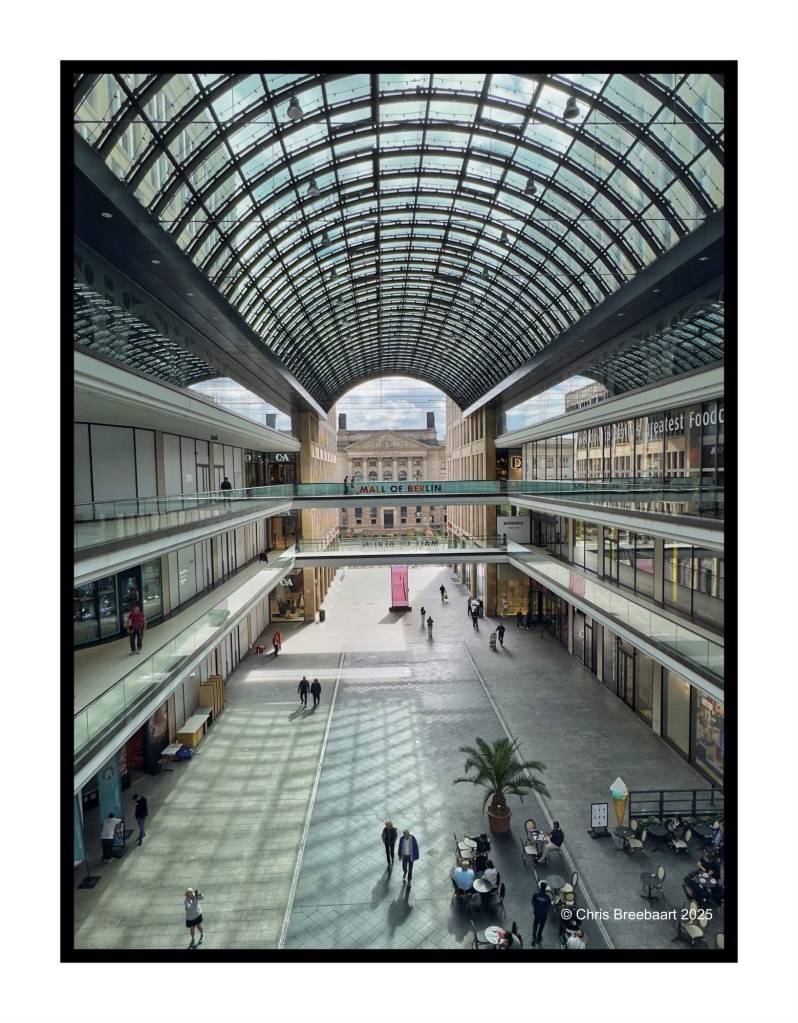
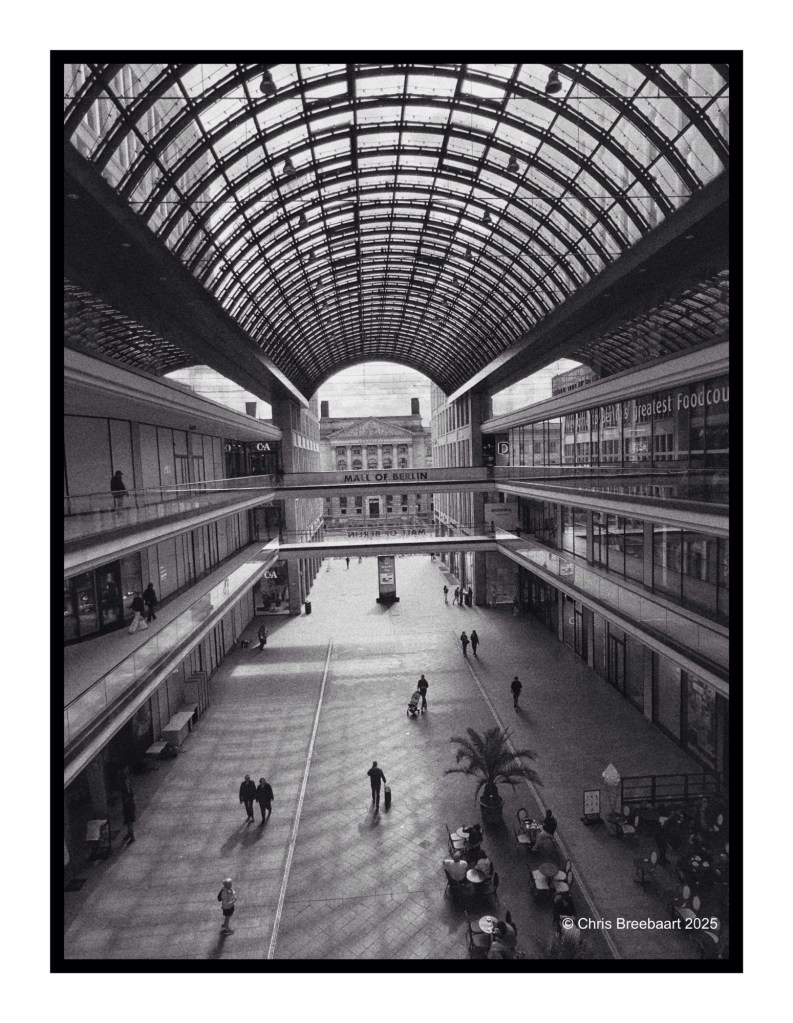
Every big city has its own mall, a big shopping center. Most of the times the shops and brands are the same as in the mall next to where you live. And the food court can be slightly different. The Mall of Berlin is no exception to that rule. The location (Leipziger Platz) makes it interesting, as does the architecture.
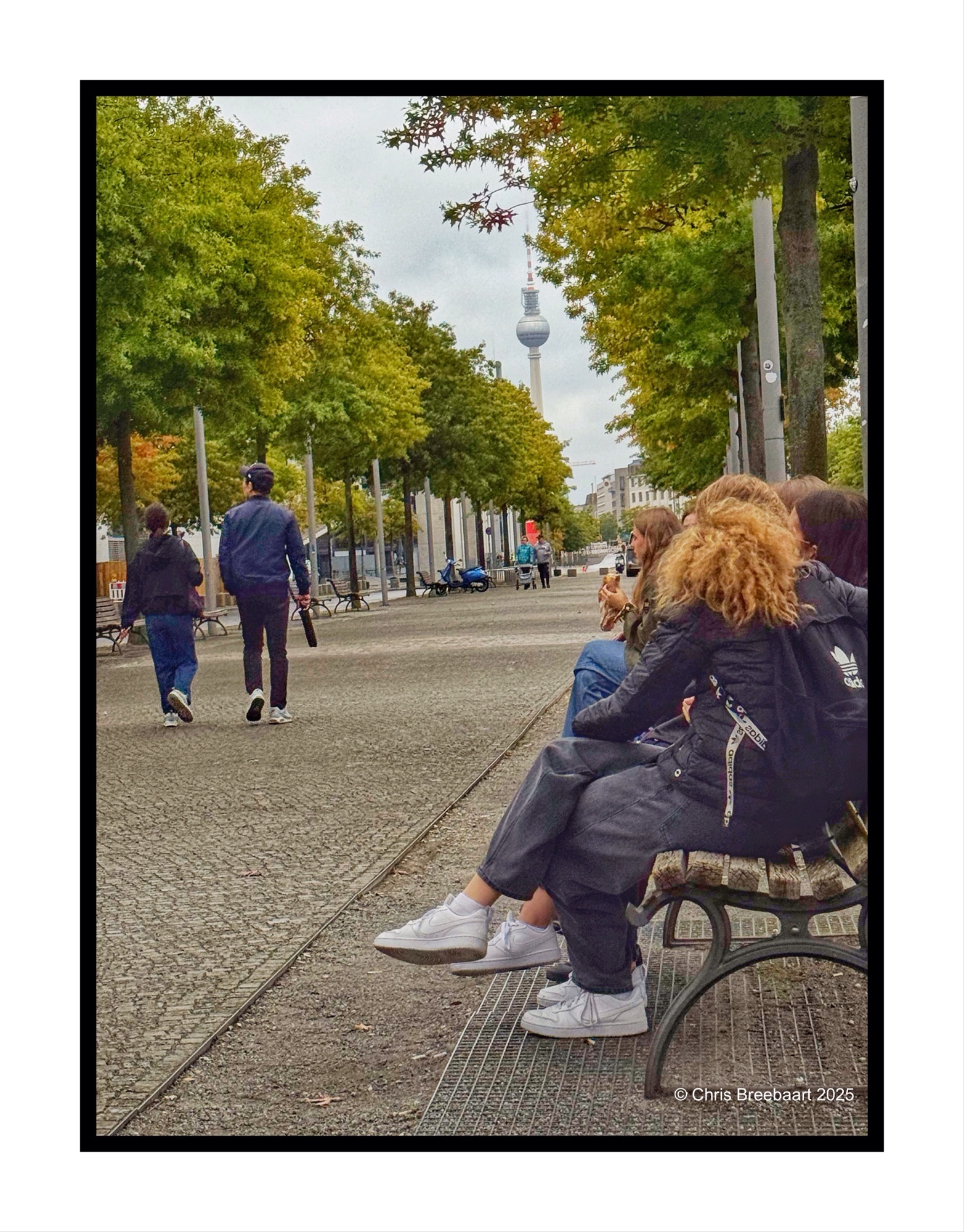
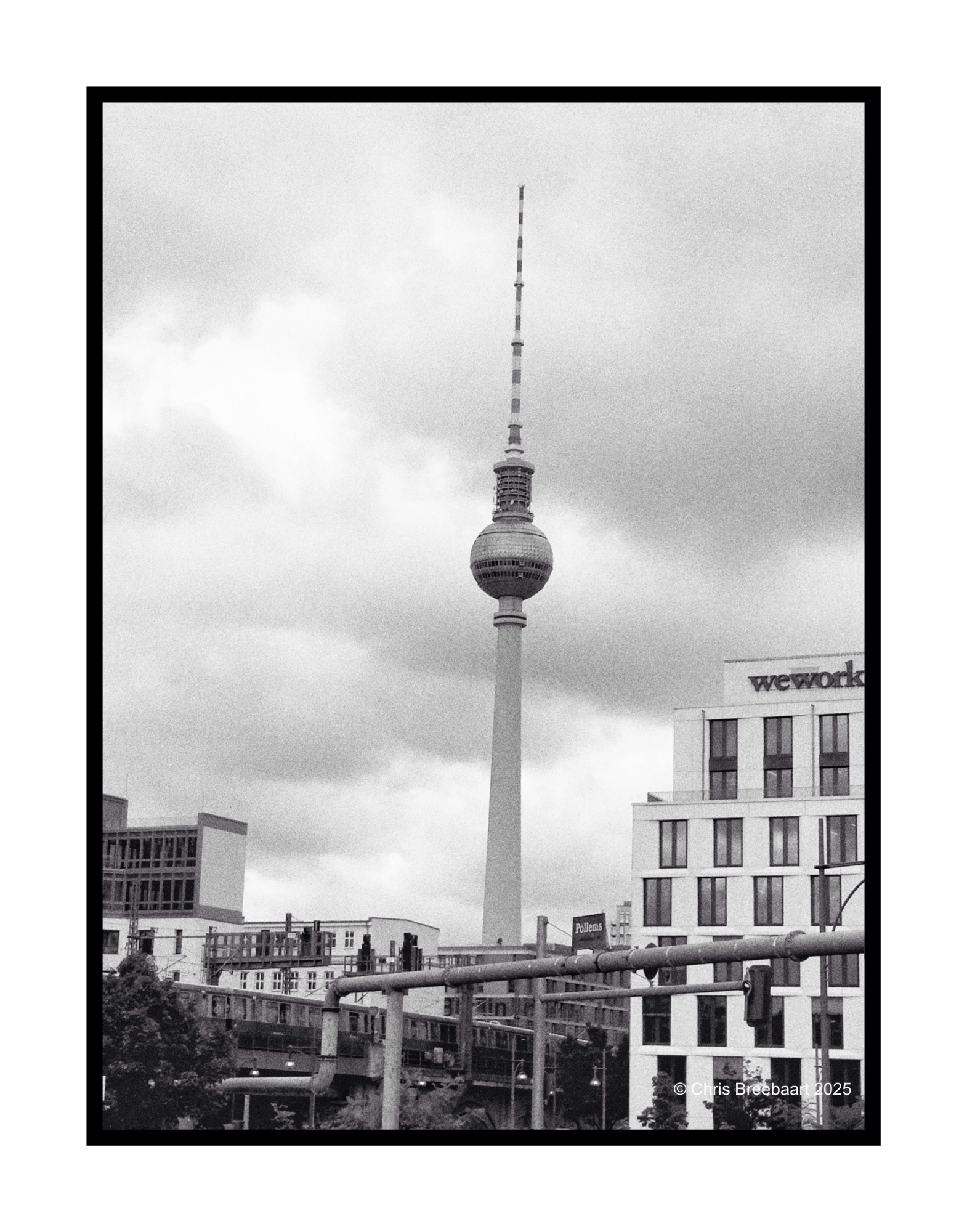
A landmark you can not overlook. The TV Tower (Fernsehturm) at Alexanderplatz. Here seen from the Paul Löbe Allee, next to the offices of the prime minister of Germany.
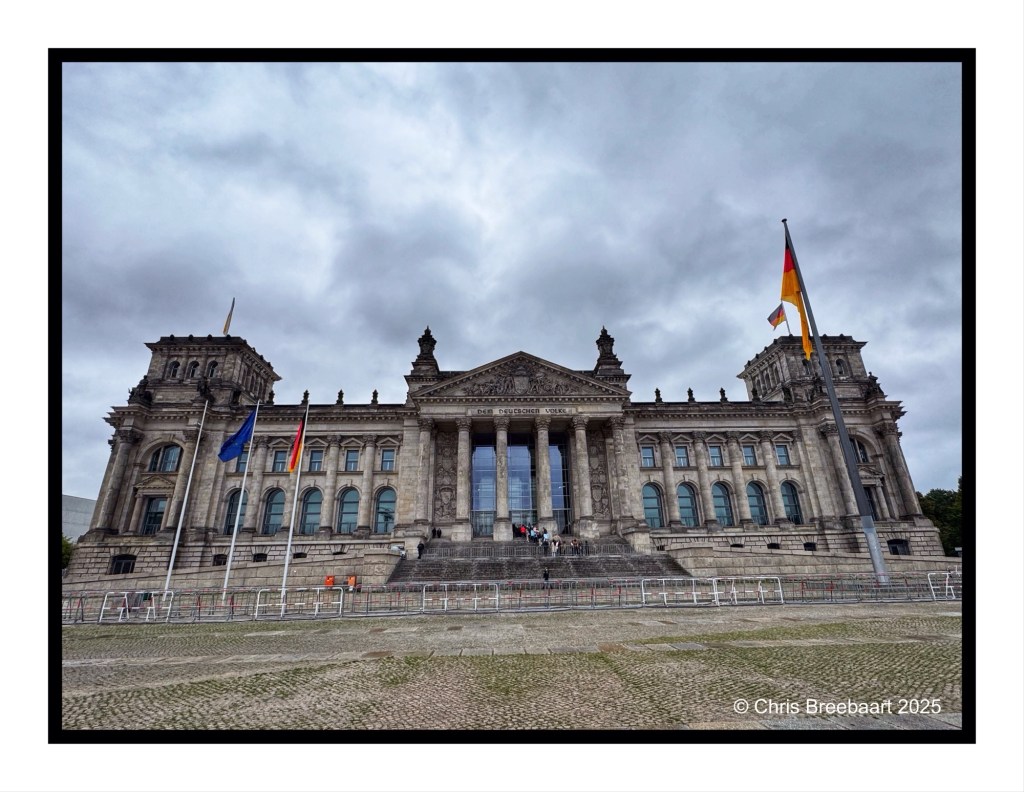
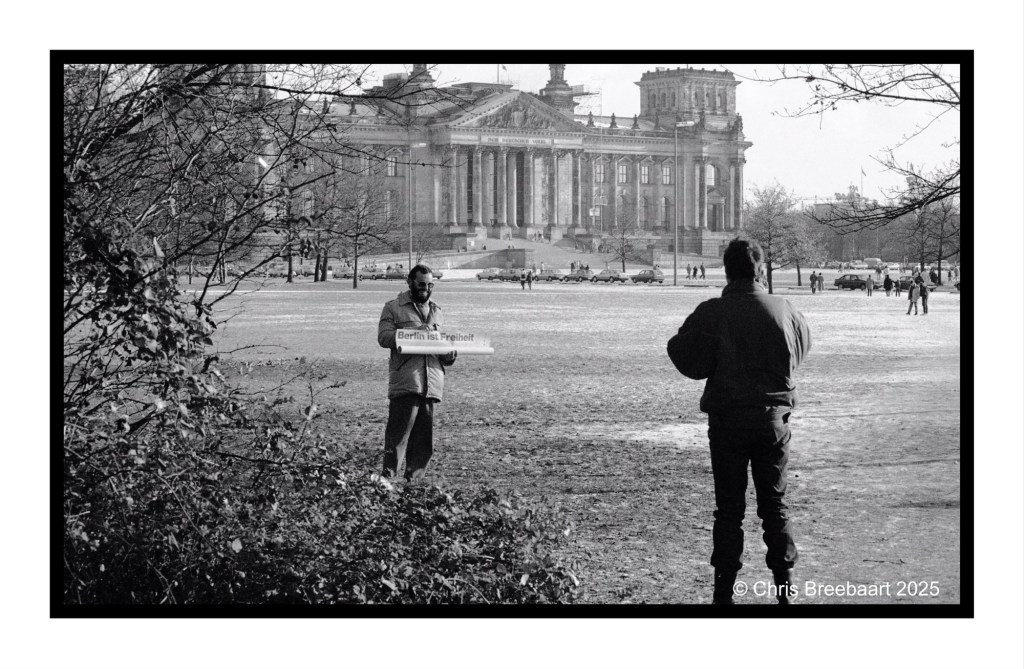
The front of the Reichstag. A visit was on the top of my list. In 1989 the Berlin Wall was right next to the building; and since 1989 this area was completely developed. So we booked a visit to the dome. On this photo I left the dome out consciously. I wanted to have an image like the building looked in November 1989 below.
Germany, Berlin – November 1989
The history of the Reichstag is connected to my hometown and Leiden. In 1933 Marinus van der Lubbe was accused, tried and sentenced by the Nazi-regime for setting fire to the building. He was born in Leiden en lived in Oegstgeest, as did his family.
About the B4 retouch series: I browsed my archive for pictures to publish. Some of them are partly retouched but most do have scratches, dust and stains.
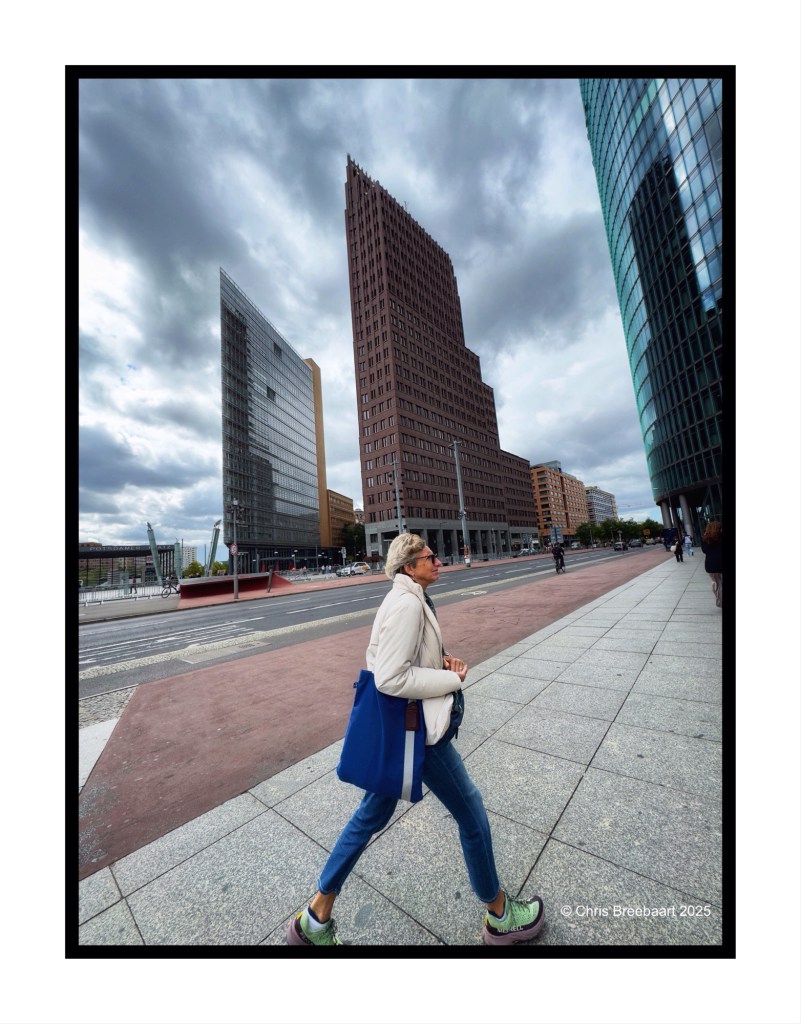
Human measure on Potsdamer Platz. During the time of the Berlin Wall people were a spic in a vast open space. Now they are a spic being over towered by high rising.
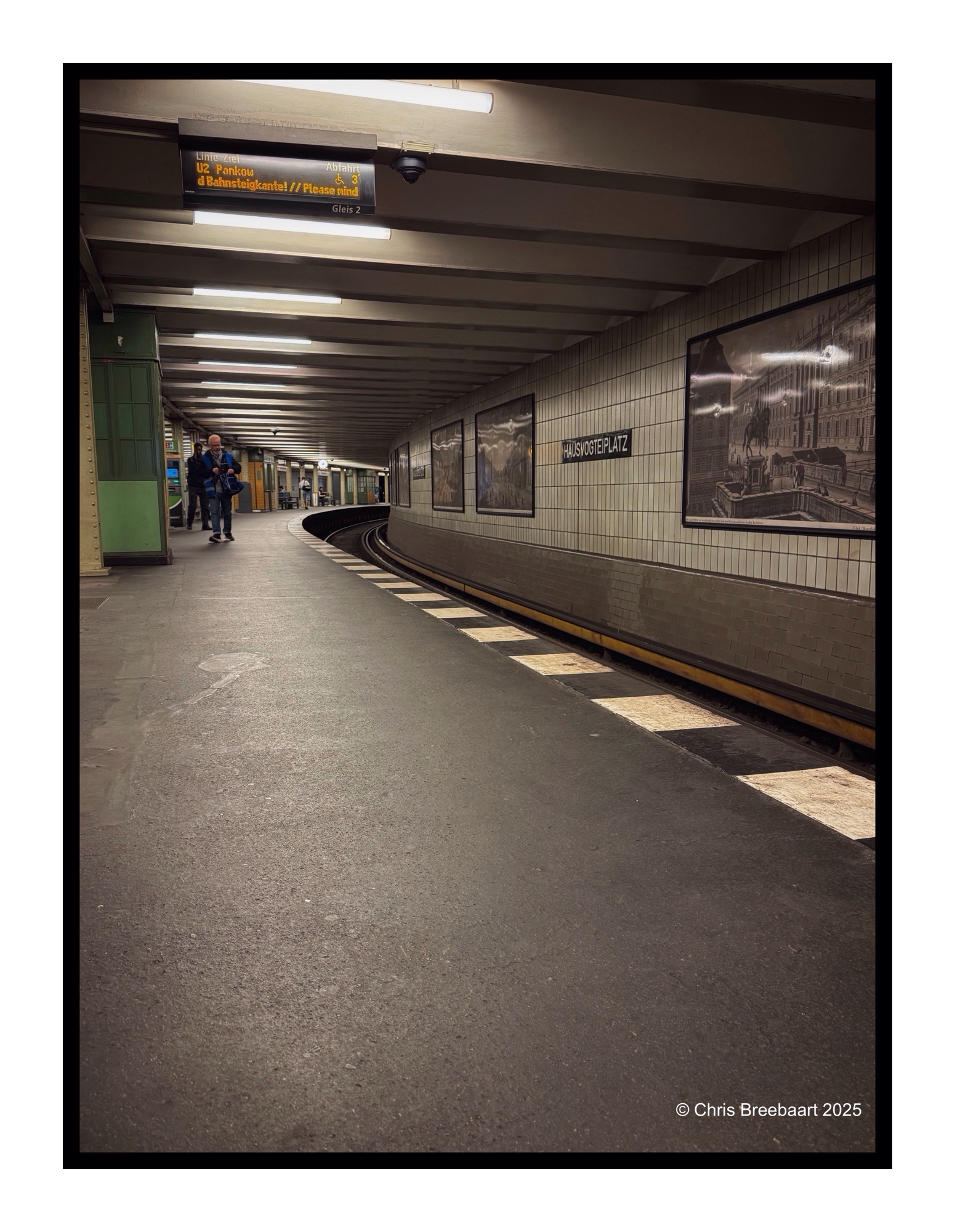
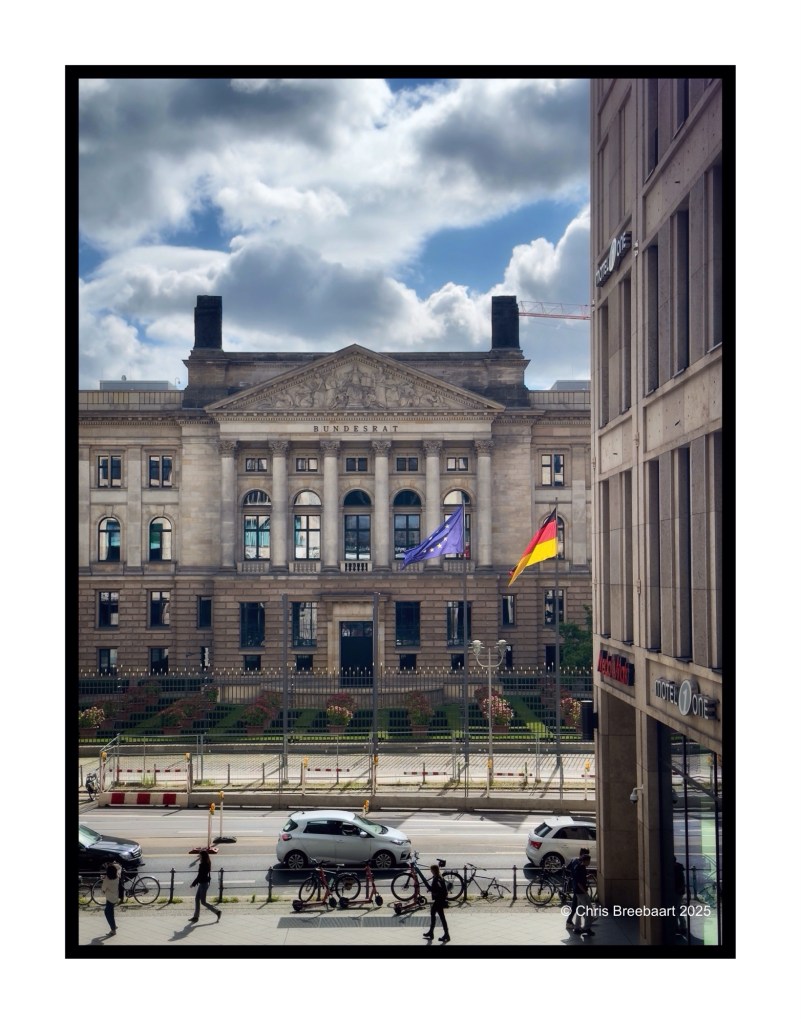
Walking through Berlin was sometimes causing some disorientation. Lots of places that were ‘void and empty’ in November 1989 are now (re)build. In 1989 I just saw a small part of former East Berlin. It was a challenge to figure out what I was looking at. An old building, a refurbished one or a new build? I have a slight preference for old buildings. Lots of them are beautifully restored. This is one of them: the Bundesrat in the former Prussian House of Lords. As seen from the Mall of Berlin.
In 1989 we just spent one day in East Berlin. This visit the first day we looked around in the former East Berlin area. The television tower still towers over the city at Alexanderplatz. There is still a lot of construction activity, and along the roads you see pipes in blue and pink. First I thought that it was a smart concrete transport system. In reality it is a way to pump out groundwater from construction sites into the Spree river.
Friends had ‘warned’ me about the changes I would see. What in 1989 was a vast open space (e.g. the Potzdamer Platz) is now completely filled with modern architecture. But what struck me the most was the vibrant vitality the city breathes now. It is cosmopolitan and a magnet.
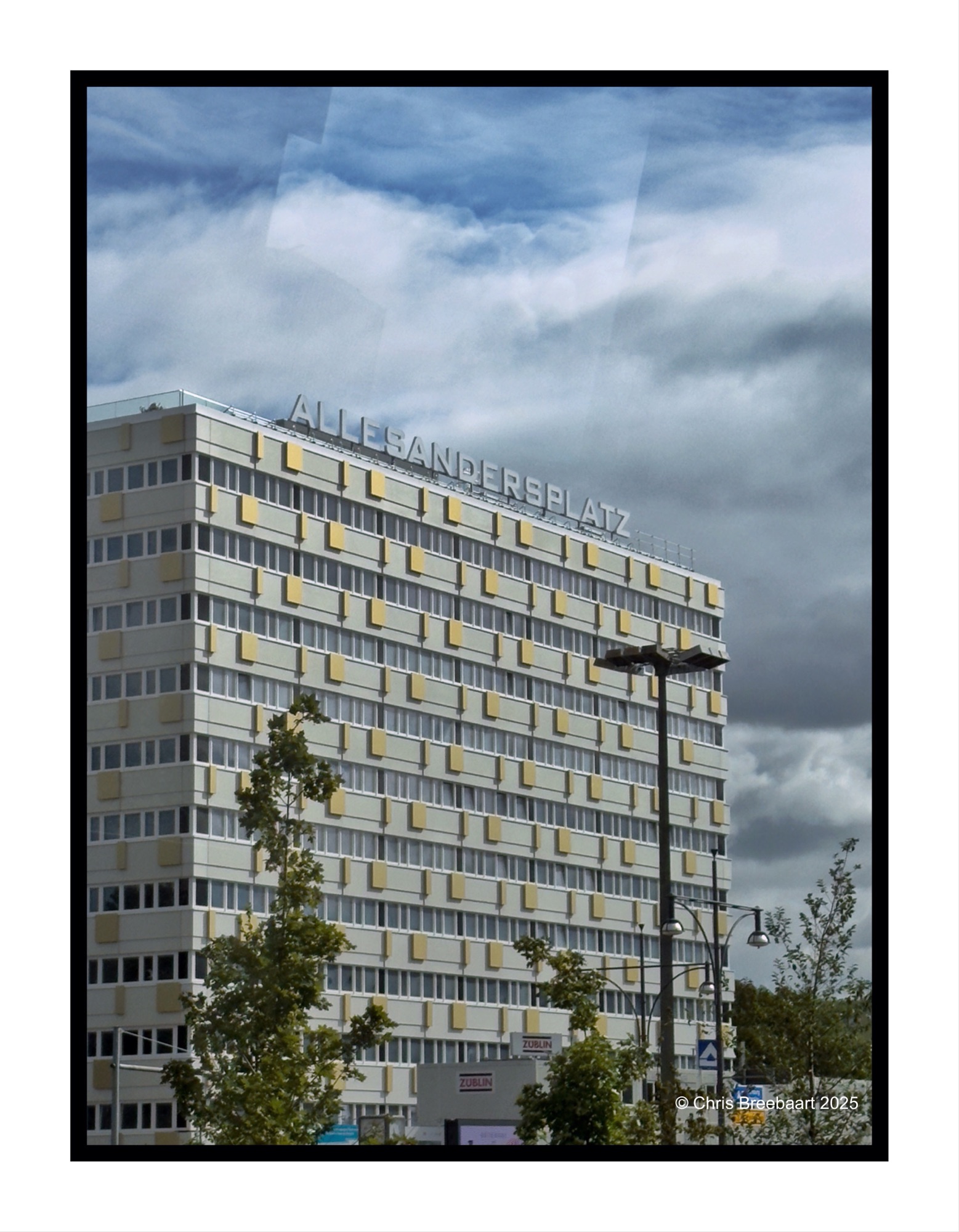
One of the landmark squares of Berlin is Alexanderplatz. On a building just a few hunder meters away I saw this text ‘Allesandersplatz’. Everything is different square? German humor? Or the basic conclusion after the first day. A lot changed. At face value.
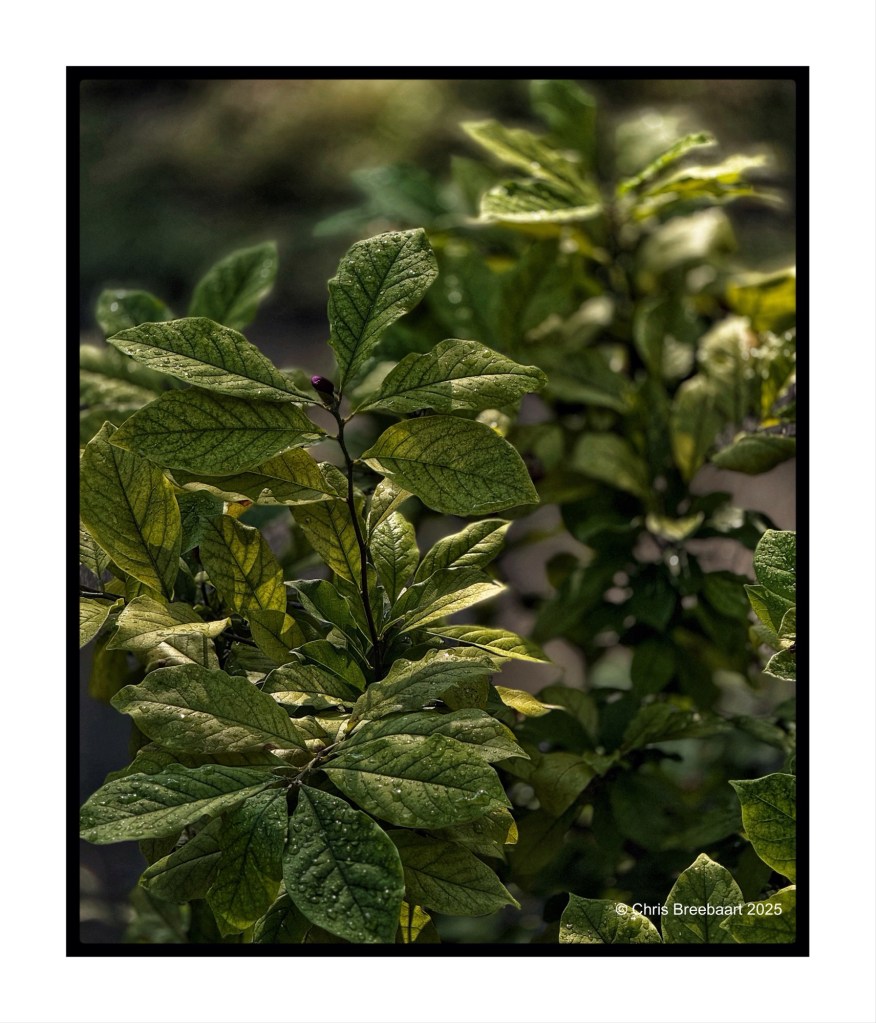
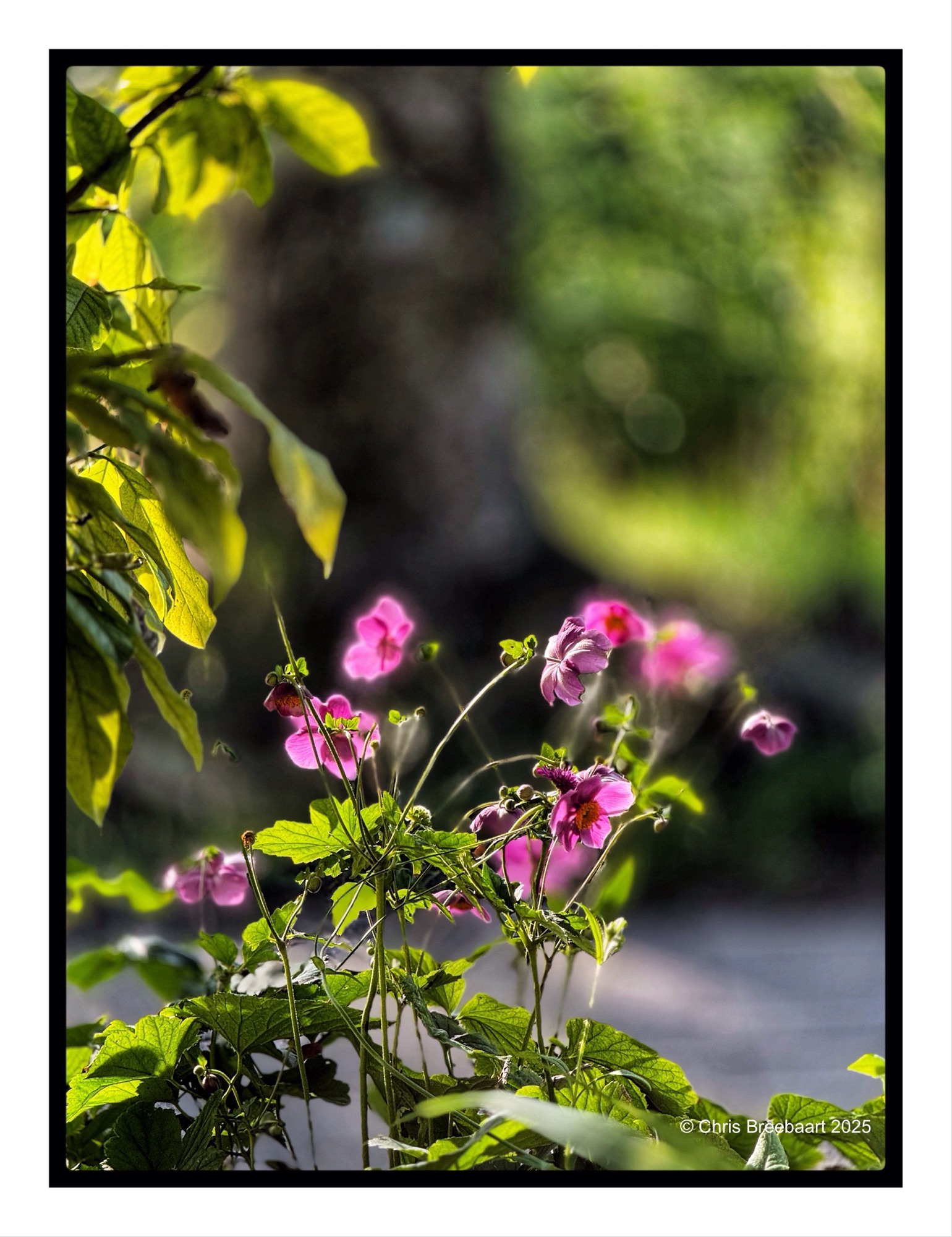
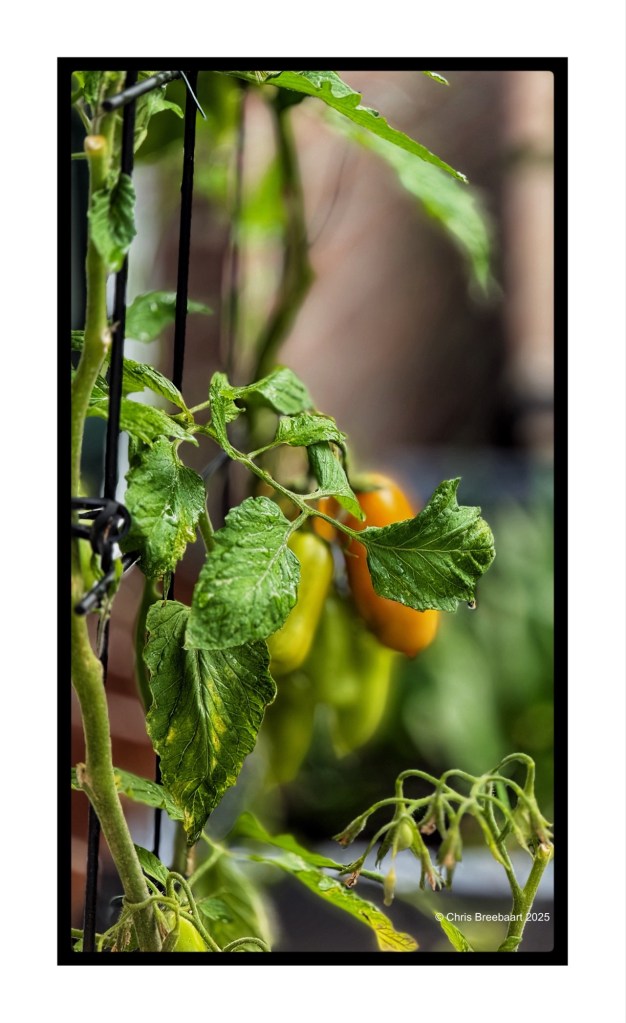
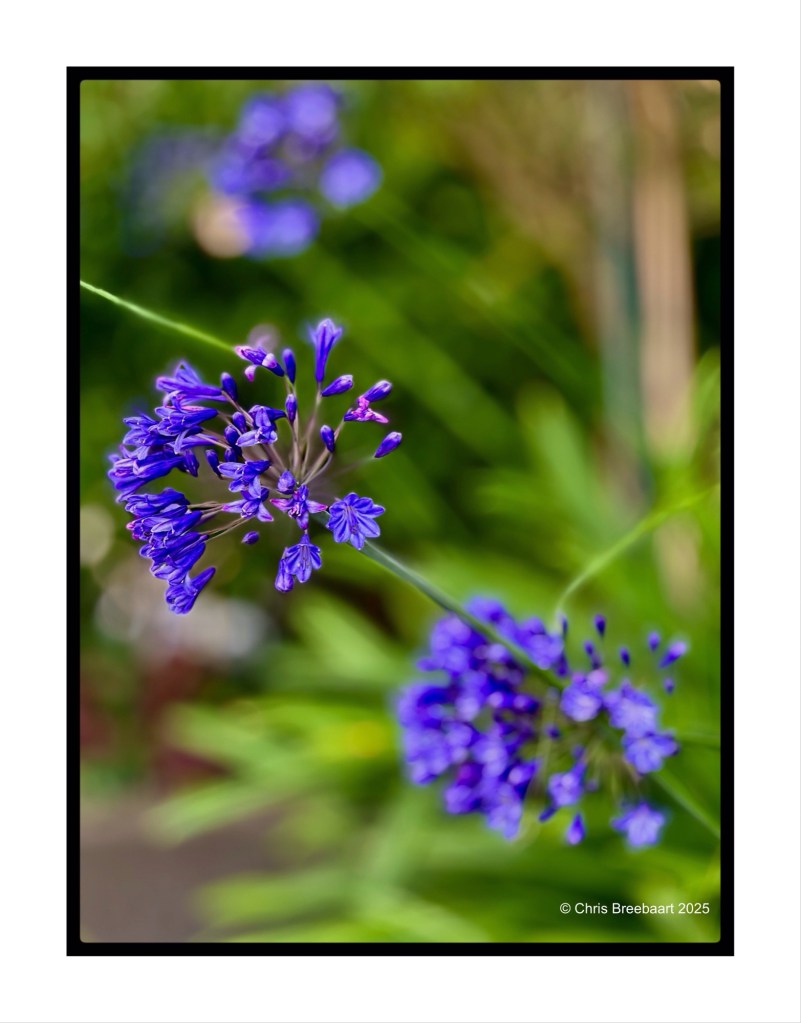
A plant in the front garden offers months of beauty in the sunlight of the morning sun. Using the portrait mode of the iPhone results in ‘hovering’ effects of parts of the plant that seem now unattached.
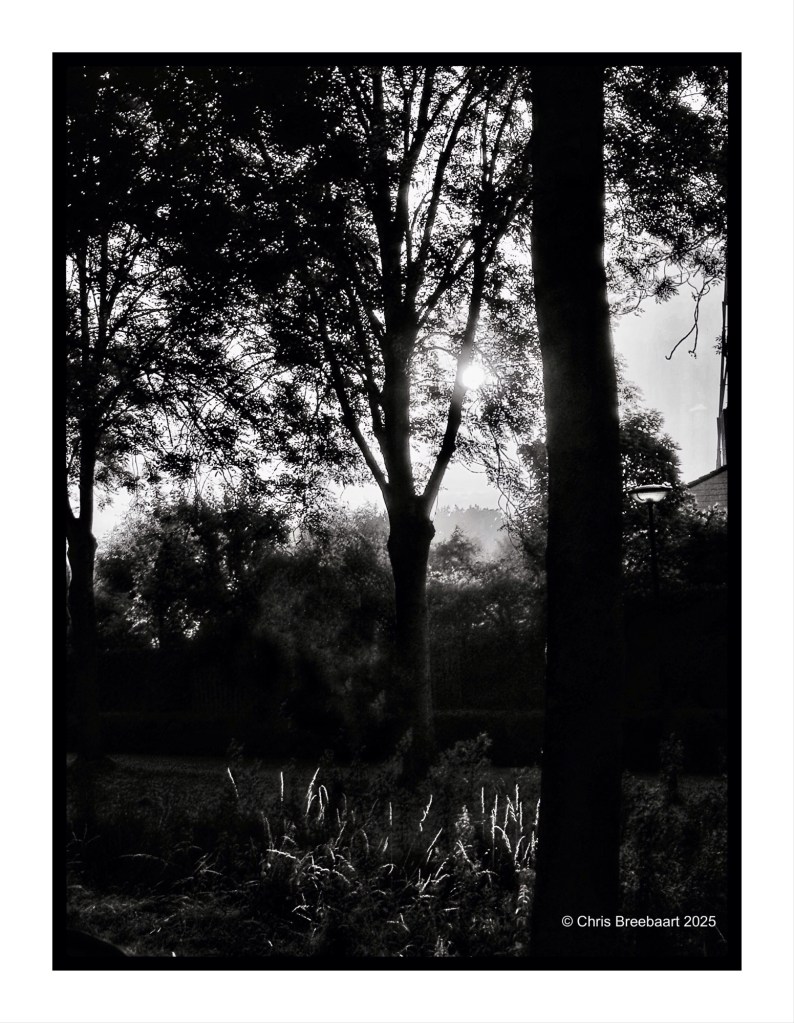
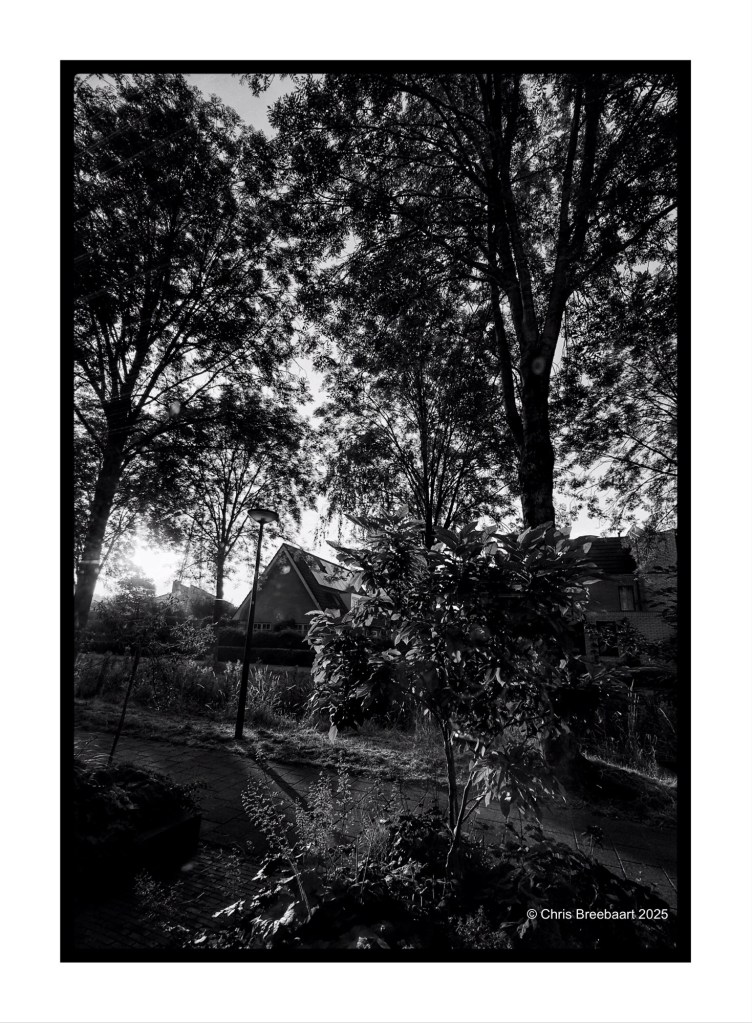
I have a fondness for black and white aka monochrome. That grew on me. Mono was cheaper 50 years ago and more ‘easy’ to handle in a dark room. Monochrome gives something extra at times. The sphere, the grain. And over all these years I learned to see objects in monochrome, visualizing what something looks like in grays.
When I bought my first Nikon digital camera (the D70), I naively asked ‘where is the monochrome setting?’. It was not there. Shooting was color only. If I wanted mono I had to create it myself afterwards in Lightroom, Photoshop or an app like Snapseed. But lucky for me, on the iPhone and on the recent Nikon Zf, there are monochrome settings. To be honest, that was one of the reasons to buy a Zf. So now I have a choice: choose a mono or color setting, or turn color afterward turn it into mono.
I know the taste of my ‘audience’ is different than mine. In three days I like to find out more about your taste. What do you fancy more: a photo in mono or in color?
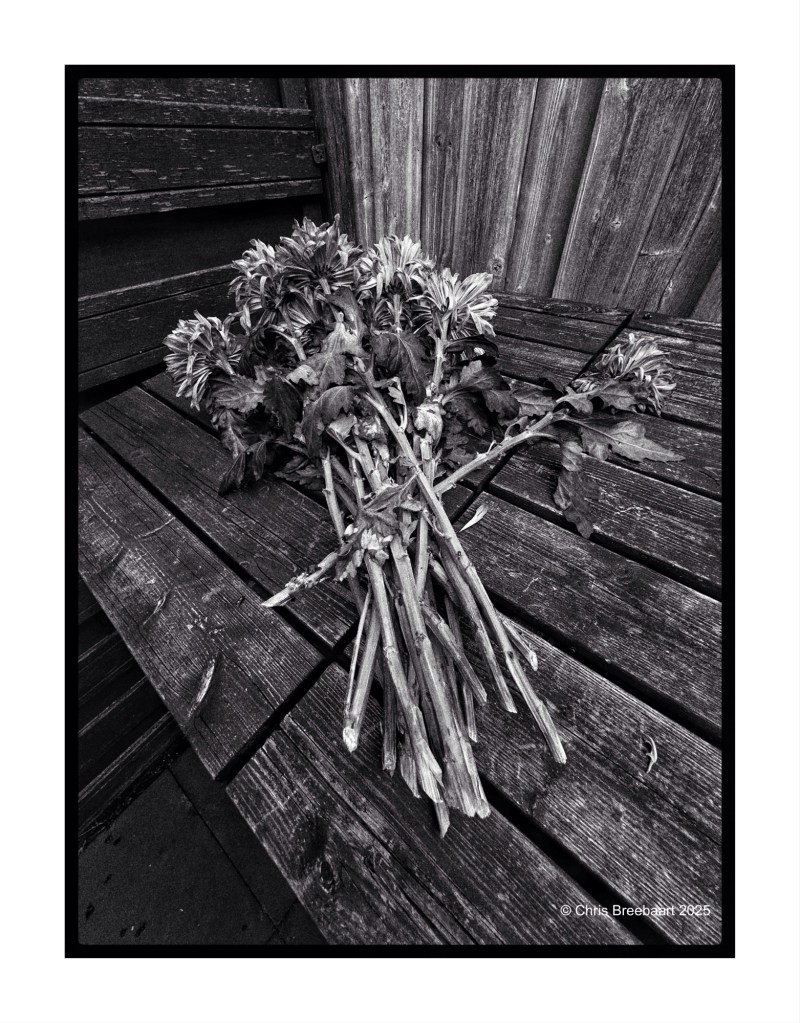
This third and last one is about flowers, waiting for the recycle bin. The photo was shot in color.
I have a fondness for black and white aka monochrome. That grew on me. Mono was cheaper 50 years ago and more ‘easy’ to handle in a dark room. Monochrome gives something extra at times. The sphere, the grain. And over all these years I learned to see objects in monochrome, visualizing what something looks like in grays.
When I bought my first Nikon digital camera (the D70), I naively asked ‘where is the monochrome setting?’. It was not there. Shooting was color only. If I wanted mono I had to create it myself afterwards in Lightroom, Photoshop or an app like Snapseed. But lucky for me, on the iPhone and on the recent Nikon Zf, there are monochrome settings. To be honest, that was one of the reasons to buy a Zf. So now I have a choice: choose a mono or color setting, or turn color afterward turn it into mono.
I know the taste of my ‘audience’ is different than mine. In three days I like to find out more about your taste. What do you fancy more: a photo in mono or in color?
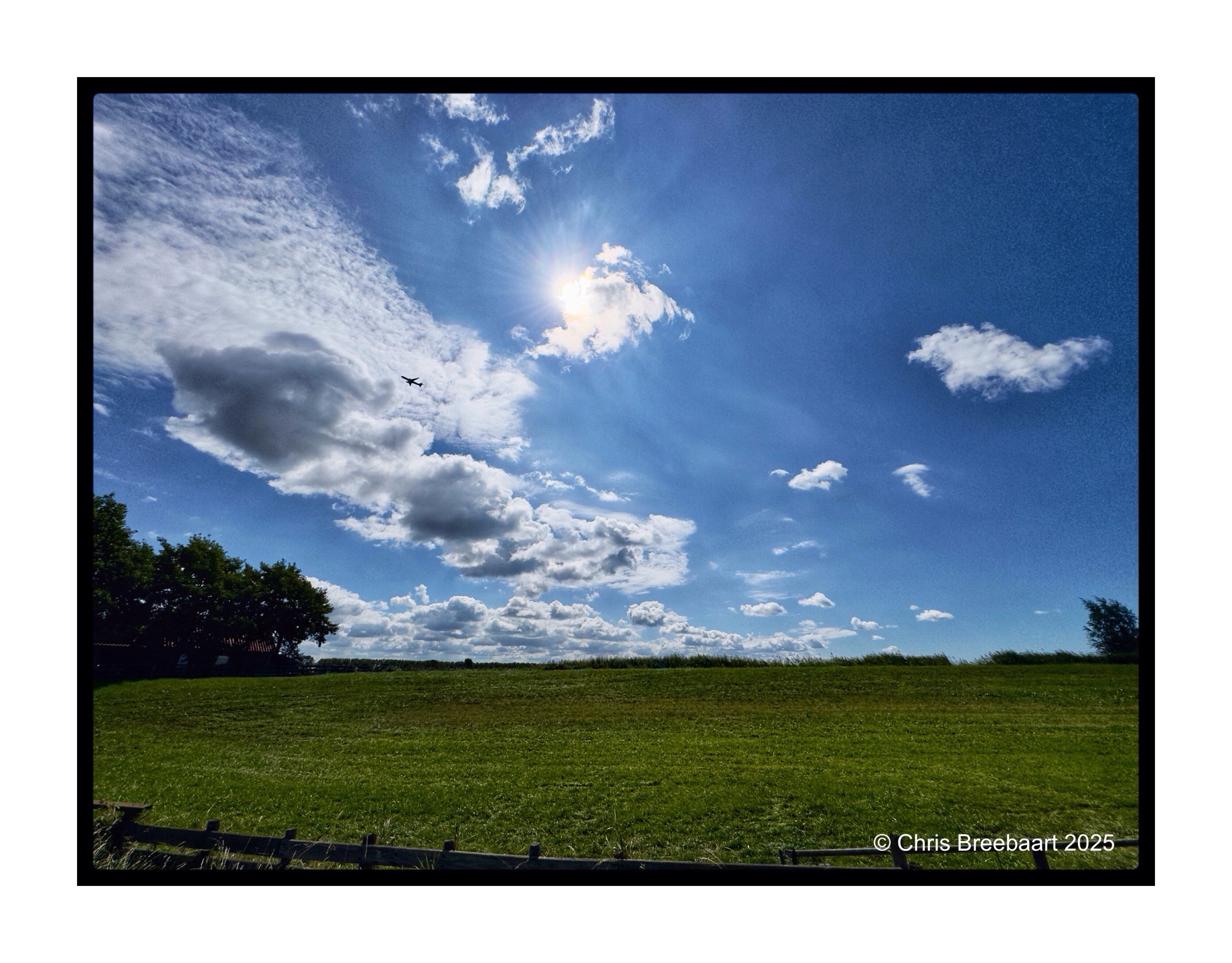
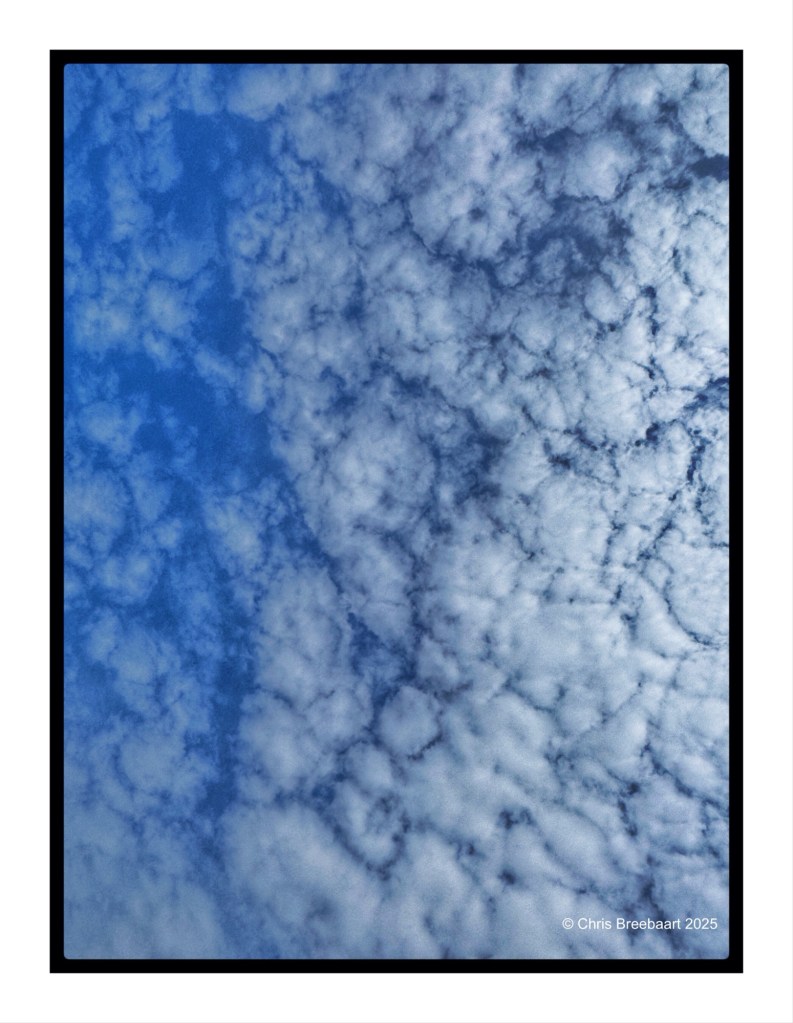
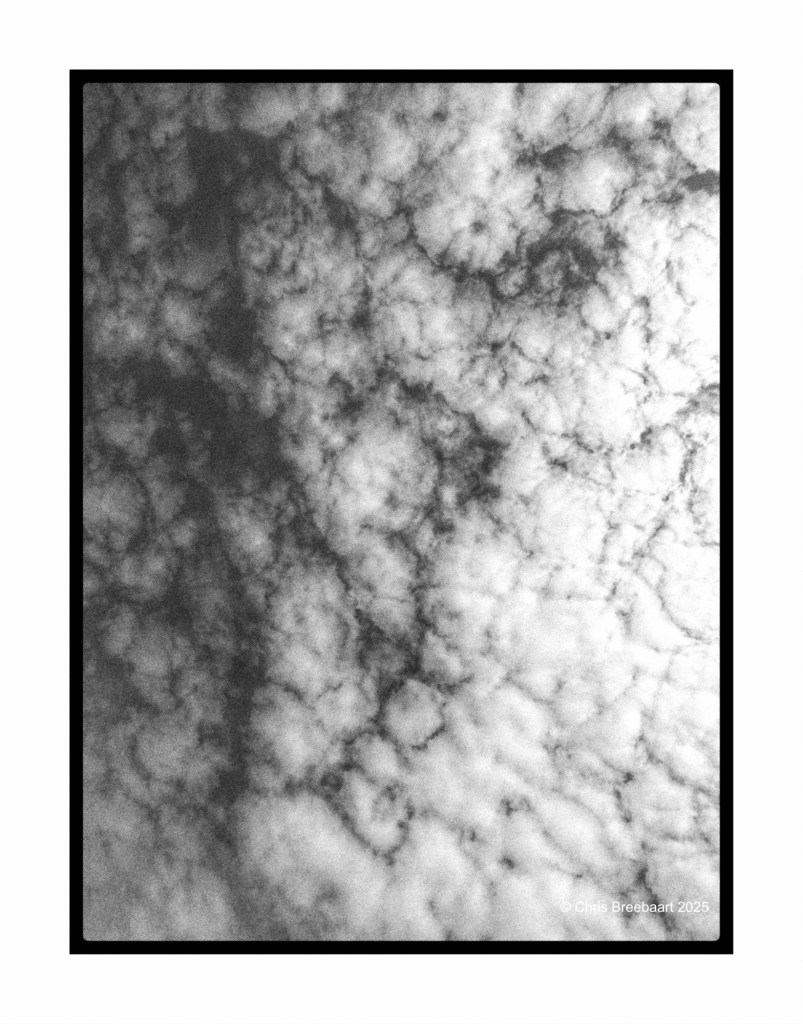
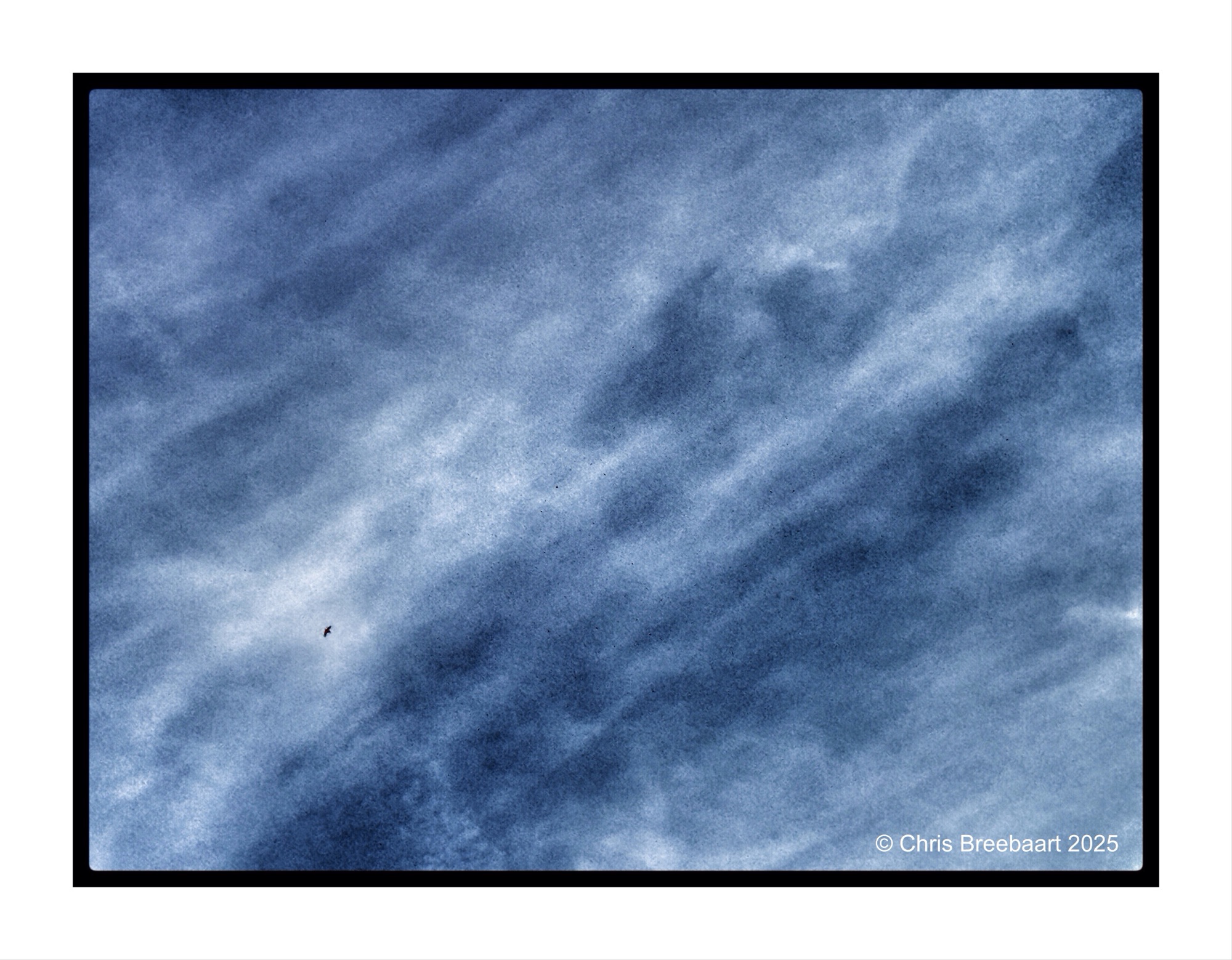
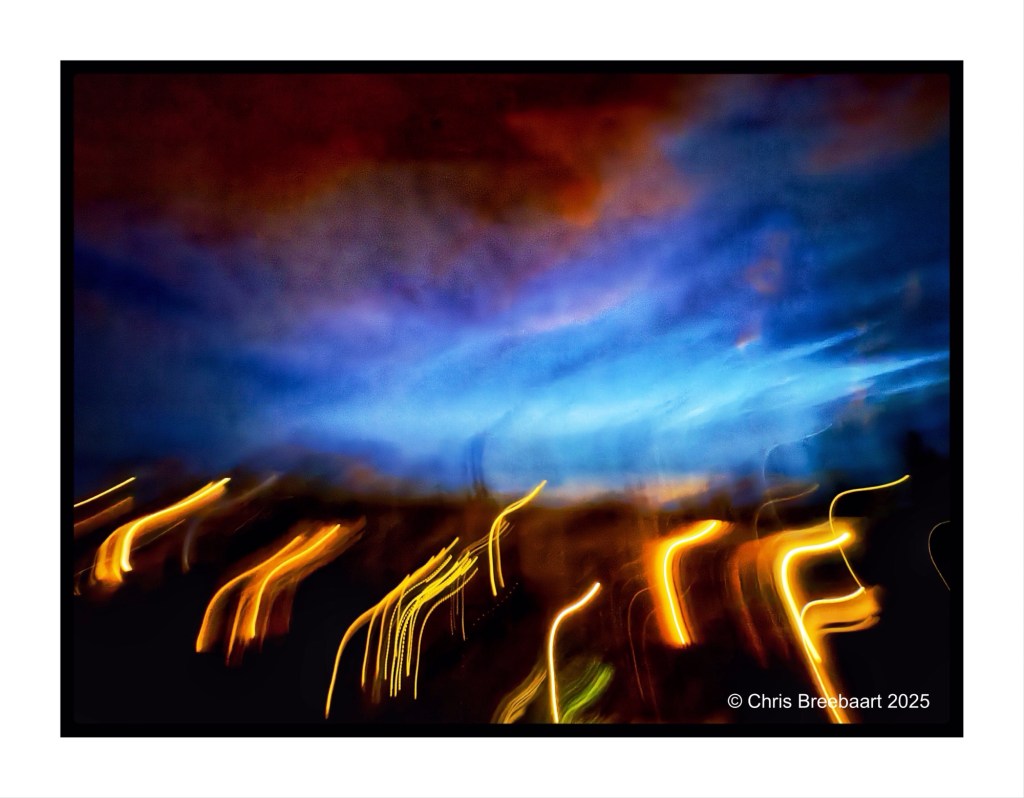
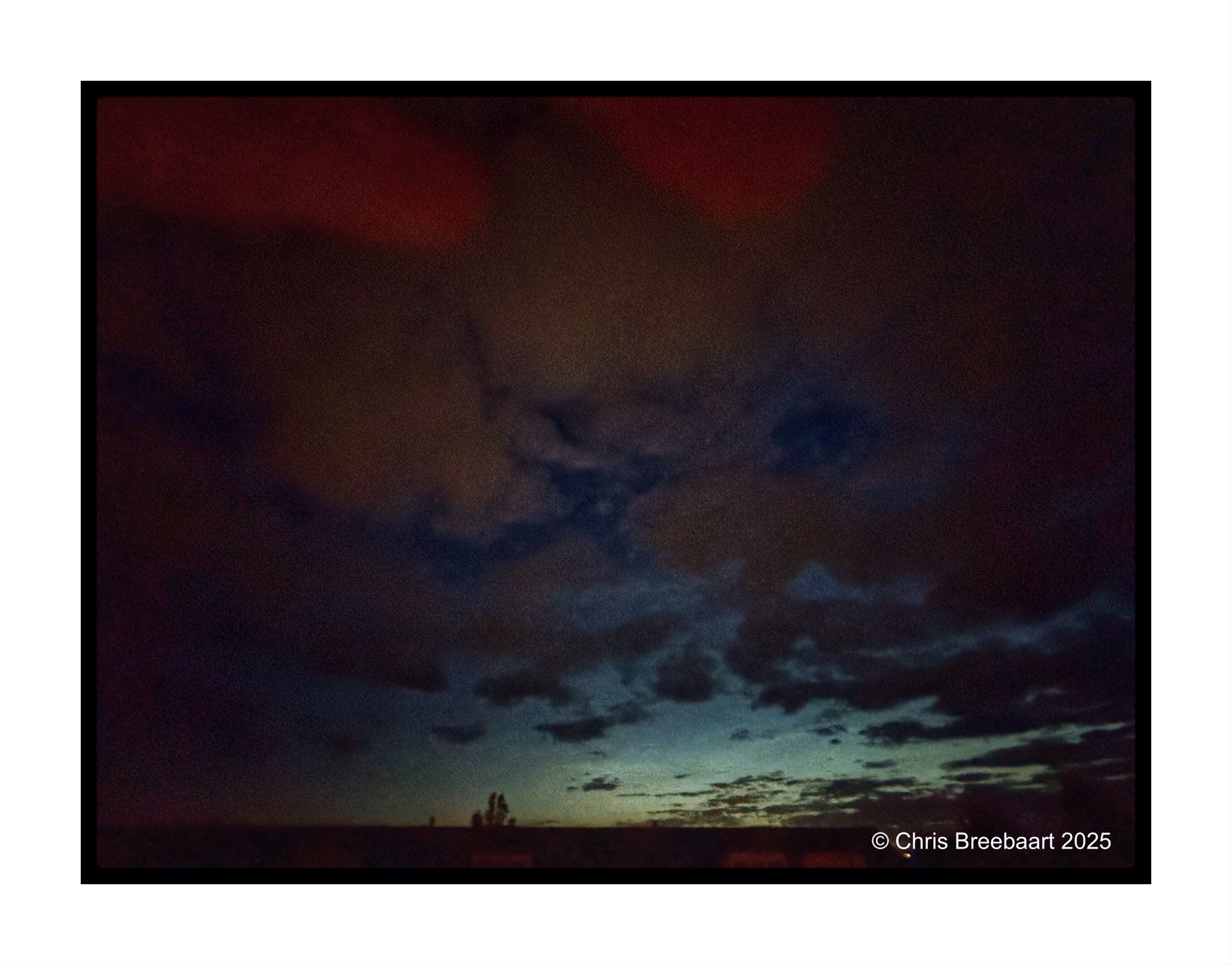
This second one is about sky. Always there, lots of it. In color it can be blue, white, gray, dark. In mono it delivers whites, grays and dark zones. In mono the image changes it seems. An abstract sky can turn into something mysterious. The photo was shot in color.
This week’s Lens-Artists Photo Challenge #359 is ‘Tools of Photo Compositions: Lines, Colors and Patterns’. Photography is about seeing. But what do you see? I can only talk for myself. It all starts with an appeal. Something in the real world captures my eyes. Most of the times that is spontaneous. It is about being there in the moment. What I visualize tells me a story, a small whisper, ‘come, shoot me! It’s fun’. And when building the photo lines, patterns, colors (or monochrome tones) are tools to try to bring that story out. And then the shutter clicks. My photo’s are my story of the world. My way of giving ‘voice’ to something that made me press the shutter, that reflects inside me. Yet, my click with the image can be totally different than the click of the observer.
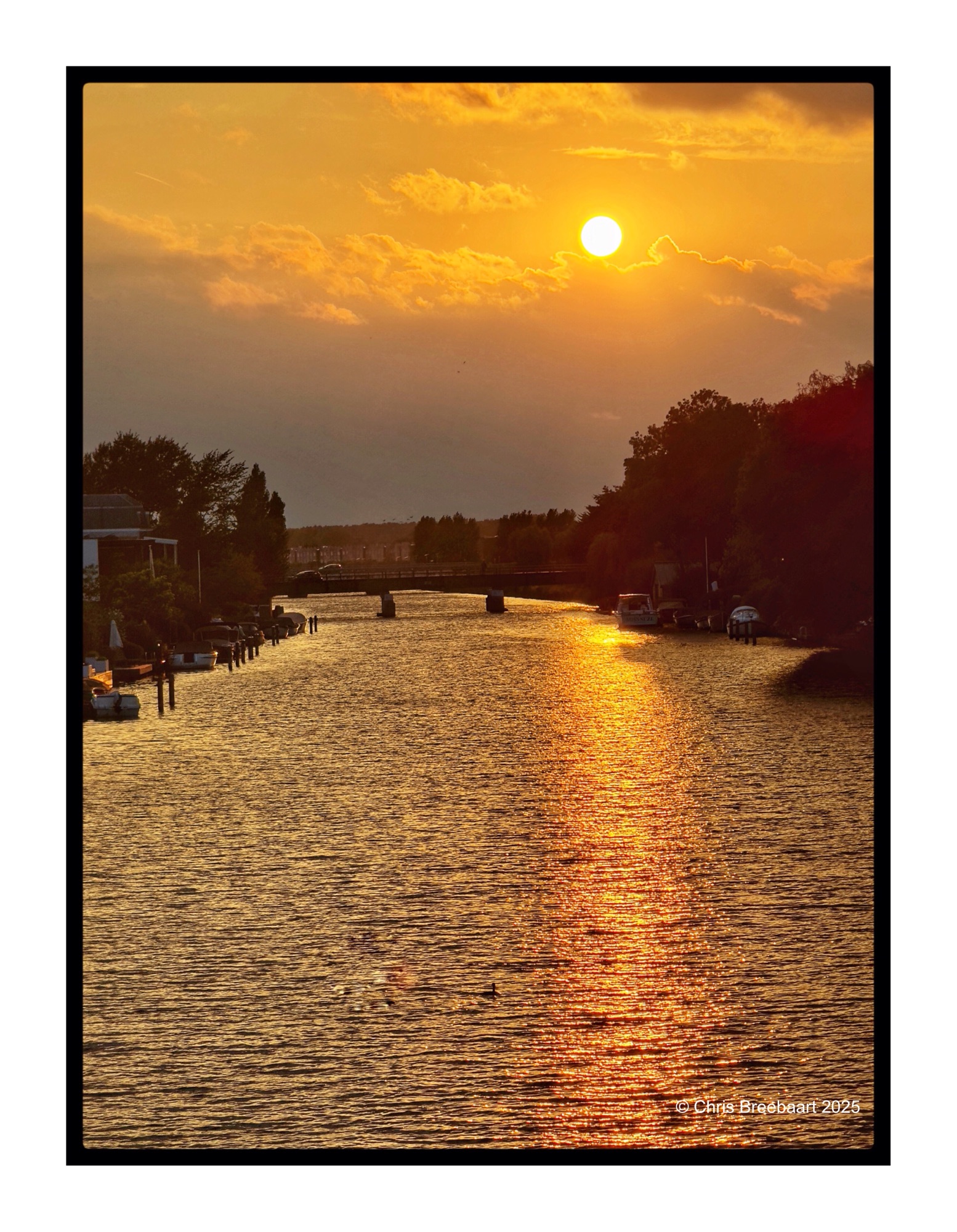
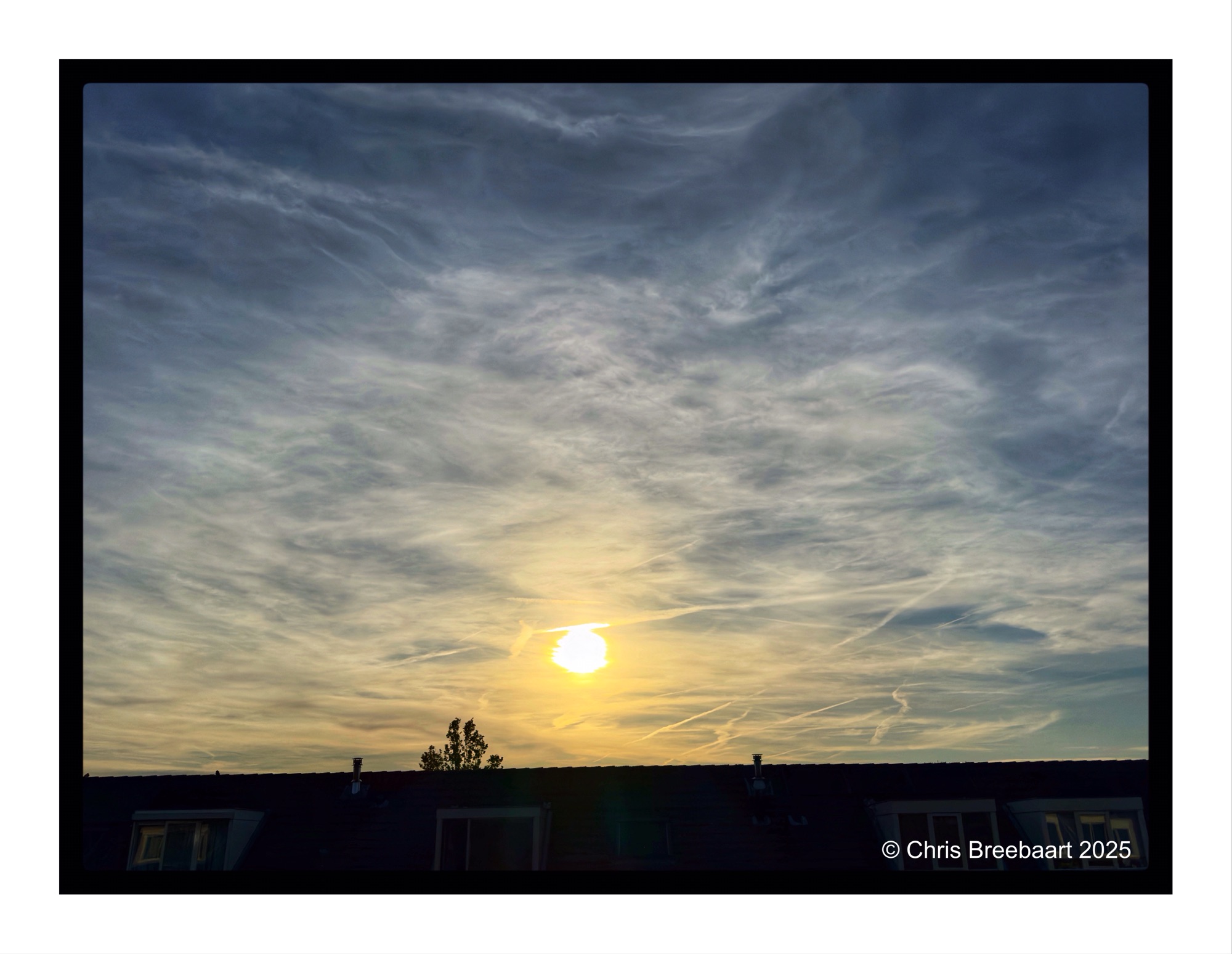
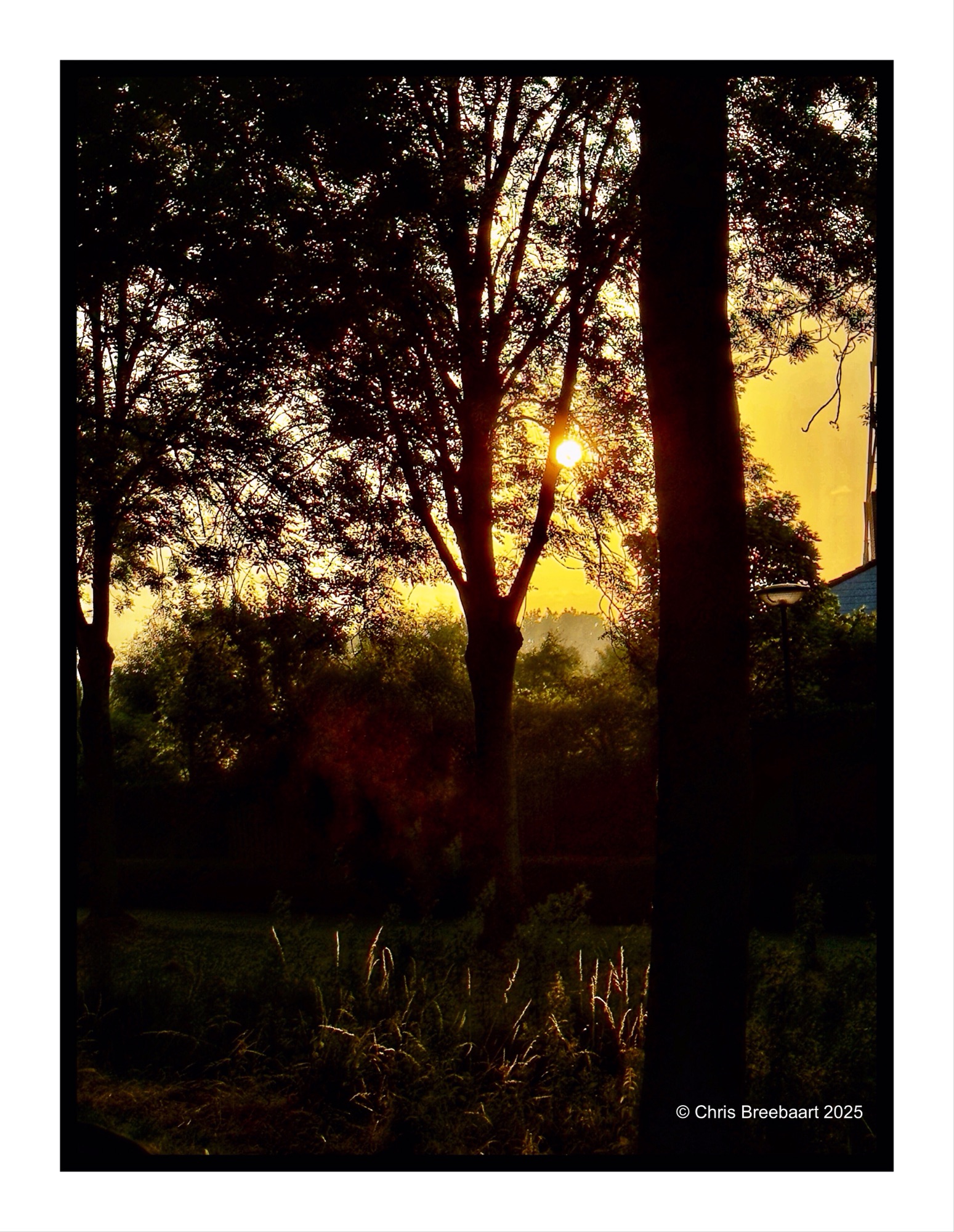
Summer mornings can sometimes welcome you into a warm, joyful and laid back day. This is one of those days filled with ease. The sun also rises, each day, at more or less the same place. And when you catch it early, it is photographer’s gold.
We Dutch are often described as being on the penny. Of course, we all wear wooden clogs. We eat stroopwafels all the time. We have a fetish for windmills. And do not forget to accuse us of creating our own country by fighting the sea. We drink to gain courage and let you pay your own meal. Add tulips and other bulb flowers to finish the picture of the Dutch. Oh yes, we are considered rude. We call it ‘direct’.
In the end we sure have a laugh about all that is said about us, Dutchies, worldwide. But if you combine being on the penny with buying flowers, you choose flowers that stay good for weeks: Chrysanthemum. As Johan Cruyff used to say: “every disadvantage, has its advantage”.
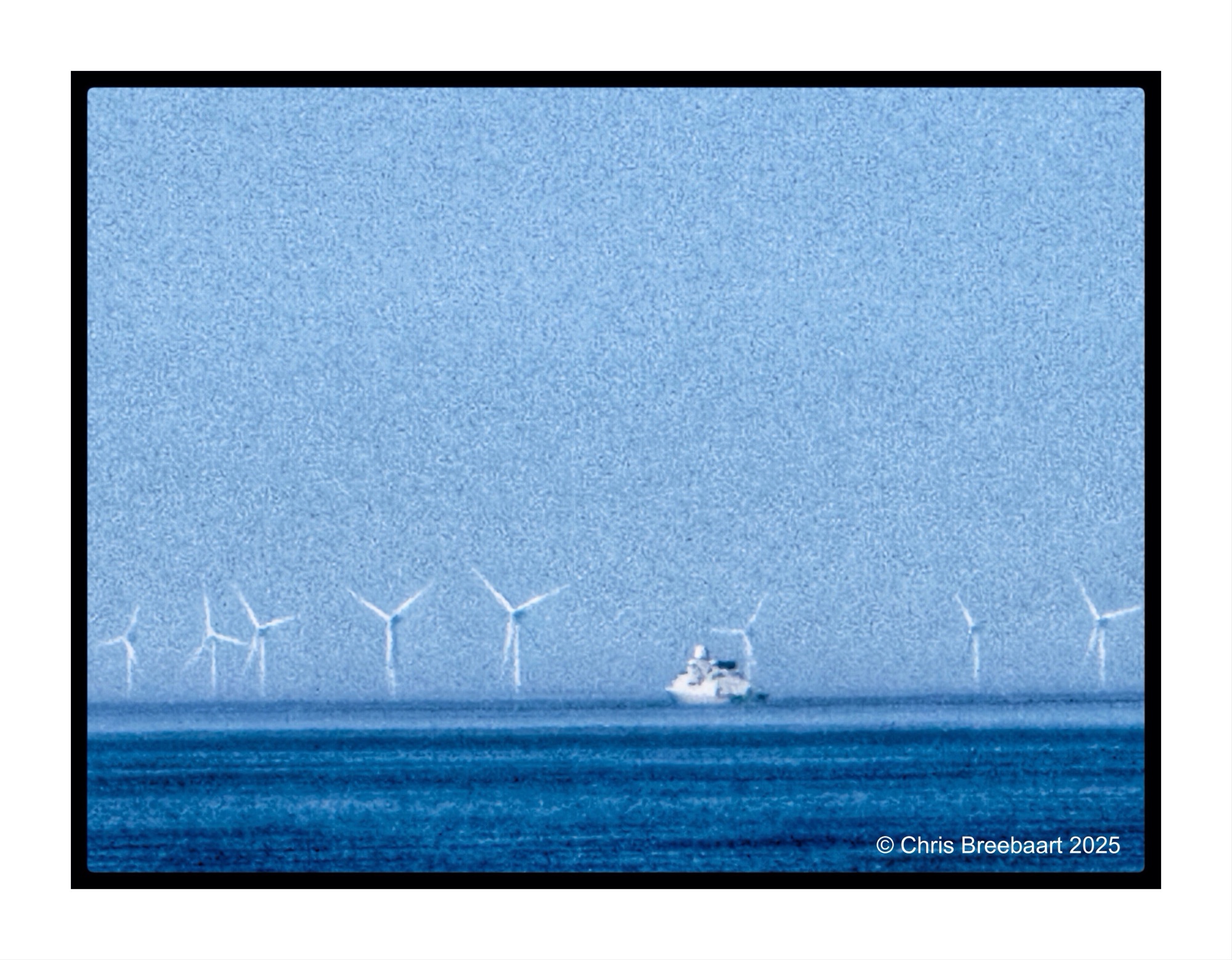
The iPhone 15 Pro Max is a wonderful clever piece of photographic technology. It is the ideal snap instrument, that is always in my pocket. The quality of the images is improved immensely over the years. And to be honest, I shoot most of my photos with it nowadays. Just because I always have my phone with me. What I still do not like is the quality of images when you use the zoom. This shot is on full zoom and the details disappear. Unfortunately I was not able to move closer at that moment. At these moments I wish I had my Nikon Zf at hand, with a nice long lens.
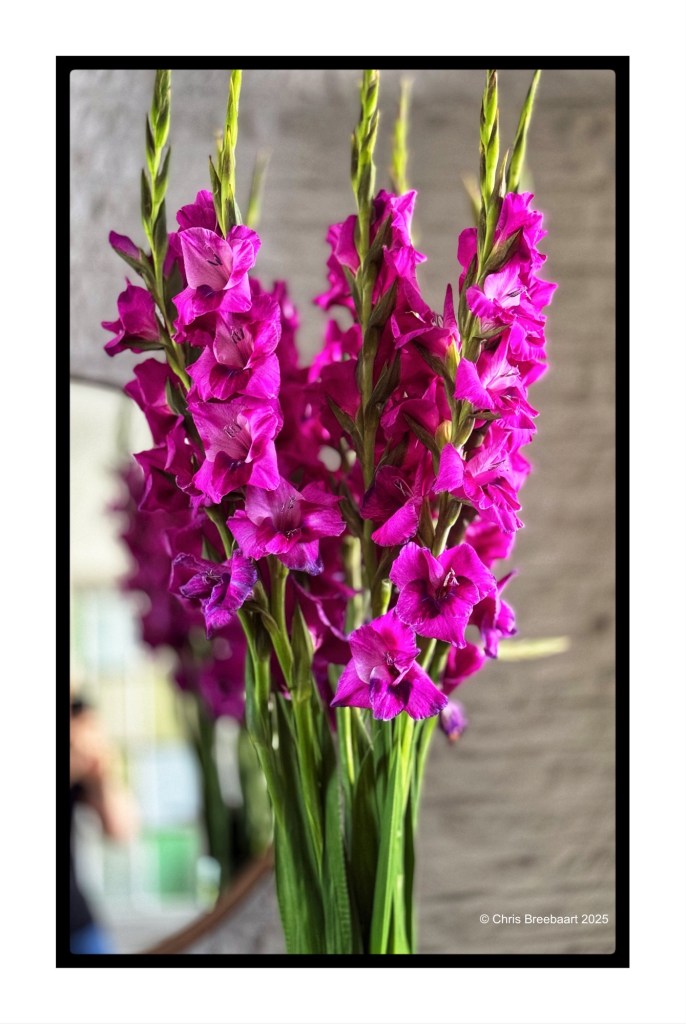
In The Netherlands, we do grow lots of cut flowers. A lot of them are exported but there is plenty of supply for the domestic market. In our household we have fresh cut flowers every week. Last week we had these big fellows. Gladioli are famous for the saying ‘death or the gladioli’. A Dutch proverb that translates to ‘all or nothing’ or ‘do or die’. Success or failure.
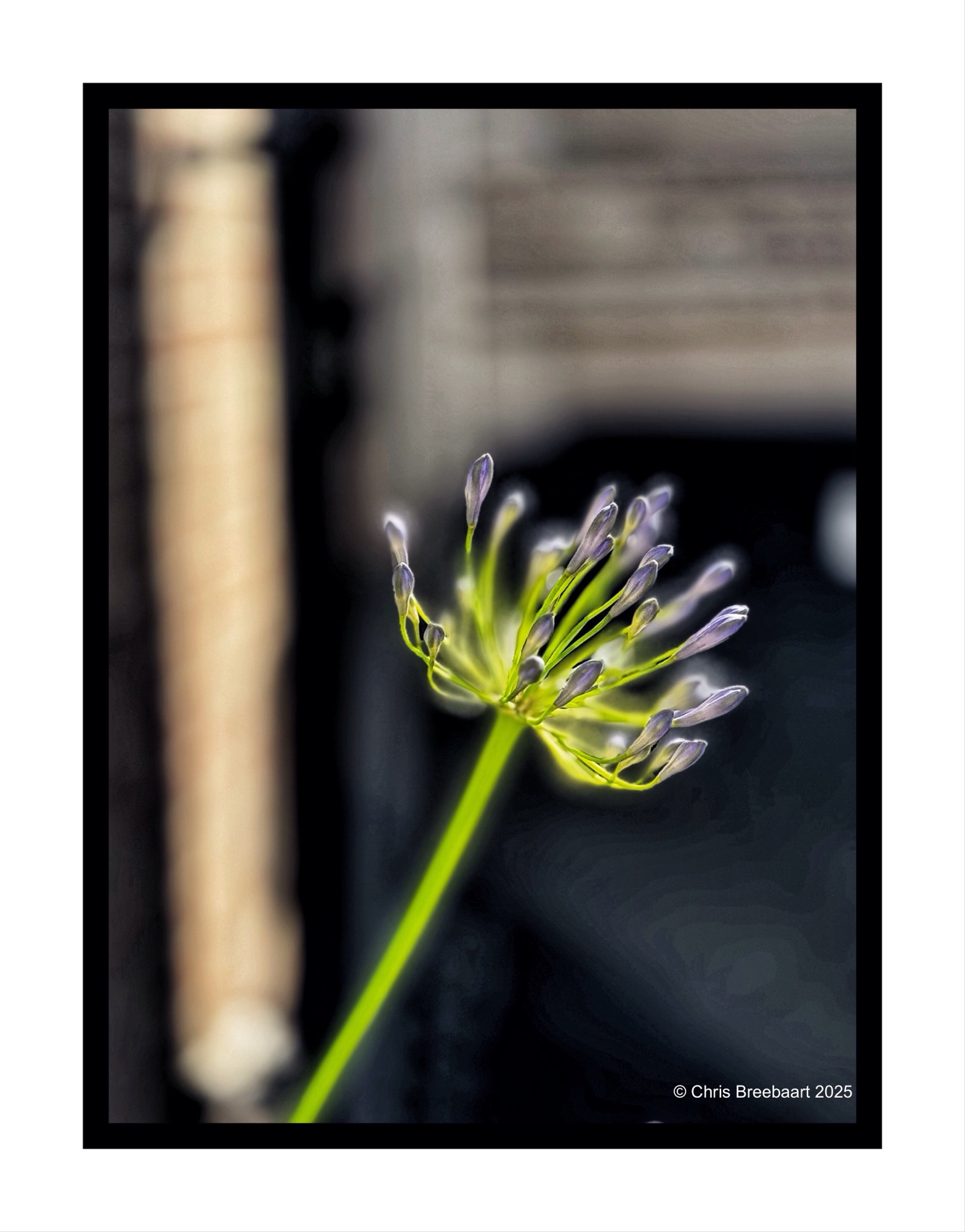
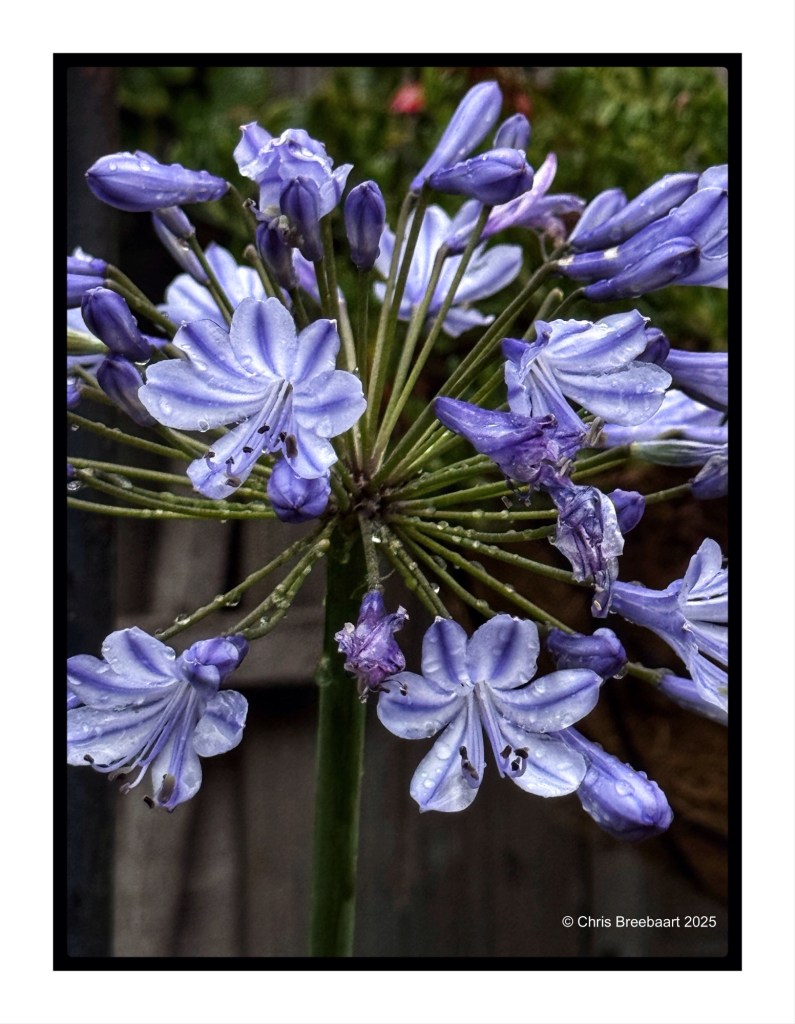
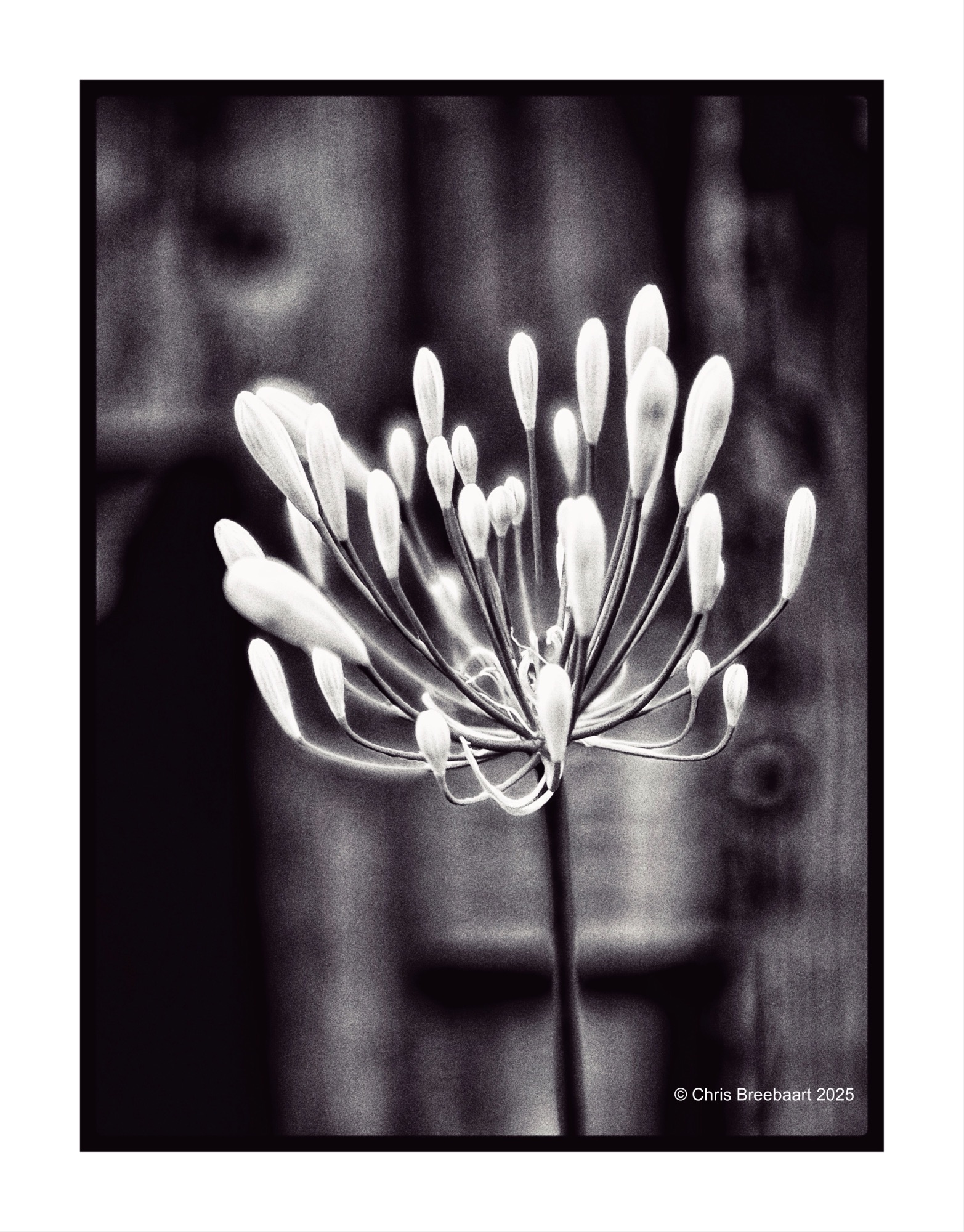
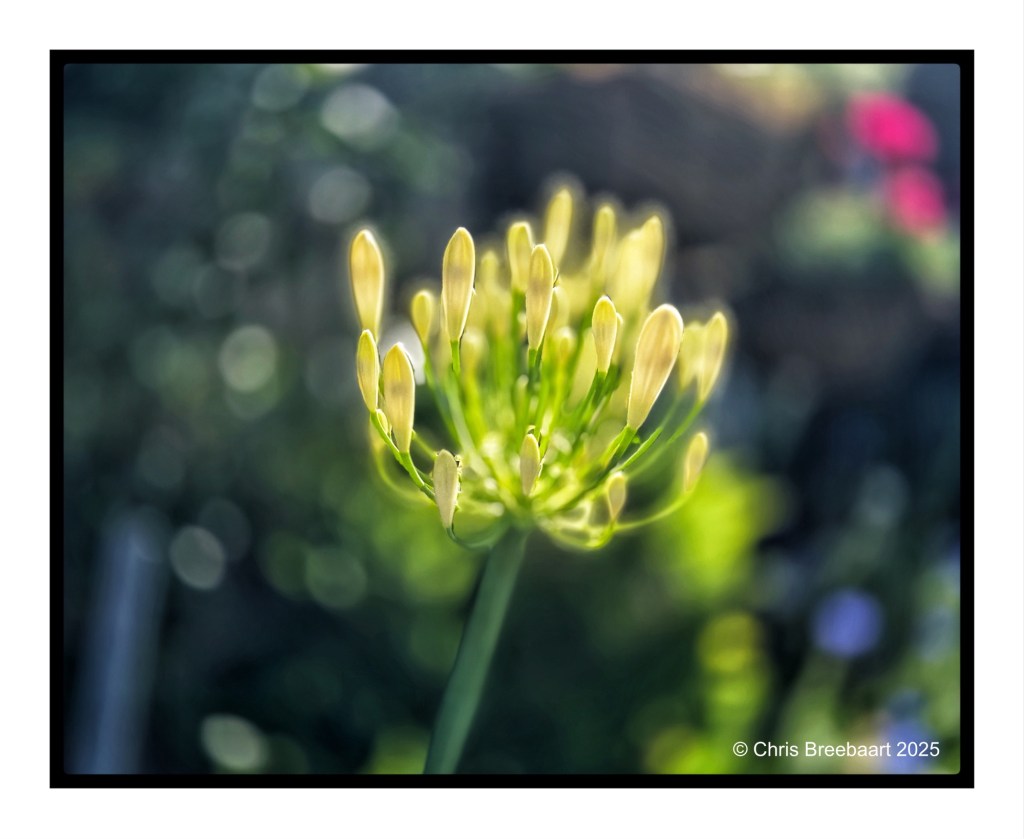
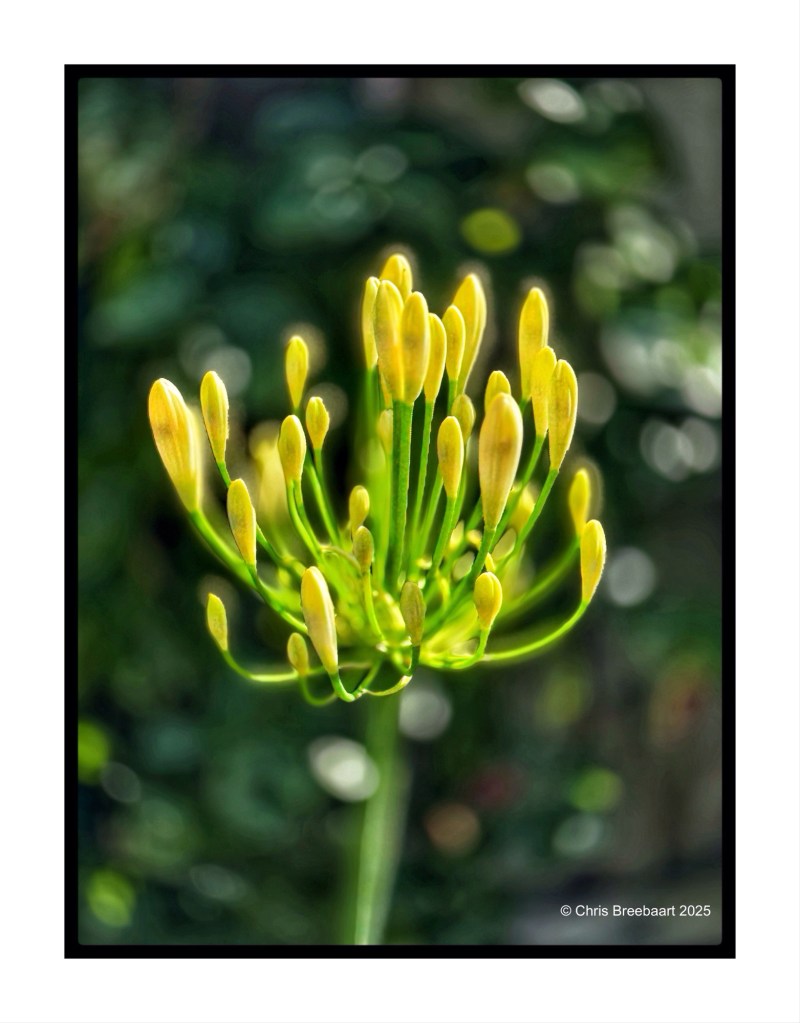
The garden is a joy now, flowers popping up everywhere. The Agapanthus are doing very well this year. They are the diva’s this time of year. This is a white agapanthus, tweaking it a bit with Snapseed turned it into yellow all of a sudden.
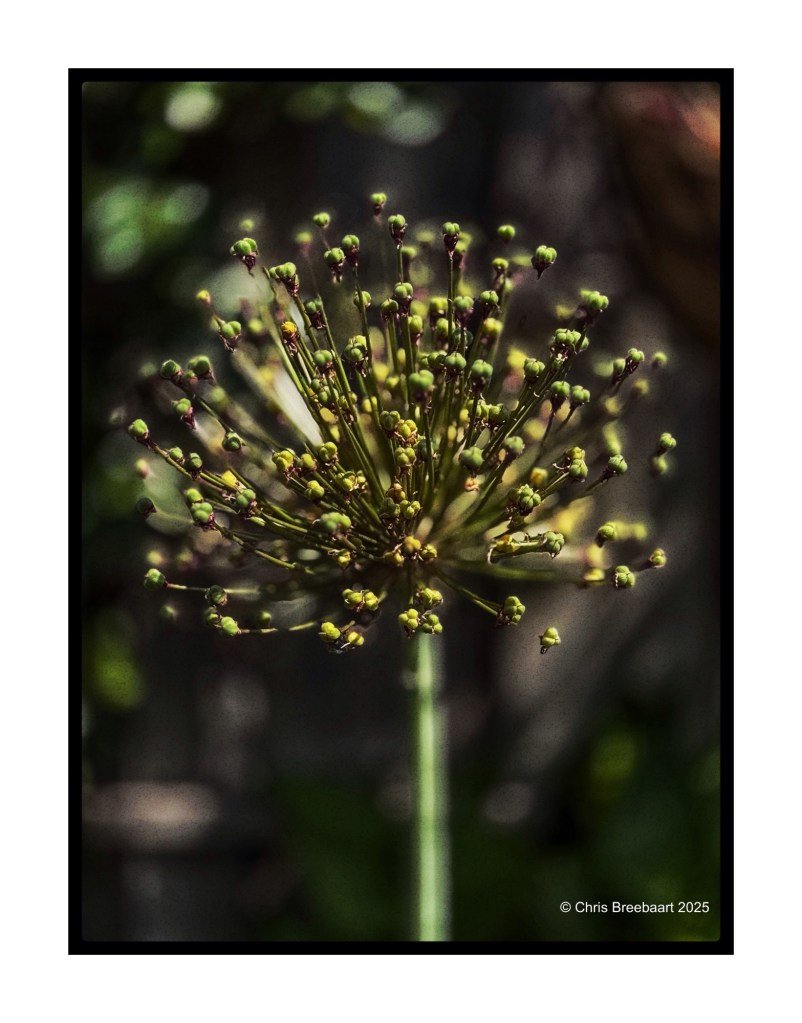
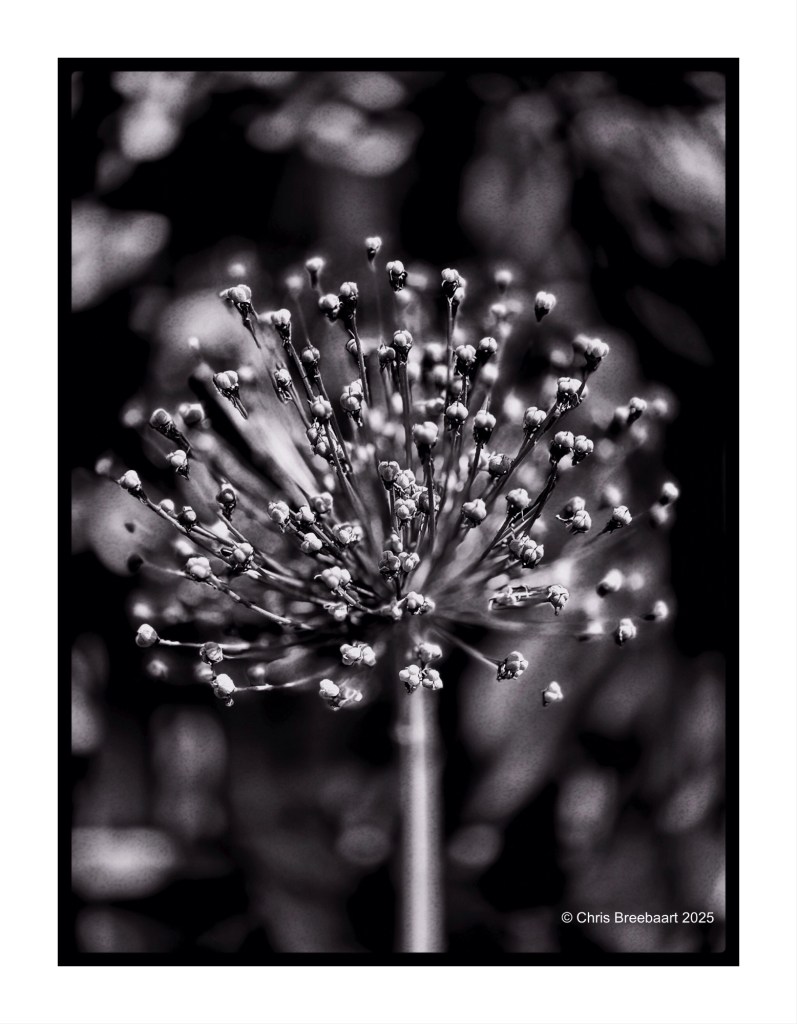
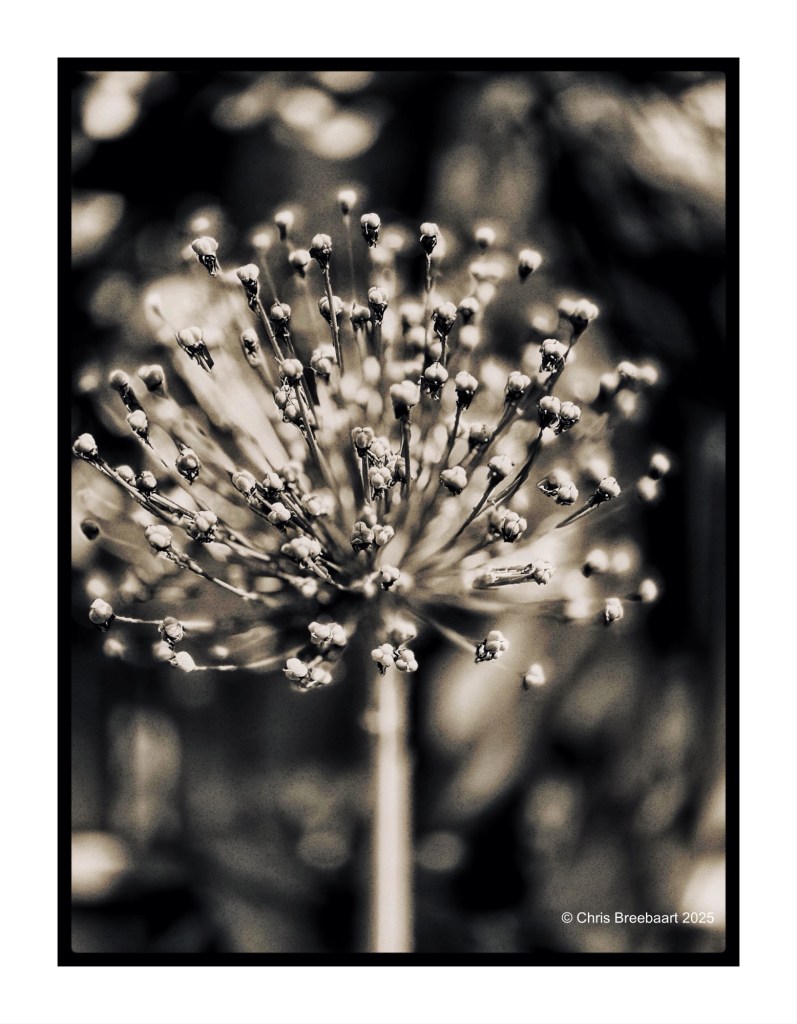
This is the last stage of the yearly cycle of a giant Allium. It comes in three photo versions after showing that amazing flower, that we enjoyed this year.
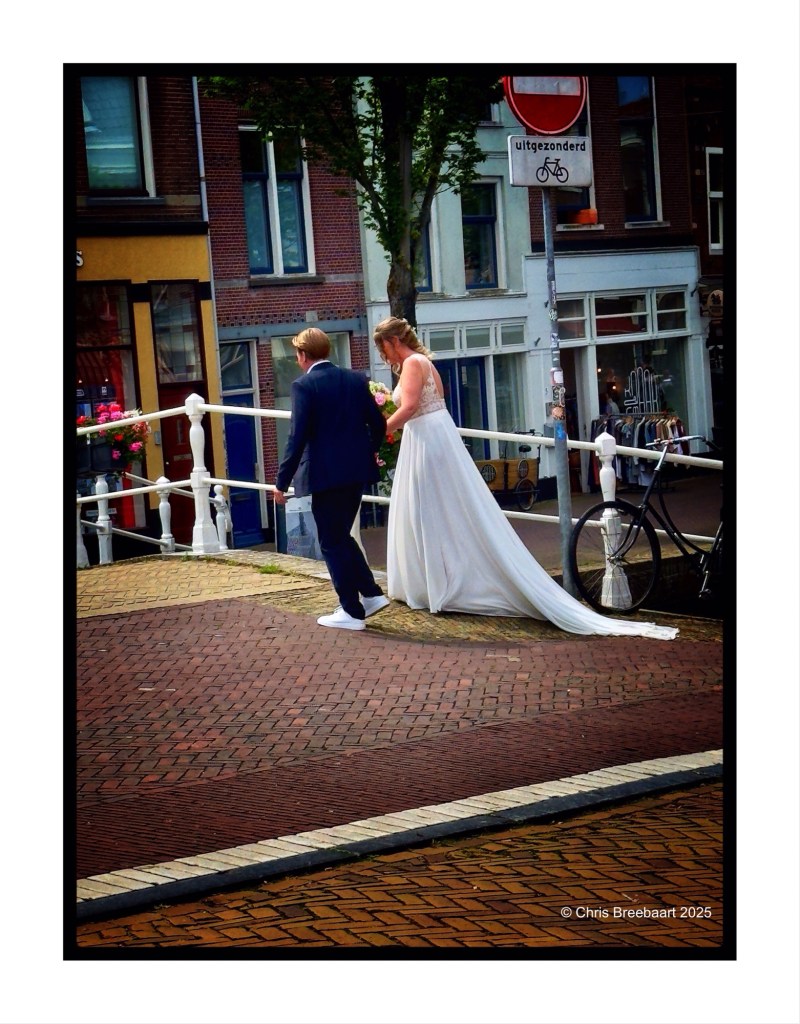
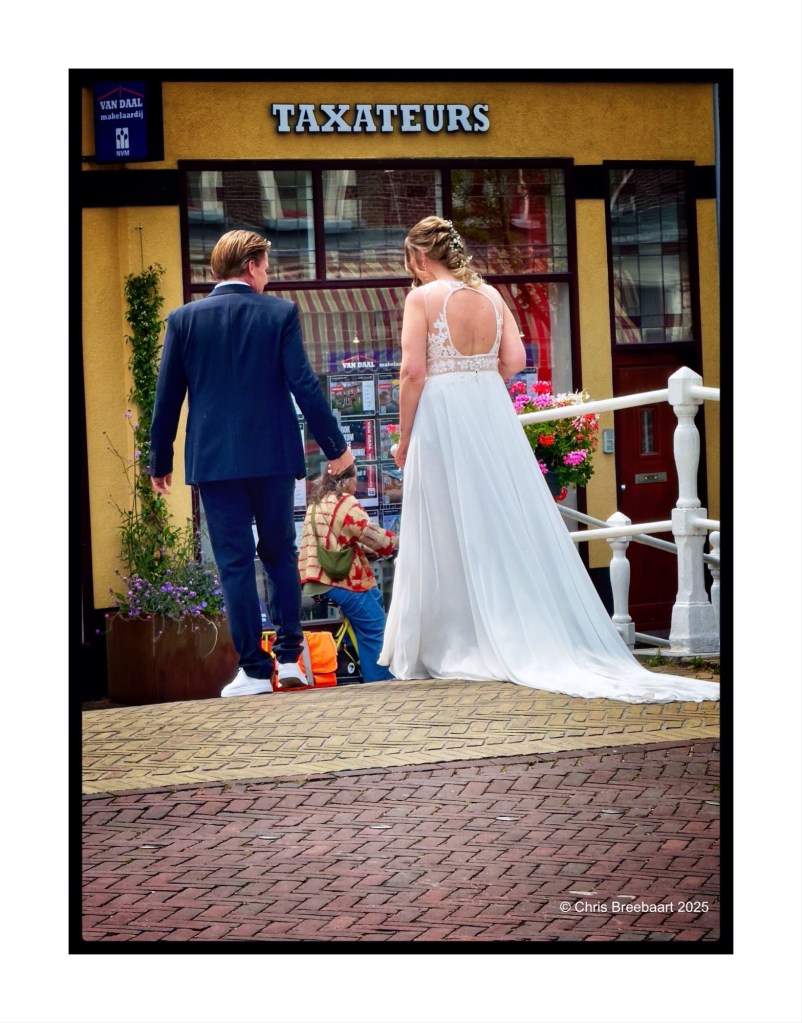
In the charming streets of Delft, a couple dressed as bride and groom had us questioning whether we’d stumbled upon a wedding or a spontaneous costume party. Either way, love was in the air, or at least some excellent snap photo ops!
Delft has a technical university with a long history in engineering and water management. The plan for Dutch coast defense implemented in the Delta Works originated here. Deltares is a major technological institute for research focusing on water management.










 What's (in) the Picture?