Den Haag Haagse Poort
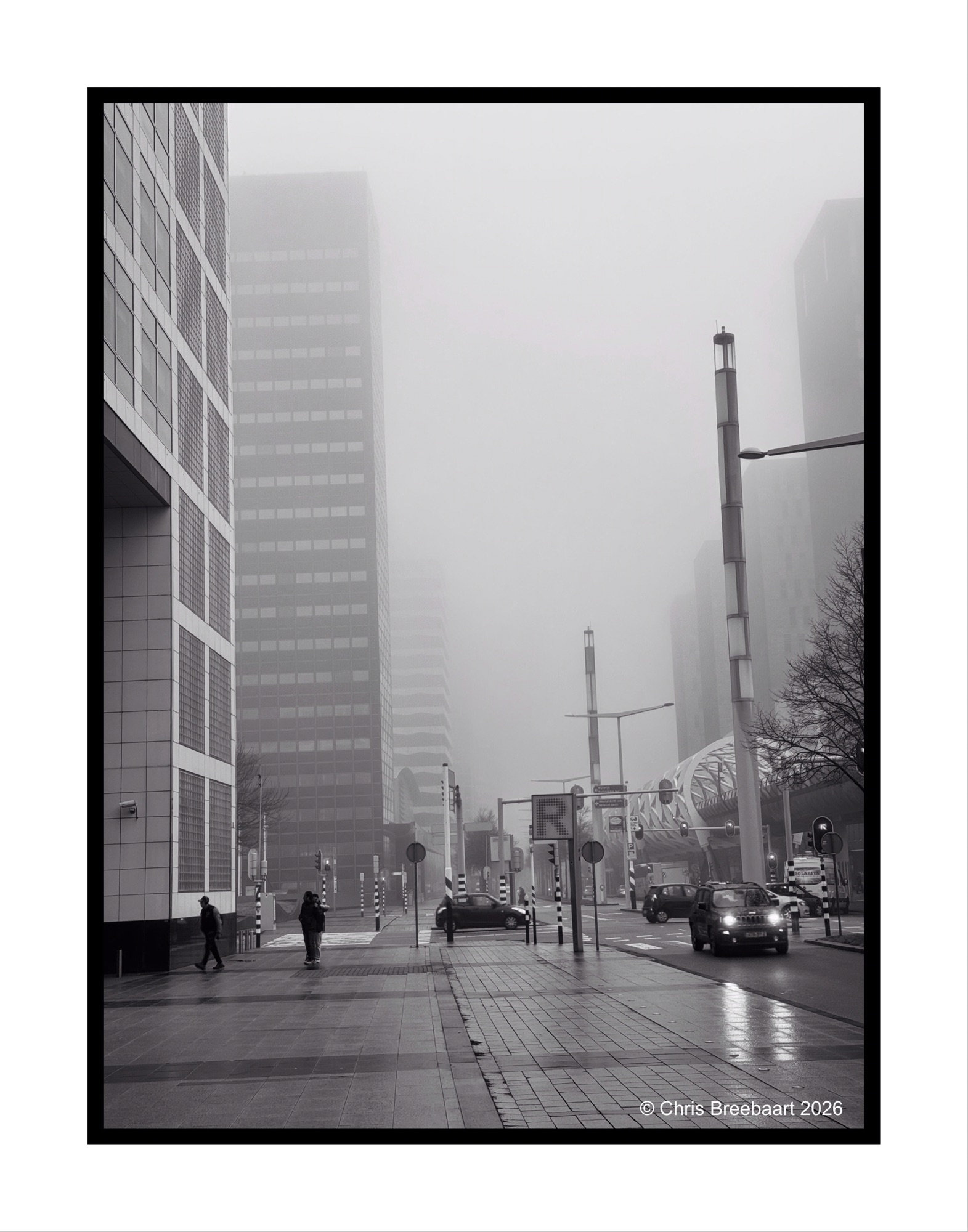
Den Haag Haagse Poort on a day with fog. Just a mono.
Shot with iPhone 15 Pro Max edited using Snapseedand Marksta. Click the picture for a larger version.
Den Haag Haagse Poort on a day with fog. Just a mono.
Shot with iPhone 15 Pro Max edited using Snapseedand Marksta. Click the picture for a larger version.
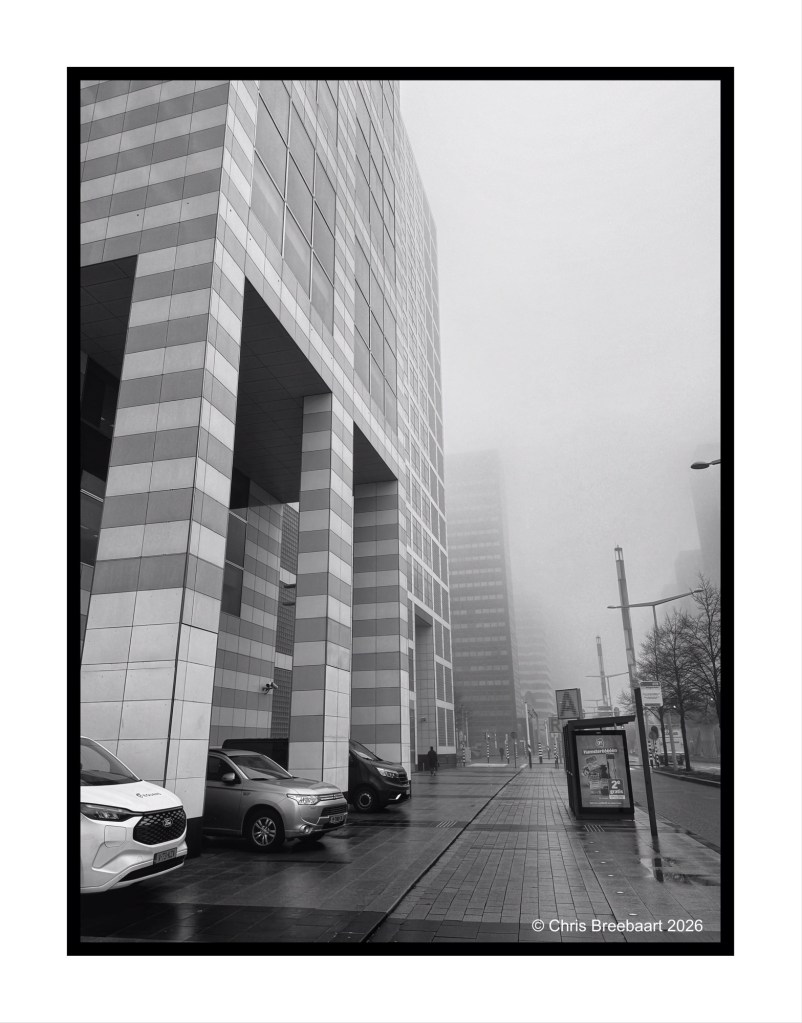
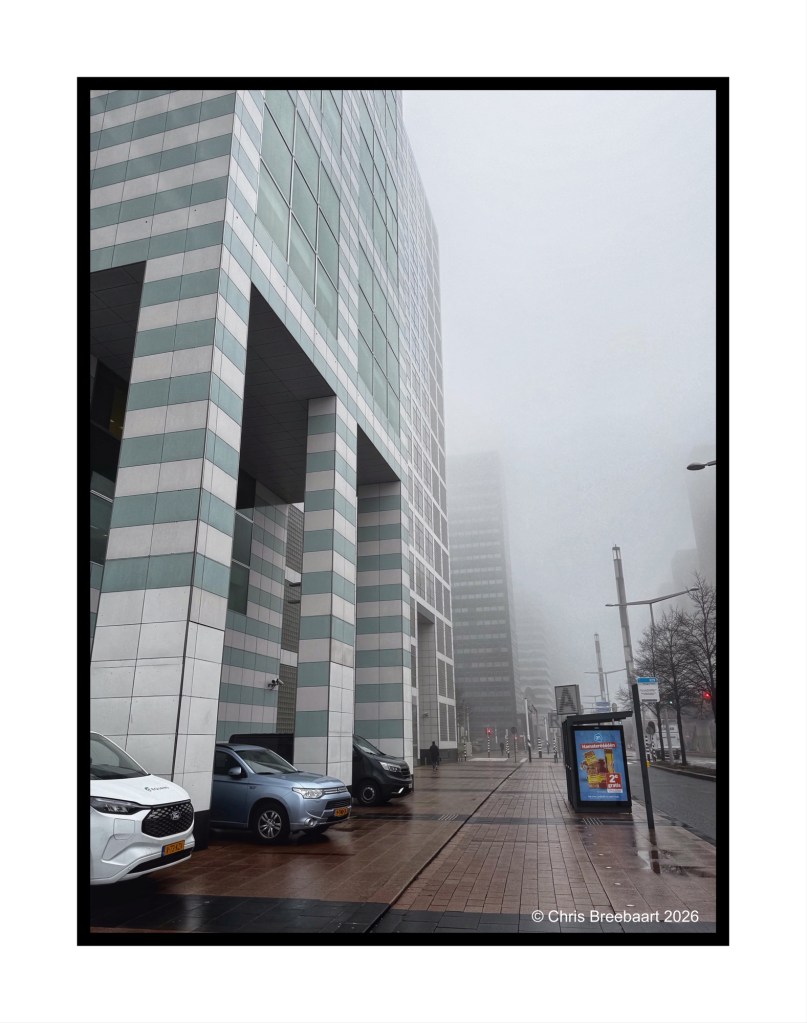
It is quite a simple question to ask. Do you prefer the monochrome version or the colored version of a photo?
I grew up with monochrome. Because it was cheaper. That applied to films as well as darkroom costs.
The mono version emphasizes the background and atmosphere. The colored version is high lighting the front of the frame.
But in the end, as the famous nr. 14 Johan Cruyff said: every advantage has its disadvantages. And the choice is as always subjective.
Shot with iPhone 15 Pro Max edited using Snapseedand Marksta. Click the picture for a larger version.
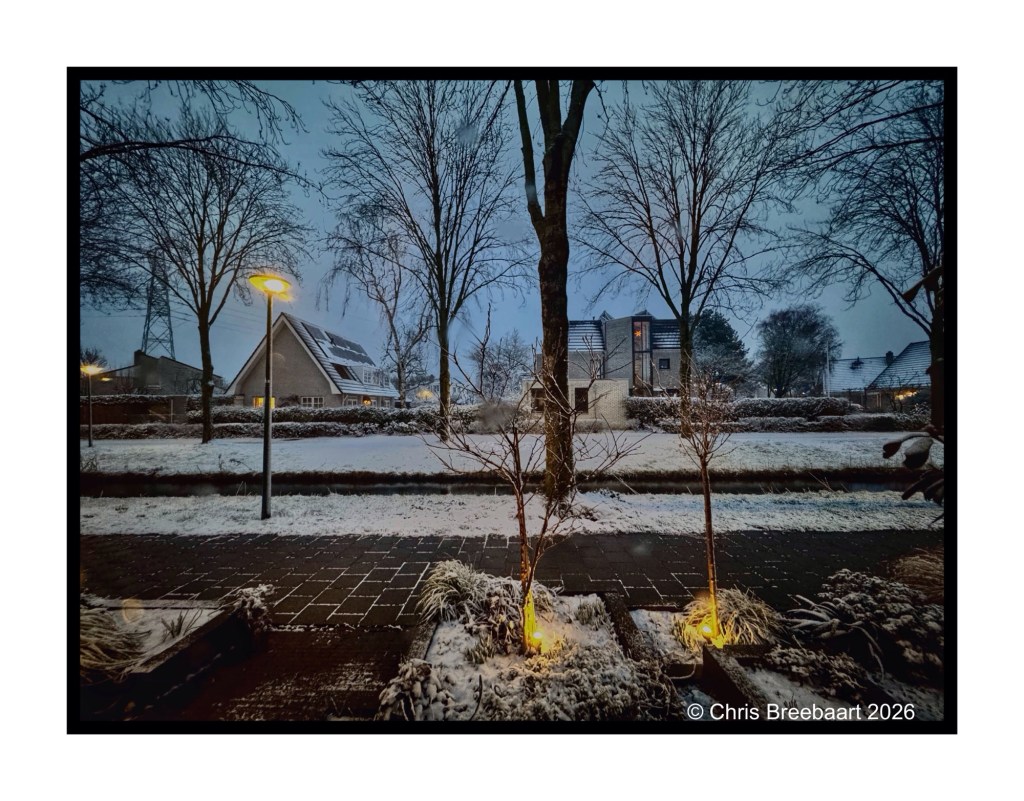
The last of snow – so far – this Winter. Just a little cover at the start of the evening.
Shot with iPhone 15 Pro Max edited using Snapseed and Marksta. Click the picture for a larger version.
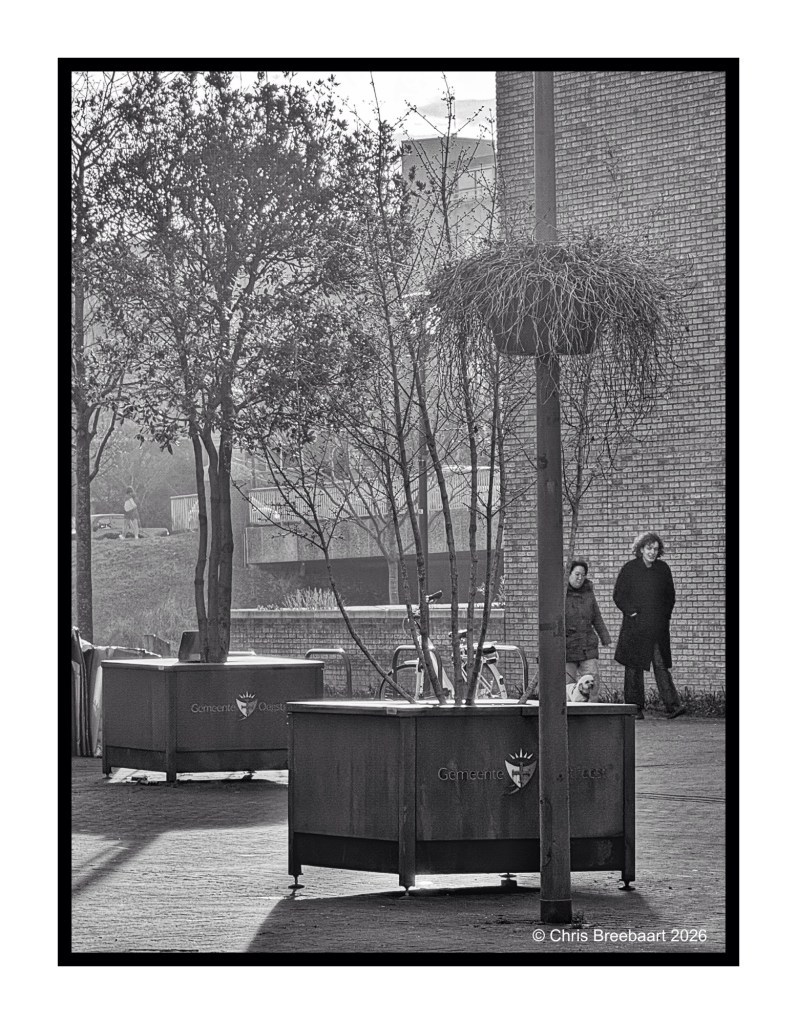
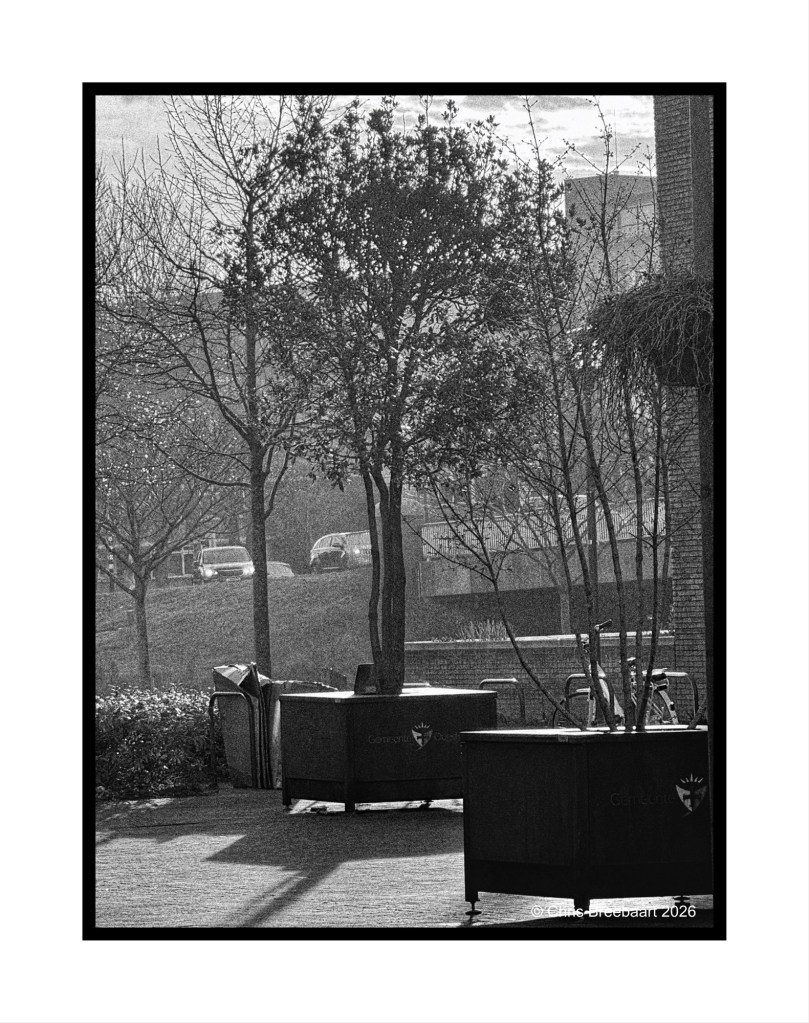
LAPC #386 invites to use the power of juxtaposition. I give the brief a bit more room for experiment, and put two pictures next to another. They both have a narrative of their own. It is basically the same subject (trees) but framed in a different way.
Shot with iPhone 15 Pro Max edited using Snapseed and Marksta. Click the picture for a larger version.
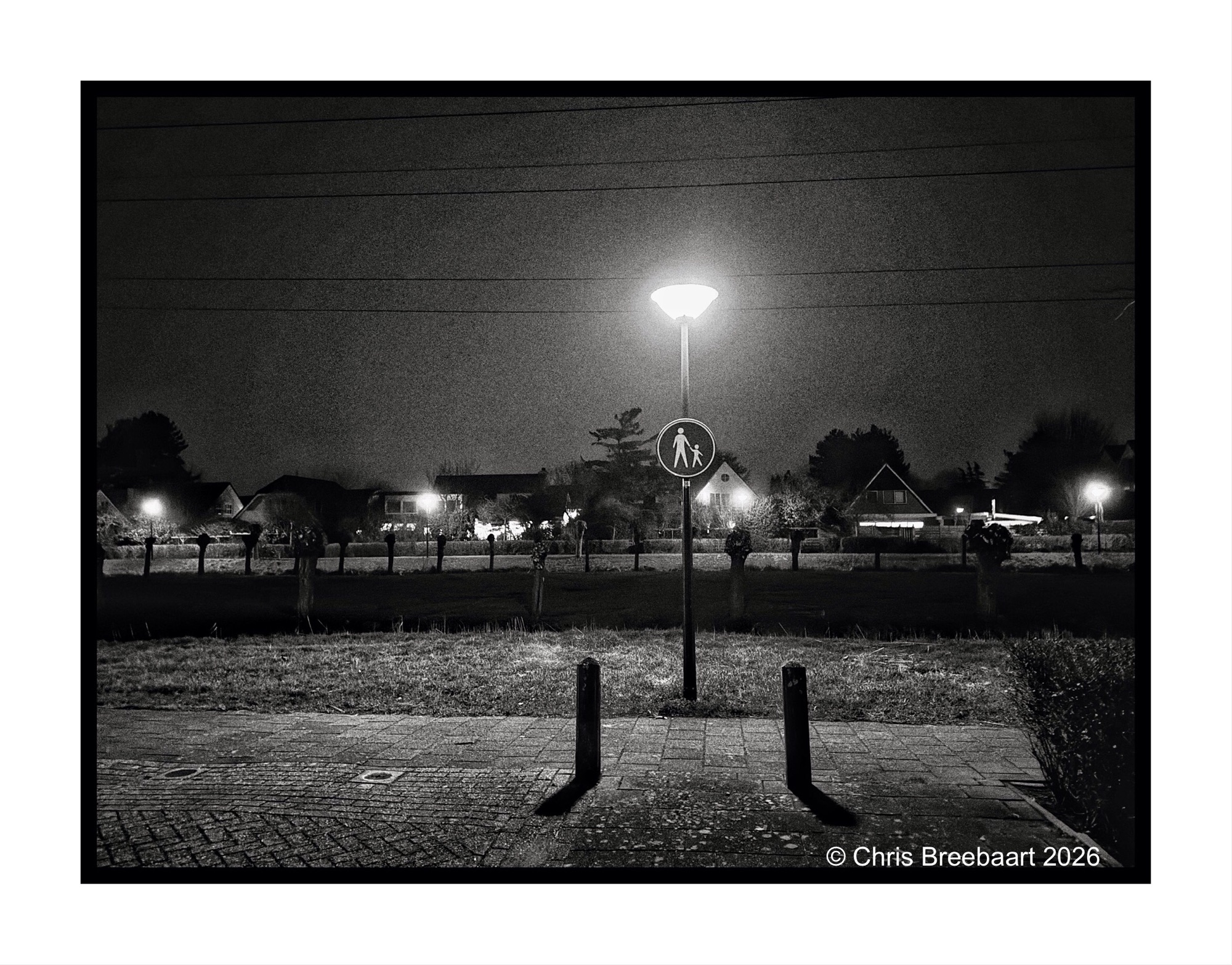
LAPC #386 invites to use the power of juxtaposition. Basically put two objects in a frame to create a narrative or reaction about their relation. A street lamp and two poles.
Shot with iPhone 15 Pro Max edited using Snapseed and Marksta. Click the picture for a larger version.
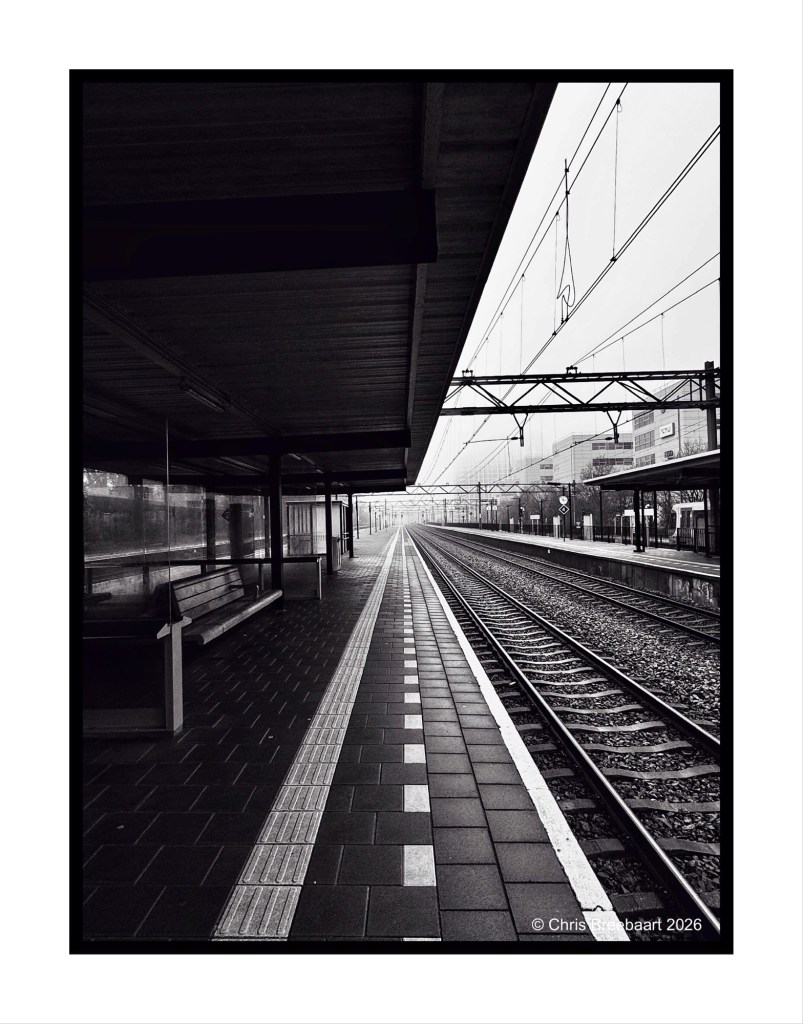
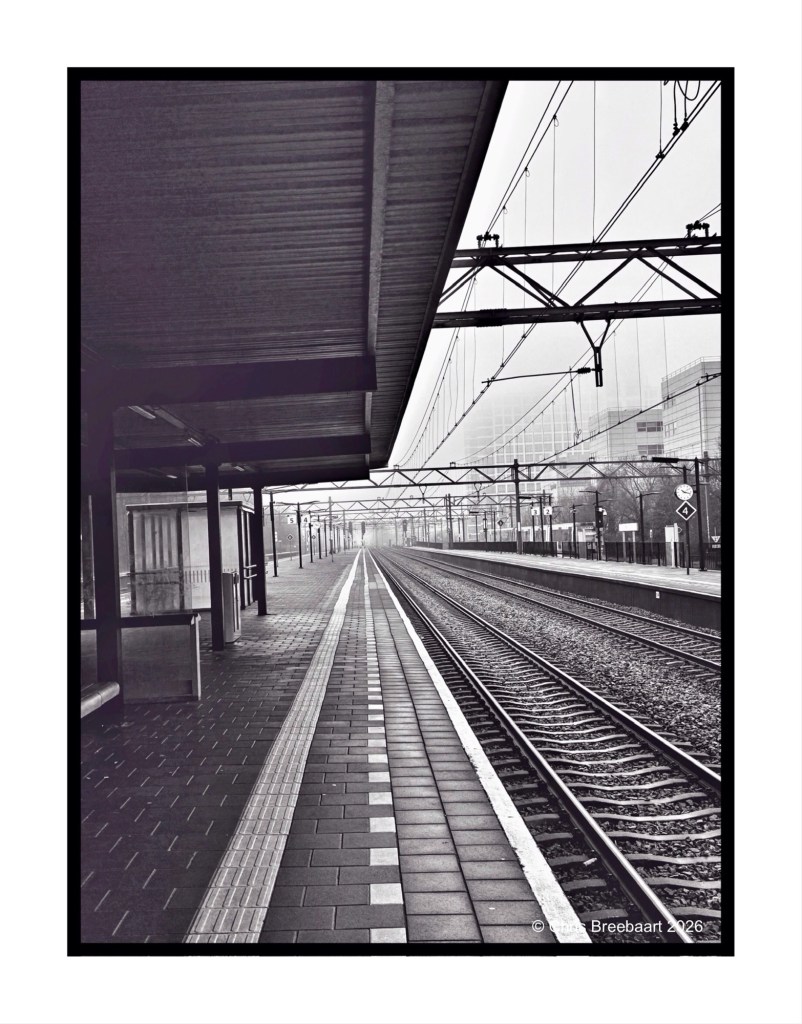
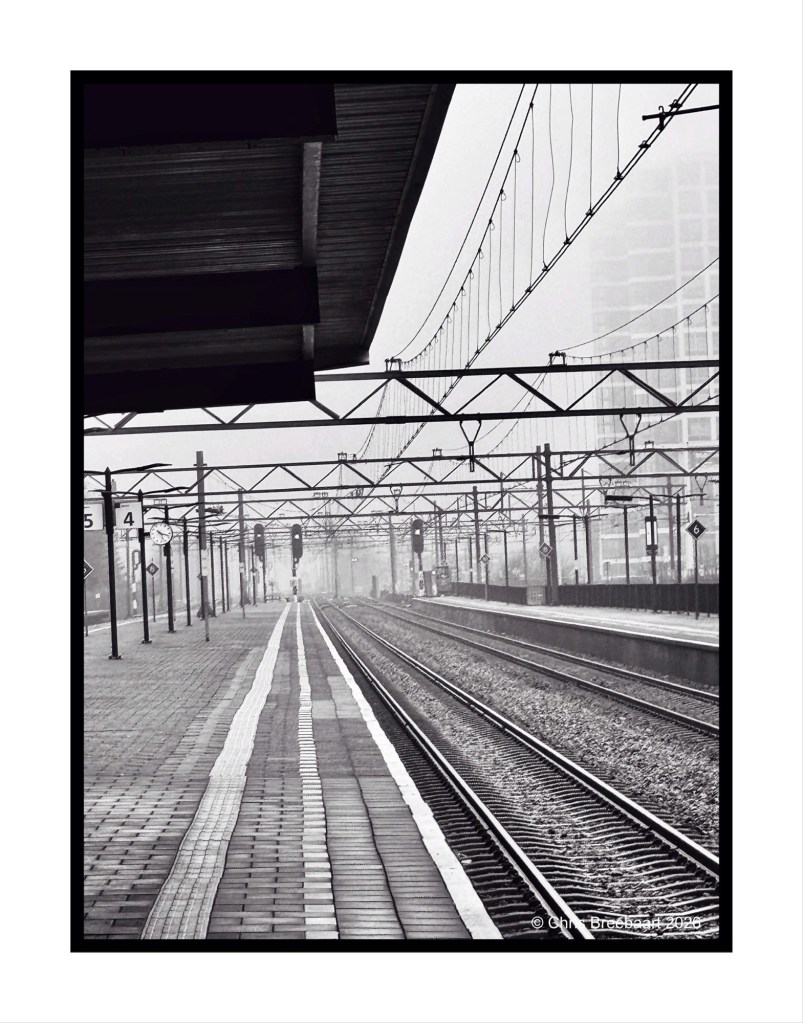
The LAPC theme #385 is ‘unusual crop’. Station Den Haag – Laan van Nieuw Oost-Indië (that is a throat breaker for most of you non-Dutch speakers). Tracking the tracks.
Shot with iPhone 15 Pro Max edited using Snapseed and Marksta. Click the picture for a larger version.
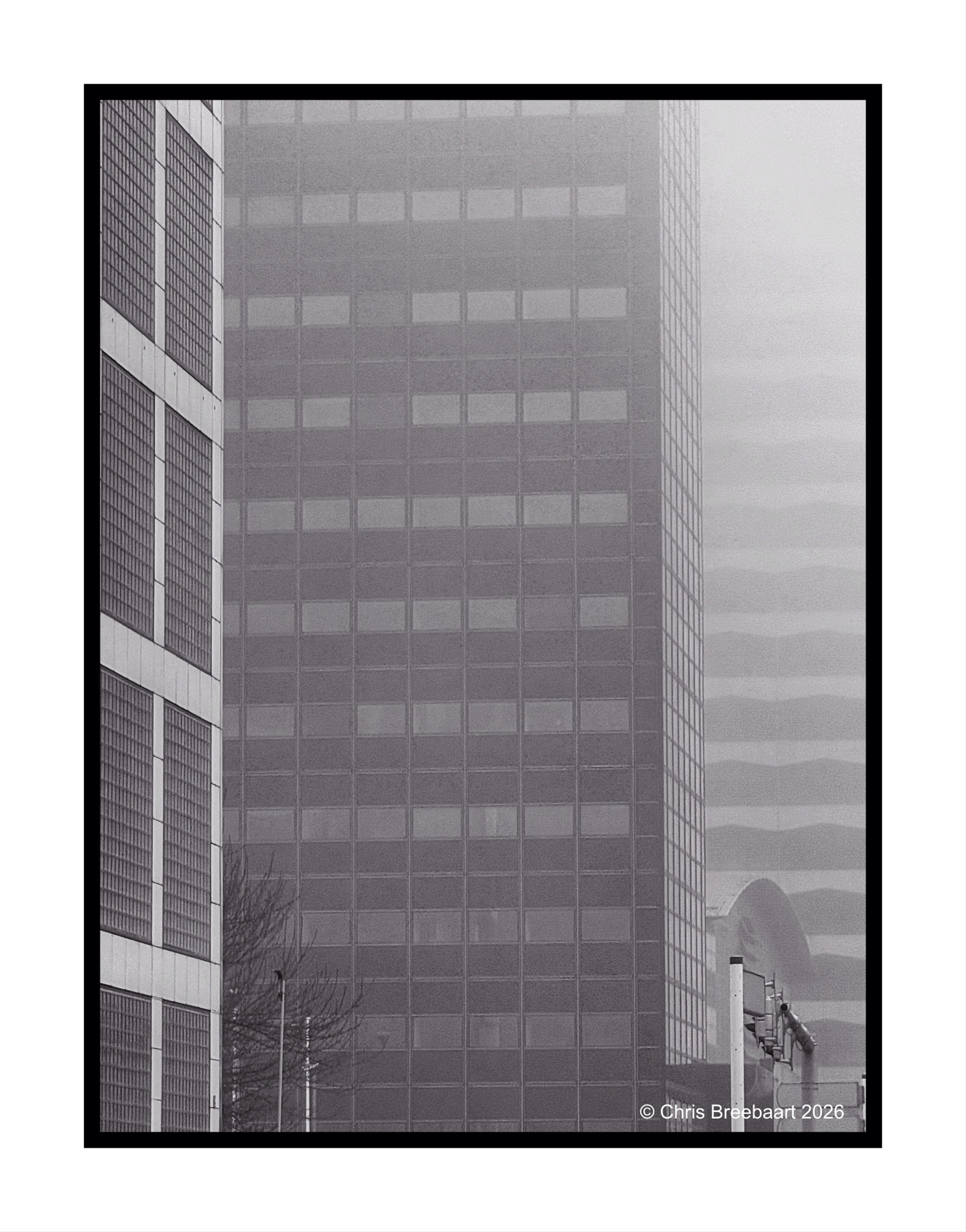
The LAPC theme #385 is ‘unusual crop’. This one was cropped/framed by zoom on the iPhone while shooting.
Shot with iPhone 15 Pro Max edited using Snapseed and Marksta. Click the picture for a larger version.
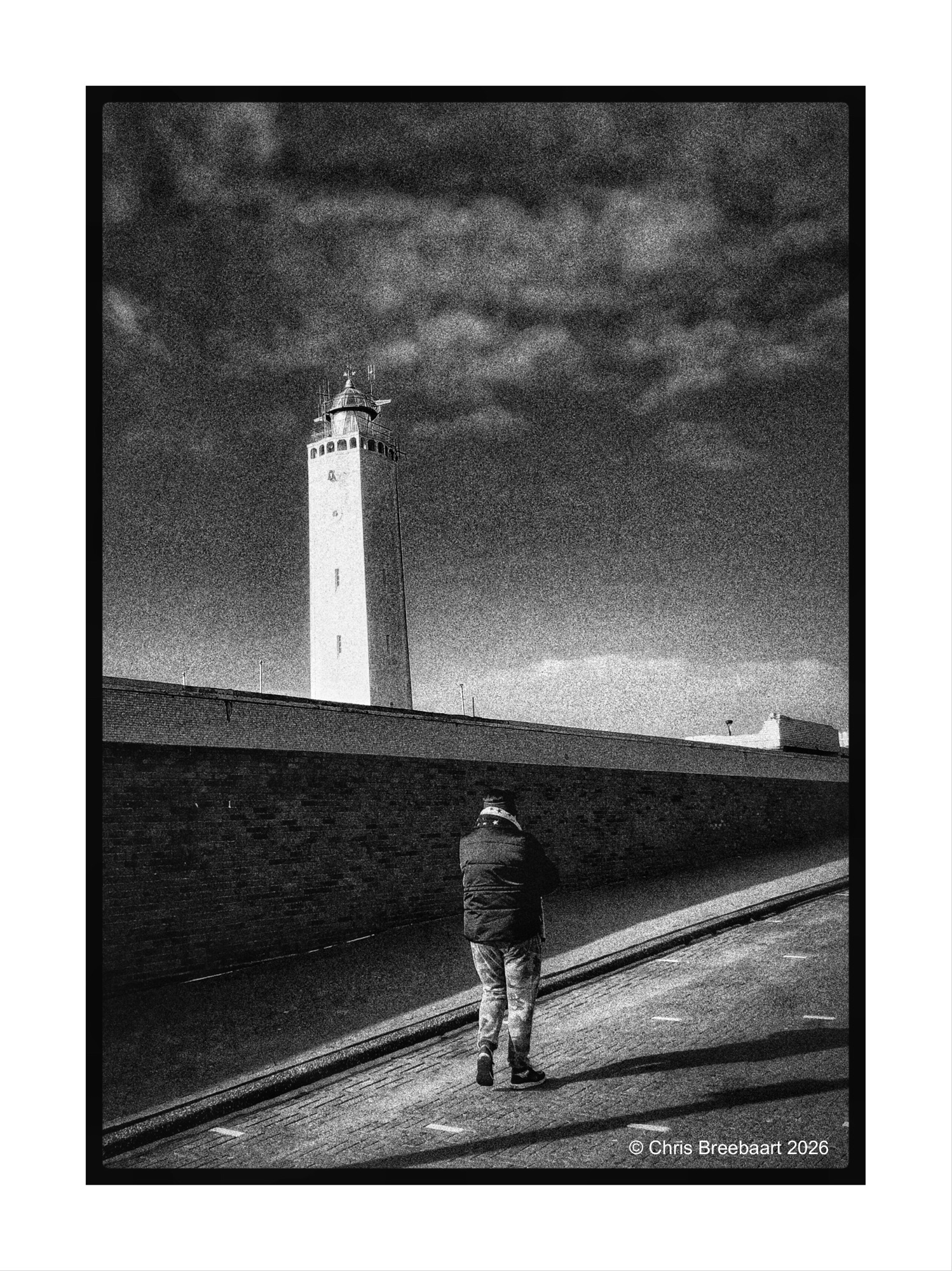
The LAPC theme #385 is ‘unusual crop’. It is about cropping (re-framing an existing image) for effect. I used an old photo from March 2018 to play with for this theme. I cropped it to get rid of some elements that I kept in the original shot. This theme makes me think about how I shoot and the principles I learned in the past.
I am not sure I fully understand the essence of the brief. I only understand it if I take it literally: how it is unusual for me to use cropping while editing. Let me try to explain. Cropping afterwards is to re-frame a shot. My aim is to frame a desired photo at the shoot on the camera. That is a principal I learned long ago. Modern technology helps. You can see the result of a shot right away on the camera. And zoom lenses give you the flexibility to decide about the framing. Long ago, all I shot was on a 50 mm lens on film. Then sometimes I deliberately shot to ‘crop’ the result. E.g. when I was unable to get close enough. In the darkroom, you enlarged the picture (blow up), and then decided the result of the frame. Nevertheless, this often resulted in a loss of quality (grain, sharpness). So I learned to frame from the start, long ago.
But even in those analogue days, blowing up negatives was creative, it added to the texture of a photo. Nowadays it is easier to be playful using better technology. Camera’s, phones, software, monitors, computers all contribute to more agility in the editing process.
I am curious about the perspective of other ‘old school’ photographers. The ones who used film and a darkroom in the past before the digital age. How do they view this challenge?
Shot with iPhone 6s plus edited using Snapseed and Marksta Click the picture for a larger version.
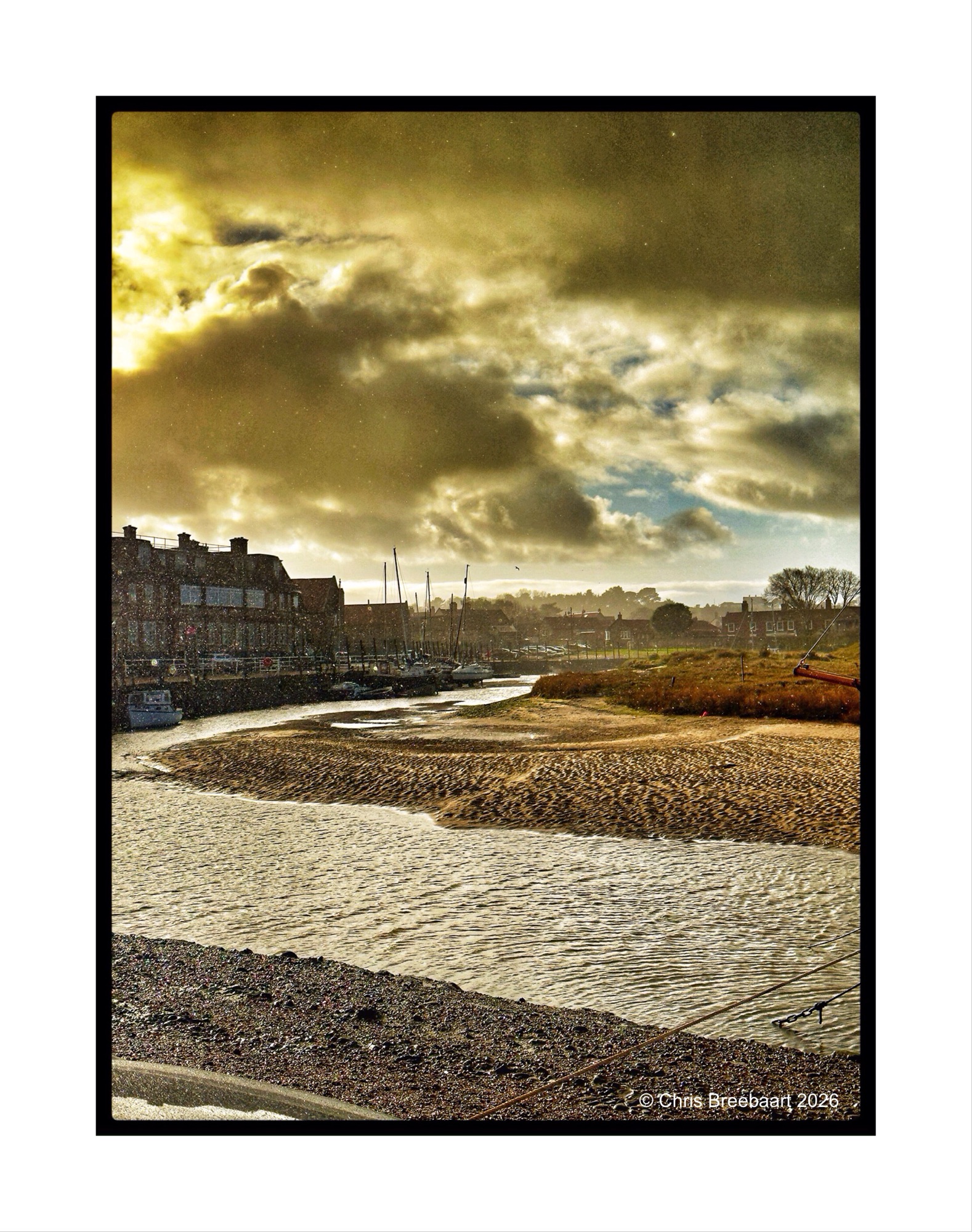
Lens-Artist’s Photo Challenge #383 is ‘patterns and designs’. A Winter rain shower over the quaside of Blakeney.
Shot with Nikon Zf, edited using Snapseed and Marksta. Click the picture for a larger version
Lens-artists Photo Challenge #382 is about rejected photos. What do you do with photos you do not like? You can throw them away, or you can keep them. And if you keep them what can you do with them? First a story of myself, how I work. And in the end an example.
I am a snap shooter for a long time. When looking at this question for myself, I have to distinguish between the analog age and the digital age. But in both ages it is about quality, how you can assess that and what instruments are available after shooting. And above all: how can you be creative, and how much room is there to experiment?
The analog age was expensive: film was expensive, darkroom materials were expensive too. And being a poor student I shot as efficient as possible. You had to be patient while shooting, and selective. You also needed to trust your skills. Experience was essential to figure out what worked and what not. To produce good prints you needed to develop darkroom skills. And some negatives were impossible to print. But you kept them all. I never threw away negatives. That decision was beneficial in the digital age. After scanning my negatives, I properly made them look like what I had in mind when shooting them. What the darkroom did not deliver, software did.
In the digital age the cost of a photo is nearly non existent. The original photo (the former negative) can be copied lots of times. From the start technology offers instruments to oversee the quality of the photos. What you shoot is instantly visible on the camera. You can try different changes in the photo. Adjustments like shutter time, focus, and shutter opening can be tested most of the time. The RAW format offers flexibility for editing the ‘negative’ after the shoot. Software offers lots of creative tools to change the photo, or create new images.
So, do you keep rejected (bad) photos or not? I do reject photos, overseeing the result on my camera. I keep photos that can come to a good result after editing. The rest I remove straight away (e.g. bracketing shots).What I keep is stored on my NAS, where I use Lightroom as my archiving tool. I use editing tools to tweak a photo slightly. My favorite is Snapseed for web and social media publication. And Lightroom and Photoshop for prints.
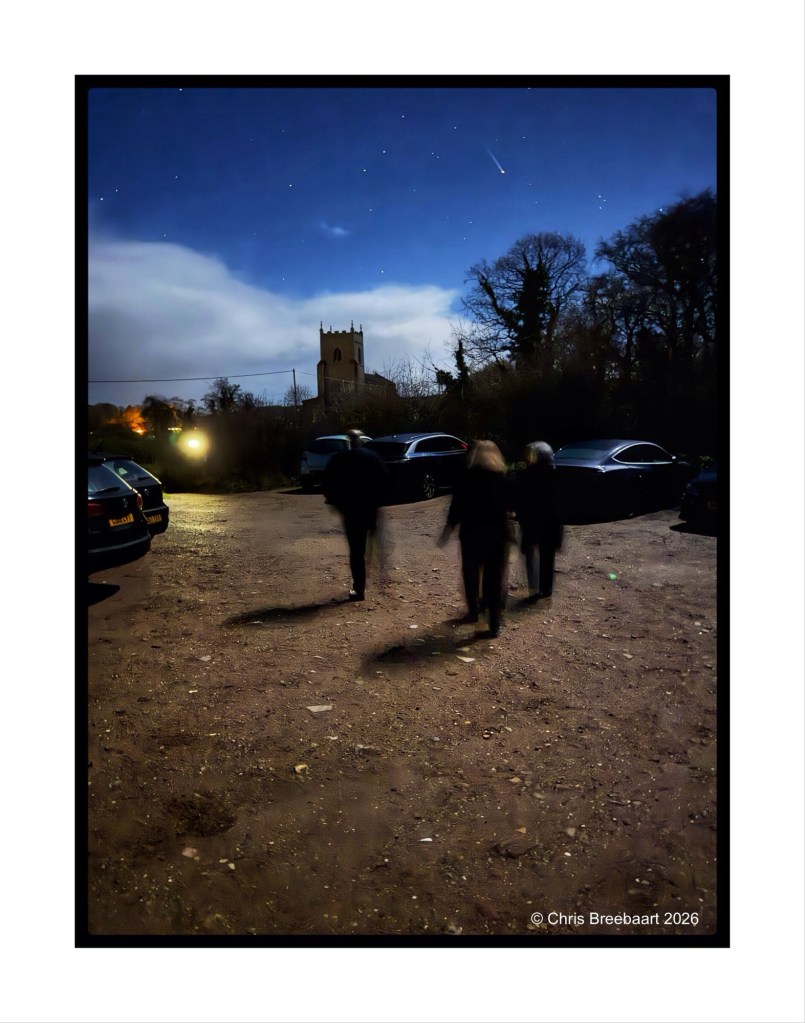
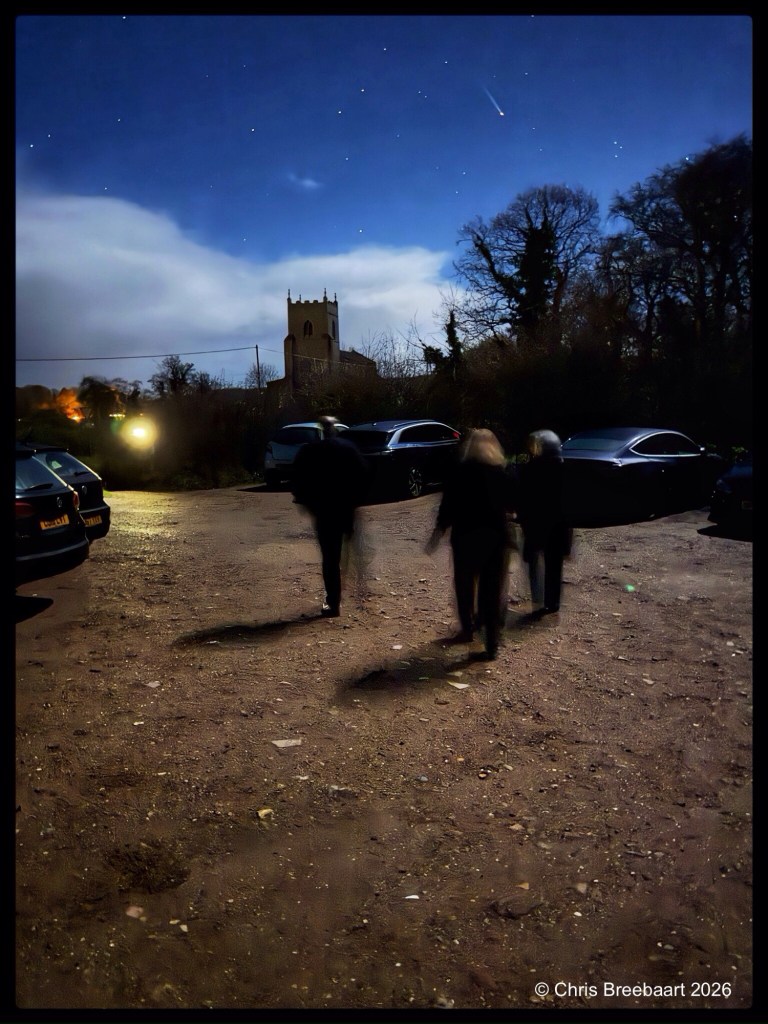
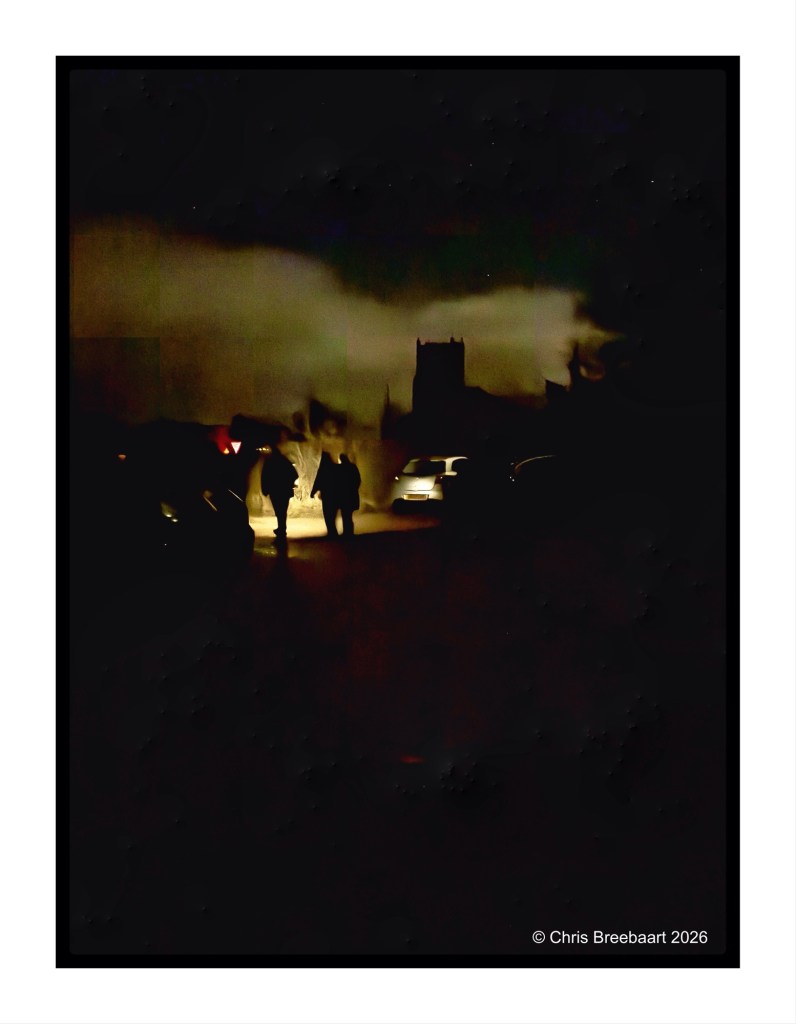
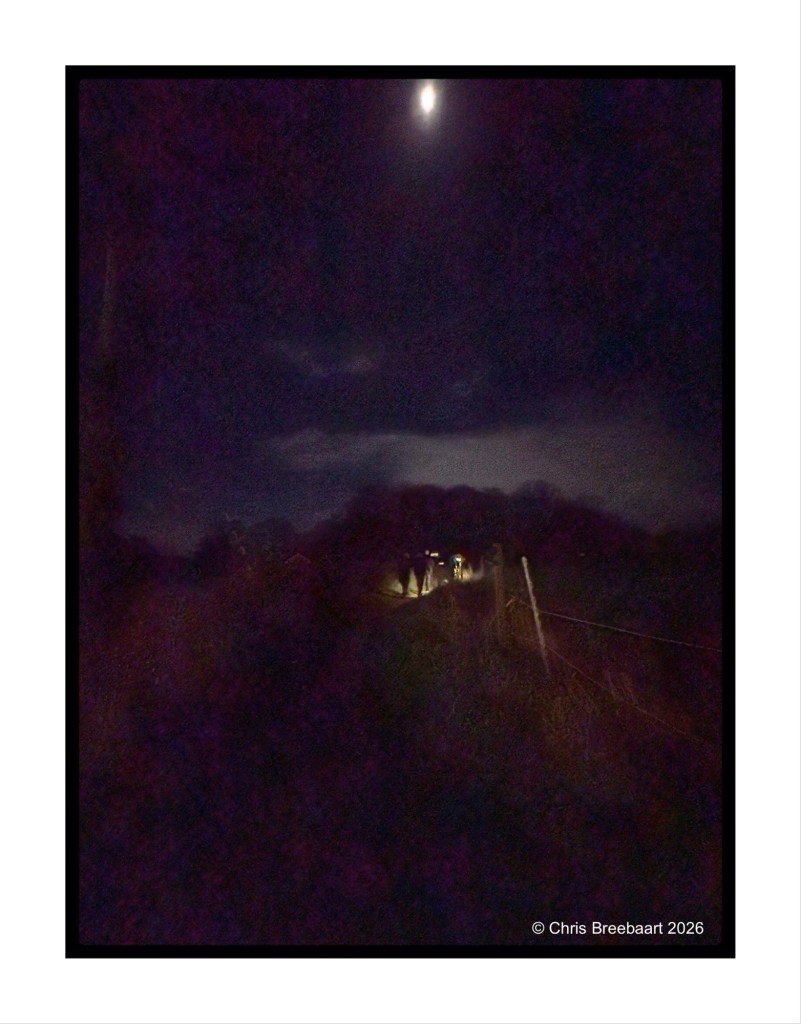
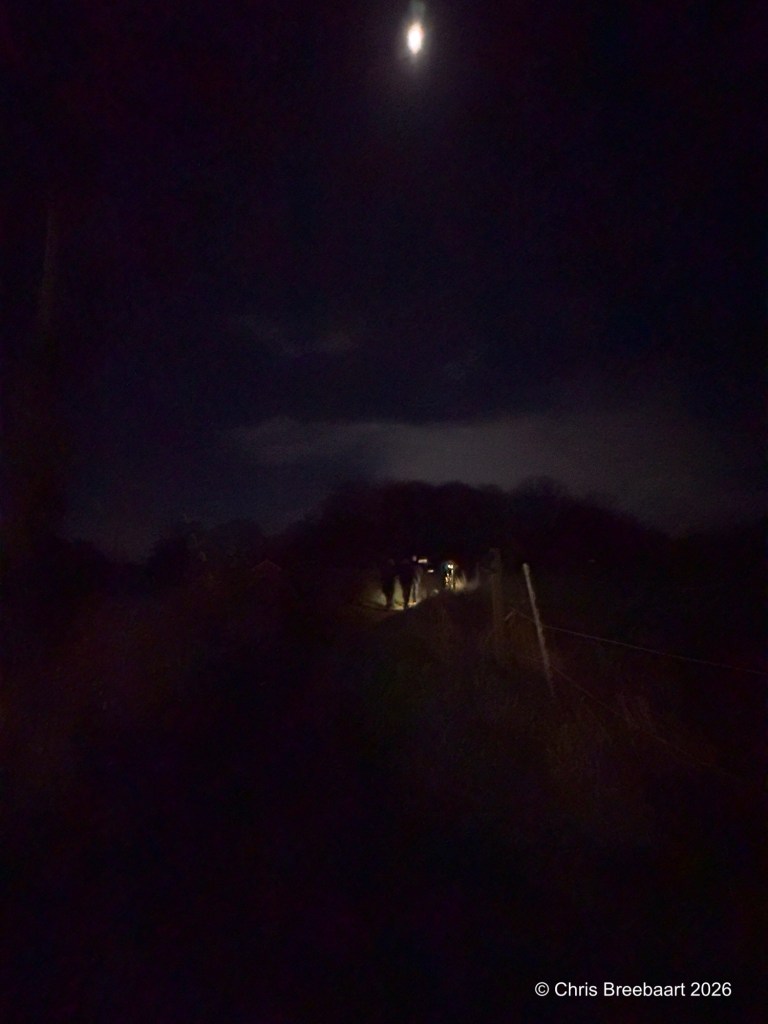
The digital age is a time for unlimited creativity. The photos of ‘dinner at Wiveton Bell’ are an example of testing out the iPhone in a very dark situation. I shot about 8 frames, I kept them all but had my doubts. At home I worked them in Lightroom and Snapseed. And was surprised by what came out. And the ones that did not work were indeed deleted.
On the left the photo published and on the right the original RAW file.
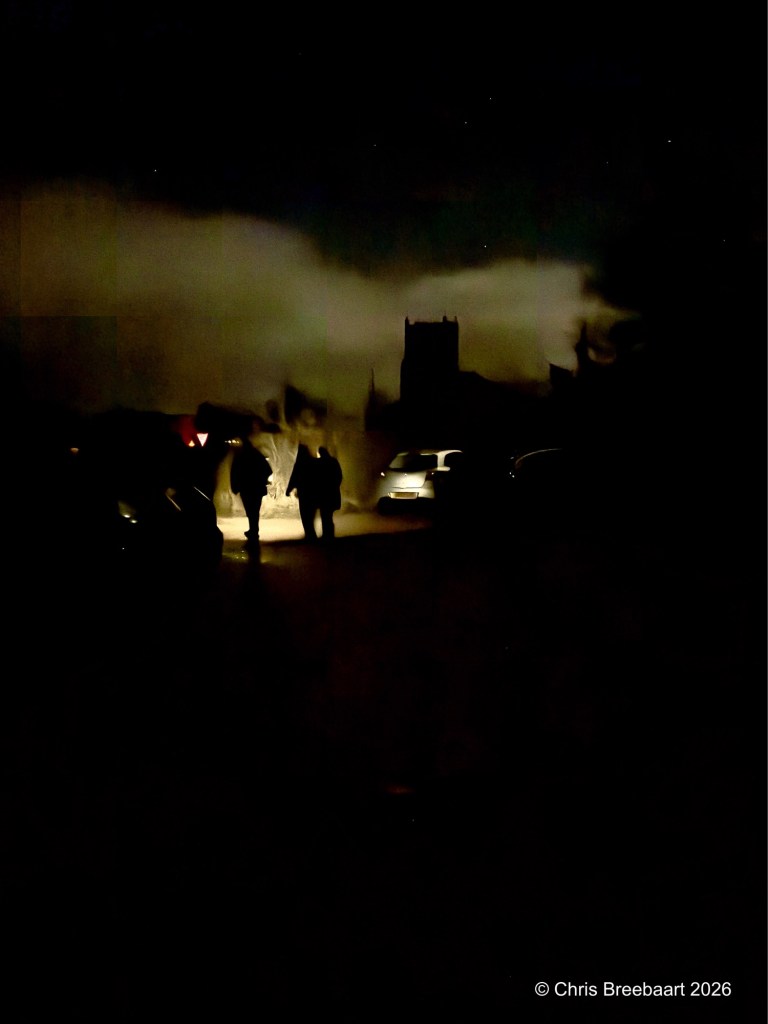
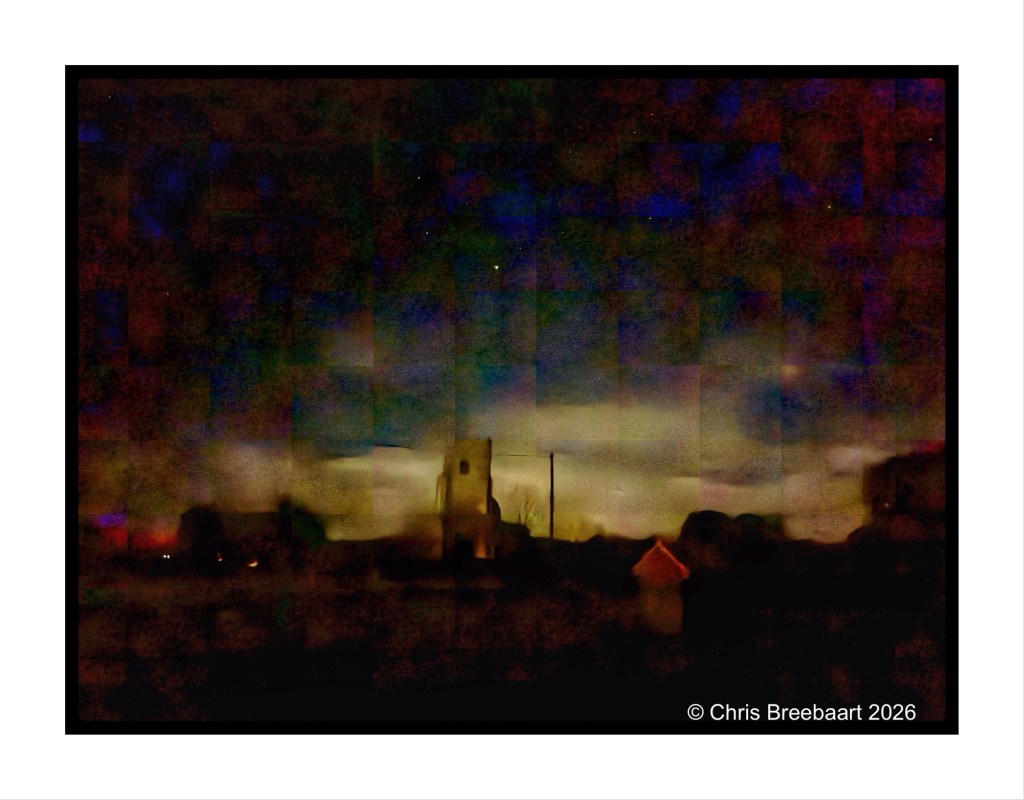
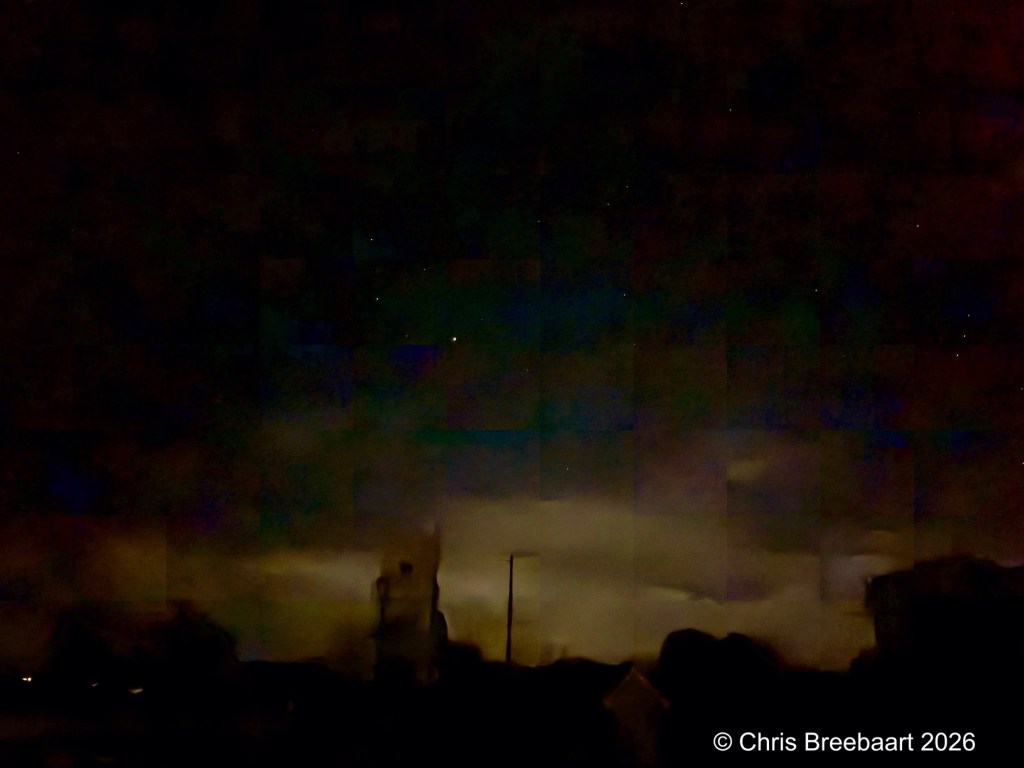
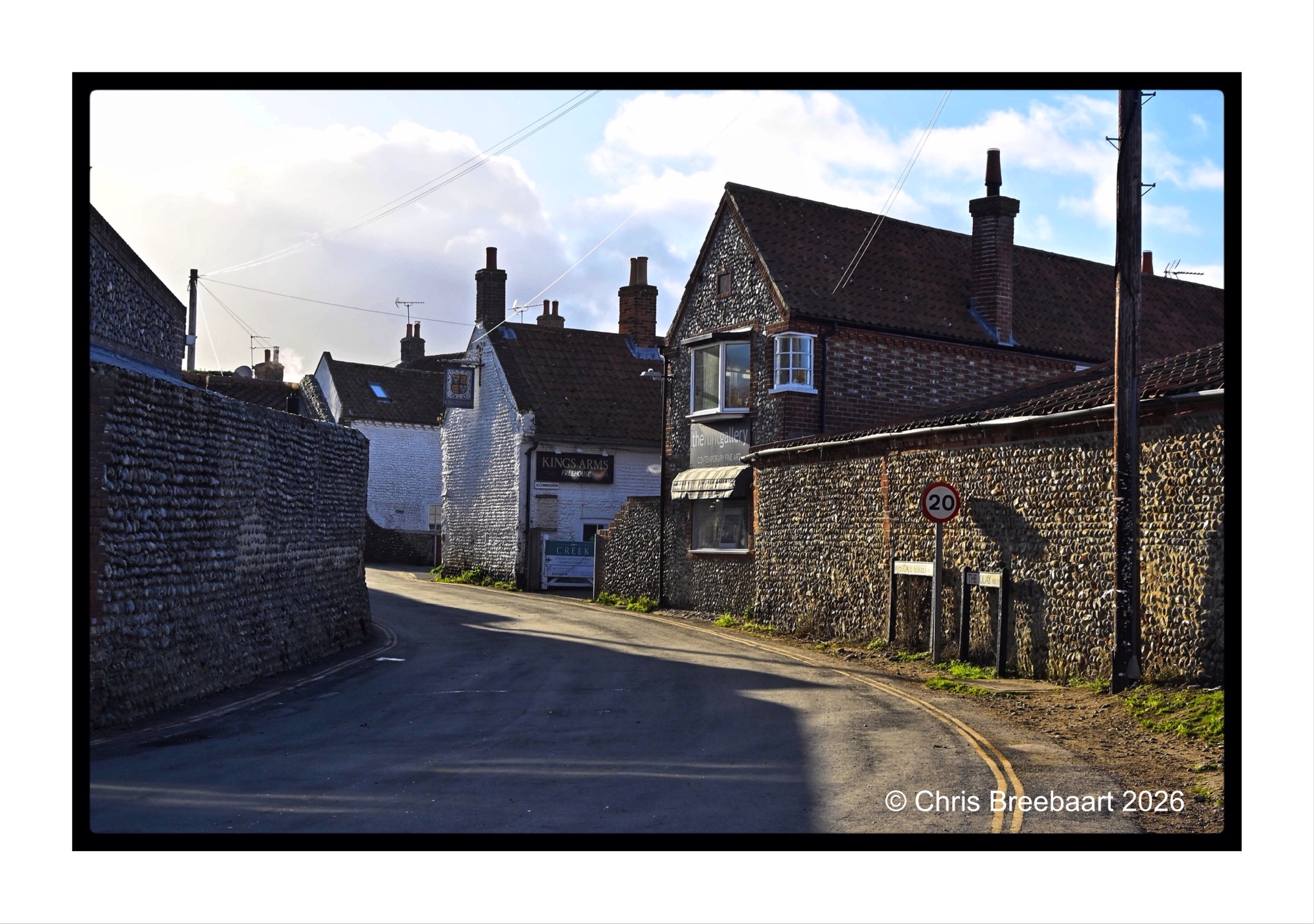
Westgate Street in Blakeney, the access to the Quay at the seafront.
Shot with Nikon Zf,edited using Snapseed and Marksta. Click the picture for a larger version.
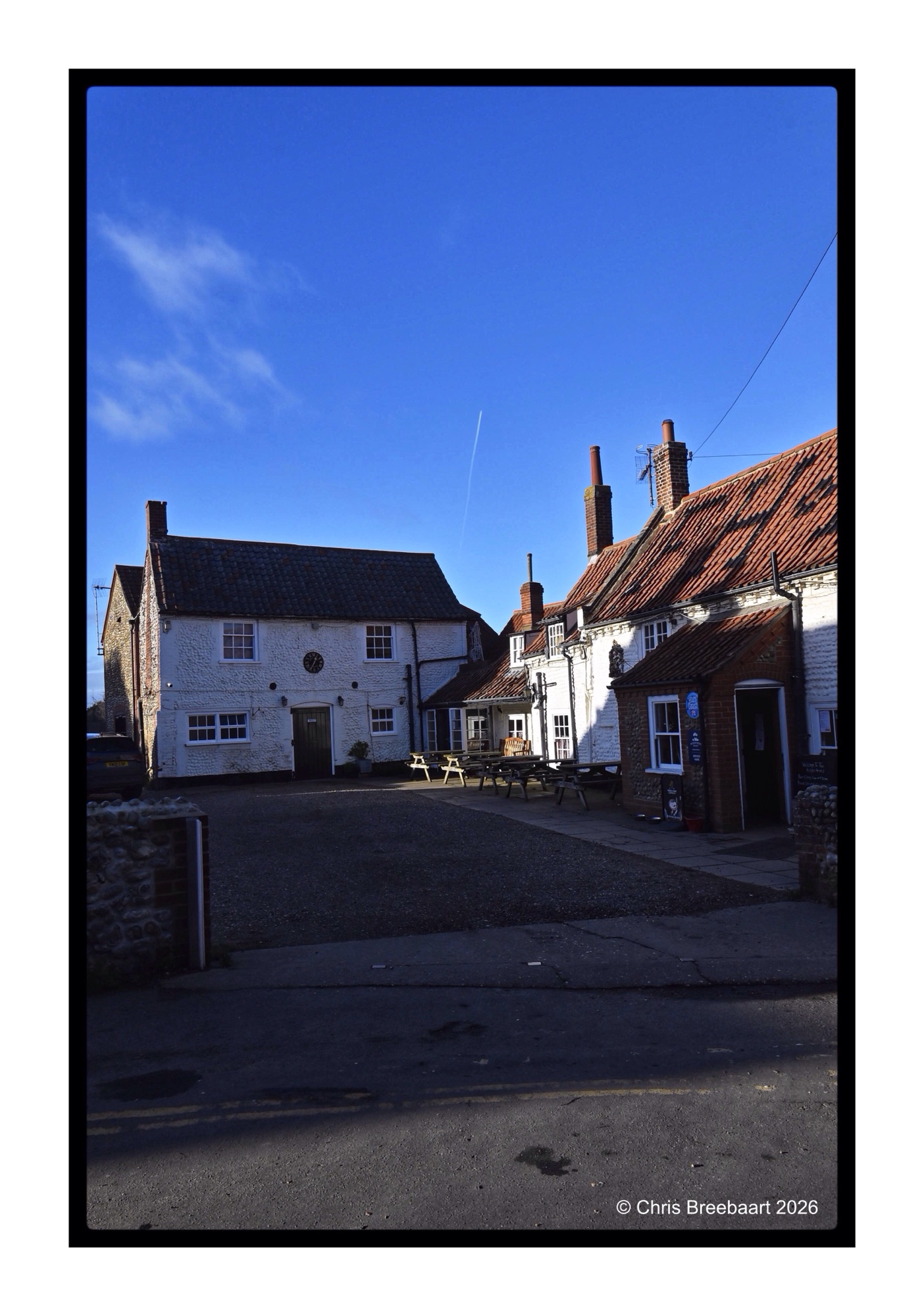
The King’s Arms in in Blakeney. Founded in 1763. And still sells fresh beer.
Shot with Nikon Zf,edited using Snapseed and Marksta. Click the picture for a larger version.
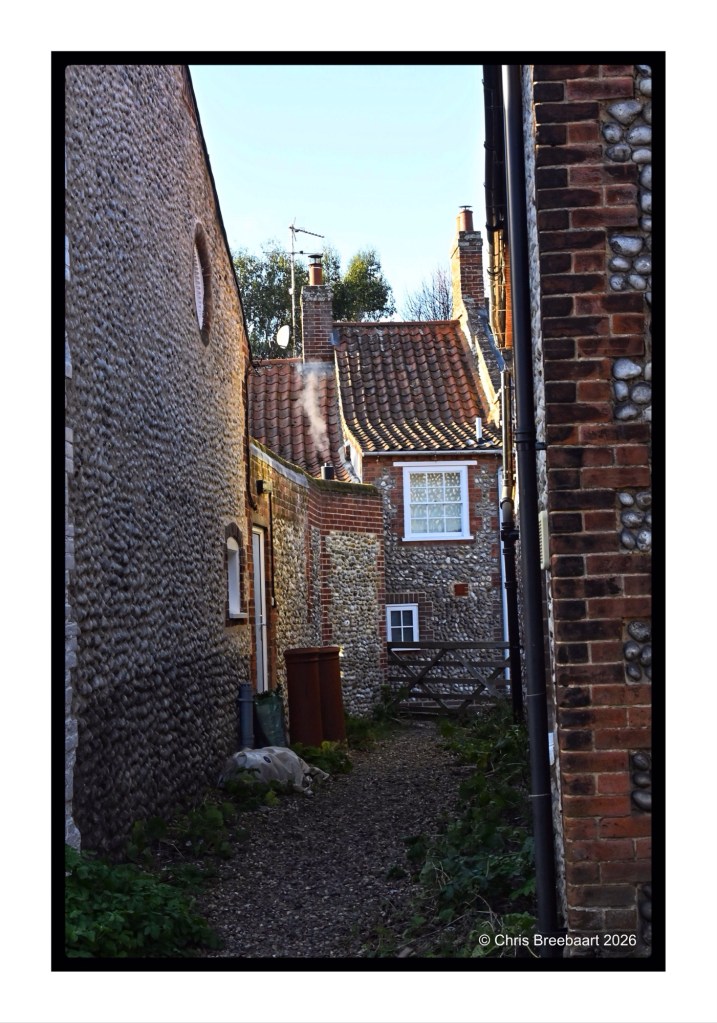
An alley in Blakeney.
Shot with Nikon Zf,edited using Snapseed and Marksta. Click the picture for a larger version.
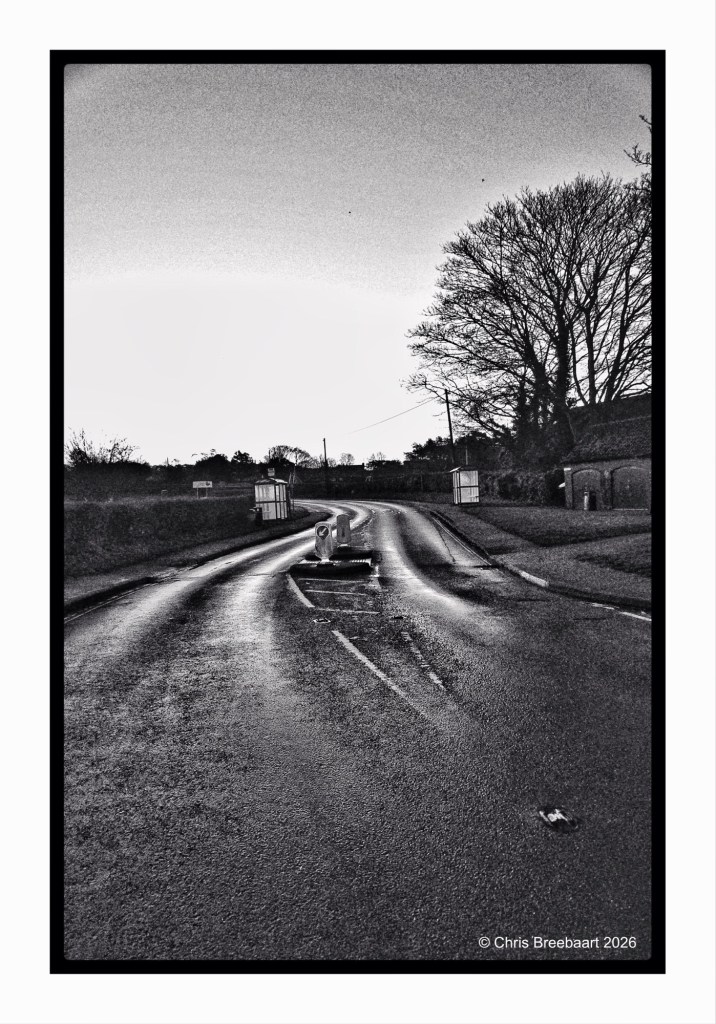
Lens artists photo challenge #381 is ‘minimalism in black and white photography’. A bus stop at sunrise.
If you wonder how it looks in color? Here is an iPhone shot of 2024 at the same spot. In the monochrome the sun is not over the horizon, in the color one it is.
Shot with Nikon Zf,edited using Snapseed and Marksta. Click the picture for a larger version.
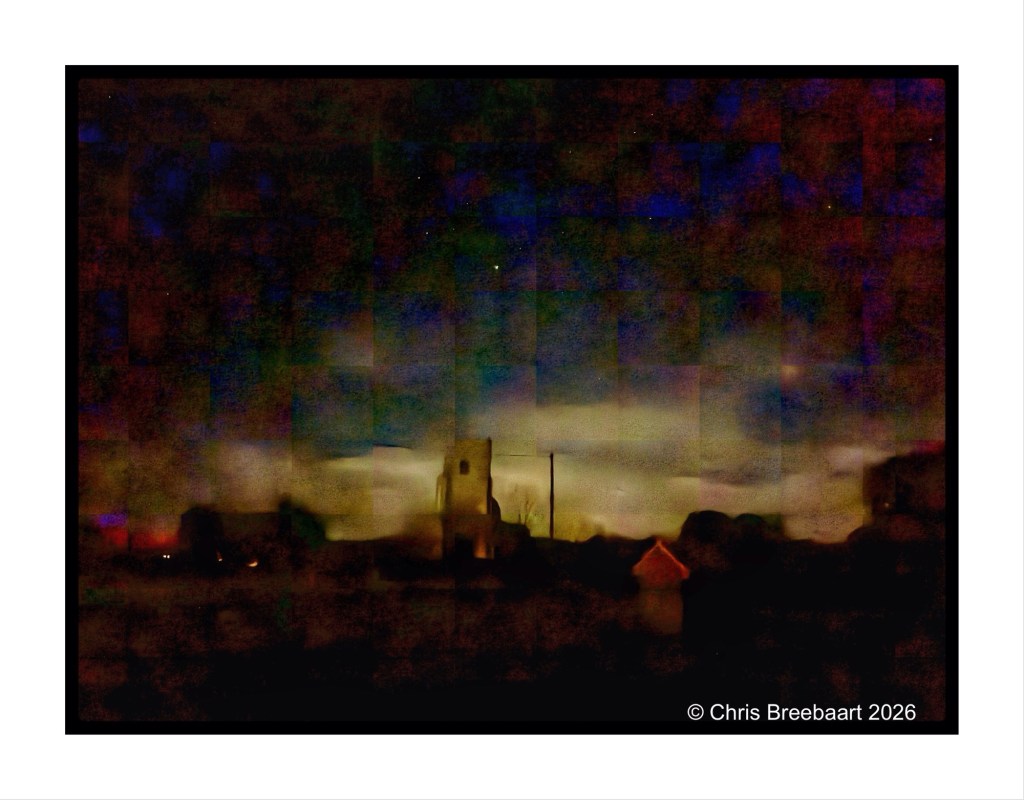
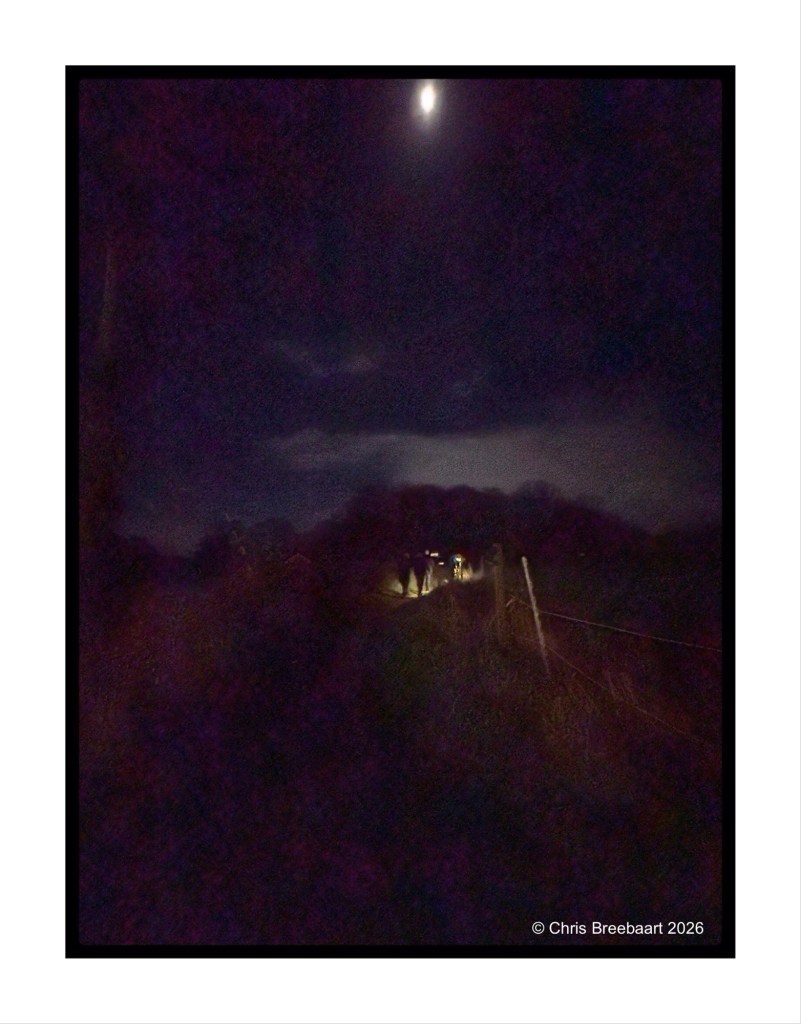
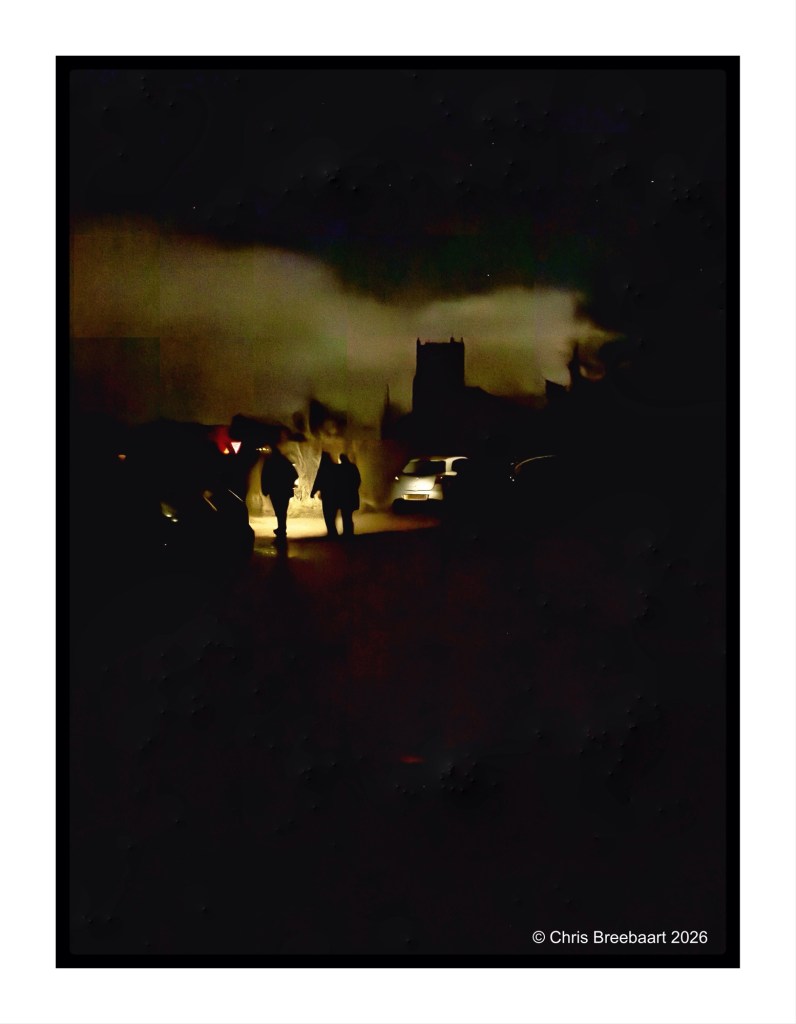
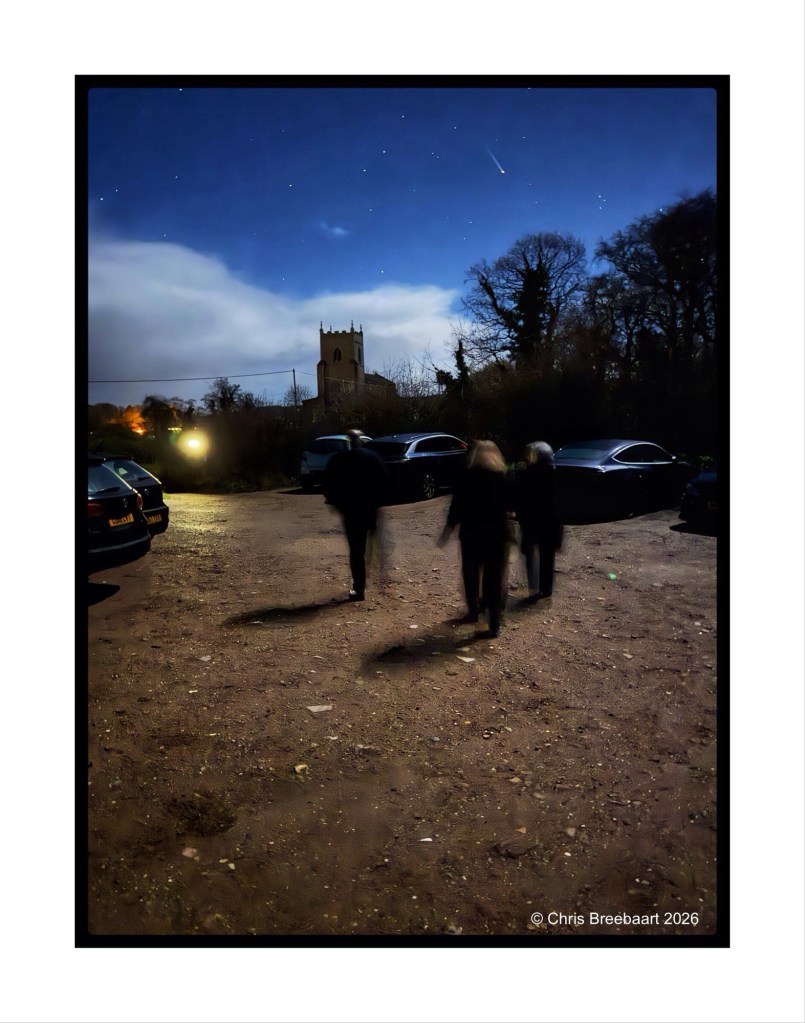
Having dinner at the Wiveton Bell. A beautiful moonlight night, an open invitation to play with the iPhone. The results did surprise me.
The bottom right photo is taken with the night modus. The rest with the manual mode of ‘real light’.
The one of the church reminds me of a medieval painting.
Shot with iPhone 15 Pro Max edited using Snapseed and Marksta. Click the picture for a larger version.
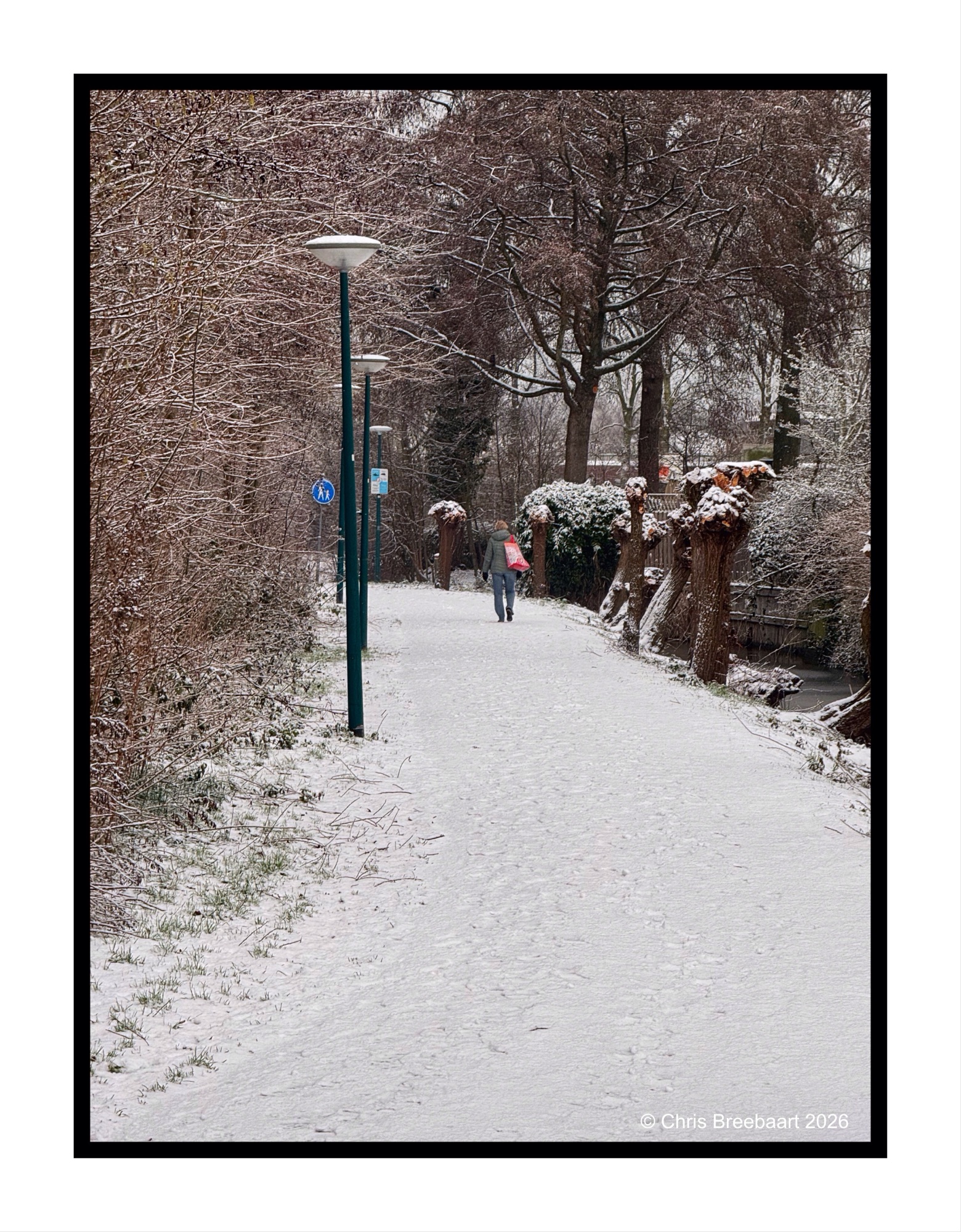
Theme for Lens-Artists Photo Challenge #380 is ‘what’s around the corner’. Last week we had snow in the village.
Shot with iPhone 15 Pro Max edited using Snapseed and Marksta Click the picture for a larger version.
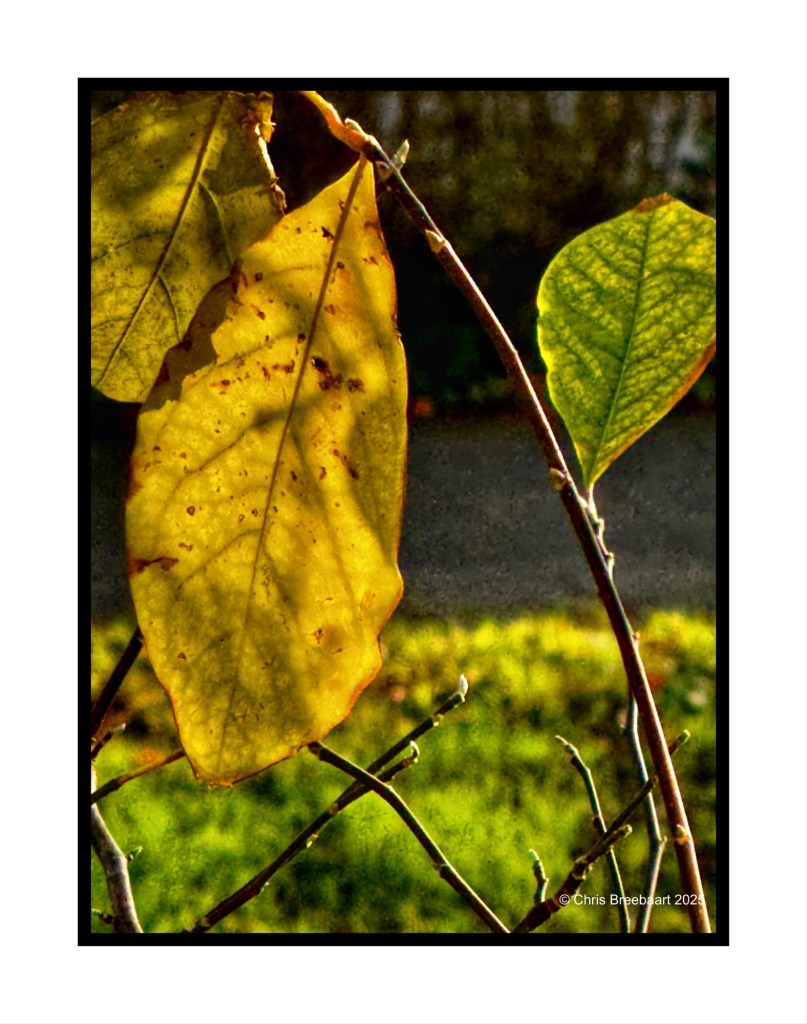
The last leaves of the Magnolia
Shot with iPhone 15 Pro Max edited using Snapseed and Marksta Click the picture for a larger version.

Autumn colors color the village.
Shot with iPhone 15 Pro Max edited using Snapseed and Marksta Click the picture for a larger version.
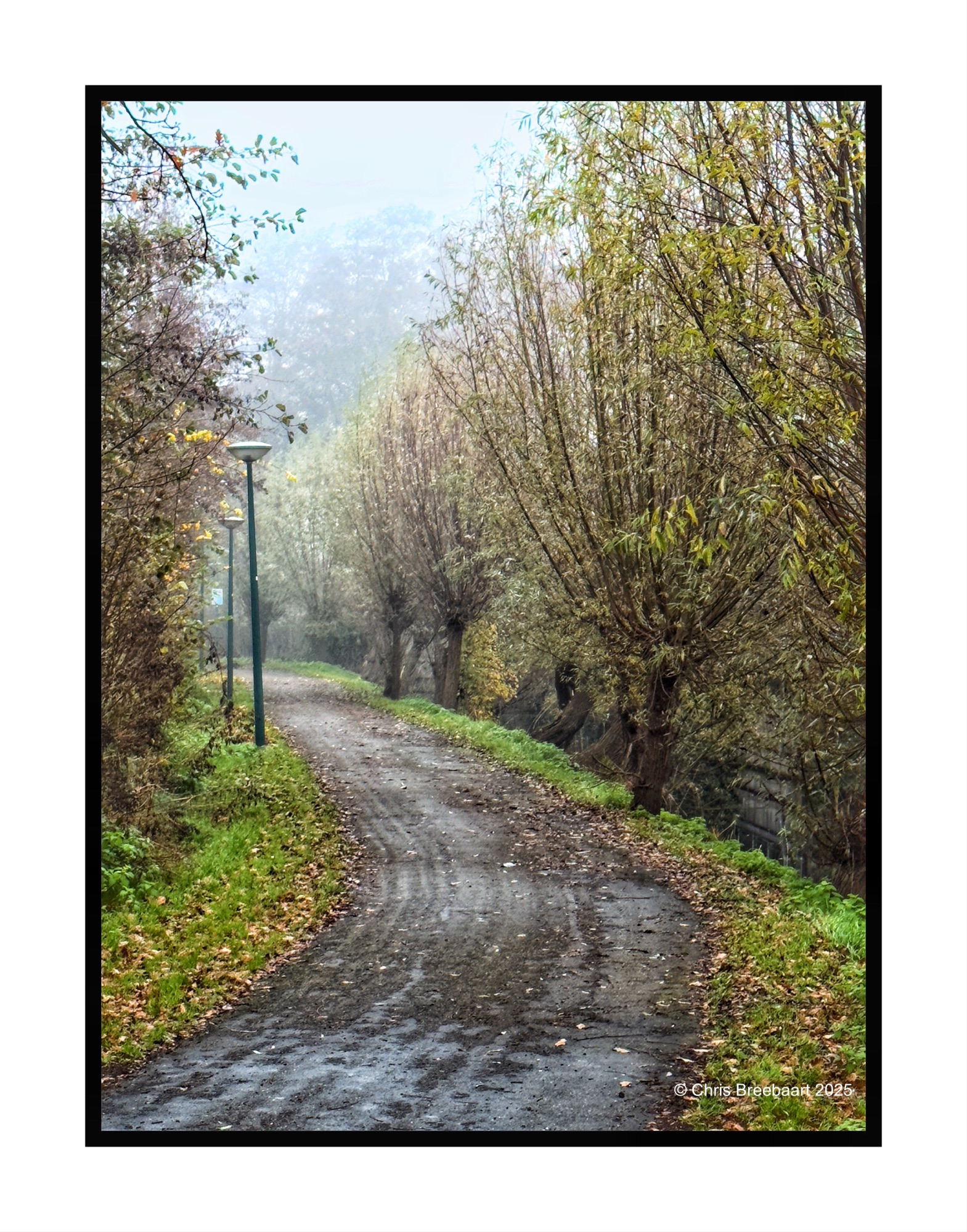
Autumn colors color the village.
Shot with iPhone 15 Pro Max edited using Snapseed and Marksta Click the picture for a larger version.
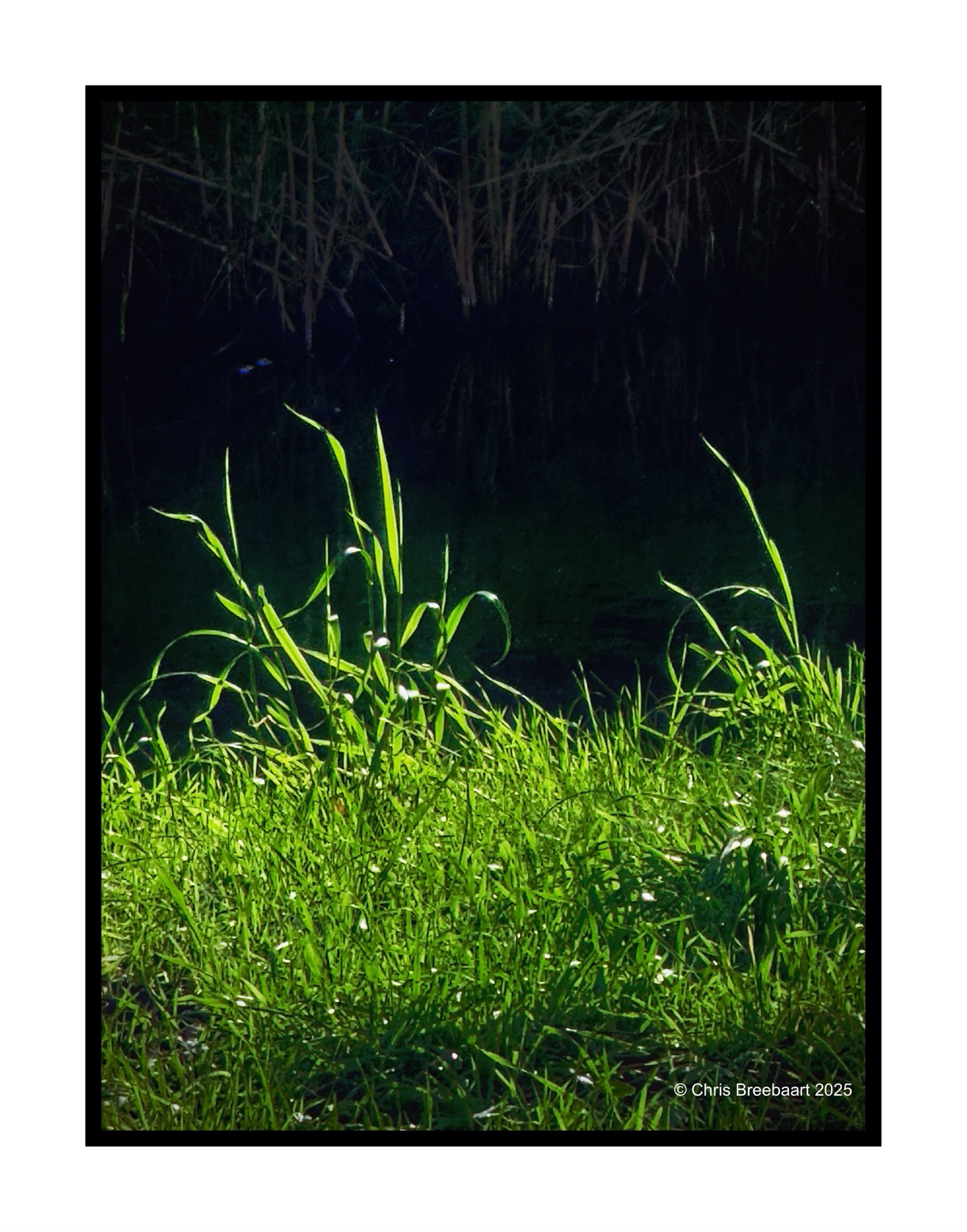
There is not a wall or hill, or other side. It is just green.
Shot with iPhone 15 Pro Max edited using Snapseed and Marksta Click the picture for a larger version.
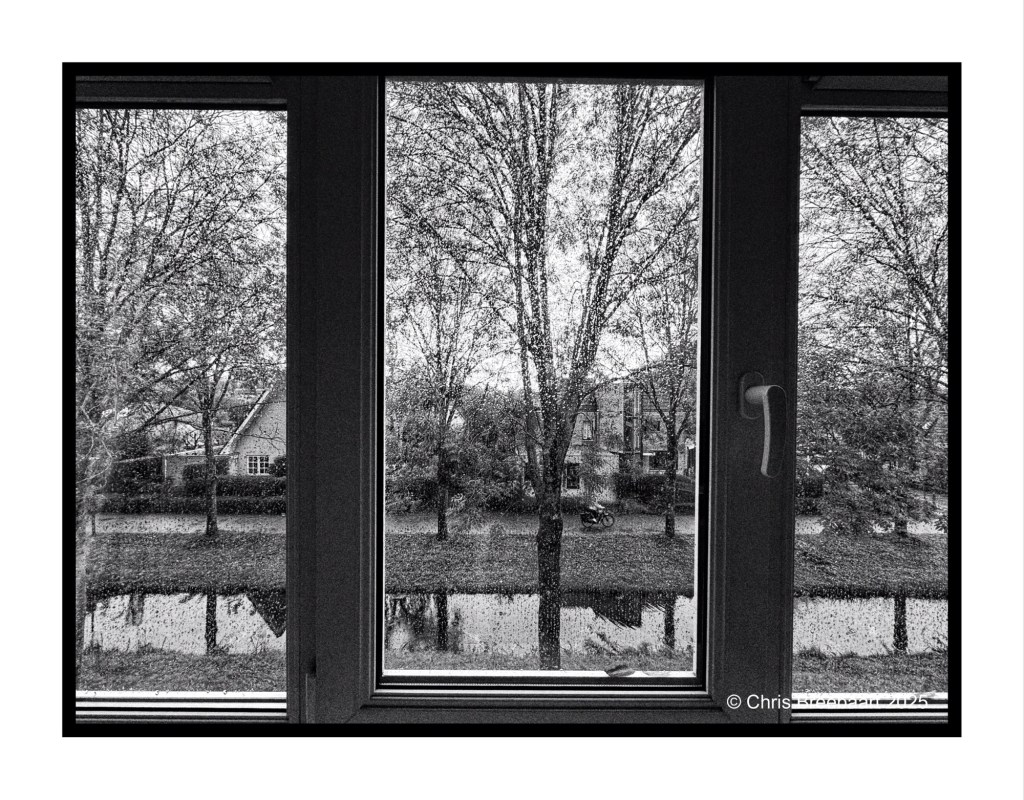
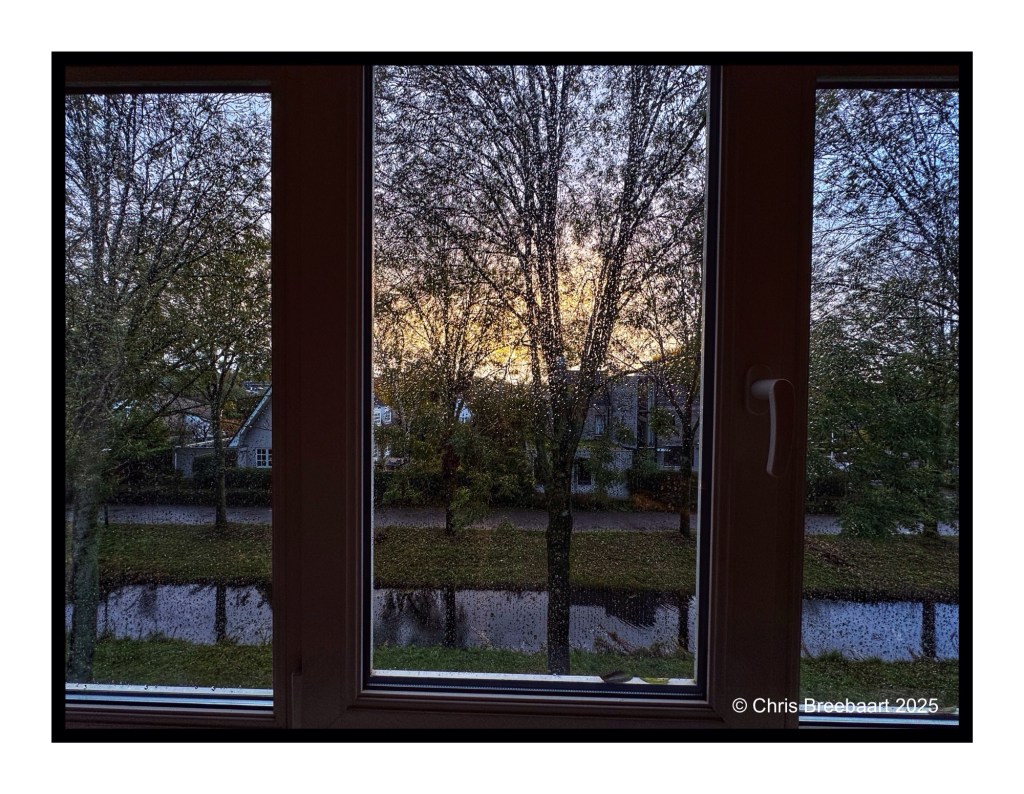
Shot with iPhone 15 Pro Max edited using Snapseed and Marksta. Click the picture for a larger version
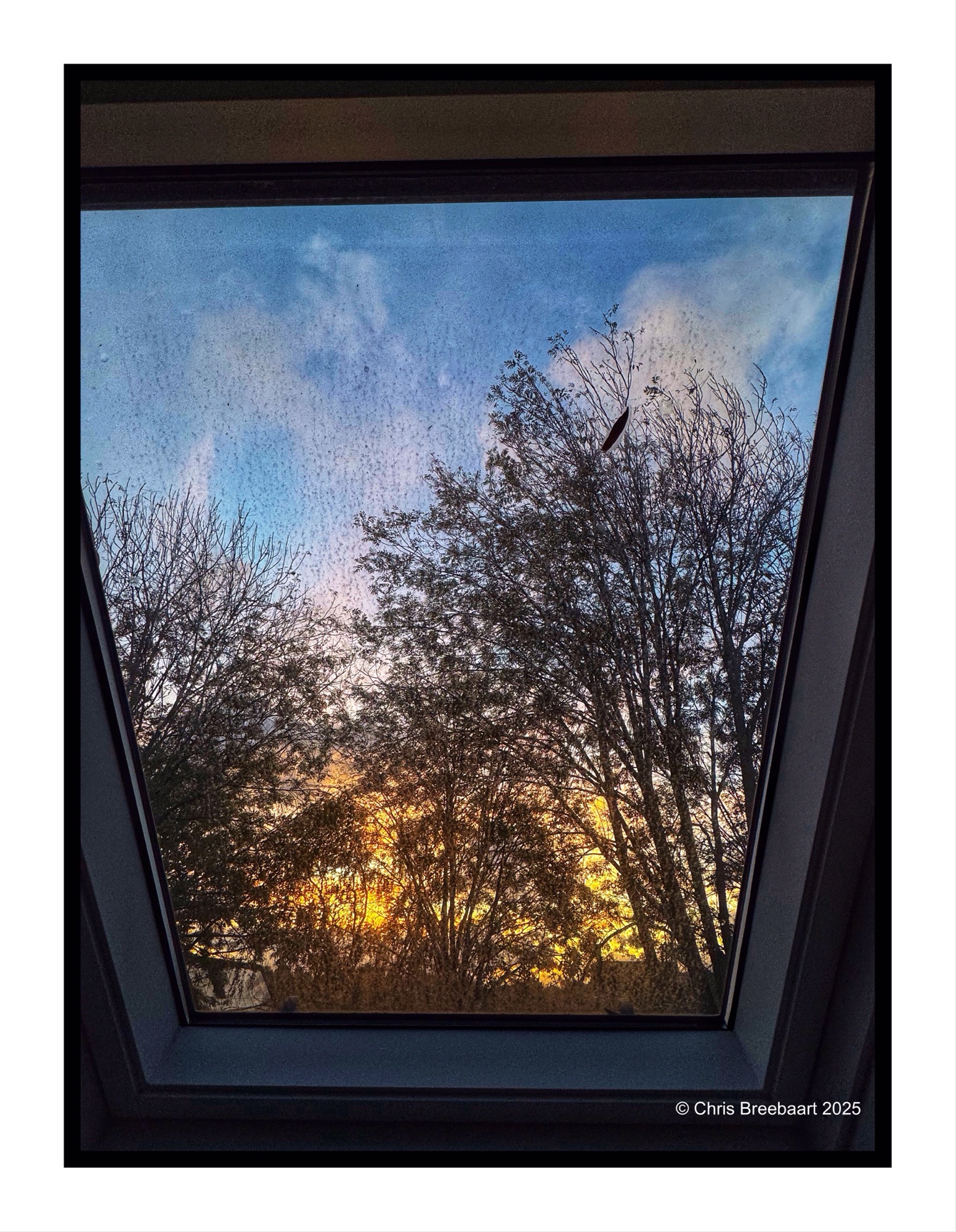
Shot with iPhone 15 Pro Max edited using Snapseed and Marksta. Click the picture for a larger version
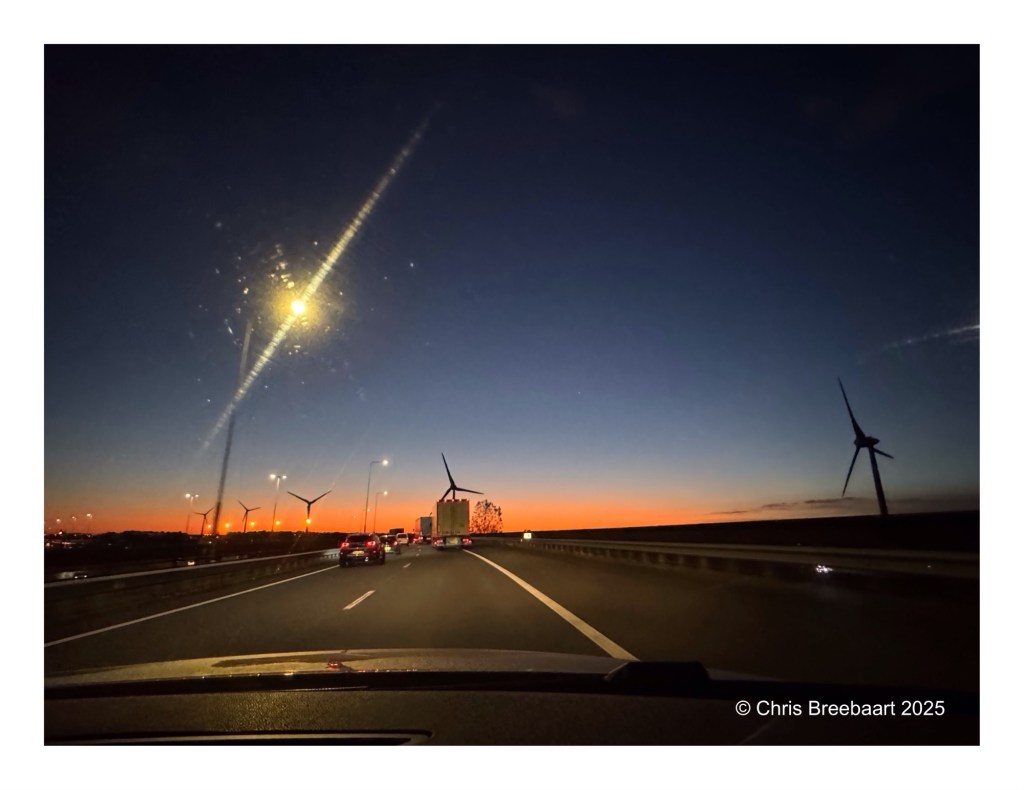
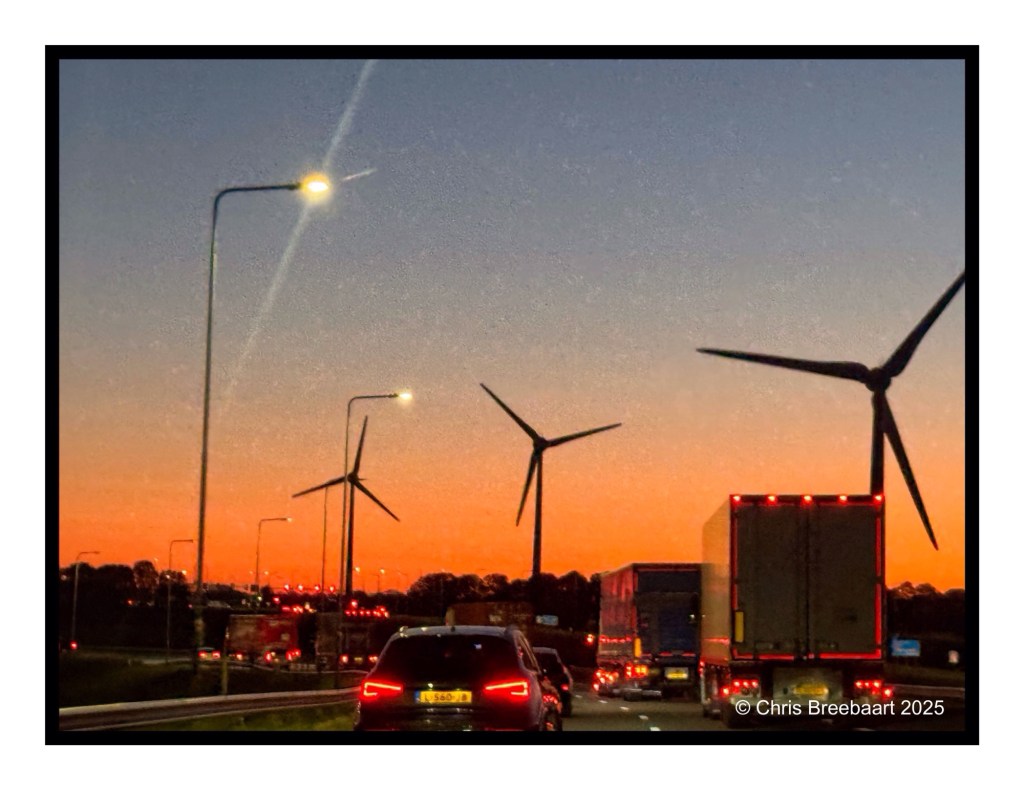
On the road at sunrise, the A44 and A4 to Schiphol Amsterdam.
I am not sure this is filling the brief of LAPC #373 ‘looking back at landscapes’. It’s more looking forward on the road.
Shot with iPhone 15 Pro Max edited using Snapseed and Marksta. Click the picture for a larger version.
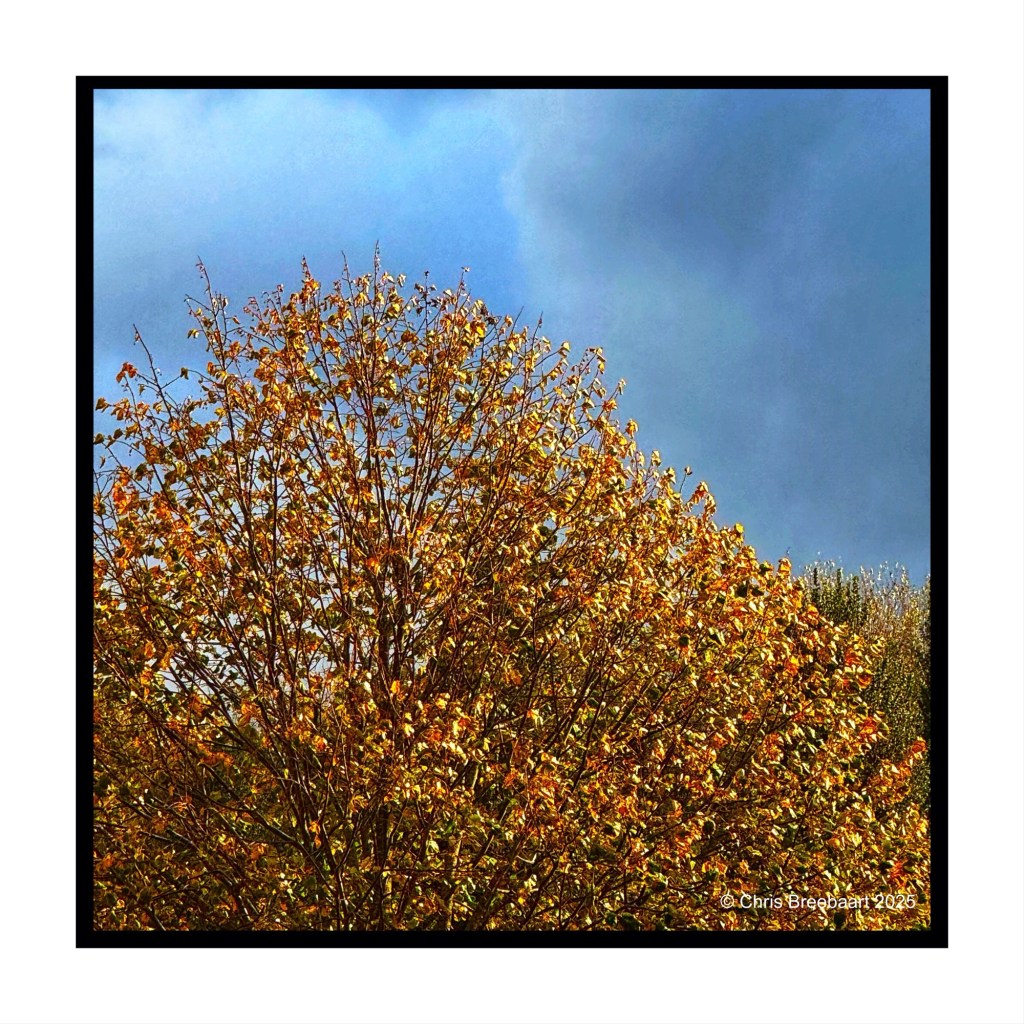
Shot with iPhone 15 Pro Max edited using Snapseed and Marksta. Click the picture for a larger version.
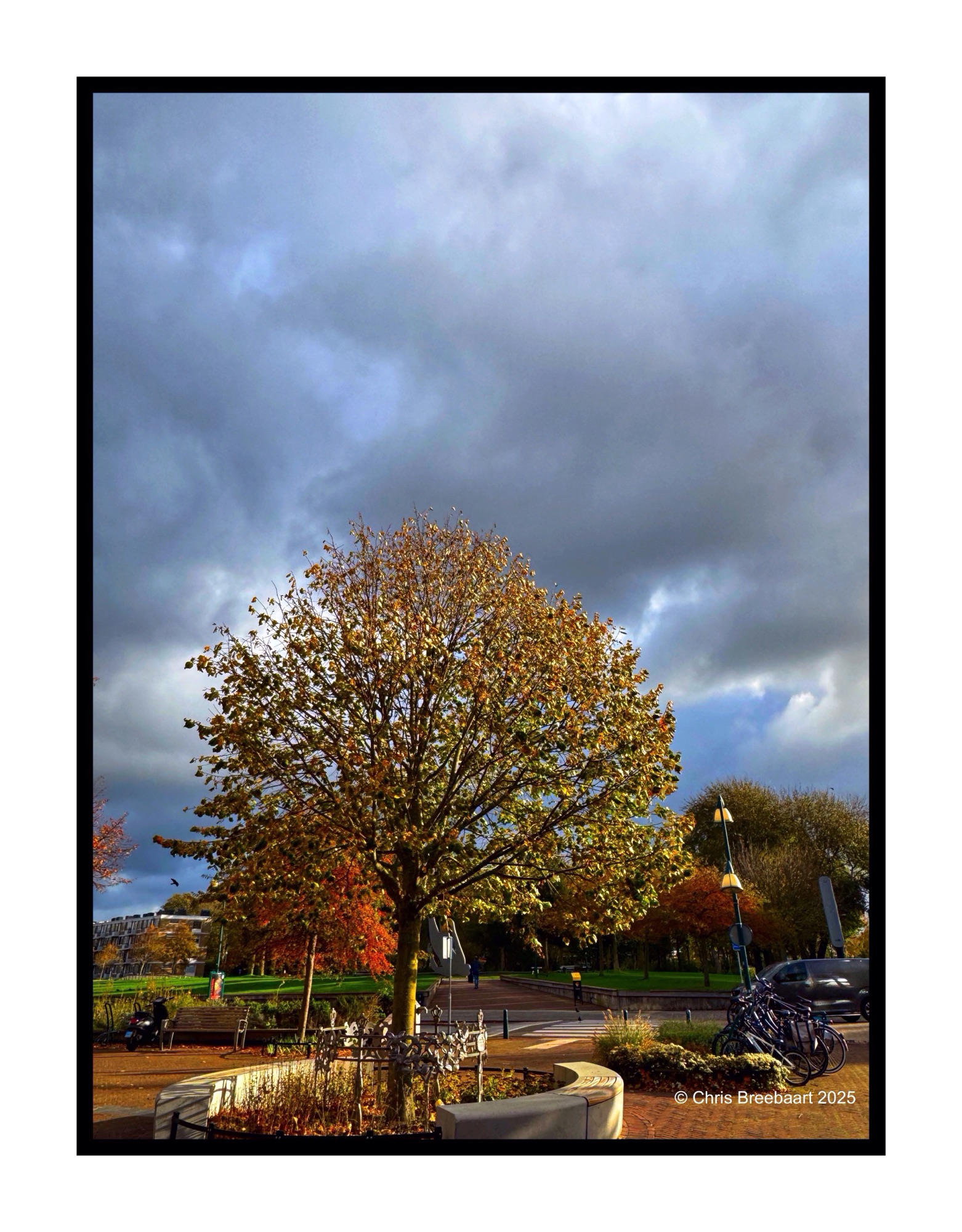
Shot with iPhone 15 Pro Max edited using Snapseed and Marksta. Click the picture for a larger version.
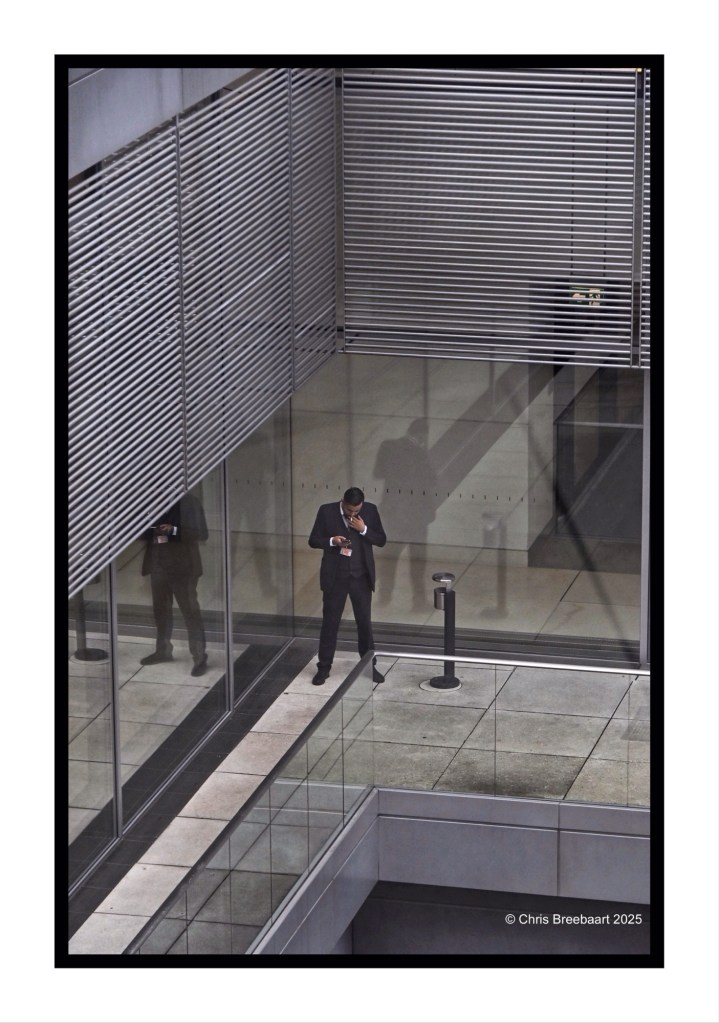
From the roof of the Reichstag. A member of staff has a smoke break. A slightly less common street detail nowadays for LAPC #371.
Shot with Nikon Zf, edited using Snapseed and Marksta. Click the picture for a larger version.
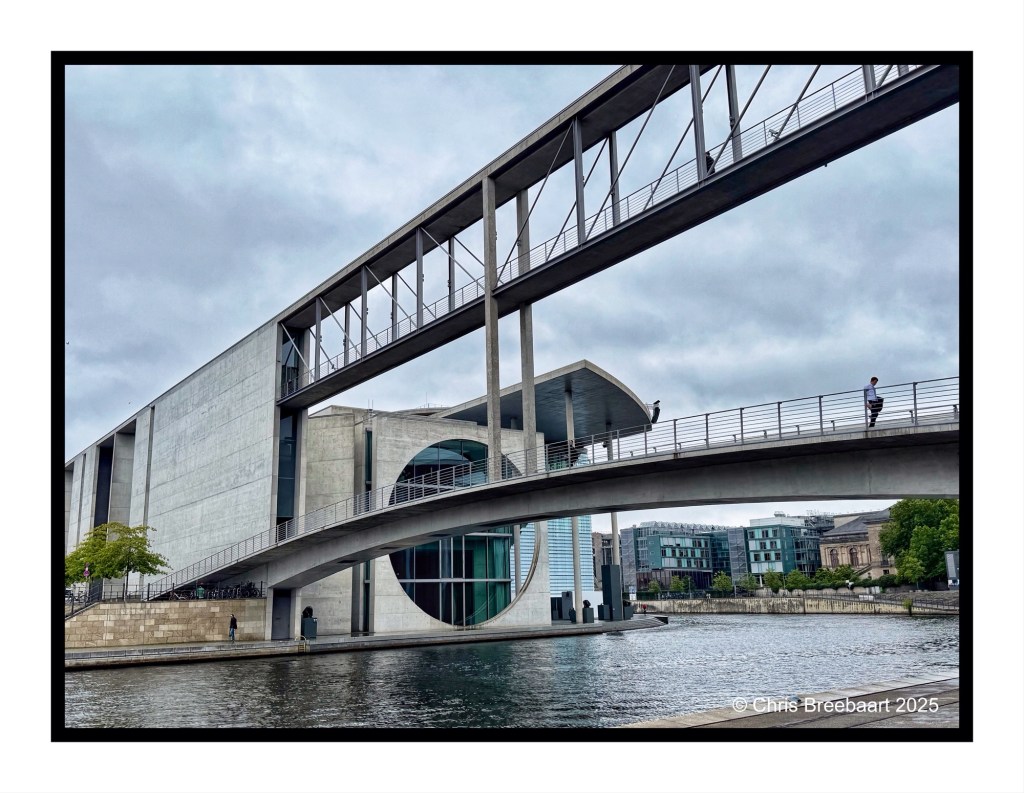
The last time, before this visit in September, I saw this part of Berlin was in November 1989. This side was West Berlin, the Spree and across was East Berlin. The Berlin Wall cut straight to the right. It was just 20 meters from the East wall of the Reichstag.
Now the Bundestag offices connect both sides of the river. The tension of the Berlin Wall is literally out of sight. But not forgotten. Seven crosses are just outside this frame on the right side. They remind us of the people who tried to flee East Germany and were killed.
Shot with iPhone 15 Pro Max edited using Snapseed and Marksta. Click the picture for a larger version. The monochrome photo of 1989 was shot with Nikon F301 on Kodak TriX.
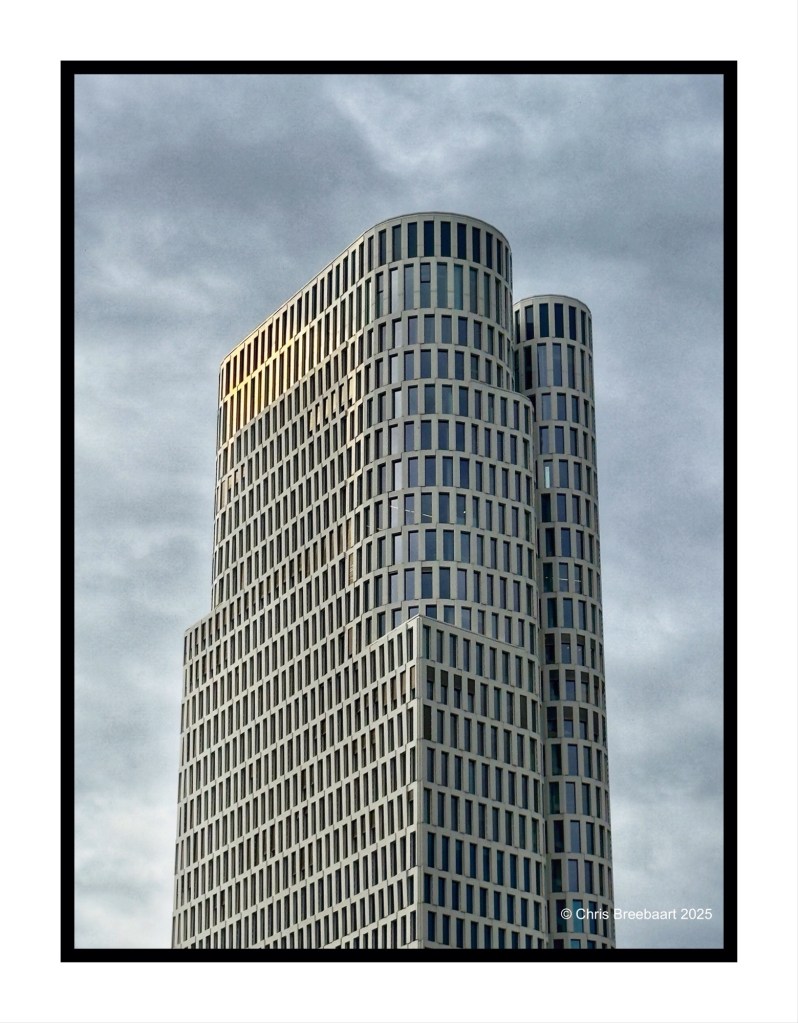
This high rising can be found near the Kaiser Wilhelm Gedächtnis Kirche.
Shot with iPhone 15 Pro Max edited using Snapseed and Marksta. Click the picture for a larger version.
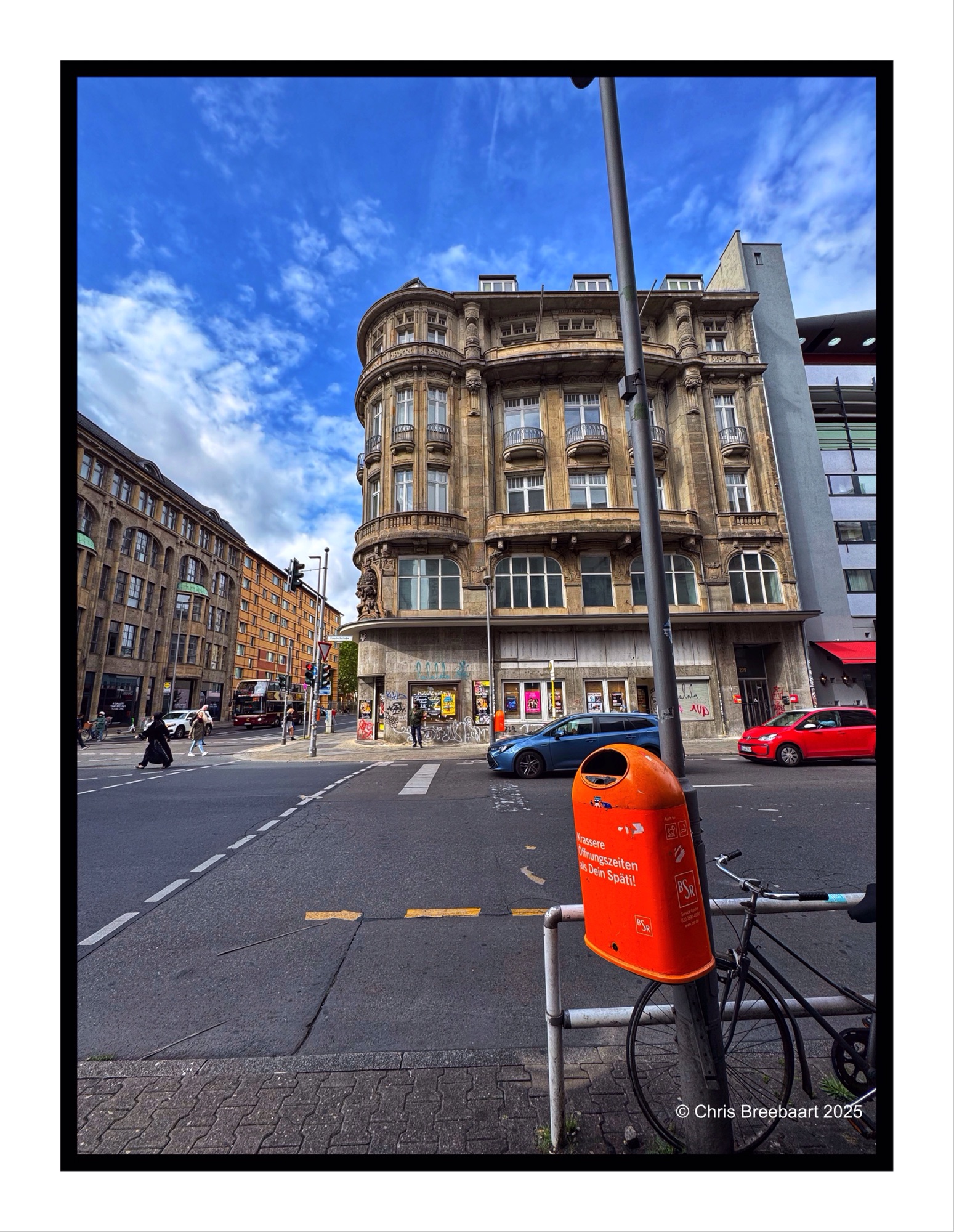
On the corner of the former Checkpoint Charlie (on the West Side).
Shot with iPhone 15 Pro Max edited using Snapseed and Marksta. Click the picture for a larger version.
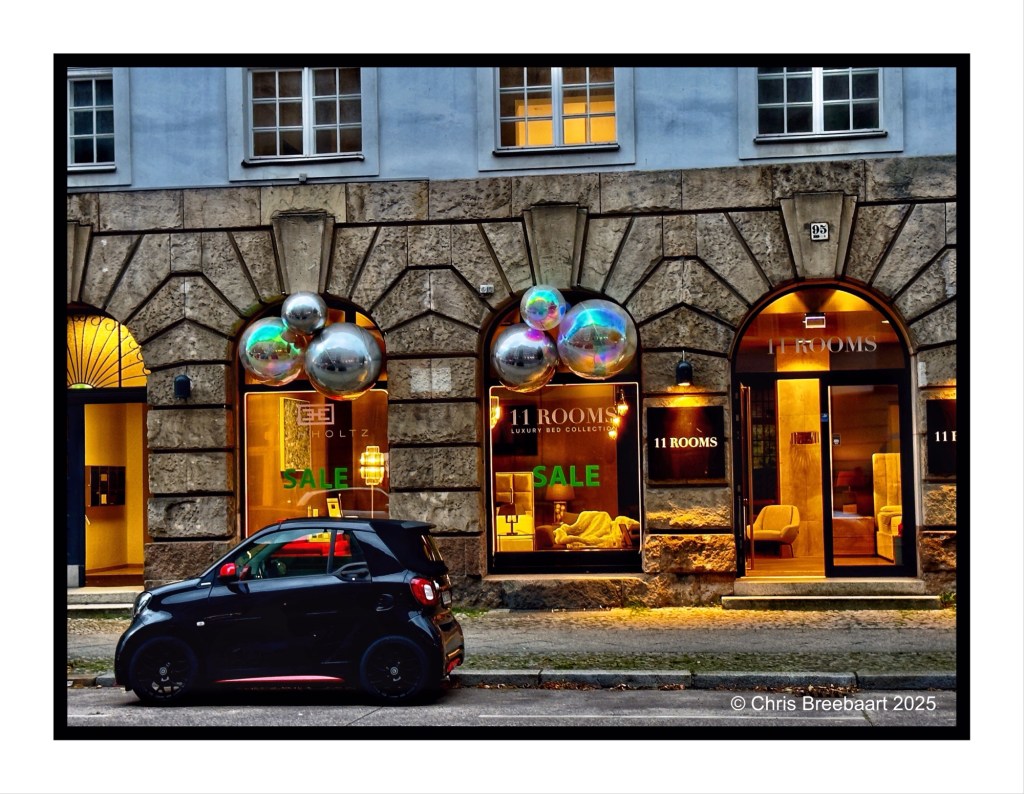
A street in Charlottenburg.
Shot with iPhone 15 Pro Max edited using Snapseed and Marksta. Click the picture for a larger version.

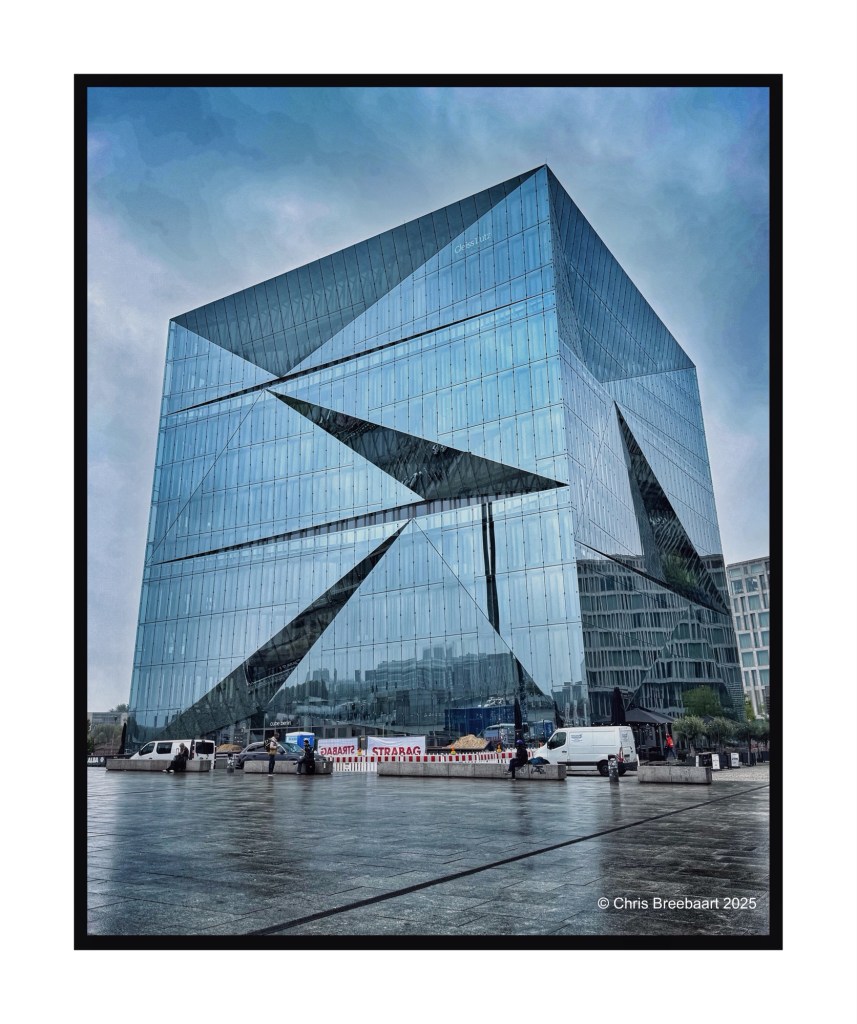
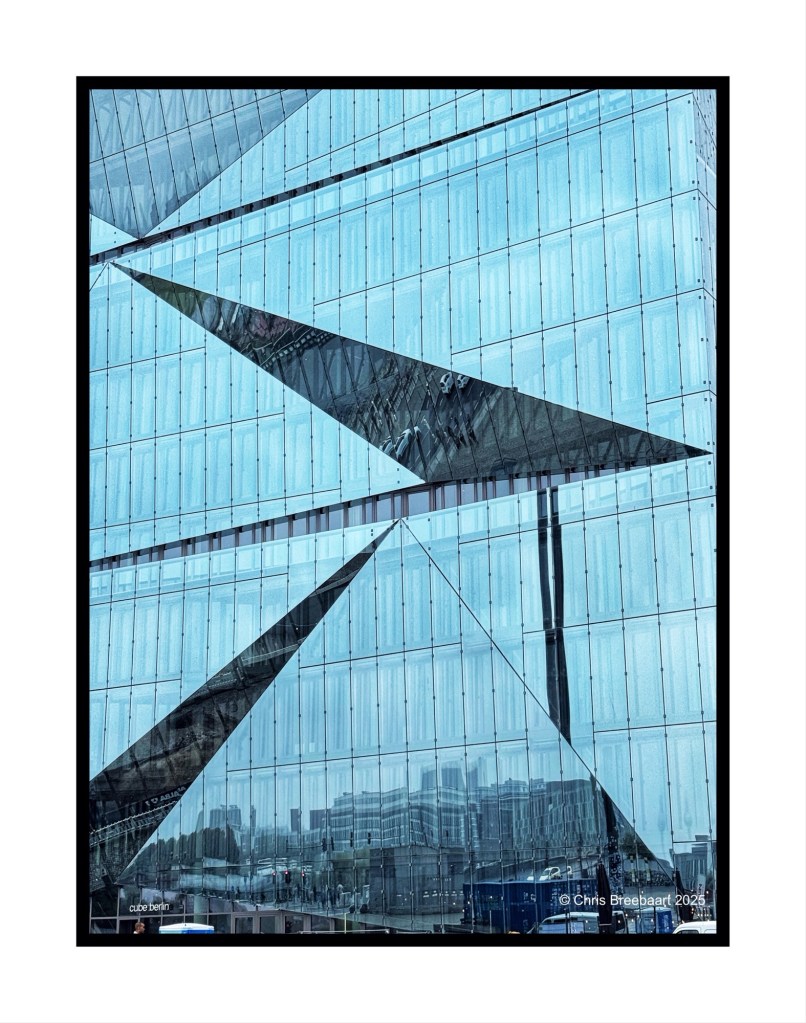
During the days of the Berlin Wall, the central transport hub of West-Berlin was Zoo station (Tiergarten). In 2006 the new Hauptbahnhof opened. In front of it is this 3XN Cube.
Shot with iPhone 15 Pro Max edited using Snapseed and Marksta. Click the picture for a larger version.
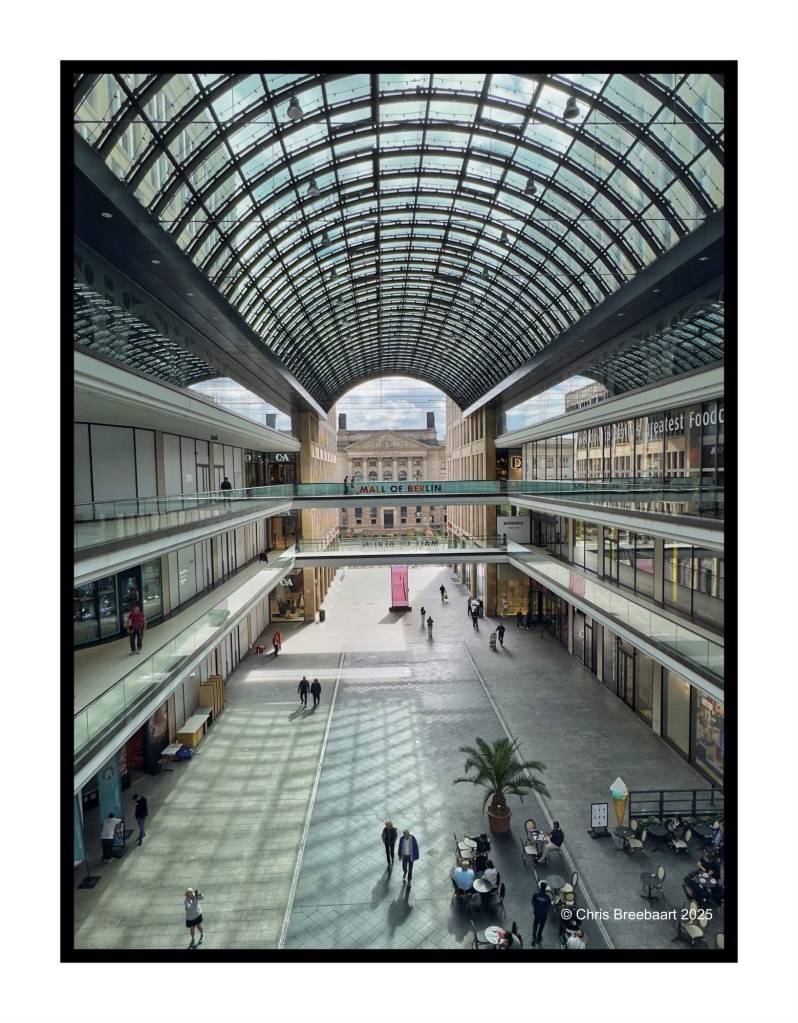
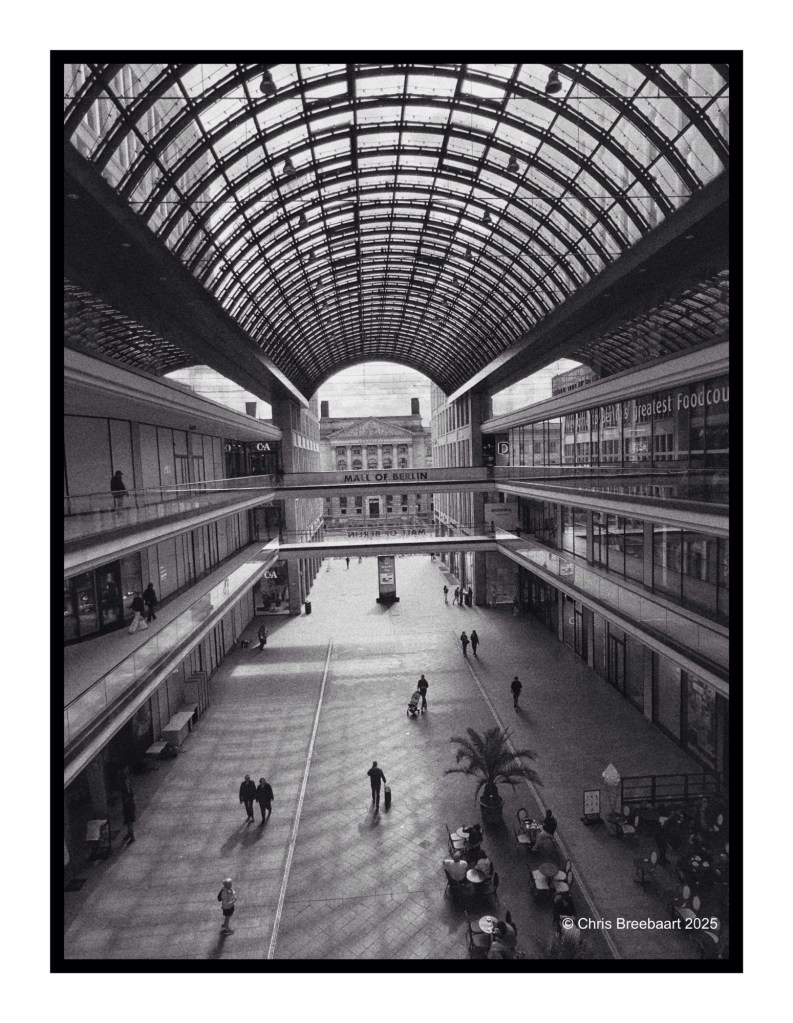
Every big city has its own mall, a big shopping center. Most of the times the shops and brands are the same as in the mall next to where you live. And the food court can be slightly different. The Mall of Berlin is no exception to that rule. The location (Leipziger Platz) makes it interesting, as does the architecture.
As always I can not choose: color, or mono?
Shot with iPhone 15 Pro Max edited using Snapseed and Marksta. Click the picture for a larger version.
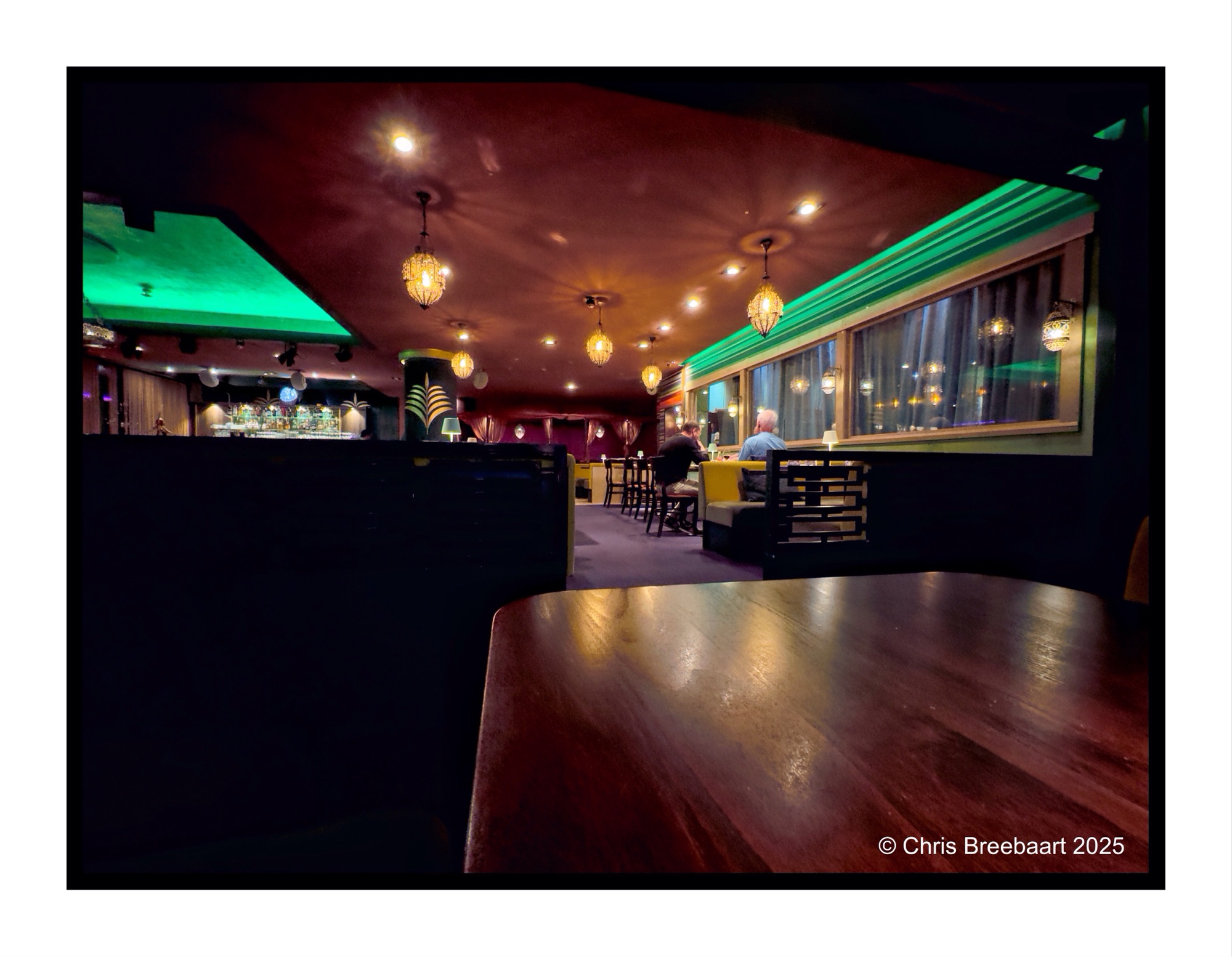
Food in Berlin is cheap (and in the right places) good!
Shot with iPhone 15 Pro Max edited using Snapseed and Marksta. Click the picture for a larger version.
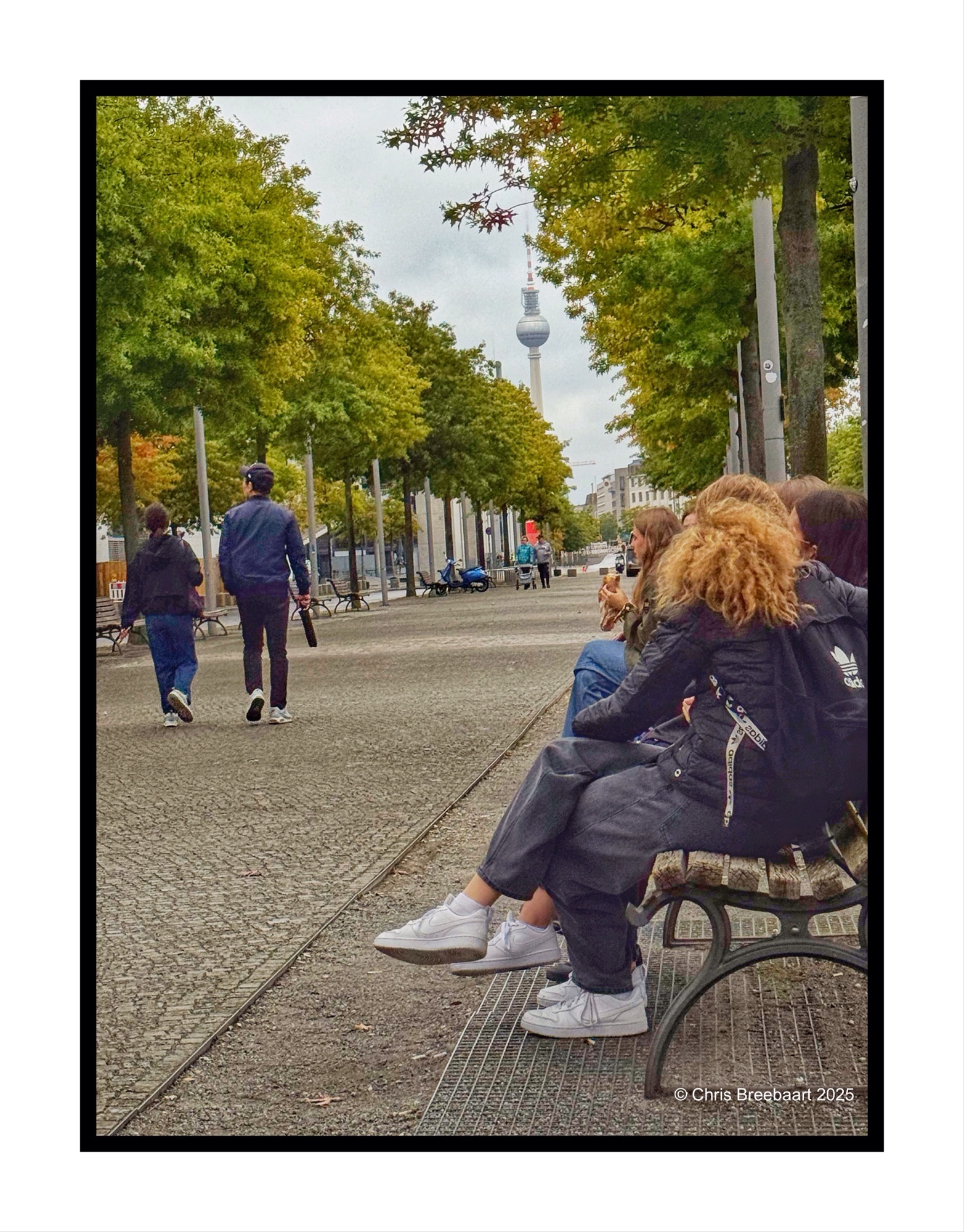
A landmark you can not overlook. The TV Tower (Fernsehturm) at Alexanderplatz. Here seen from the Paul Löbe Allee, next to the offices of the prime minister of Germany.
Shot with iPhone 15 Pro Max edited using Snapseed and Marksta. Click the picture for a larger version.
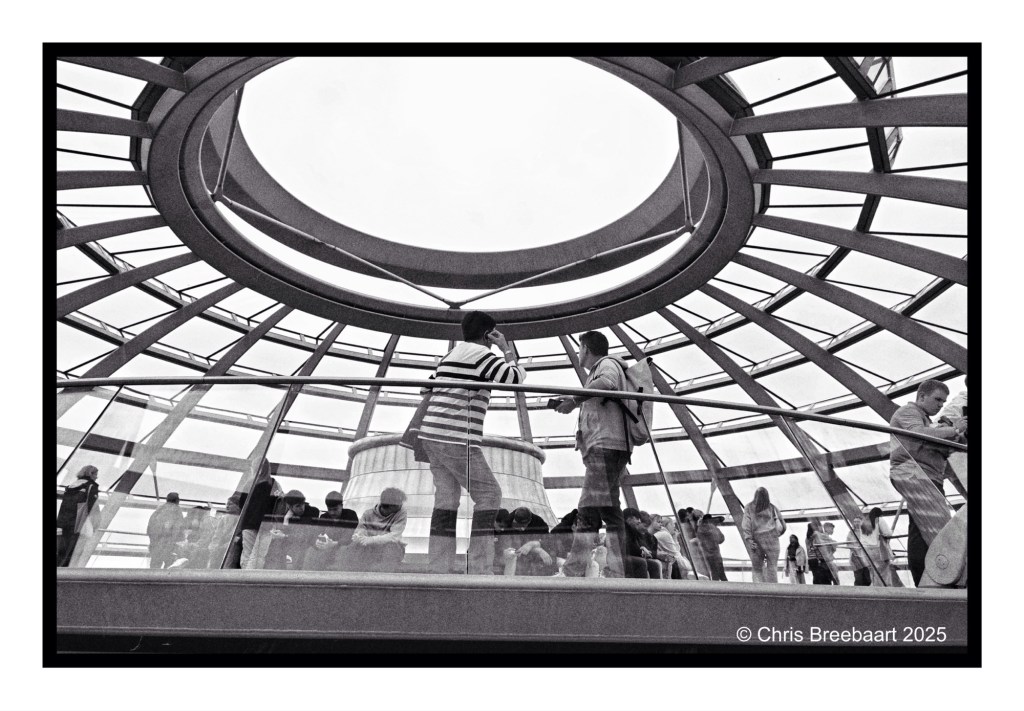
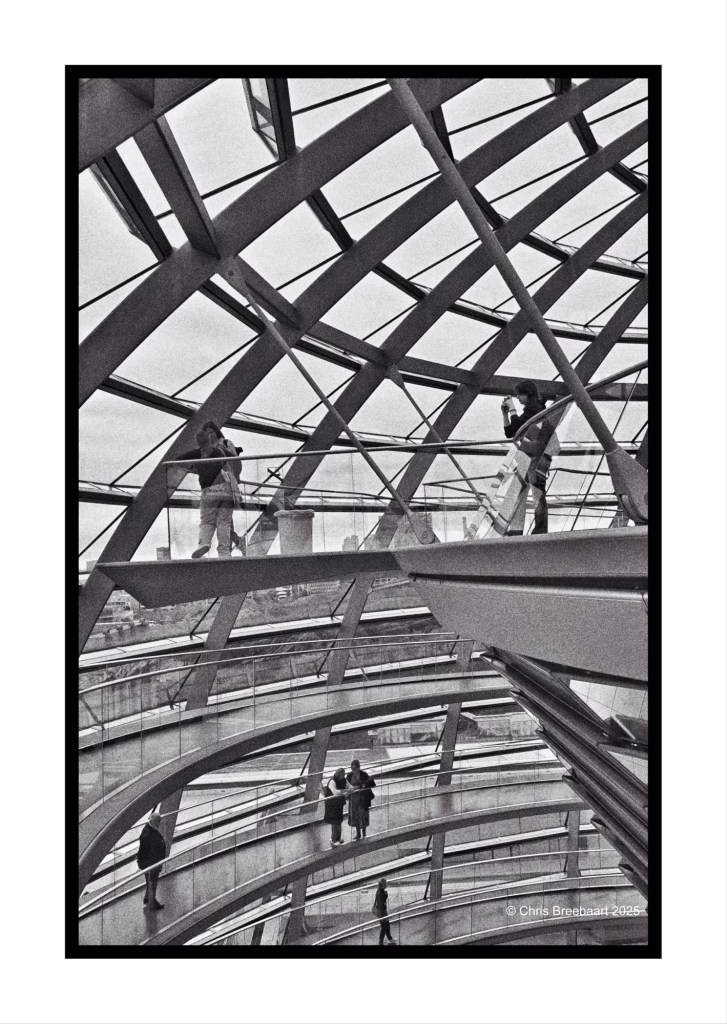
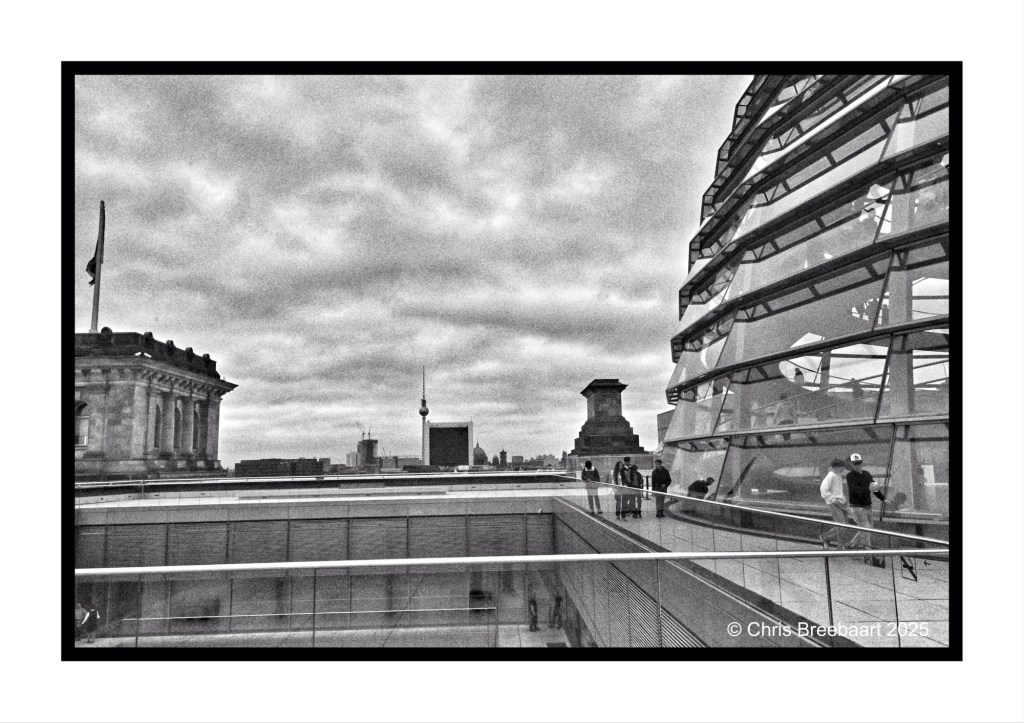
The dome on the Reichstag offers a wonderful panoramic view on Berlin. And you can walk the rest of the roof as well to look over the city. Here an impression in monochrome.
Shot with Nikon Zf, edited using Snapseed and Marksta. Click the picture for a larger version
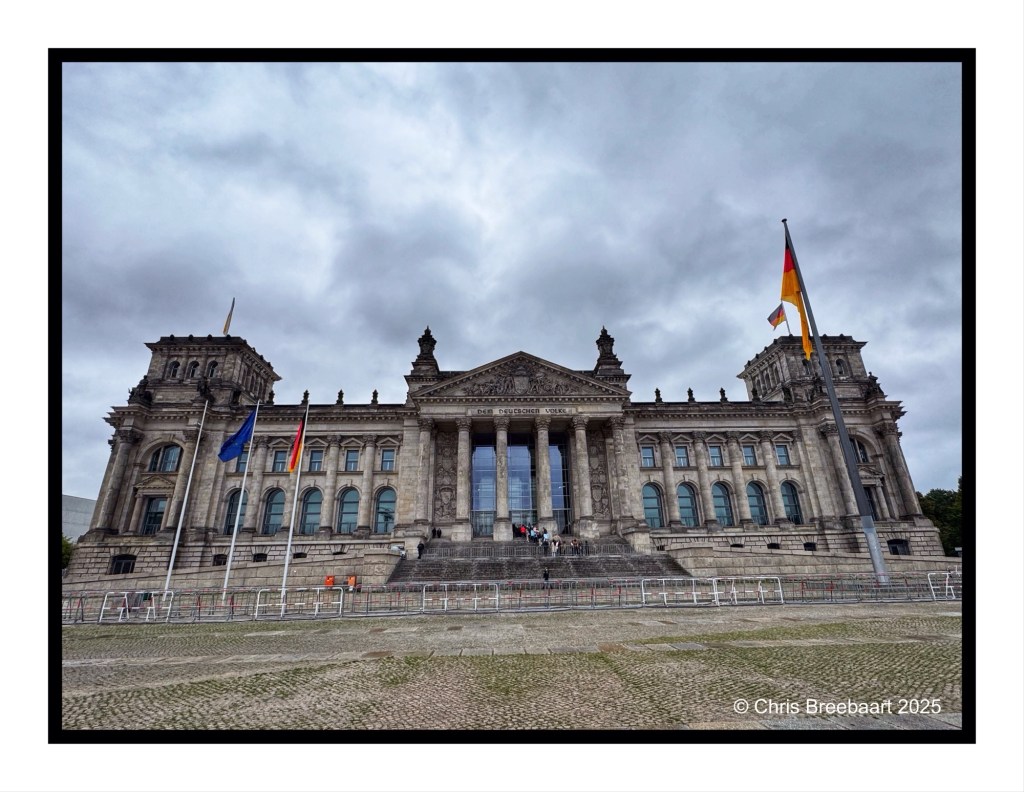
The front of the Reichstag. A visit was on the top of my list. In 1989 the Berlin Wall was right next to the building; and since 1989 this area was completely developed. So we booked a visit to the dome. On this photo I left the dome out consciously. I wanted to have an image like the building looked in November 1989 below.
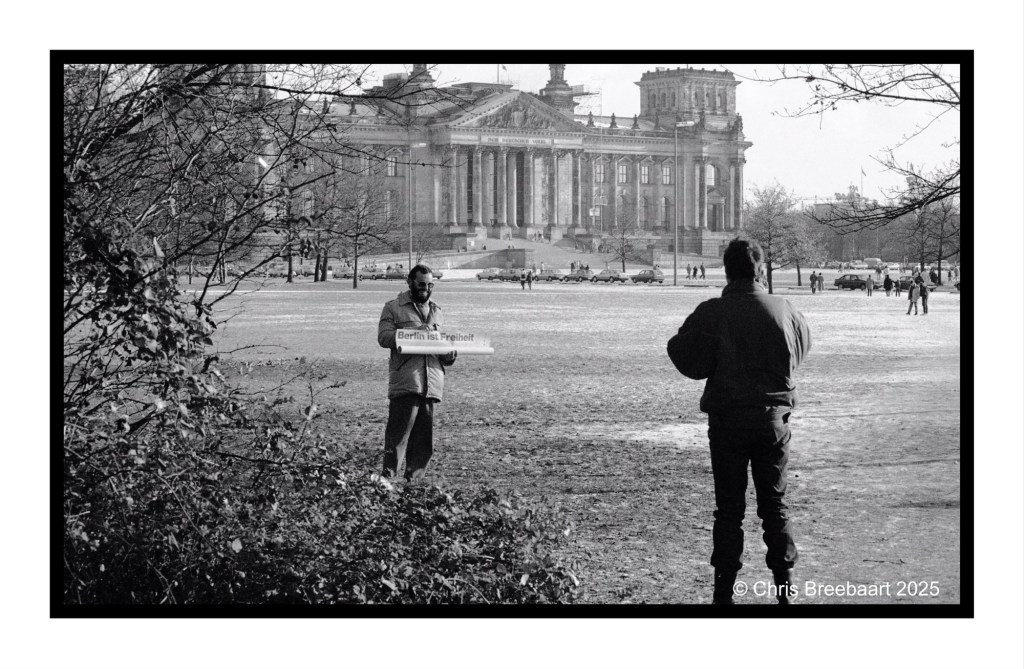
The history of the Reichstag is connected to my hometown and Leiden. In 1933 Marinus van der Lubbe was accused, tried and sentenced by the Nazi-regime for setting fire to the building. He was born in Leiden en lived in Oegstgeest, as did his family.
About the B4 retouch series:
I browsed my archive for pictures to publish. Some of them are partly retouched but most do have scratches, dust and stains.
Shot with iPhone 15 Pro Max edited using Snapseed and Marksta. Click the picture for a larger version. The monochrome photo of 1989 was shot with Nikon F301 on Kodak TriX.
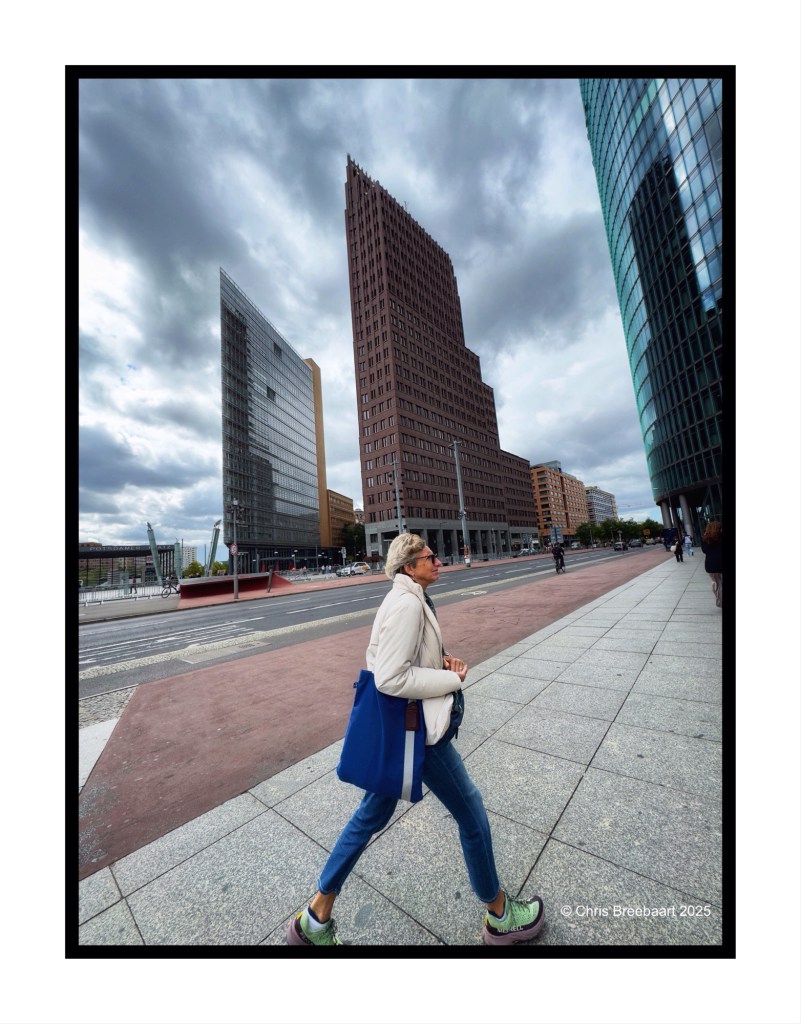
Human measure on Potsdamer Platz. During the time of the Berlin Wall people were a spic in a vast open space. Now they are a spic being over towered by high rising.
Shot with iPhone 15 Pro Max edited using Snapseed and Marksta. Click the picture for a larger version.
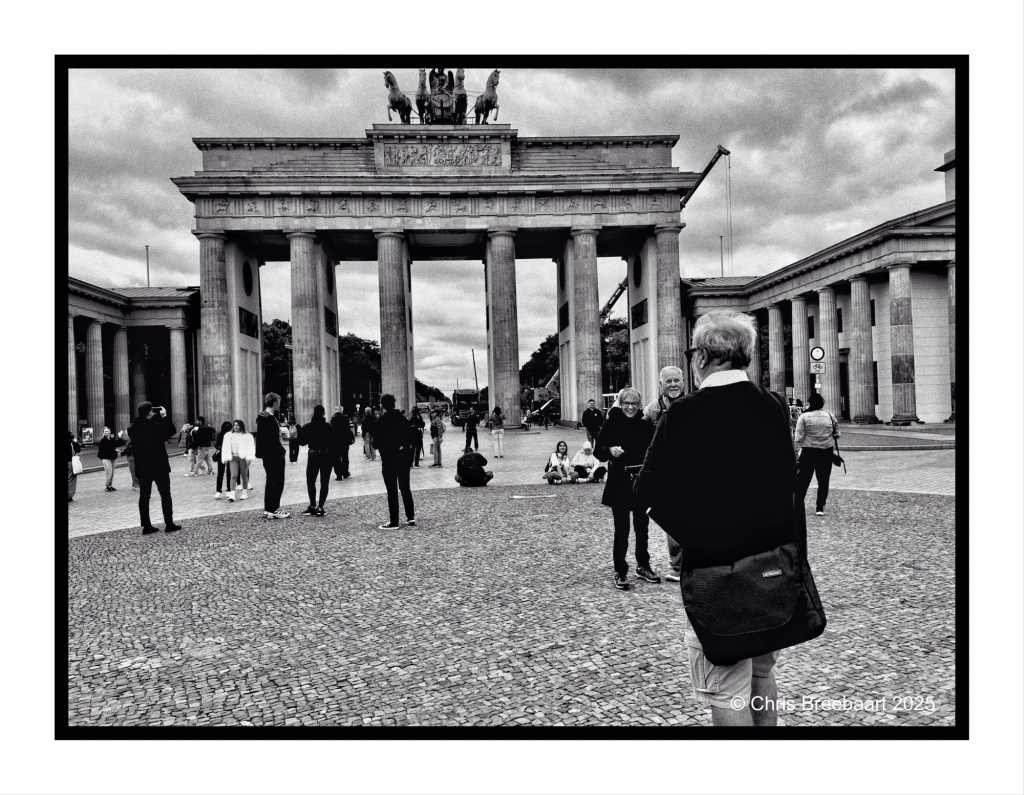
Brandenburger Gate (Brandenburger Tor) is a much used backdrop for photos in Berlin.
Shot with iPhone 15 Pro Max edited using Snapseed and Marksta. Click the picture for a larger version.
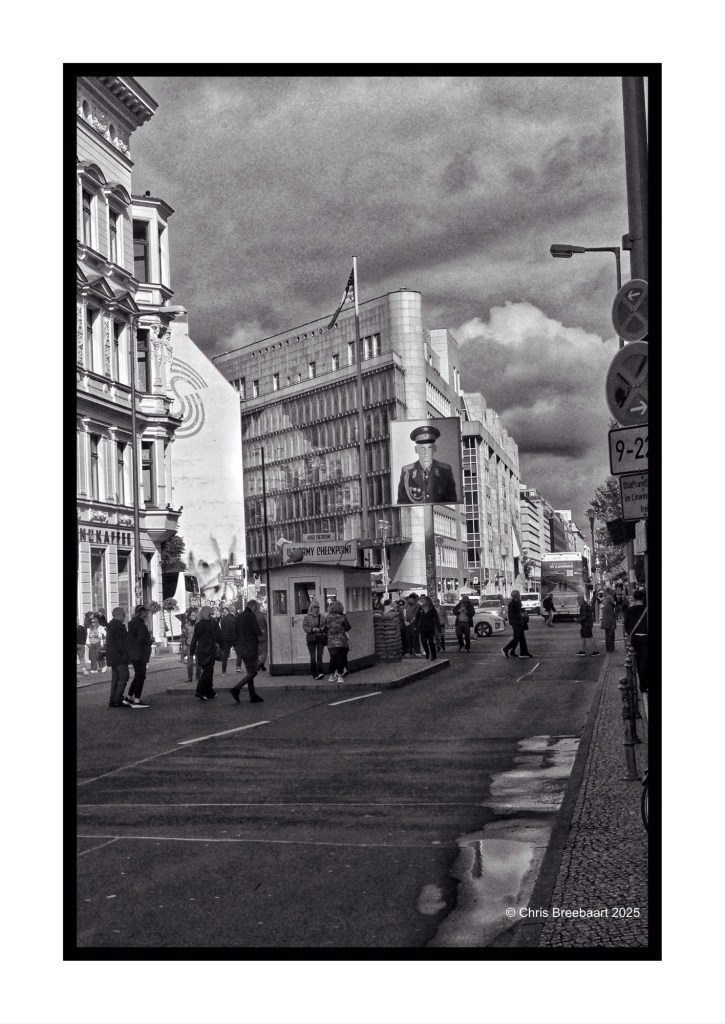
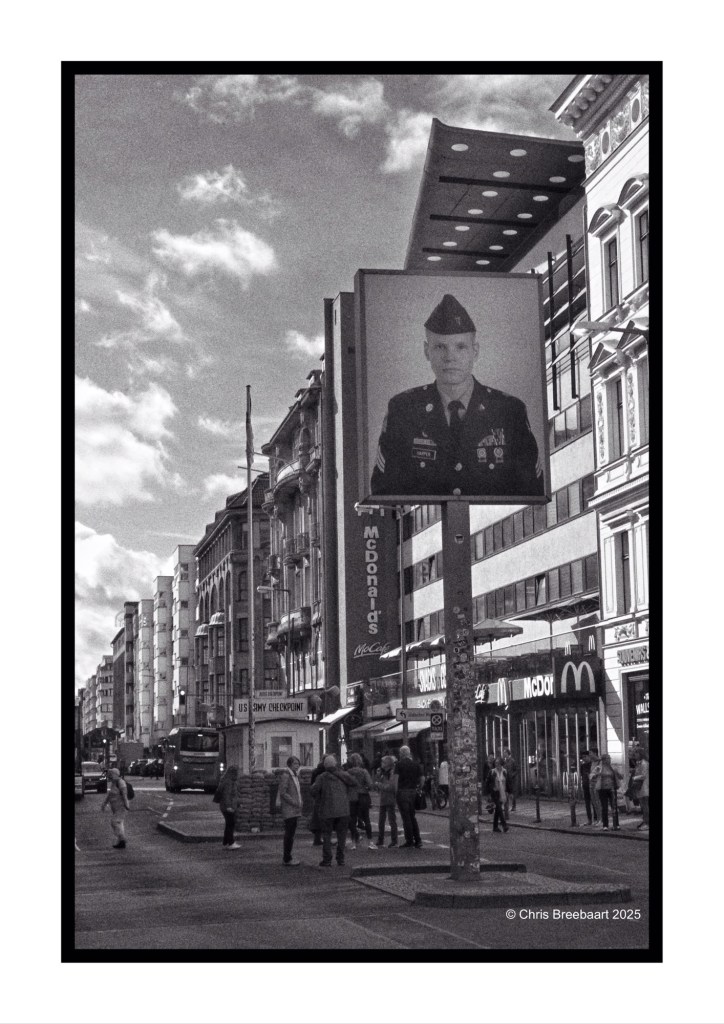
Checkpoint Charlie, symbol of the cold war.
Shot with Nikon Zf, edited using Snapseed and Marksta. Click the picture for a larger version

Berlin has a wonderful (and cheap) public transportation infrastructure. One of the building blocks is the U-Bahn.
Shot with Nikon Zf, edited using Snapseed and Marksta. Click the picture for a larger version
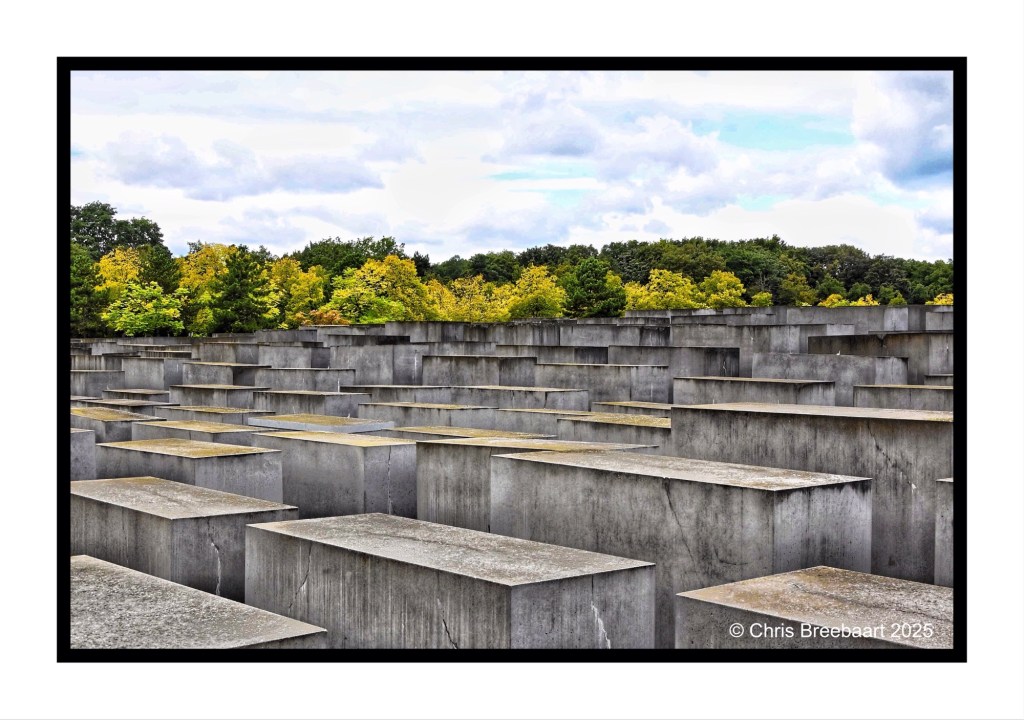
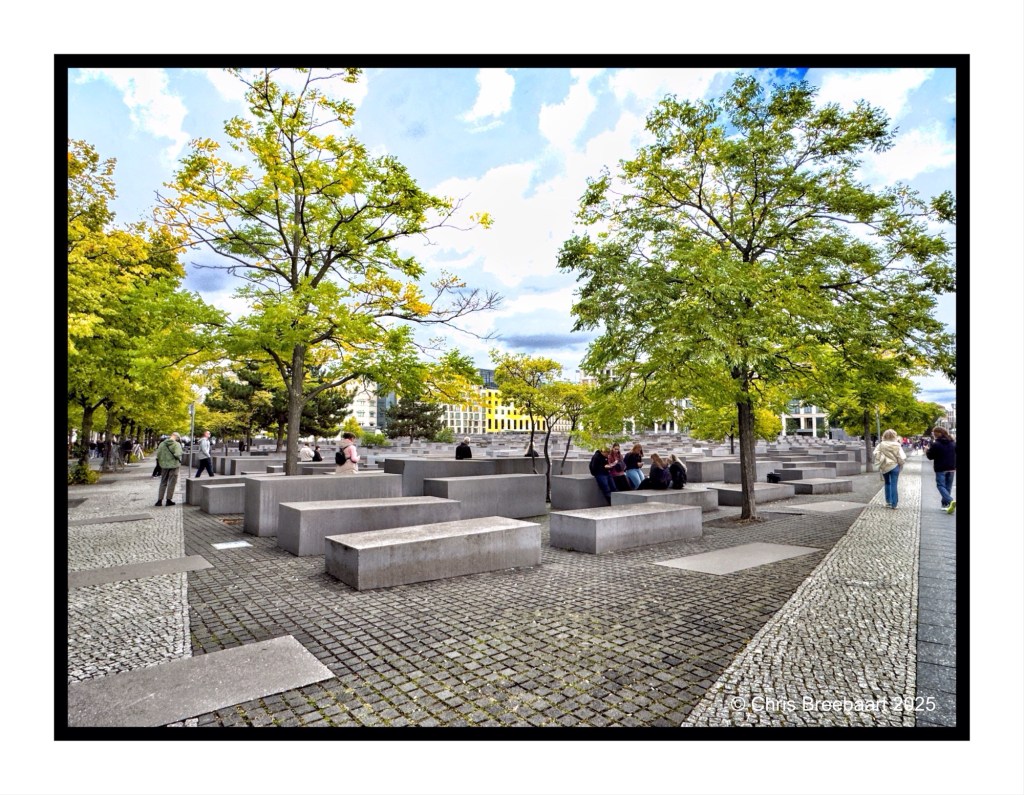
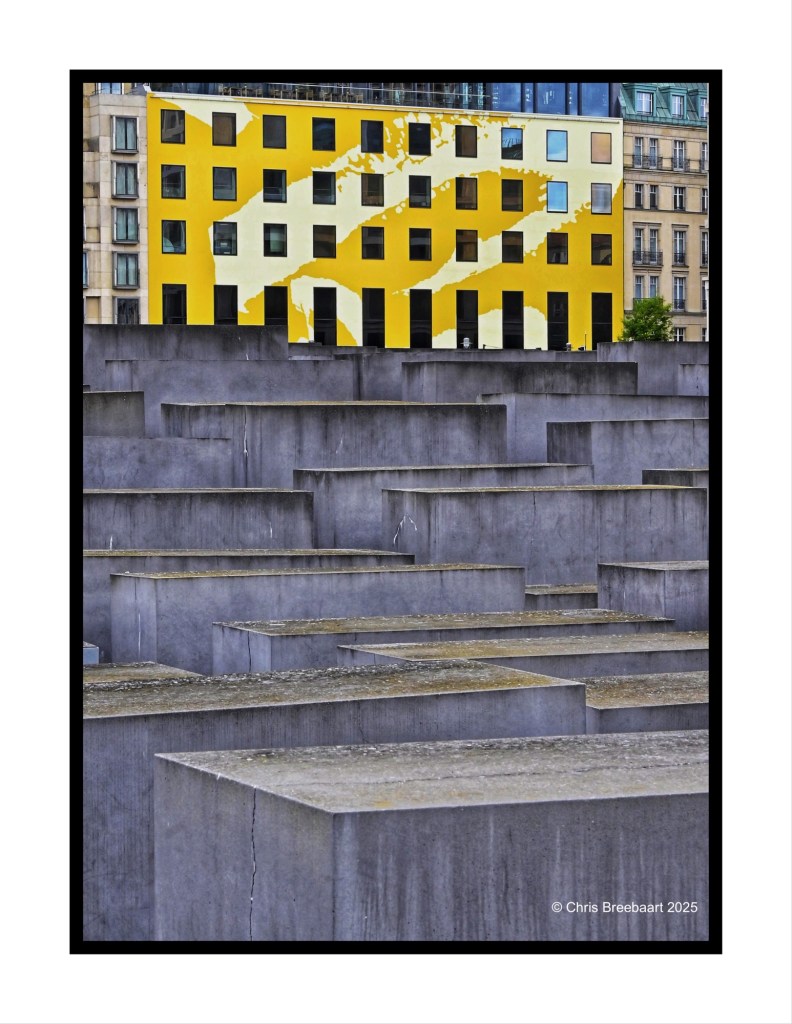
Another impression of the the Memorial to the murdered Jews in Europe.
Shot with iPhone 15 Pro Max and Nikon Zf, edited using Snapseed and Marksta. Click the picture for a larger version

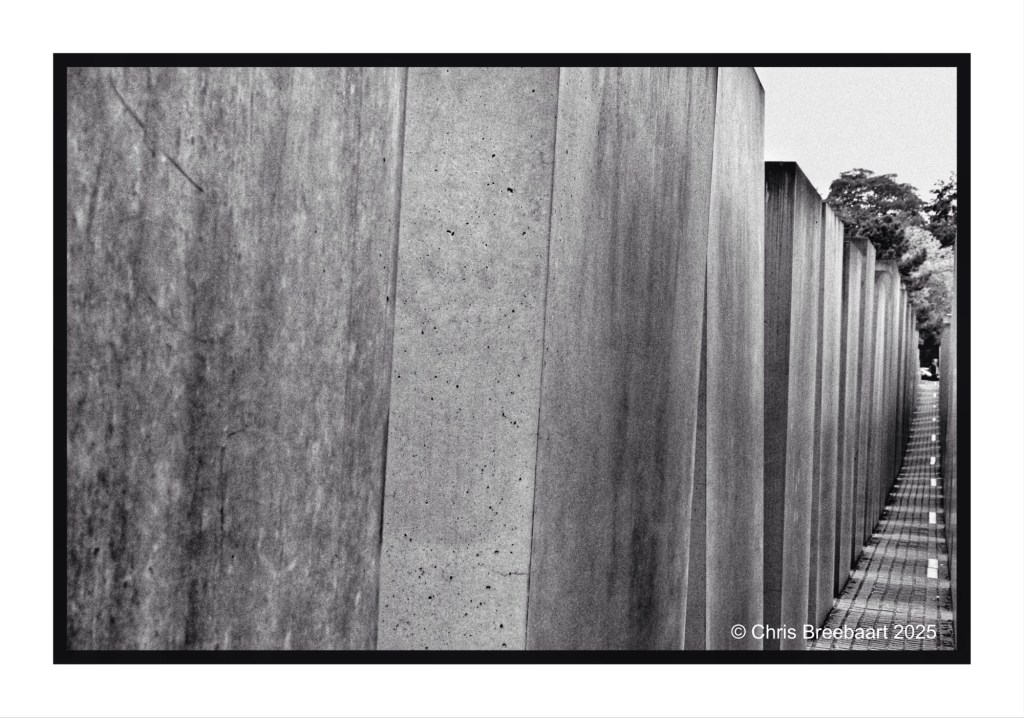
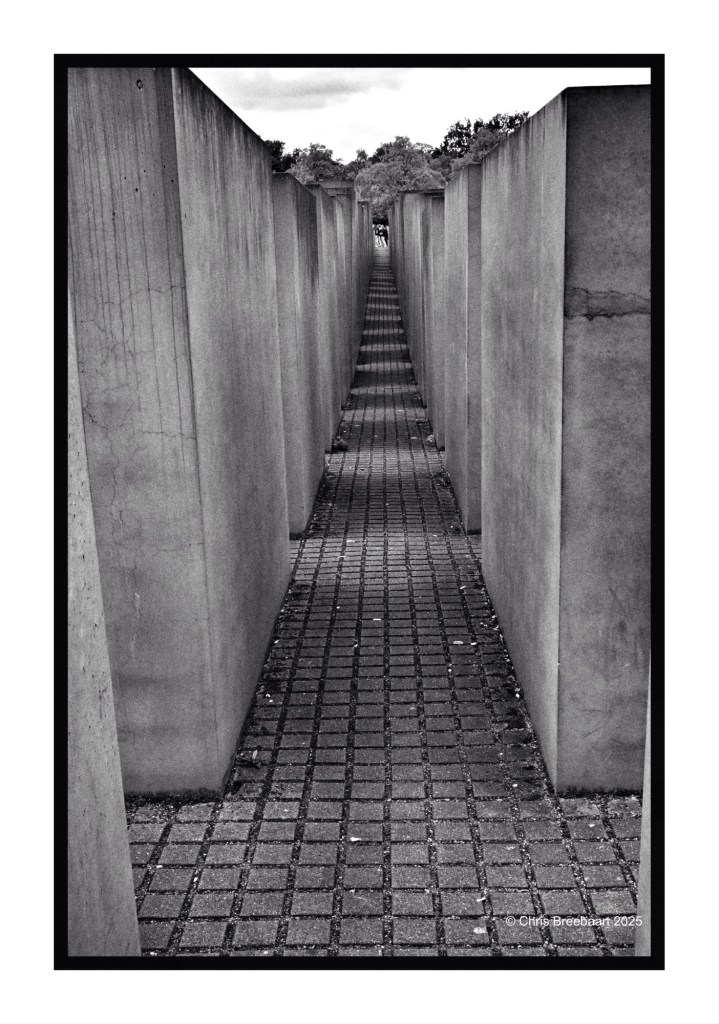

Last September I revisited Berlin after 46 years. One of the reasons to come back was to visit the Memorial to the murdered Jews in Europe. I had read stories and seen photos, and I wondered how I would take photo’s of it. And what it would be like to wonder through it. This visit I had my first experience with the monument. Here is the first impression (and the coming days I will publish some more).
Shot with Nikon Zf, edited using Snapseed and Marksta. Click the picture for a larger version.
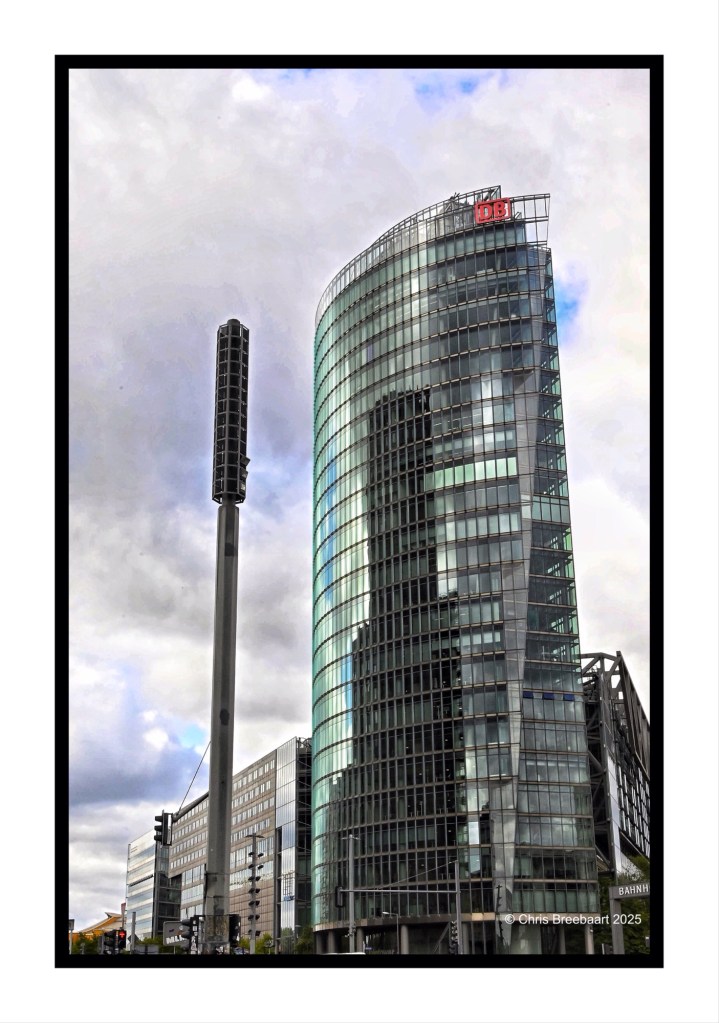
The Bahntower on the Potsdamer Platz, headoffice of the Deutsche Bahn.
Potsdamer Platz was the vivid heart of Berlin. During World War II, it was almost completely destroyed. Since 1961 Potsdamer Platz was a no man’s land, a death strip as part of the Berlin Wall. After the fall of Berlin Wall this was the biggest property developing area in a major city in Europe.
Shot with Nikon Zf, edited using Snapseed and Marksta. Click the picture for a larger version.
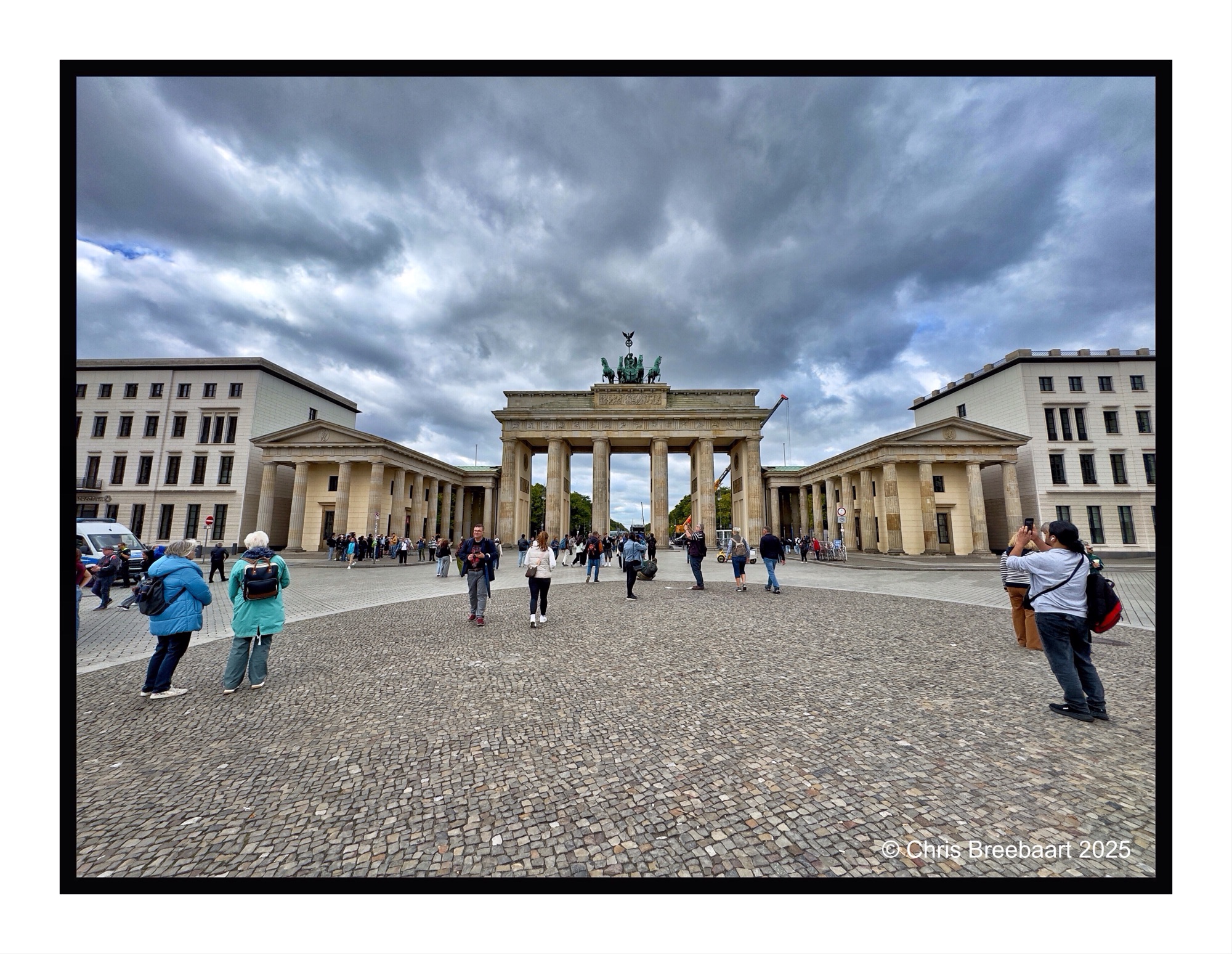
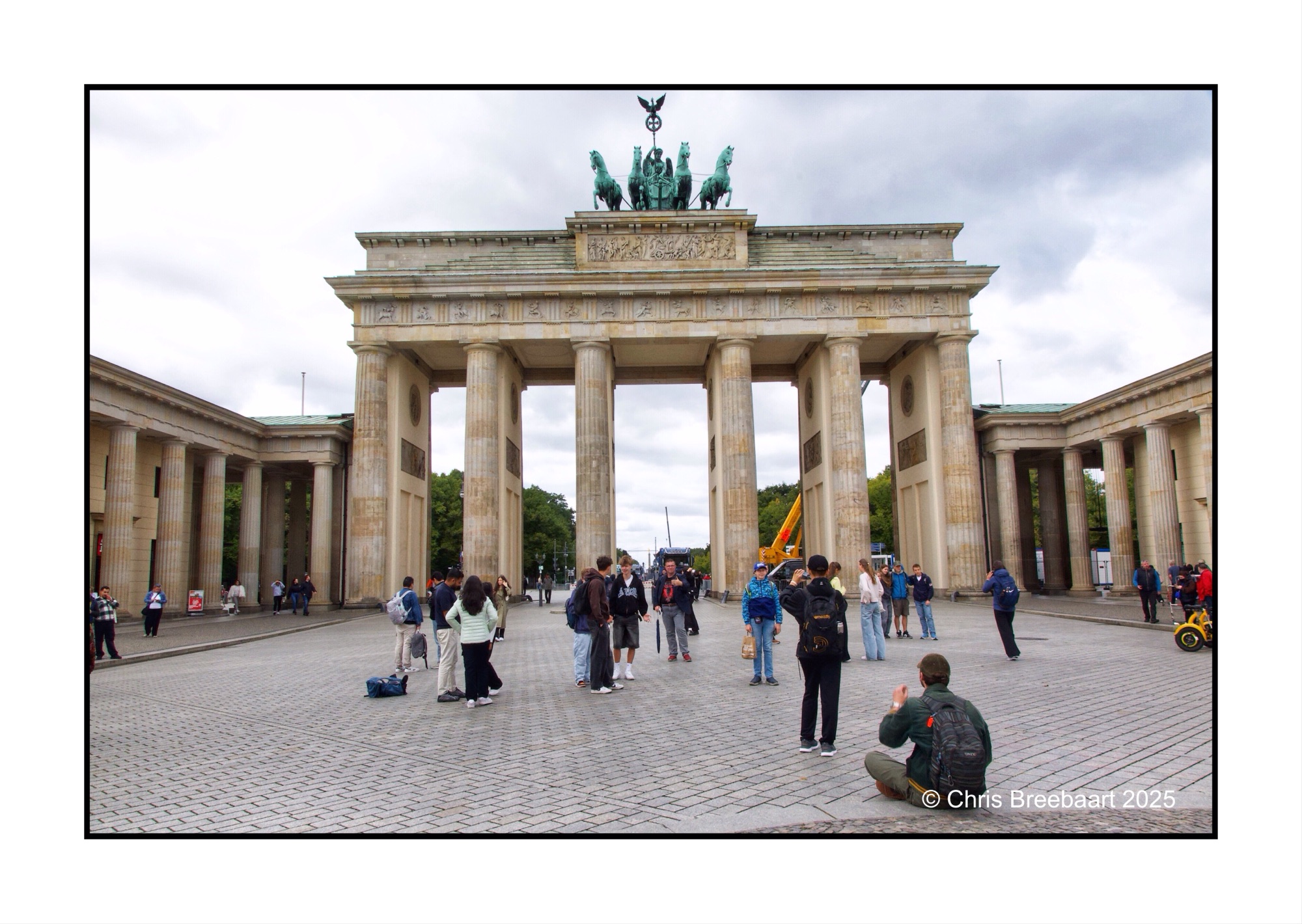
Brandenburger Gate (Brandenburger Tor) is a symbol of unity for Berlin and Germany. Nowadays the Pariser Platz (Paris Square) is a pedestrian and bicycle area.
Shot with Nikon Zf, edited using Snapseed and Marksta. Click the picture for a larger version.
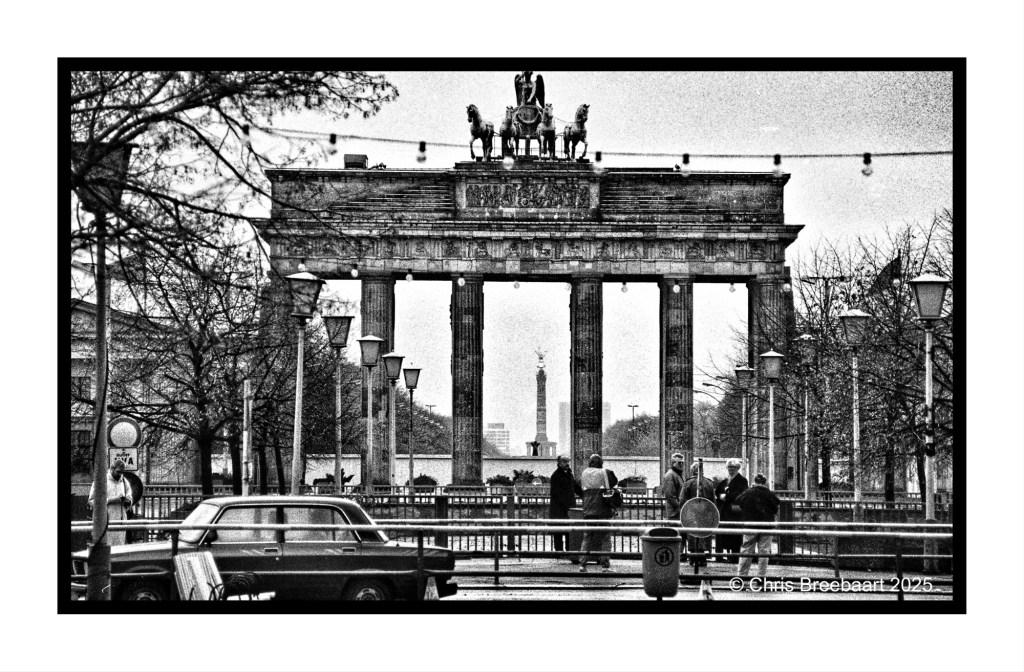
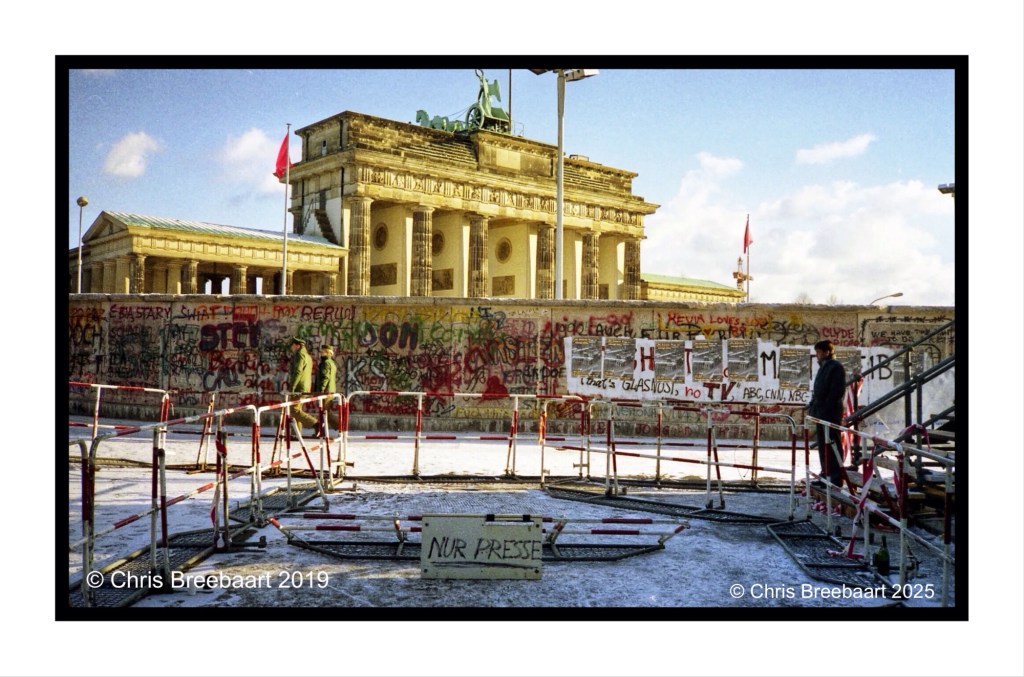
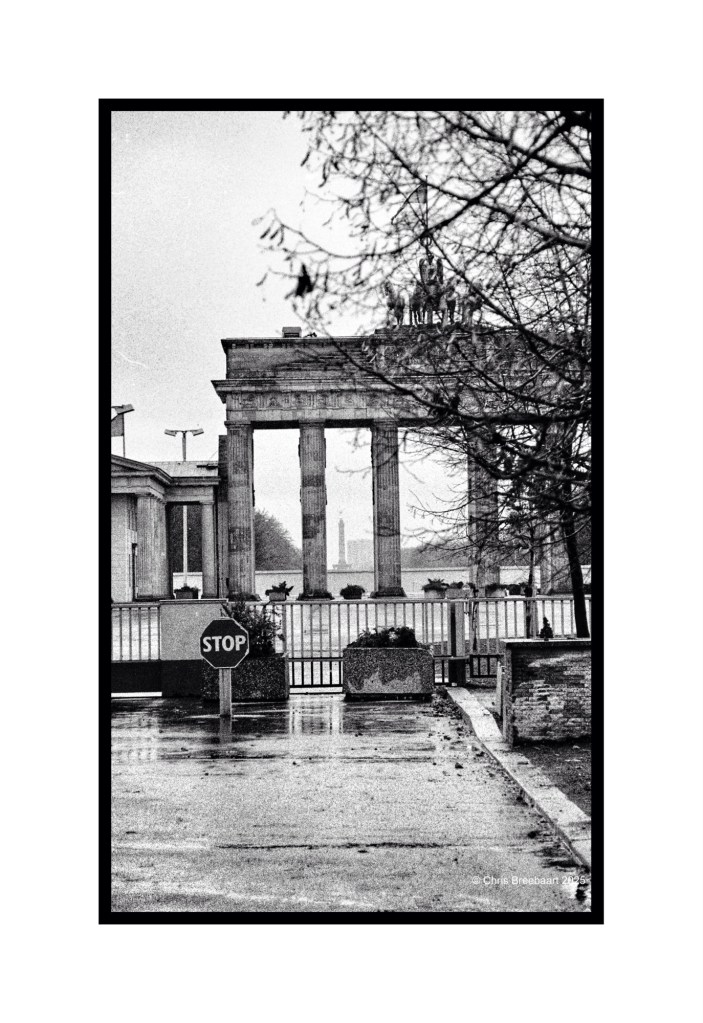
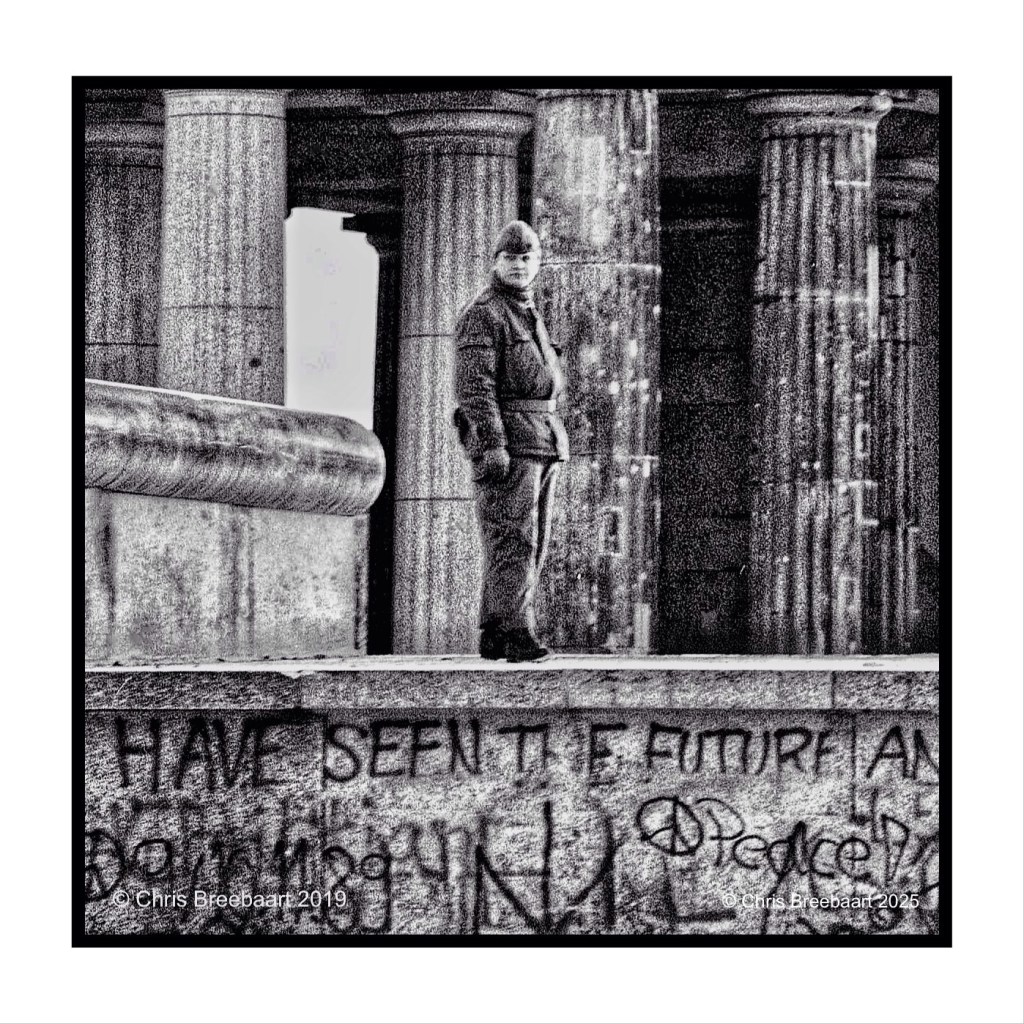
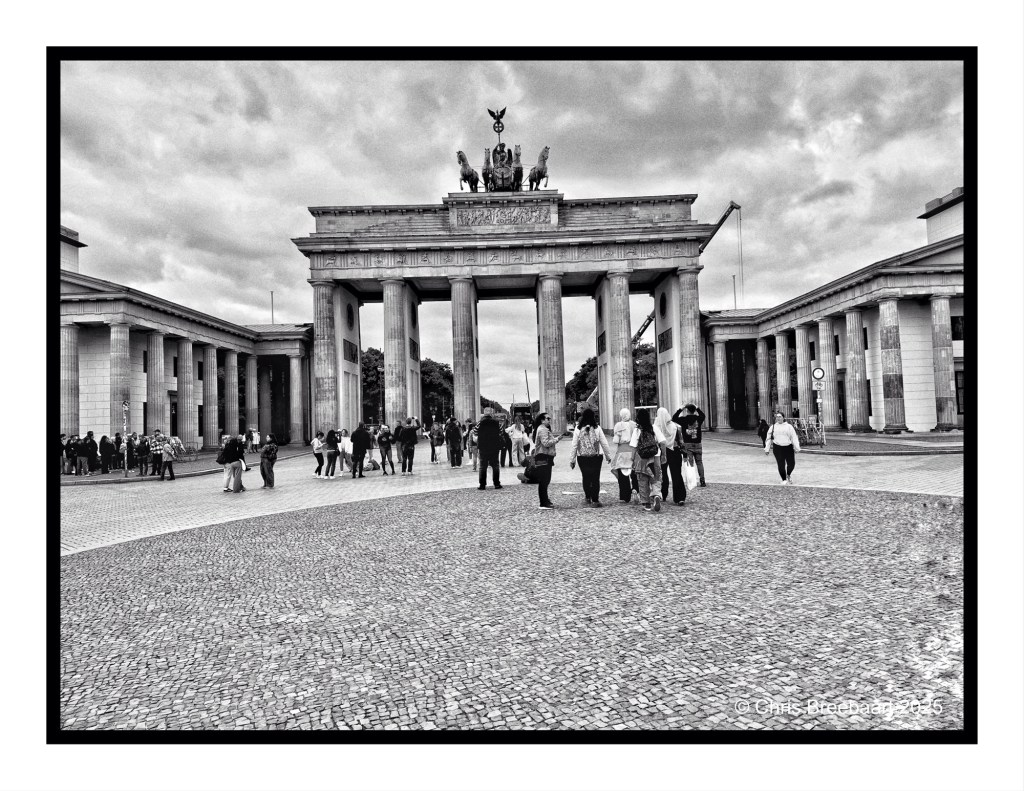
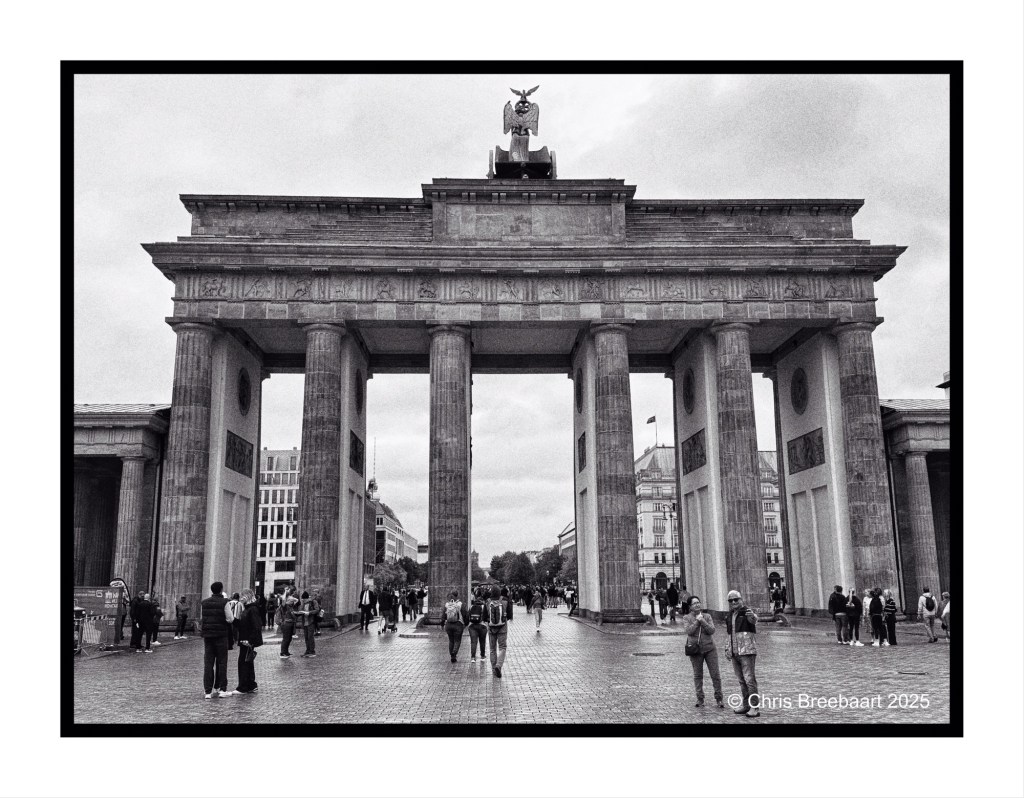
Brandenburger Gate (Brandenburger Tor) in Berlin was an iconic point at the time of the Berlin Wall (Berliner Mauer). The gate then stood in no mans land, and showed the alienating effects of division through the city. Now the Brandenburger Gate is a symbol of unity of Berlin. It was a pleasure to walk through the gates, and enjoy the people and streets around it. And the see the gate back at its splendor.
About the B4 retouch series:
I browsed my archive for pictures to publish. Some of them are partly retouched but most do have scratches, dust and stains.
The monochrome set of 1989 was shot with Nikon F301 on Kodak TriX. The colorfilm was Fuji, and shot on Pentax Espio 115M. 2025 photos shot with iPhone 15 Pro Max edited using Snapseed and Marksta. Click the pictures for a larger version.
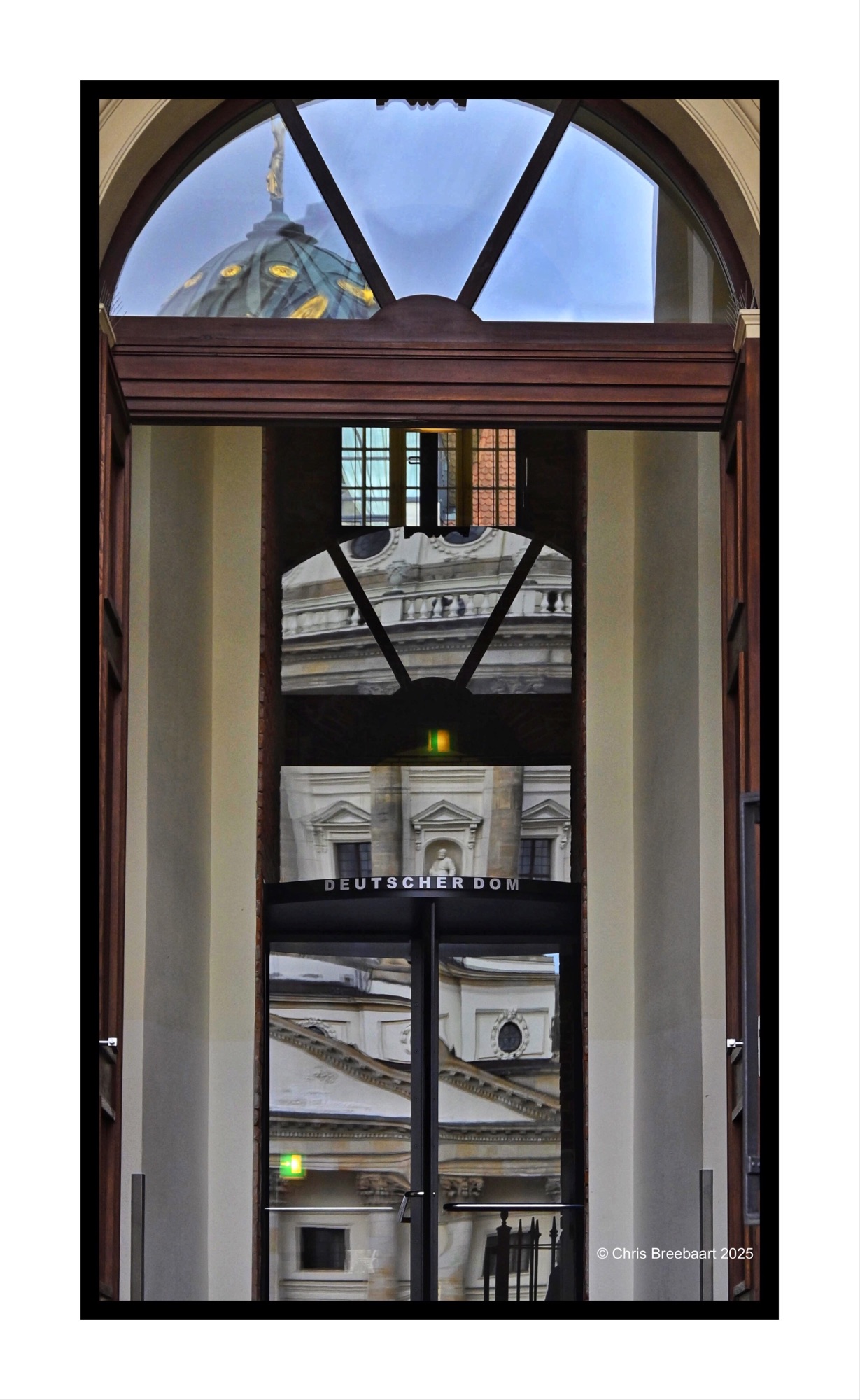
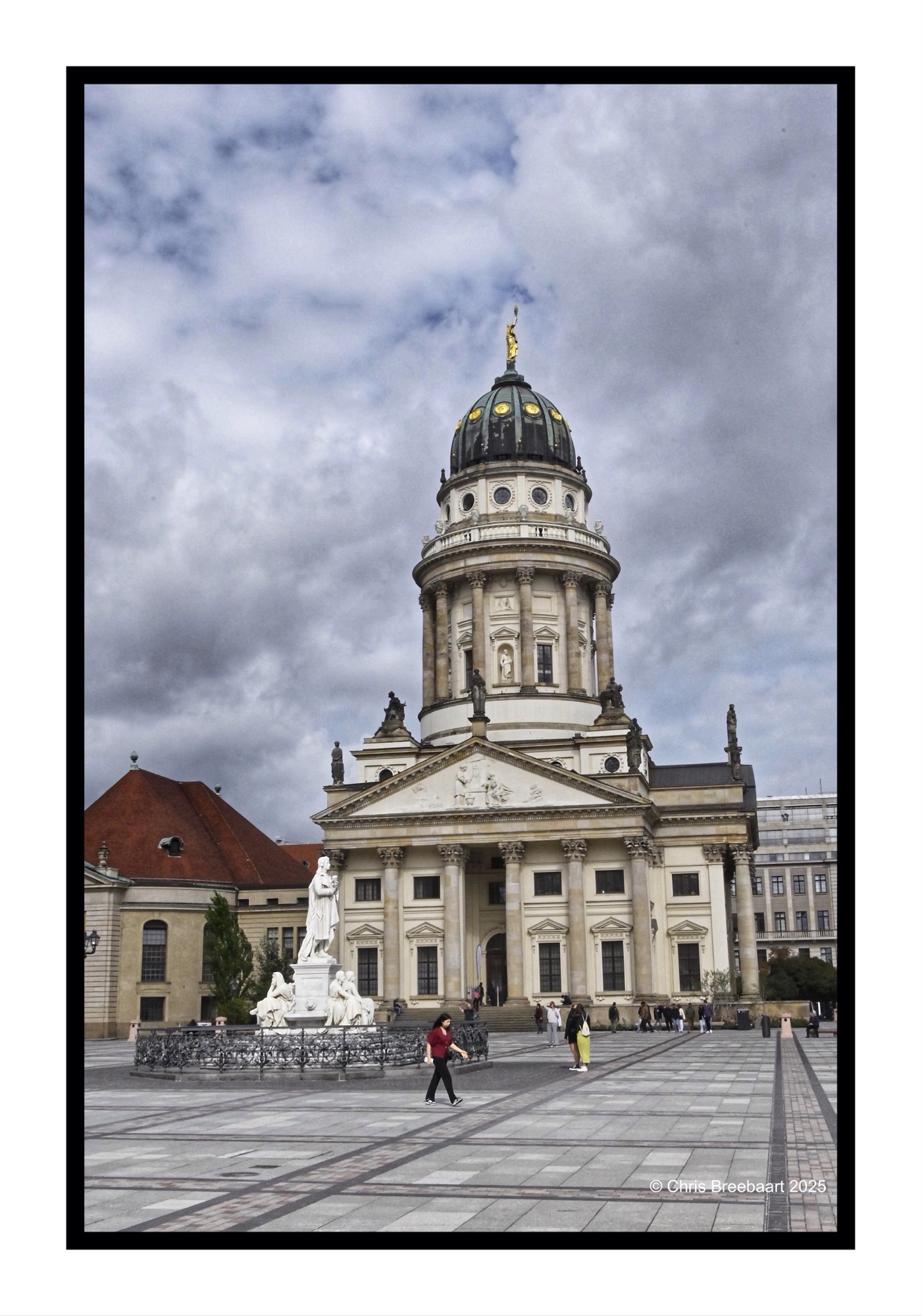
One of the beautiful squares in Berlin: the Gendarmenmarkt. On one side you find the Deutscher Dom a.k.a. Neue Kirche (German Cathedral), and opposite the Französischer Dom (French Cathedral). The top photo reflects the latter in the doors of the Deutscher Dom.
Shot with iPhone 15 Pro Max edited using Snapseed and Marksta. Click the picture for a larger version.
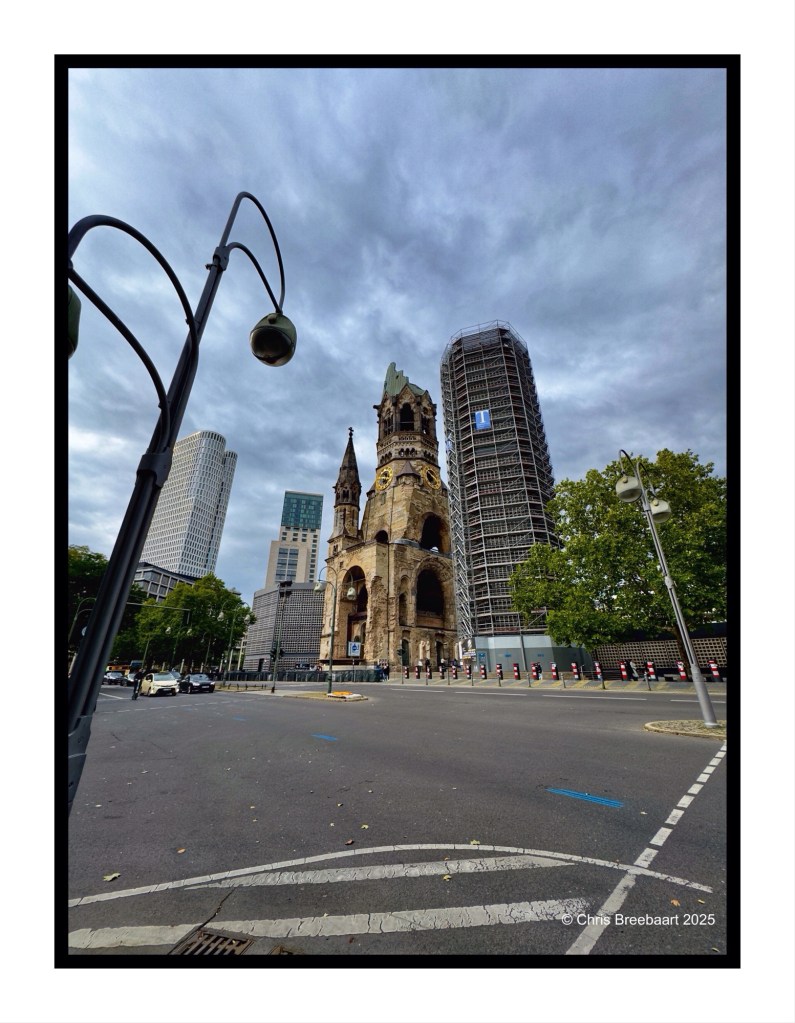
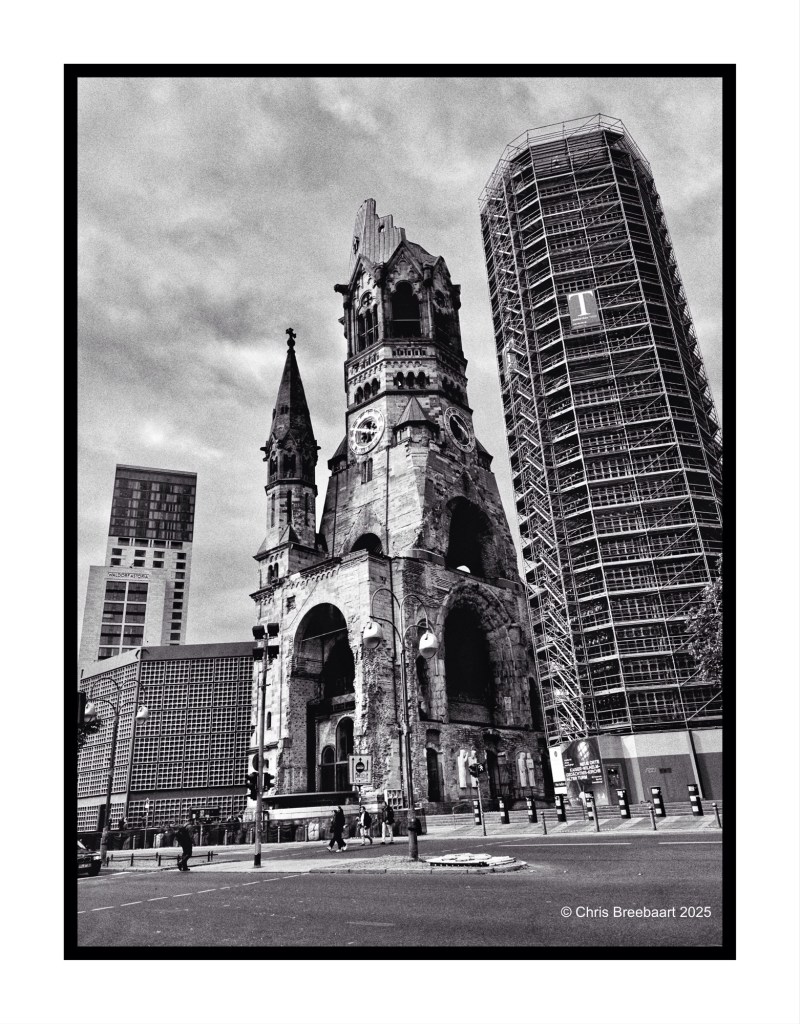
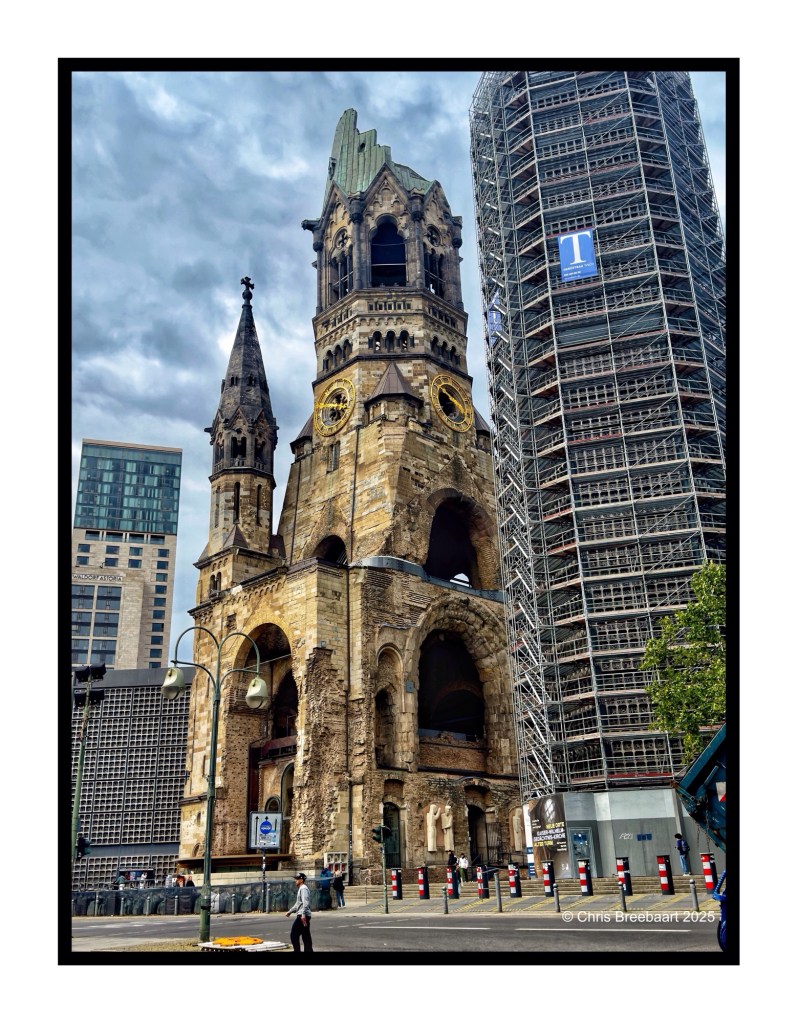
One of the memorial landmarks of Berlin is the Kaiser Wilhelm Gedächtnis Kirche. In its simplicity it is a powerful landmark and memorial.
Shot with iPhone 15 Pro Max edited using Snapseed and Marksta. Click the picture for a larger version.
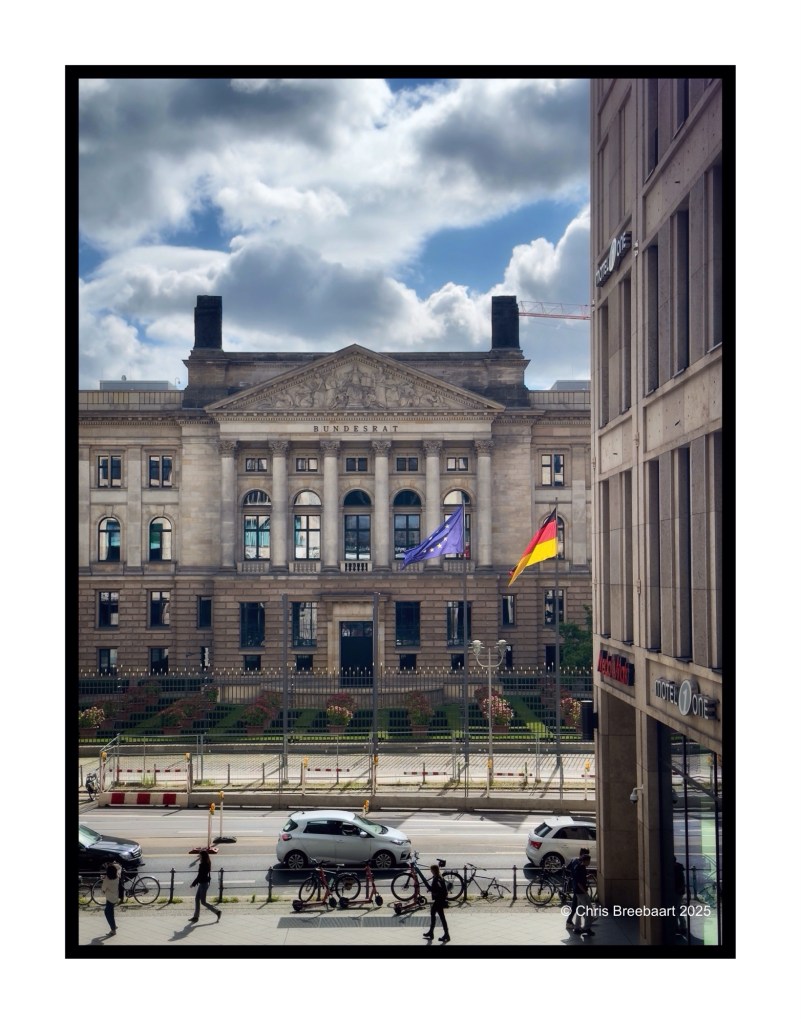
Walking through Berlin was sometimes causing some disorientation. Lots of places that were ‘void and empty’ in November 1989 are now (re)build. In 1989 I just saw a small part of former East Berlin. It was a challenge to figure out what I was looking at. An old building, a refurbished one or a new build? I have a slight preference for old buildings. Lots of them are beautifully restored. This is one of them: the Bundesrat in the former Prussian House of Lords. As seen from the Mall of Berlin.
Shot with iPhone 15 Pro Max edited using Snapseed and Marksta. Click the picture for a larger version.
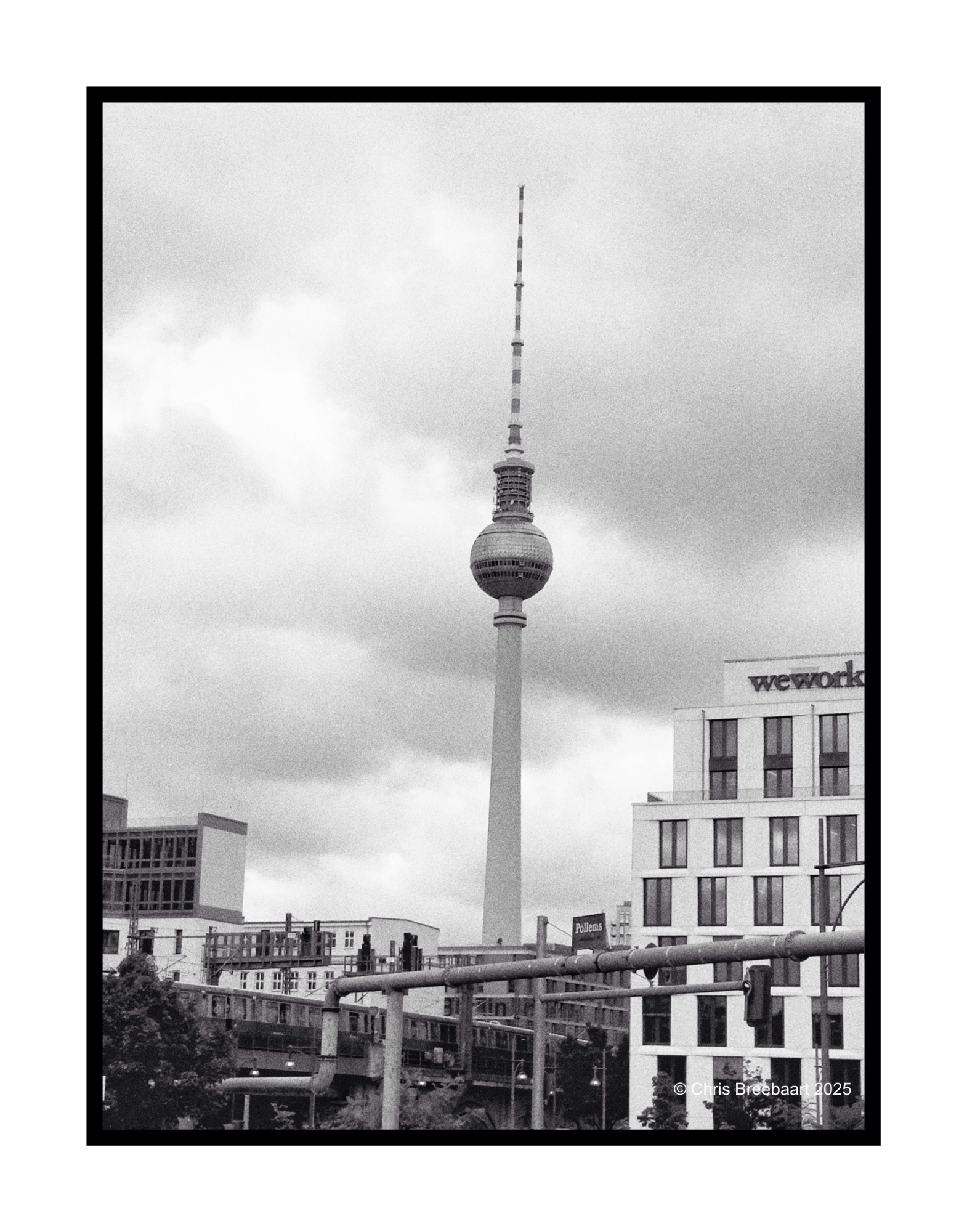
September 2025 I visited Berlin for the second time. My first visit was in November 1989. That coincided with the fall of the Berlin Wall. After 46 years I wanted to see how Berlin had changed since ‘die Wende’.
In 1989 we just spent one day in East Berlin. This visit the first day we looked around in the former East Berlin area. The television tower still towers over the city at Alexanderplatz. There is still a lot of construction activity, and along the roads you see pipes in blue and pink. First I thought that it was a smart concrete transport system. In reality it is a way to pump out groundwater from construction sites into the Spree river.
Shot with iPhone 15 Pro Max edited using Snapseed and Marksta. Click the picture for a larger version.
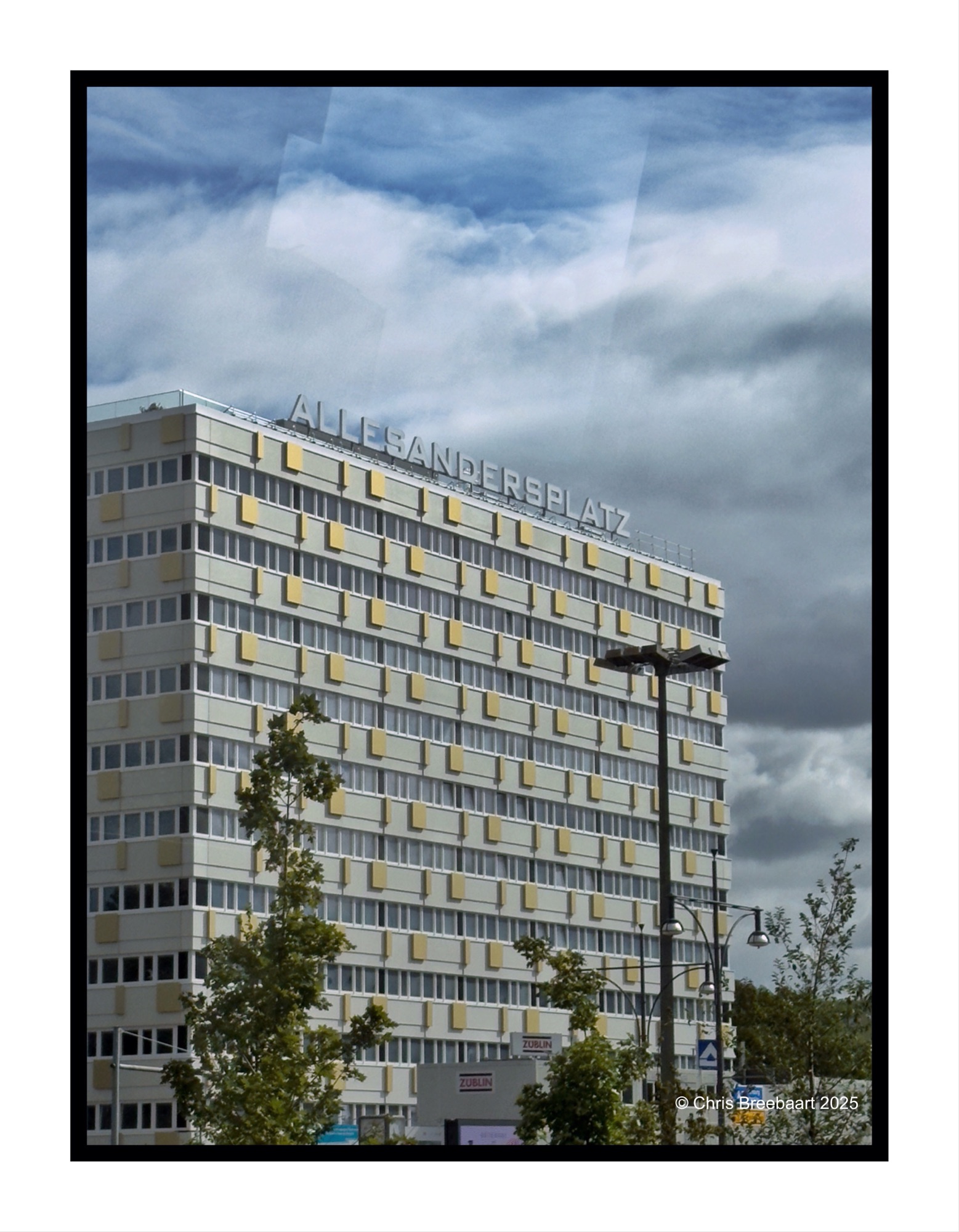
September 2025 I visited Berlin for the second time. My first visit was in November 1989. That coincided with the fall of the Berlin Wall. After 46 years I wanted to see how Berlin had changed since ‘die Wende’. The coming days I will publish some photos of this trip.
Friends had ‘warned’ me about the changes I would see. What in 1989 was a vast open space (e.g. the Potzdamer Platz) is now completely filled with modern architecture. But what struck me the most was the vibrant vitality the city breathes now. It is cosmopolitan and a magnet.
One of the landmark squares of Berlin is Alexanderplatz. On a building just a few hunder meters away I saw this text ‘Allesandersplatz’. Everything is different square? German humor? Or the basic conclusion after the first day. A lot changed. At face value.
Shot with iPhone 15 Pro Max edited using Snapseed and Marksta. Click the picture for a larger version.

