This week’s Lens-Artists Photo Challenge #361 is ‘Doors revisited’. That theme was also the brief for LAPC #20. A door is a pass way to another space behind it. That space can be something we know already. Or something we like to imagine to see there when we go through. And in books you can end up in another world. In this post a few doors I met in my life. One I used for a long time, most I just passed by or passed through on holidays.
The word ‘doors’ for me is also linked to the band The Doors. The name of the band came from a book by Aldous Huxley, The doors of perception. And Huxley took it from William Blake, who used it as a metaphor:
“If the doors of perception were cleansed every thing would appear to man as it is, Infinite. For man has closed himself up, till he sees all things thro’ narrow chinks of his cavern . Doors lead you to another side or space, break on through to the other side.”
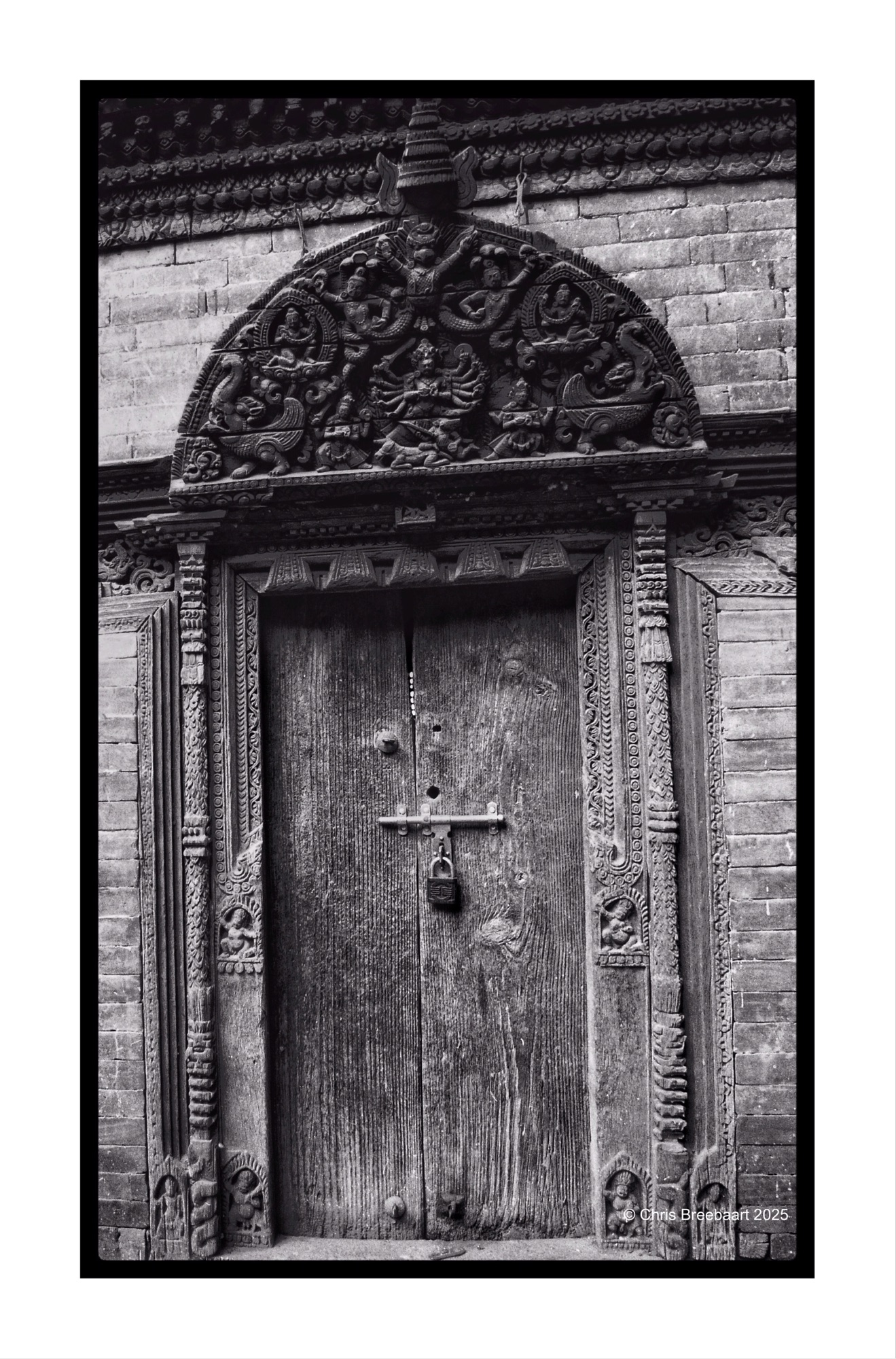
So a lot can be said about doors. Luckily, we still have the photos. Here are a few from my conscious memory.
The Netherlands, Oegstgeest – November 1991
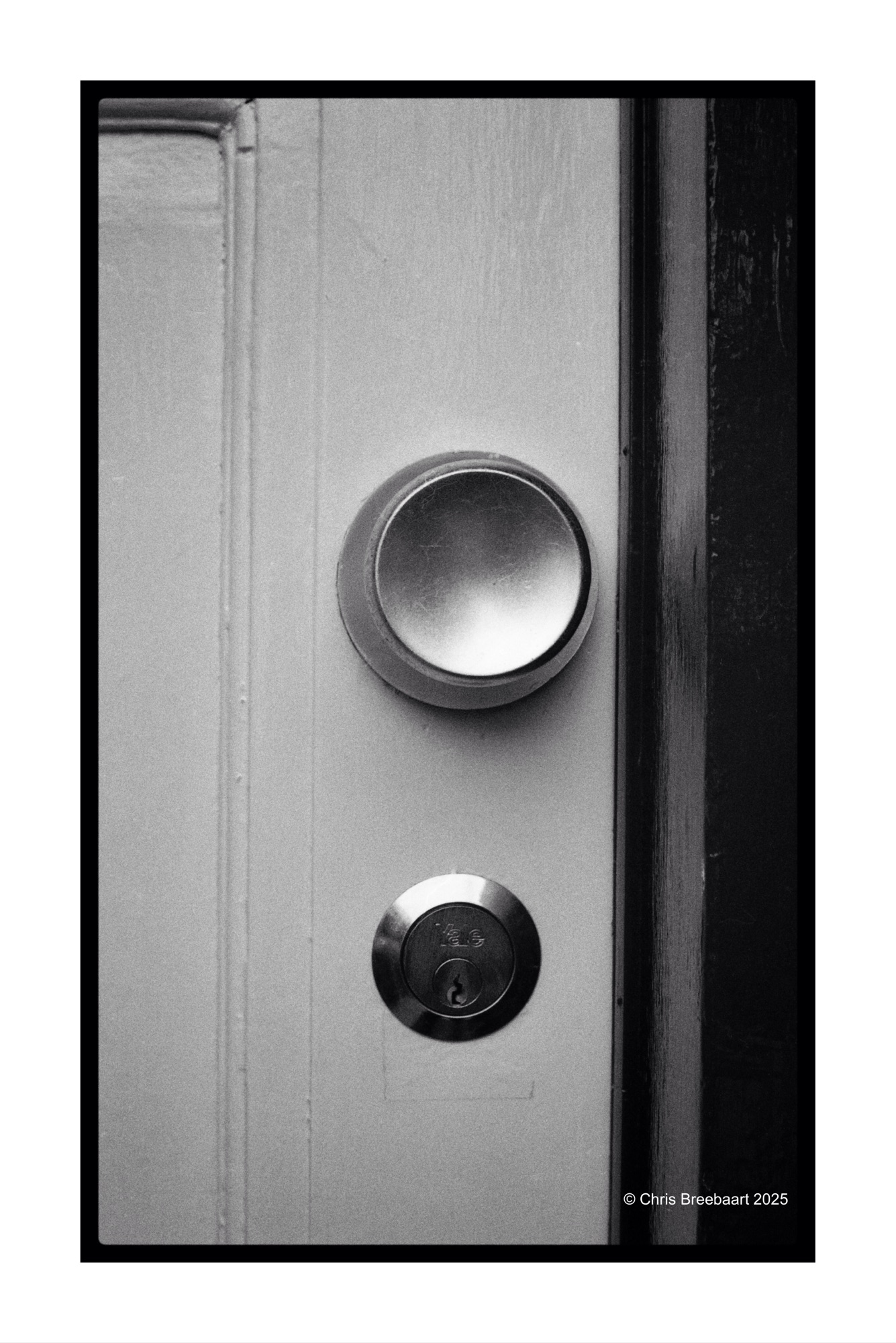
This is the front door to the house I was born and lived in for 25 years. The photo is shot on Ilford XP with a Pentax K1000.
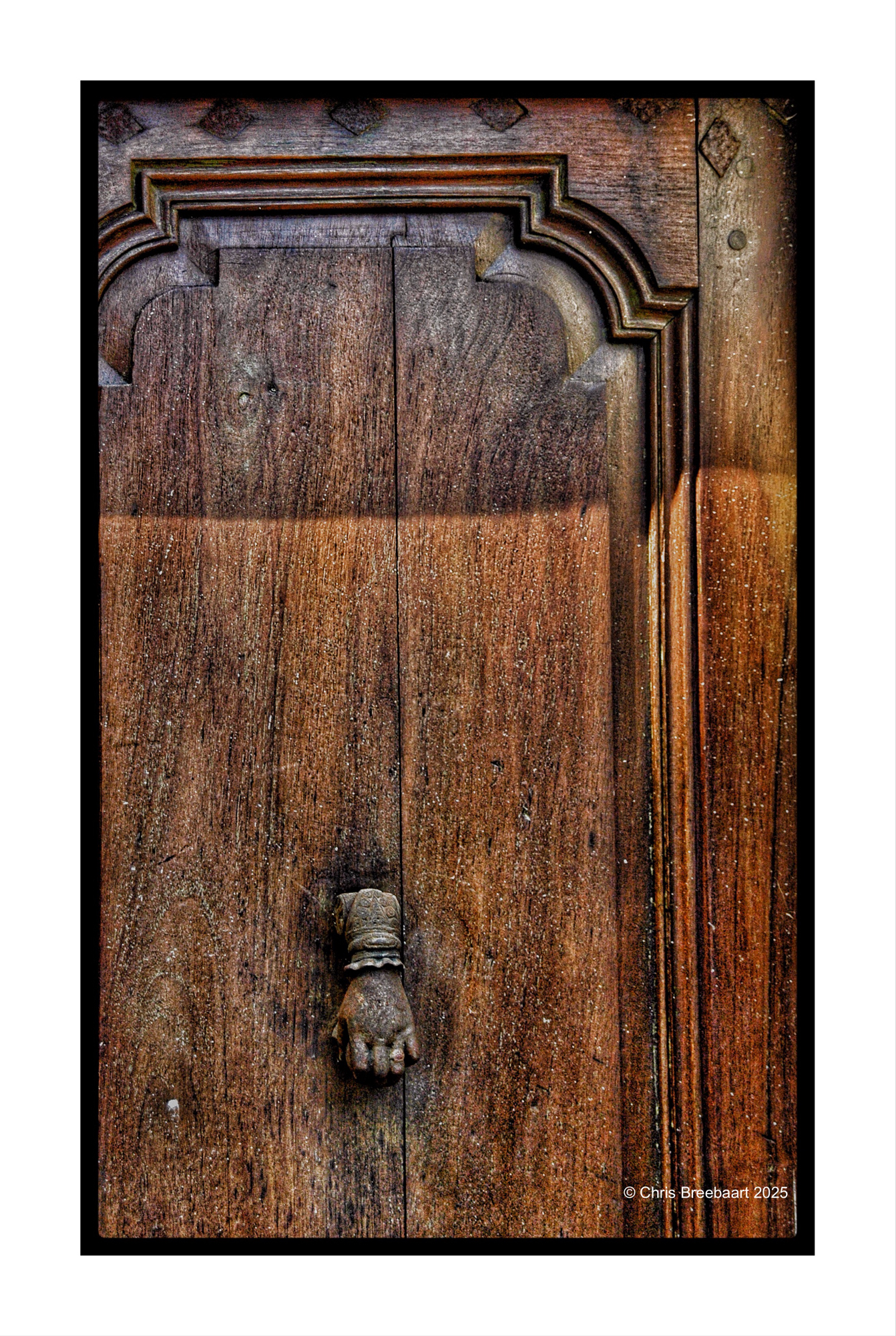
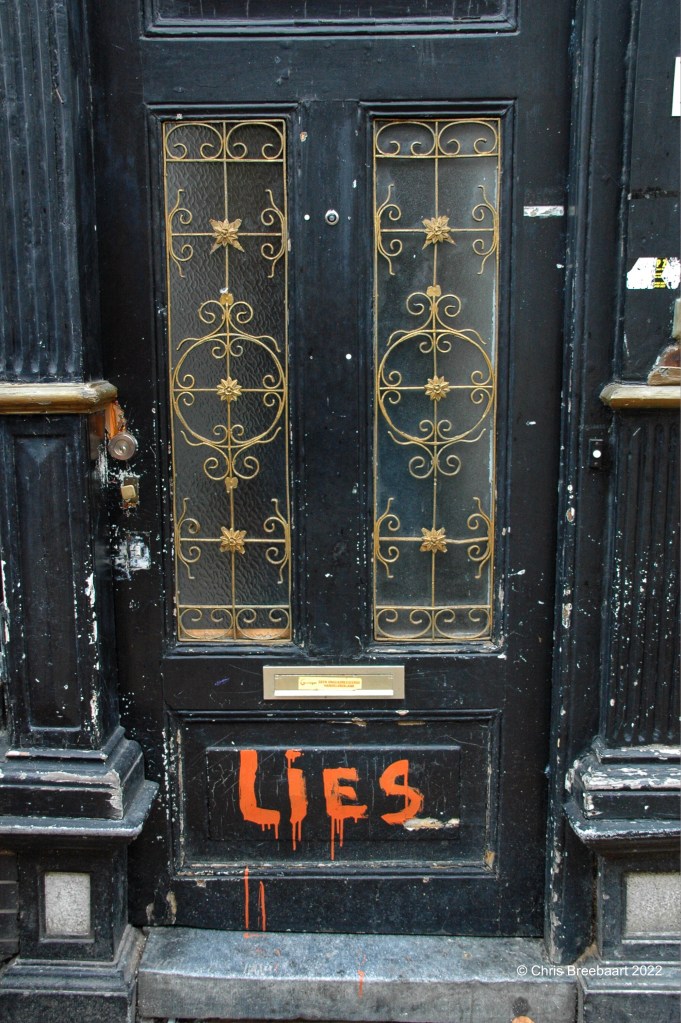
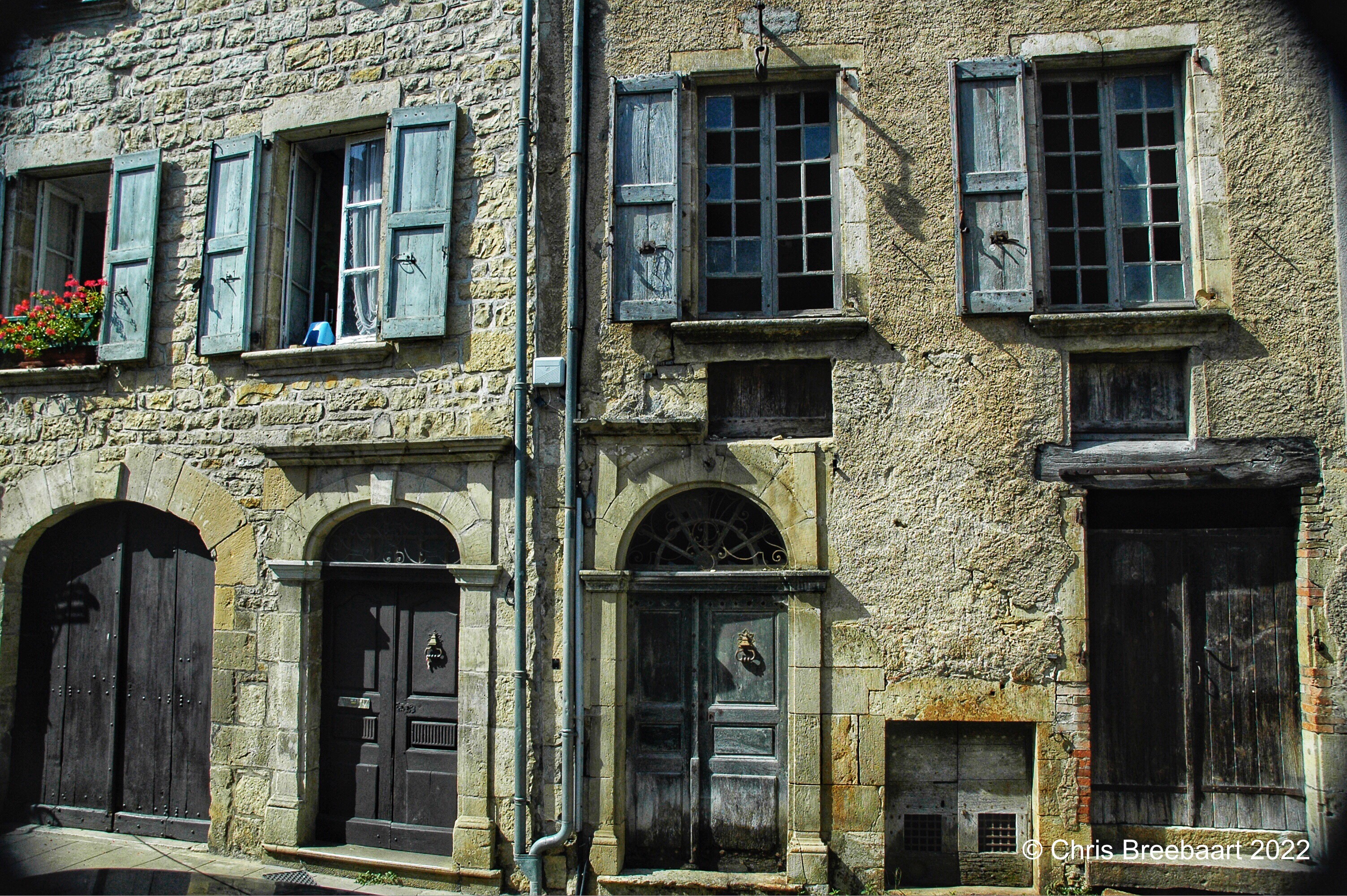
France, Caylus – September 2005
This door in Caylus is ready to be knocked. Shot on Nikon D70.
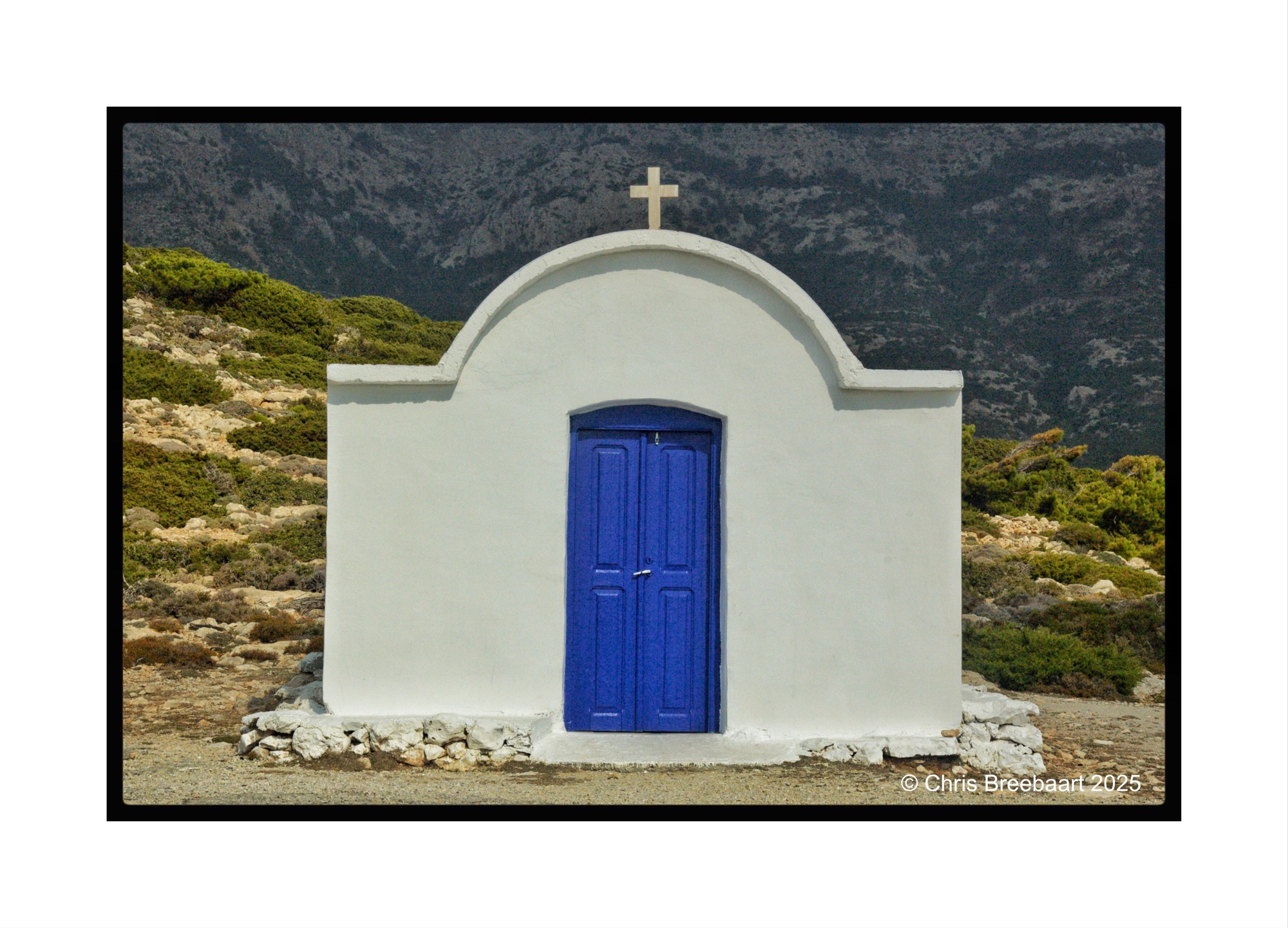
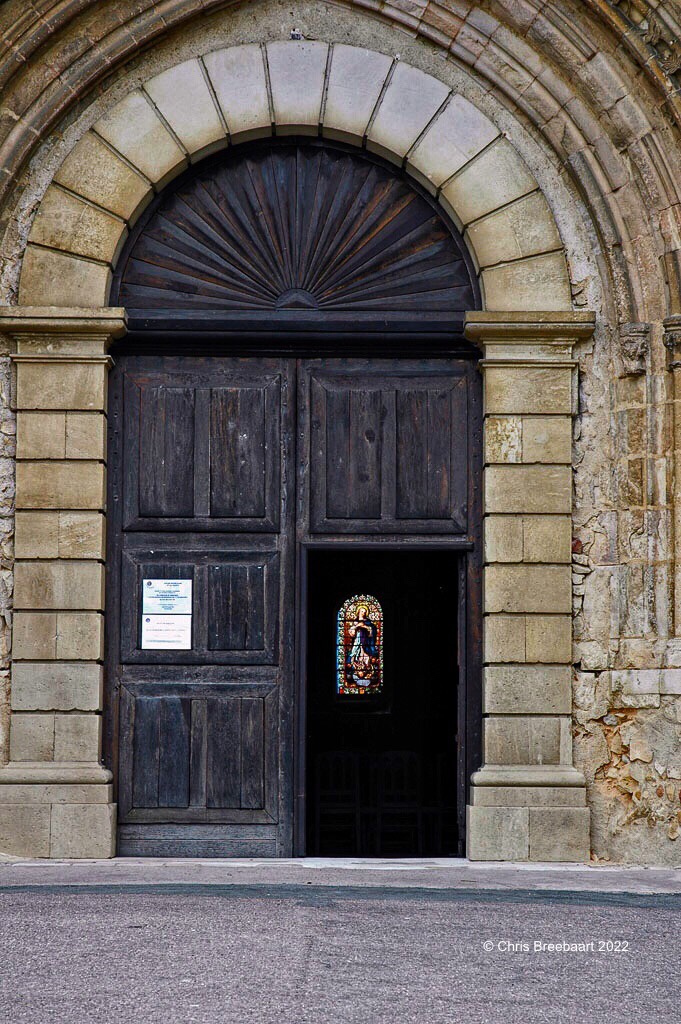
Greece, Karpathos – September 2009
I looked through my archive. It struck me that lots of the doors I saw there are doors of small or bigger churches. This one is on Karpathos. Shot on Nikon D70.
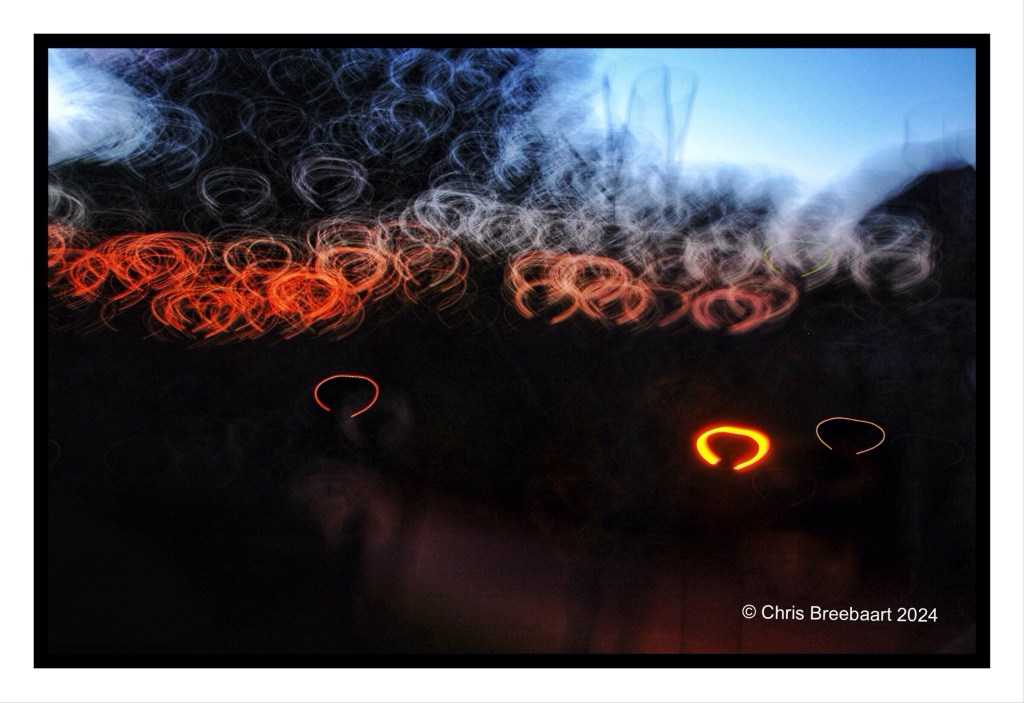
This week’s Lens Artitsts Photo Challenge (#321) is Intentional Camera Movement (ICM). Yesterday I published photos shot analogue on film: the result is only visible after developing the film. This one is from 2004 with my first digital Nikon D70. The fun of digital is that you can actually see on the back what the result is, and use this feedback to try again. Digital gives freedom and is cheap and gives instant feedback. 20 years of digital playing.
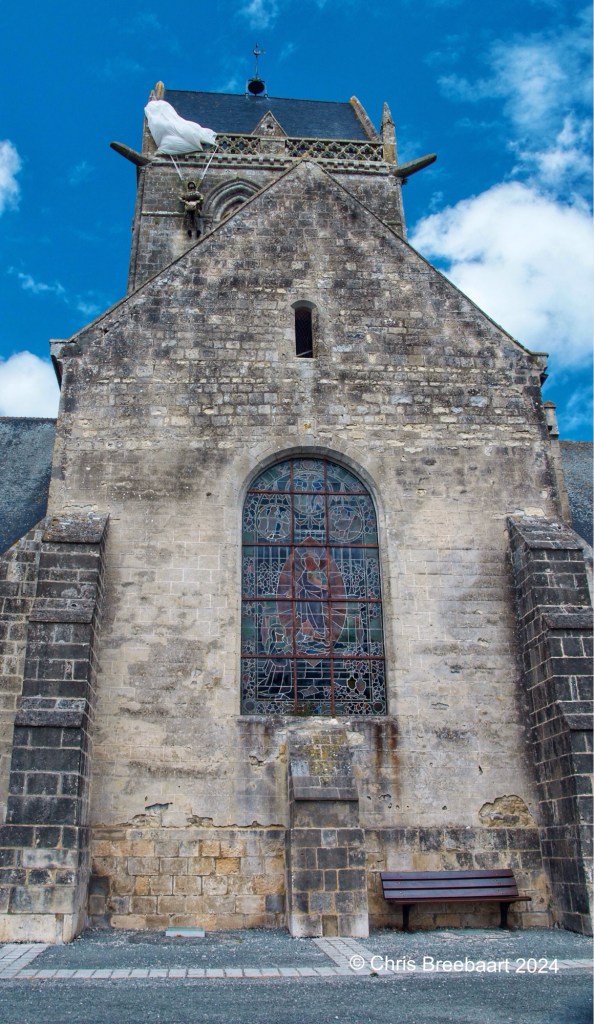
Today we remember that 80 years ago thousands were willing to pay the highest price to give us our freedom. John Steele landed on the pinnacle of this church in the early morning of June 6 1944 in Sainte-Mère-Église.
Some photos do not fit the LAPC’s themes, so there is a rest category ‘last chance’ being #280. I never am guided by the themes in the photos I shoot. Some fit in, some don’t. But I never know the theme while shooting. Here is one from the archive I recently stumbled upon, never published.
Slane Hill in Ireland. Close to Slane Castle castle that is famous among other historical facts, for being the recording site for U2’s The unforgettable fire’ in 1984. And famous open air concerts.
Outside the village is The Hill of Slane with a small old ruined chapel, a ruined monastery and a graveyard, overlooking the landscape and the river Boyne.
The most interesting place is a small hill with undergrowth right behind the site, from which this photo was taken.
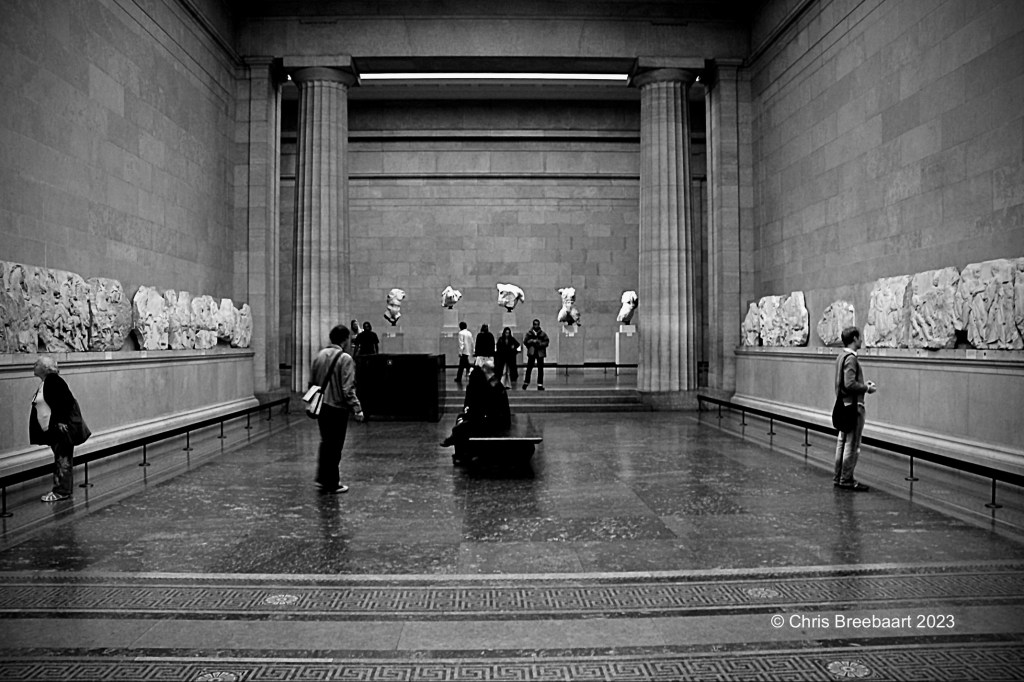
These sculpture (nicknamed The Elgin Marbles) are originally from the Parthenon in Athens. Lord Elgin supposedly bought them from the Ottomans, who occupied the present Greece at that moment. The Greek try to return these marbles for decades, the UK government refuses, saying it’s British heritage. Last week a meeting of the UK prime minister with the prime minister of Greece was cancelled, after the Greek PM reiterated the ownership of the marbles. How mesmerizing and wonderful must it be to see these ornaments in the place they belong, on top of the Acropolis over Athens.
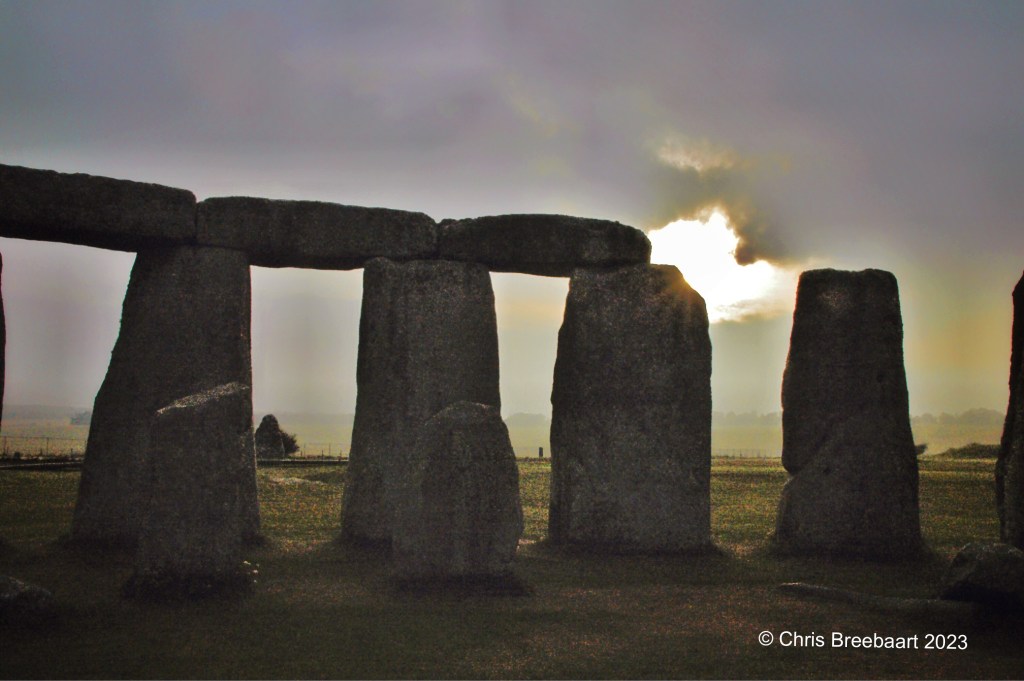
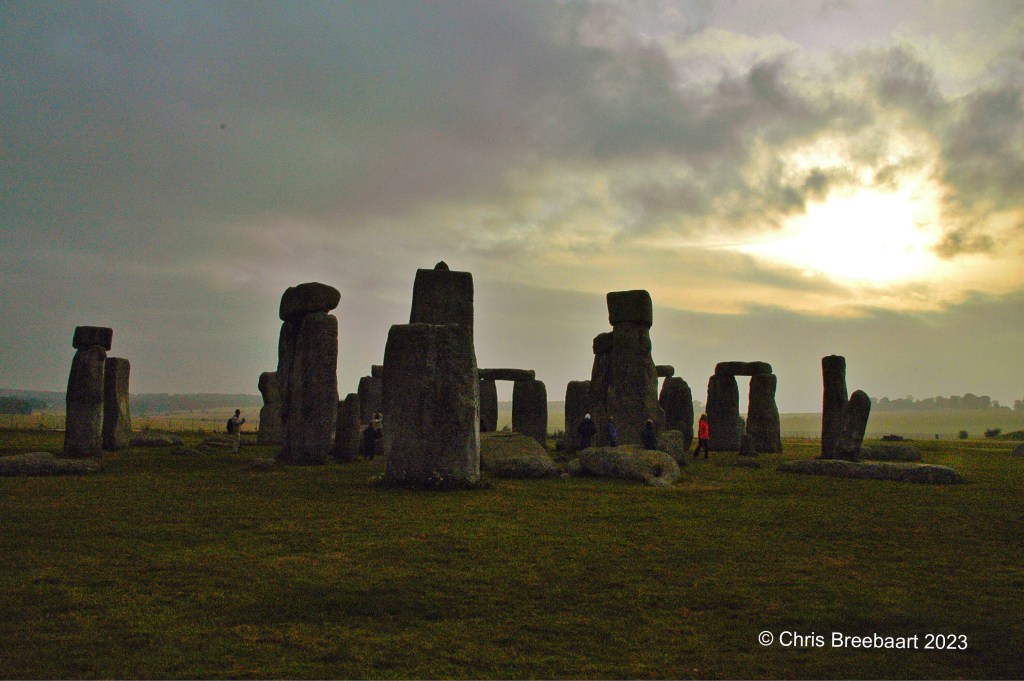
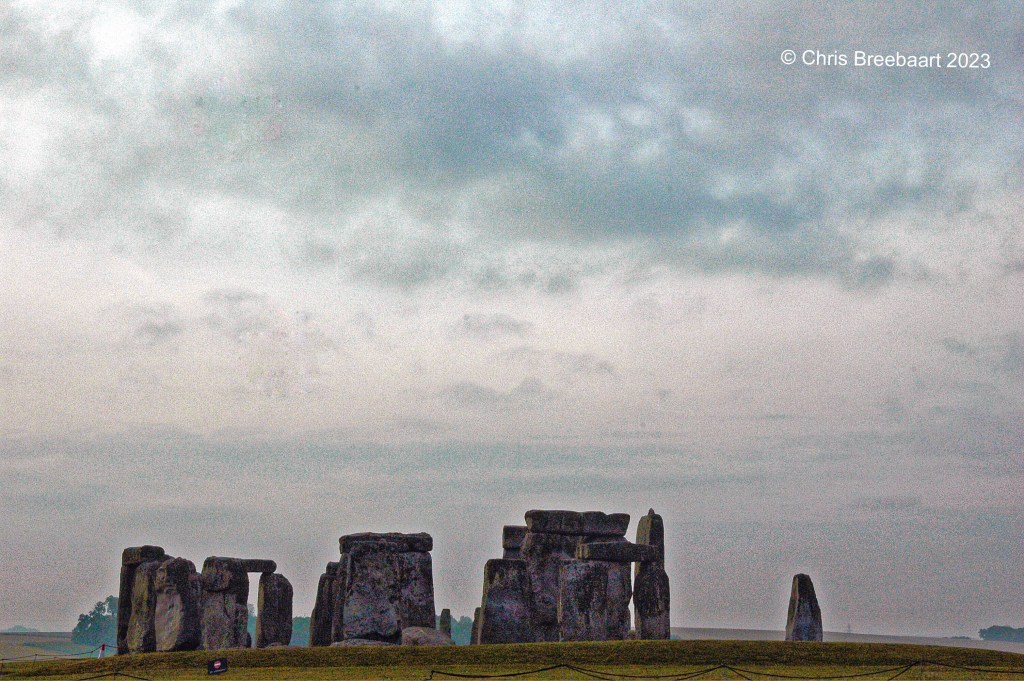
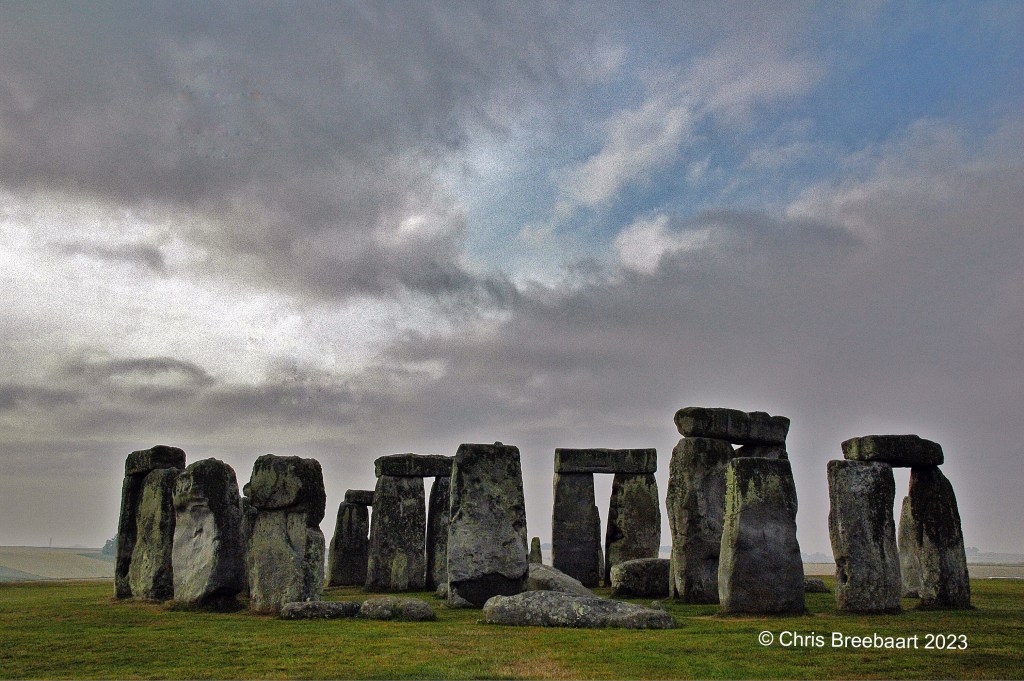
This week LAPC #254 is ‘spiritual places’. In August 2006 I was lucky to visit the inside of Stonehenge at sunrise. It was rather cloudy but it was a beautiful experience to be within the circles of stone, without crowds of people around.
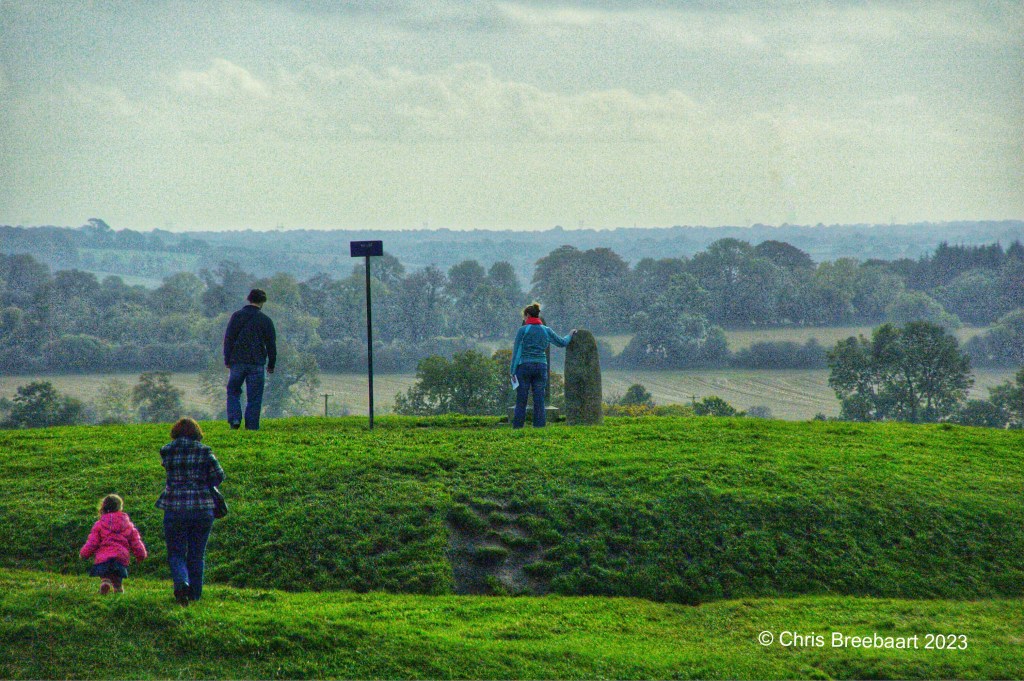
The Hill of Tara was the location for the inauguration of the High Kings of Ireland. The candidate should lay his hand on the stone, and if earth roared in acceptance, the candidate should be King. The present stone is not the original one. The original Lia Fáil (Irish for “stone of destiny”) used at Tara for inaugurating the High Kings of Ireland, was taken by the King of Scotland and move to Scone. In 1296, during the First Scottish War of Independence, King Edward I of England took the stone as spoils of war and removed it to Westminster Abbey, where it was fitted into a wooden chair – known as the Coronation Chair or King Edward’s Chair – on which most subsequent English and then British sovereigns have been crowned. For the full story I refer to Wikipedia’s Stone of Scone.
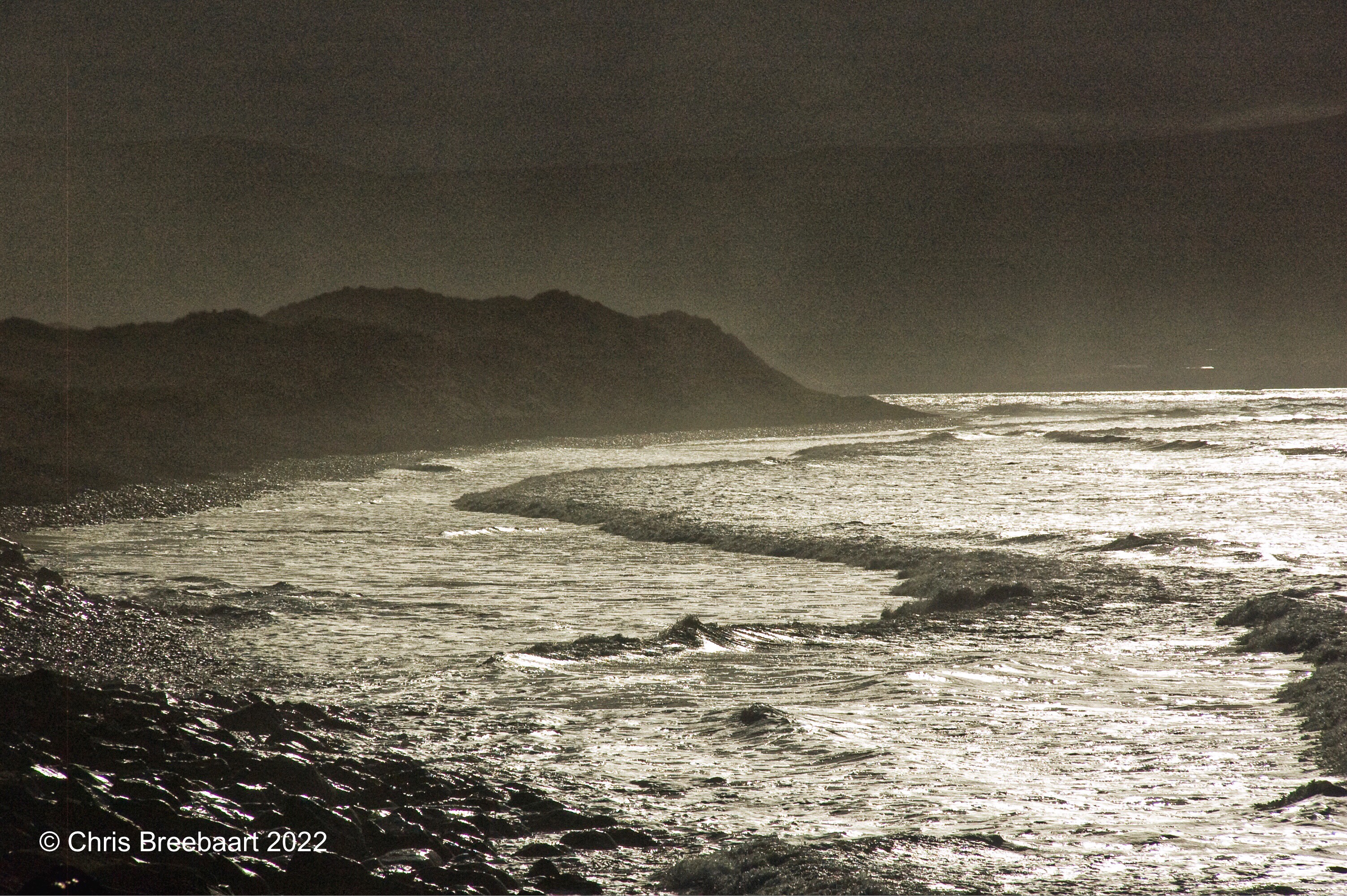
This weeks challenge #186 is ‘Low Light’. Using the available light is primarily a question of creativity and secondarily the available technology. The advice when using a Kodak Instamatic (a very old point and shoot film camera in the 1970’s) was to keep the sun in the back. My advice is not to do that. When using film it was a calculated guess (the result came after developing of the film). Nowadays in digital times the result is immediately available on your camera, hence a source of more playing around and tweaking. Playing with light is playing with the source of light. This photo of Strandhill was taken on a ‘normal’ sunny day. The angle used makes it much more dramatic. This photo ‘See Sea’ gives an idea of the light as it was that day. The fog and dark sky added to the atmosphere (in the Archive Ireland you can find two more photo’s of this perspective taken at the same moment).
Strandhill in Sligo is a small town, looking out over the Atlantic Ocean to the West. Rising over it is Knocknarea with Queen Maeve.
In the paradox of Achilles and the tortoise, Achilles is in a footrace with the tortoise. Achilles allows the tortoise a head start of 100 meters, for example. Suppose that each racer starts running at some constant speed, one faster than the other. After some finite time, Achilles will have run 100 meters, bringing him to the tortoise’s starting point. During this time, the tortoise has run a much shorter distance, say 2 meters. It will then take Achilles some further time to run that distance, by which time the tortoise will have advanced farther; and then more time still to reach this third point, while the tortoise moves ahead. Thus, whenever Achilles arrives somewhere the tortoise has been, he still has some distance to go before he can even reach the tortoise.
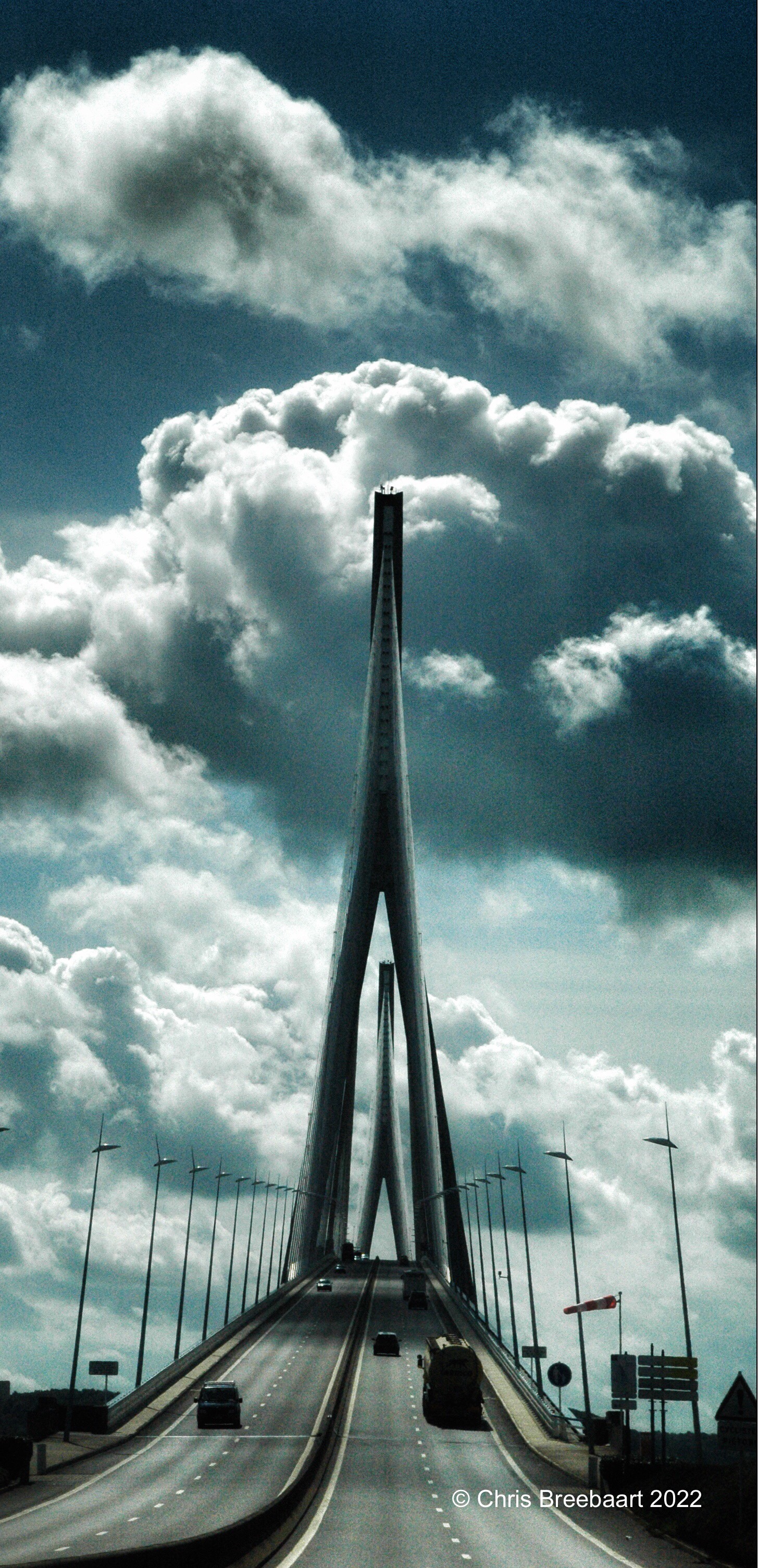
Pont de Normandie is a beautiful bridge over the river Seine between Le Havre and Honfleur. It towers over you as you approach it. The first time I passed it I was in admiration and also in awe. This week’s Lens Artists Photo Challenge #181 is double dipping: send in a photo that is related to another creative challenge on WordPress. This photo is a response to the monthly Thursday special of Lost in Translation. A beautiful blog with great creative photography. Each month one can enter photo’s portraying words: in December 2021 Introspective, Anticipating, Befriending, Choices, Wish. This photo describes anticipation and choices. If you choose to cross a bridge like this, what will it be like?
Mona Lisa is one of the most famous and genius works of art in the world. I was lucky to view it for the first time when the Louvre was not modernized. On a Monday morning in February 1984 me and a friend were the only persons in the room to admire her mysterious smile. In 2008 I saw her again from a distance, in a sea of pressing people, holding up phones and camera’s to get a glimpse of her. I have not been there since, but I can imagine what it must look like on a normal day before the pandemic. A wave of smartphones will be raised towards her, in a never ending stream of people on visiting times of the Louvre. Apparently 80% of the visitors of the Louvre come to see her.
I read in an article that at present people seek personal attention in combination with important objects and/or moments. A selfie is the instrument to gain that attention on Instagram or Twitter or Facebook or Tiktok. Mona Lisa/Lisa Gherardini never wanted that attention, a brilliant artist painted her portrait. And the rest is history. She must feel lonely now, no one is coming to see her. Or is she finally getting her well deserved rest.
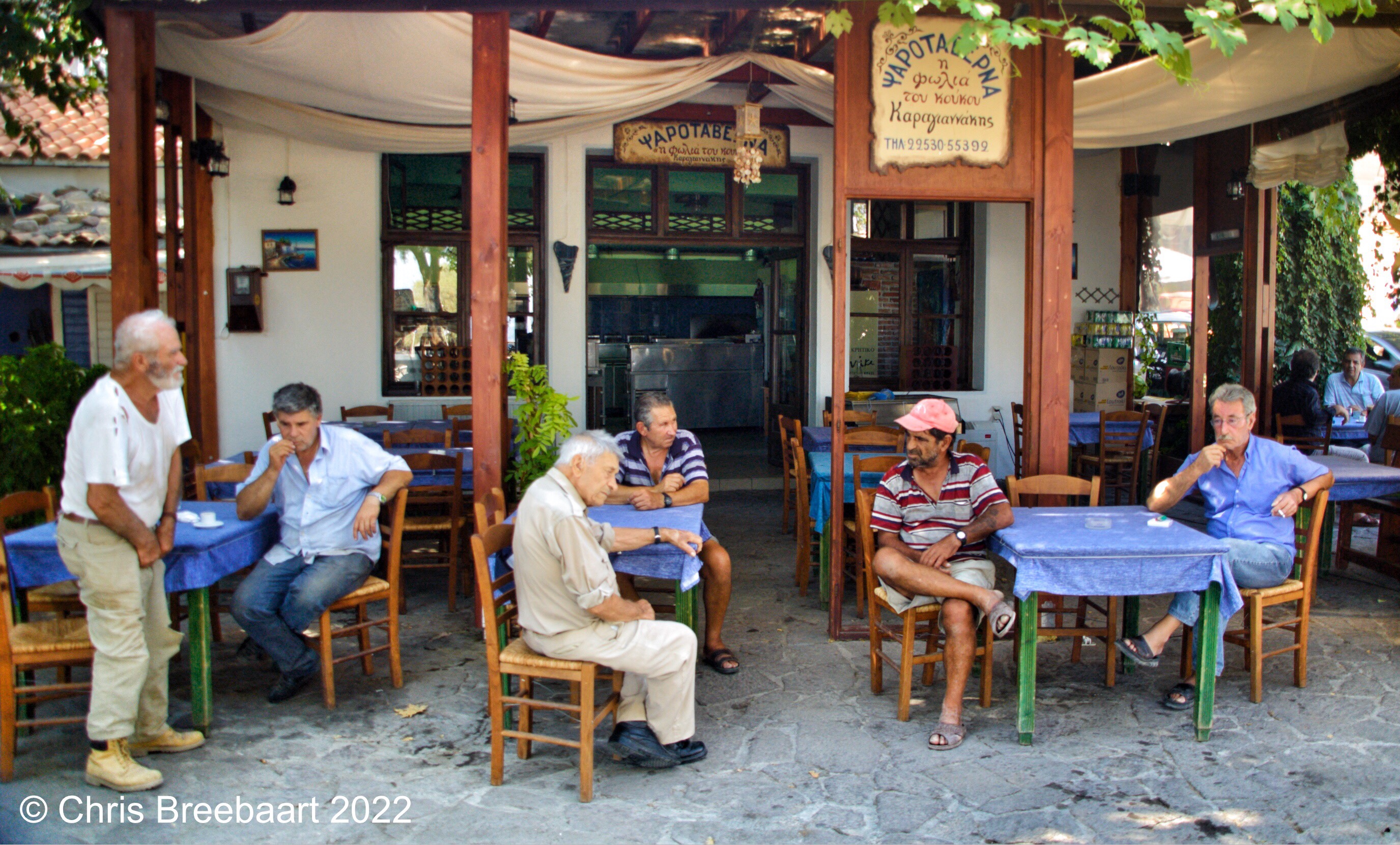
January 2008 I joined WordPress. This is the first photo I published on WordPress. A taverna in a hamlet in Greece. Quite obvious what struck me in this picture: all men, all apparently in thoughts. What is going on?



















 What's (in) the Picture?