Running On Empty
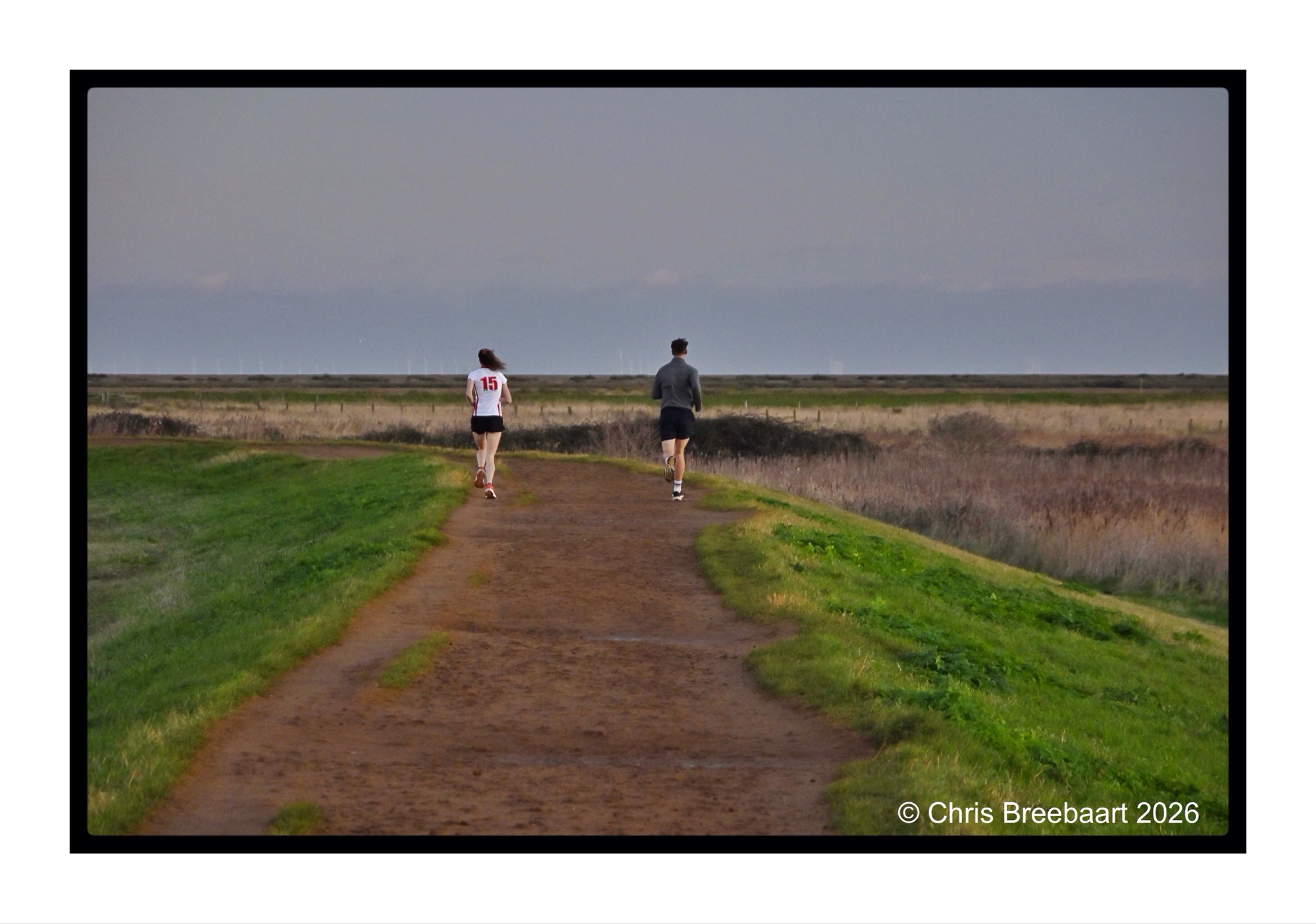
The coast path between Blakeney and Cley next the sea is used often by joggers.
Shot with Nikon Zf,edited using Snapseed and Marksta. Click the picture for a larger version
The coast path between Blakeney and Cley next the sea is used often by joggers.
Shot with Nikon Zf,edited using Snapseed and Marksta. Click the picture for a larger version
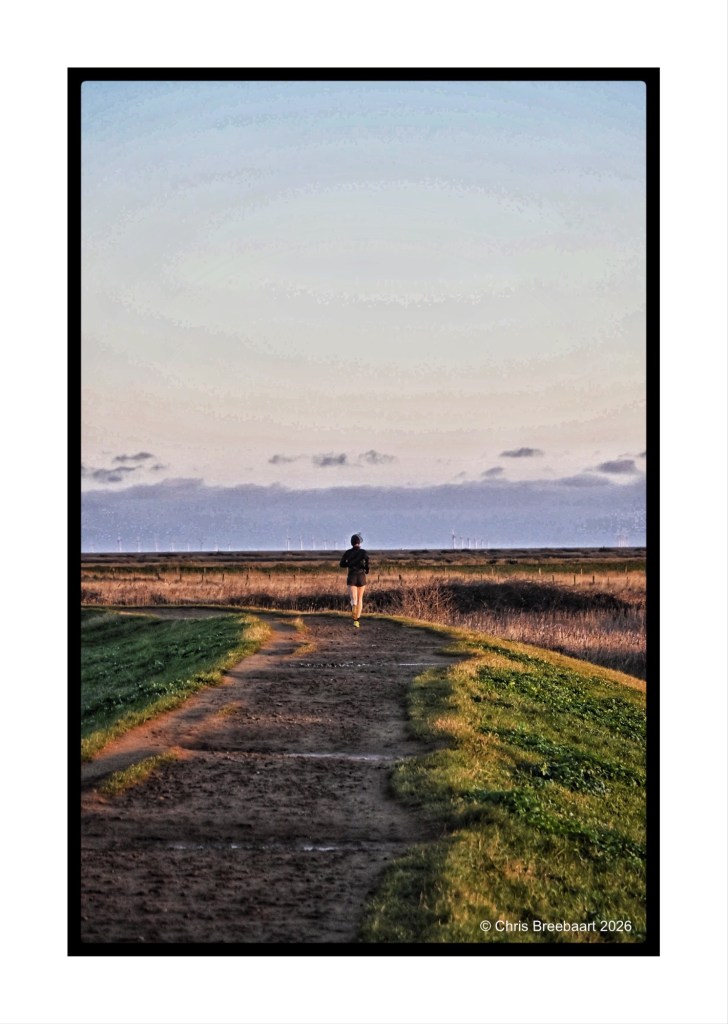
I published this one in a black and white version earlier, but this is the original. The coast path between Blakeney and Cley next the sea is used often by joggers.
Shot with Nikon Zf,edited using Snapseed and Marksta. Click the picture for a larger version.
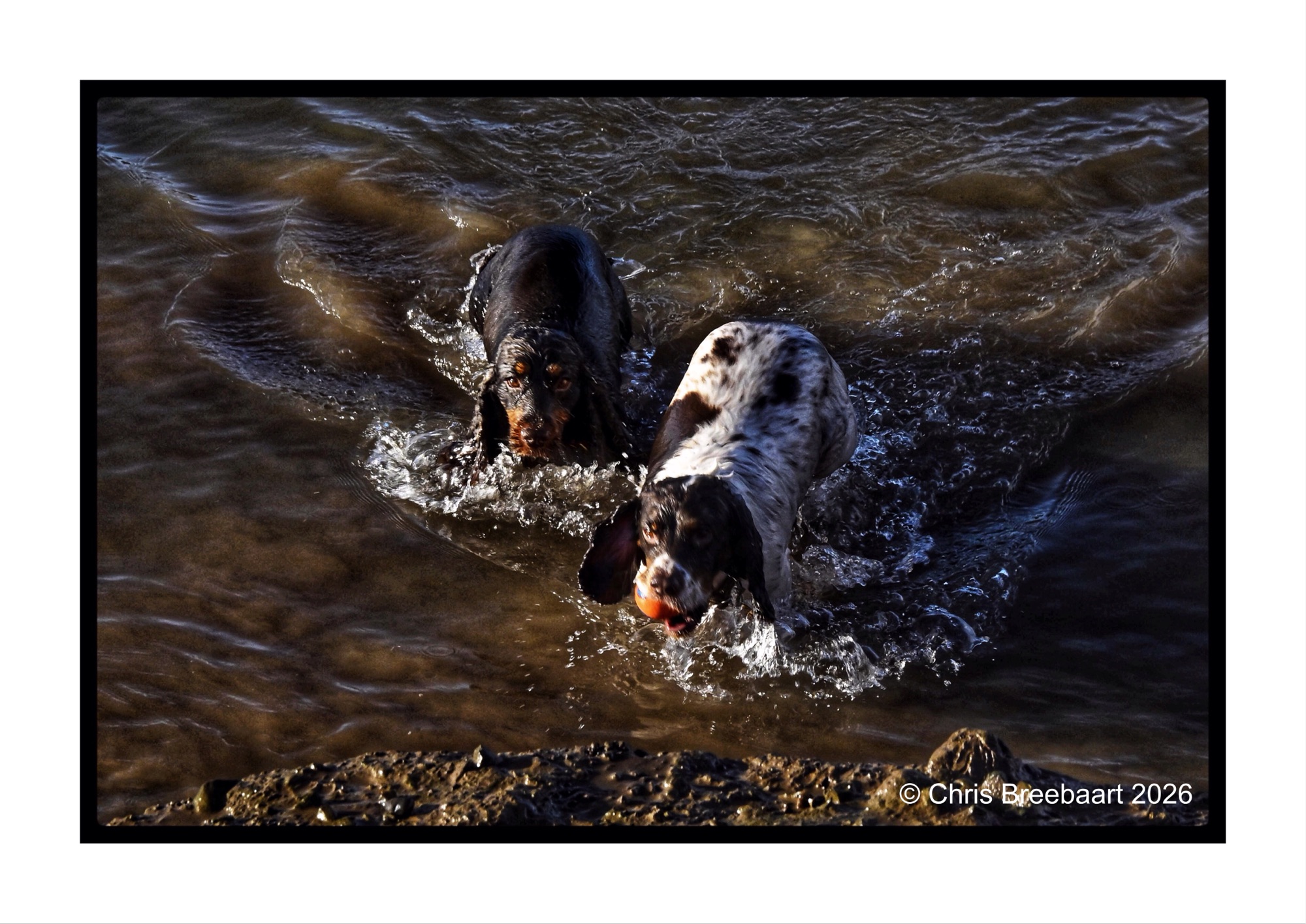
Lens-Artist’s Photo Challenge #384 is ‘astonishment’. The brief is to show in a photo a feeling of surprise or wonder. These two dogs (Murphy left and Cooper right) keep me wondering for years already. It is about their addiction to water in general. If there is water anywhere (preferably muddy) they dive in. Here they have a bath hunting for the ball in at the quayside of Blakeney.
Shot with Nikon Zf,edited using Snapseed and Marksta. Click the picture for a larger version.
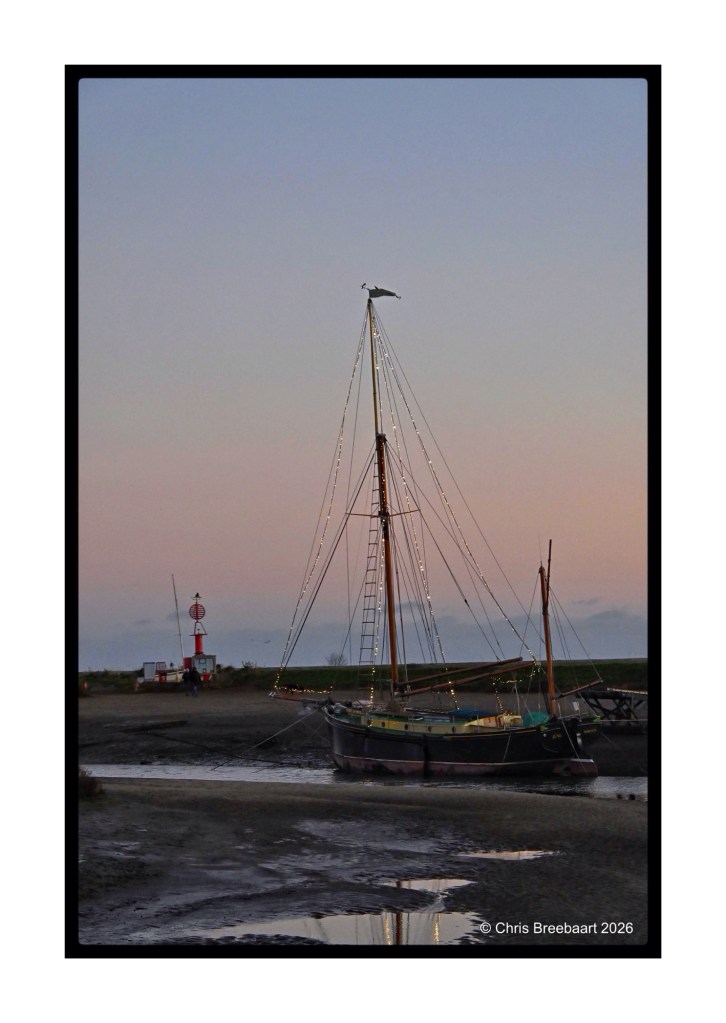
The quayside and harbour of Blakeney just before sunrise.
Shot with Nikon Zf,edited using Snapseed and Marksta. Click the picture for a larger version.
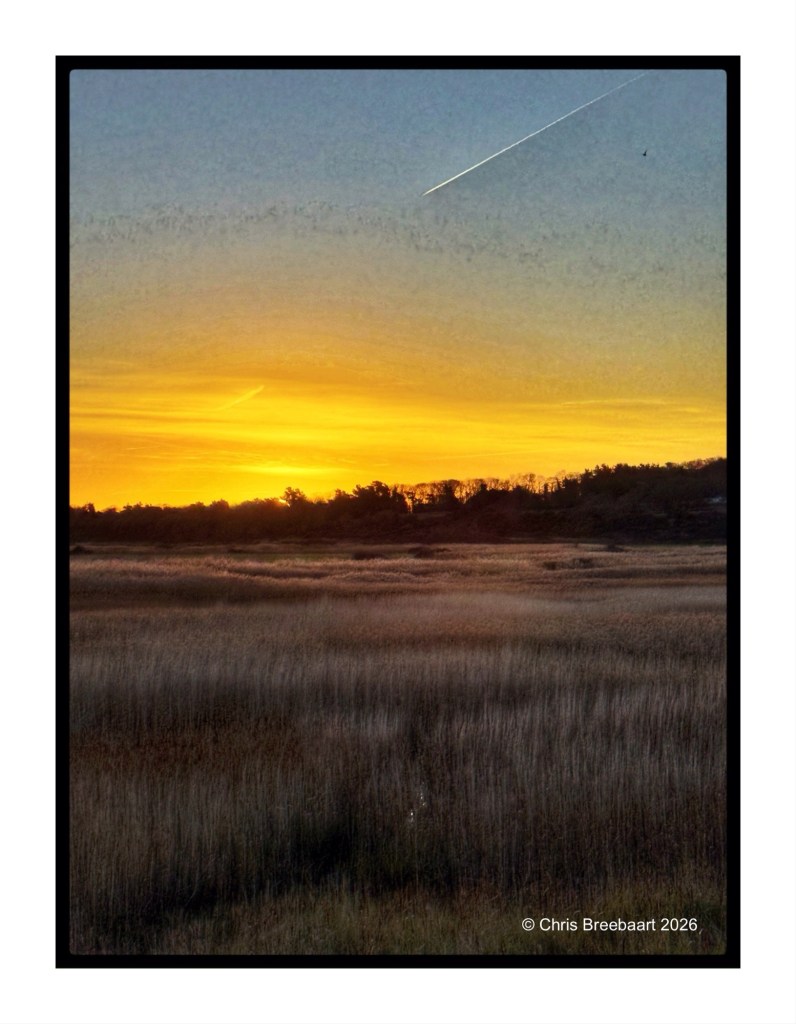
Lens-Artist’s Photo Challenge #383 is ‘patterns and designs’. Sunrises are always amazing, but the marshes being touched by the first rays is amazing to see.
Shot with Nikon Zf, edited using Snapseed and Marksta. Click the picture for a larger version
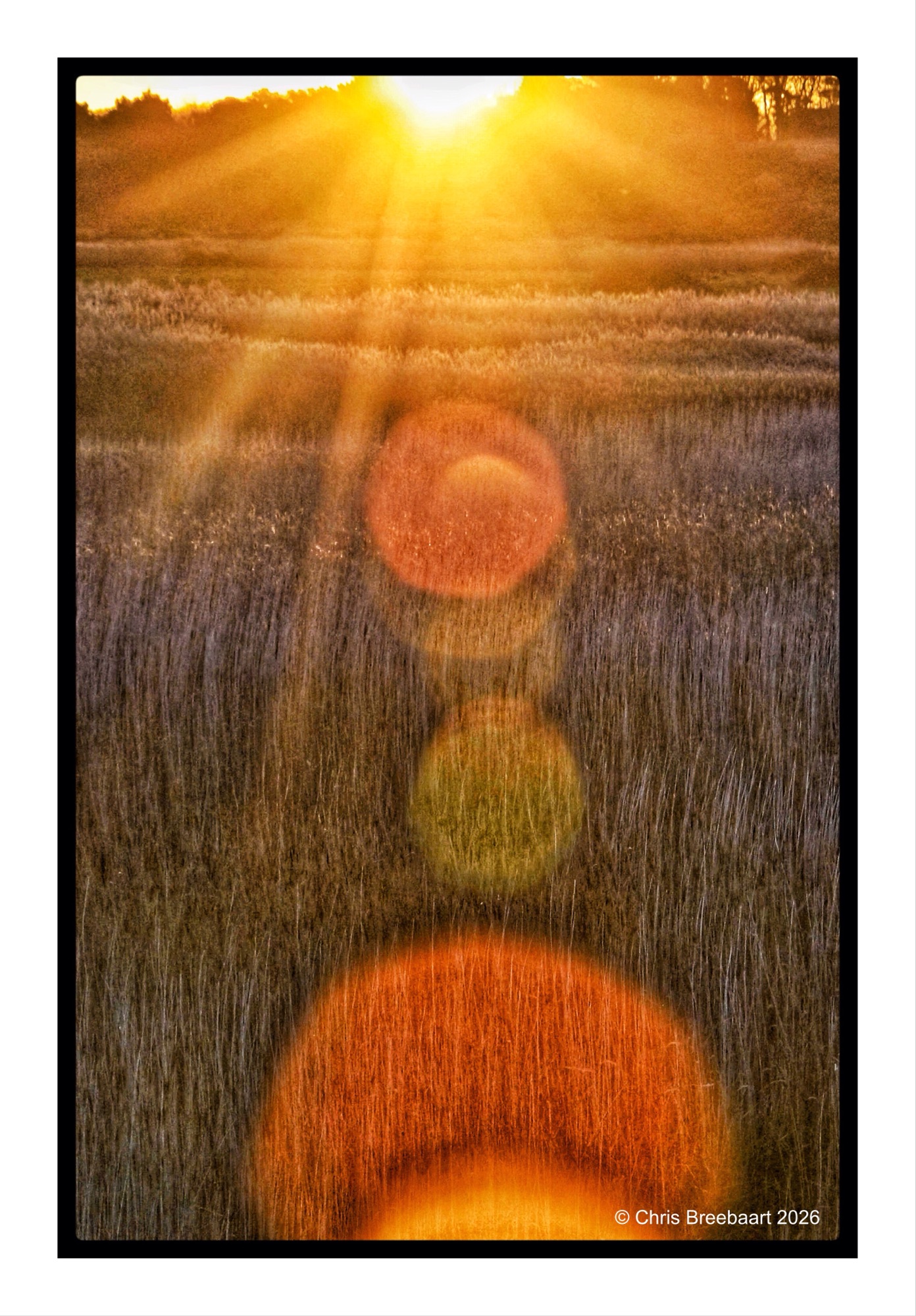
Lens-Artist’s Photo Challenge #383 is ‘patterns and designs’. The sunrise distorted in the lens.
Shot with Nikon Zf, edited using Snapseed and Marksta. Click the picture for a larger version
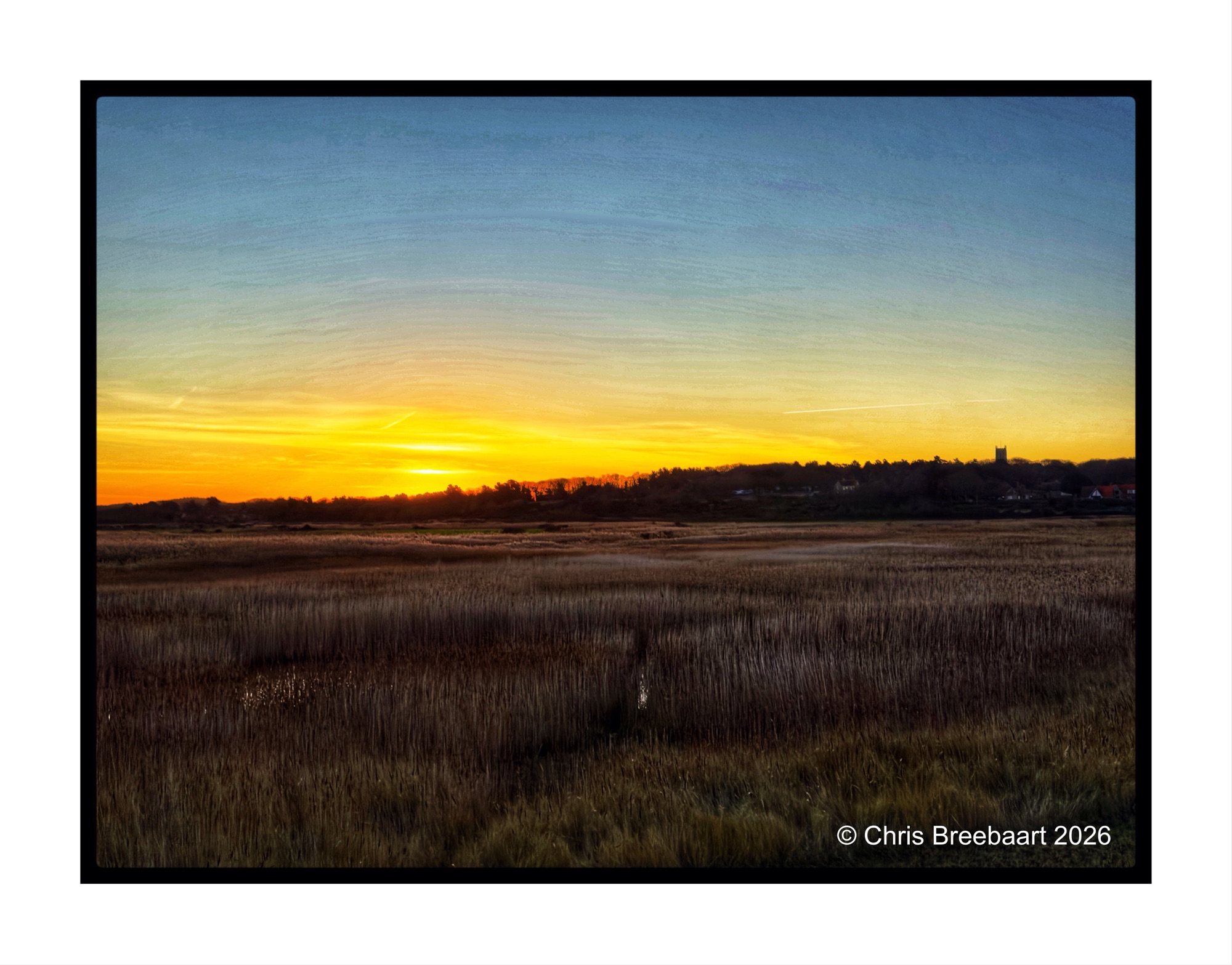
Lens-Artist’s Photo Challenge #383 is ‘patterns and designs’. The sunrise over marshes near Blakeney.
Shot with Nikon Zf, edited using Snapseed and Marksta. Click the picture for a larger version
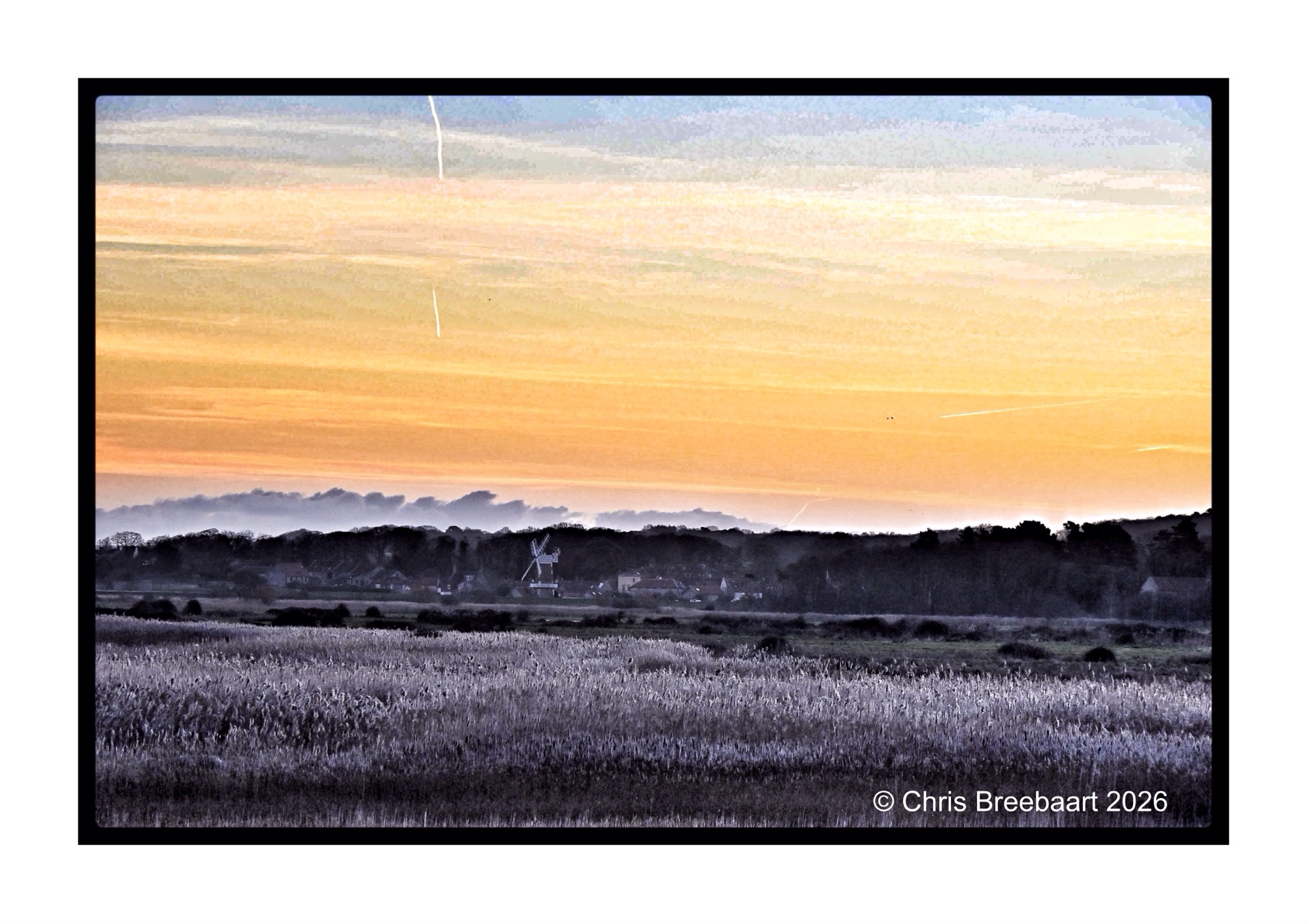
Lens-Artist’s Photo Challenge #383 is ‘patterns and designs’. The sunrise over the famous Cley windmill and Cley next the sea.
Shot with Nikon Zf, edited using Snapseed and Marksta. Click the picture for a larger version
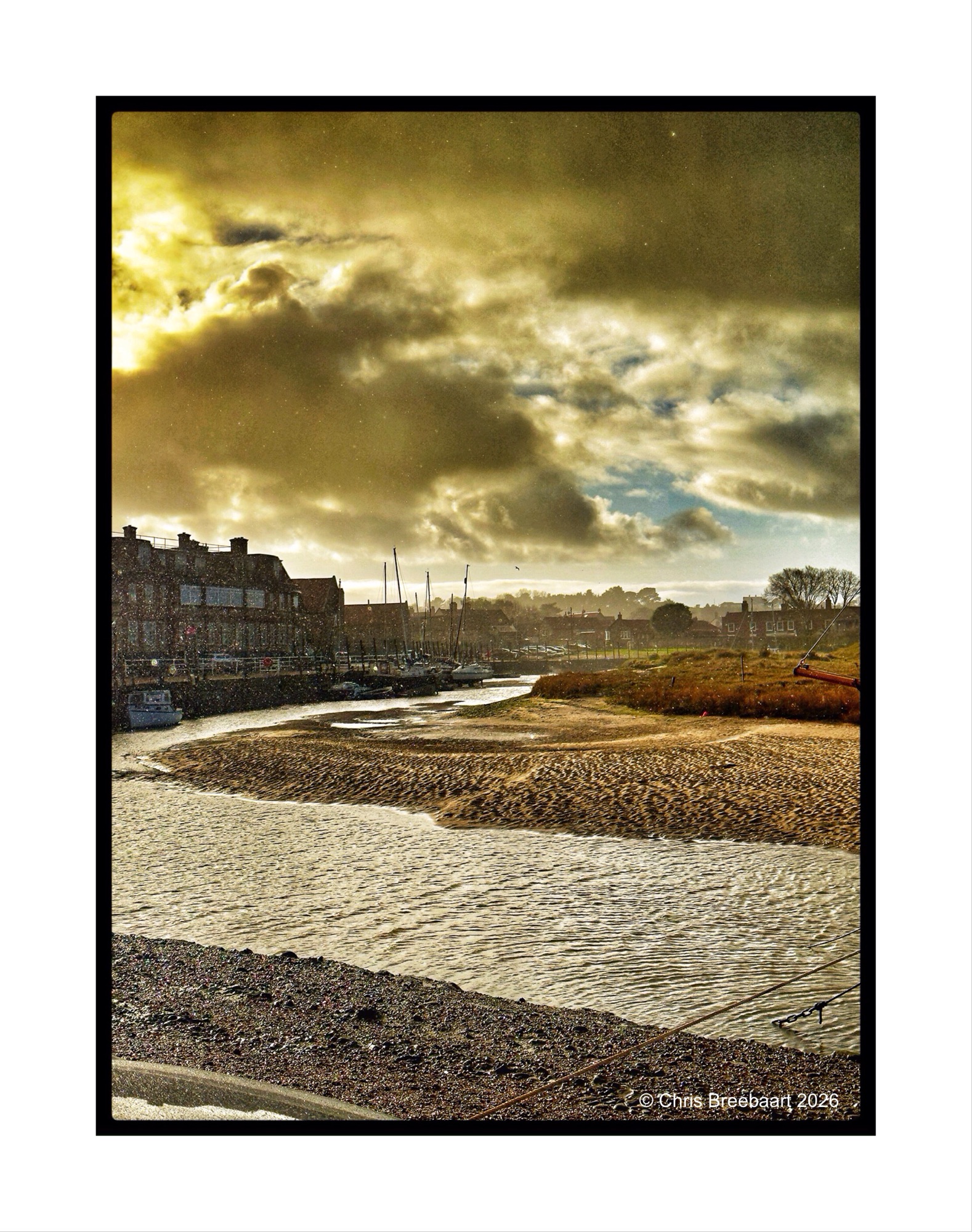
Lens-Artist’s Photo Challenge #383 is ‘patterns and designs’. A Winter rain shower over the quaside of Blakeney.
Shot with Nikon Zf, edited using Snapseed and Marksta. Click the picture for a larger version
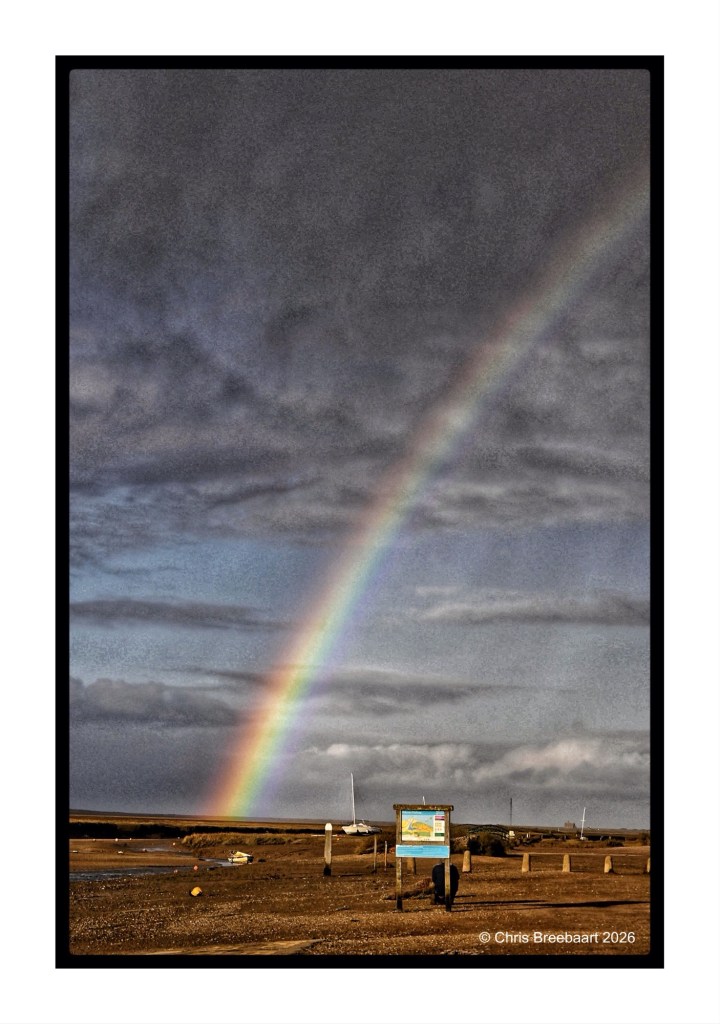
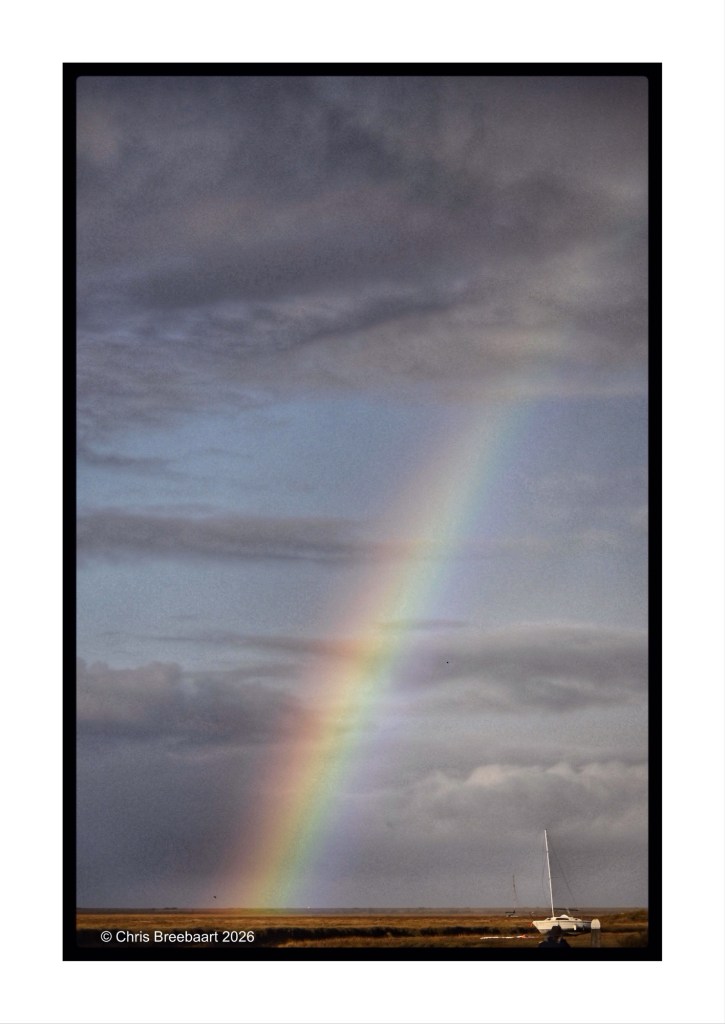
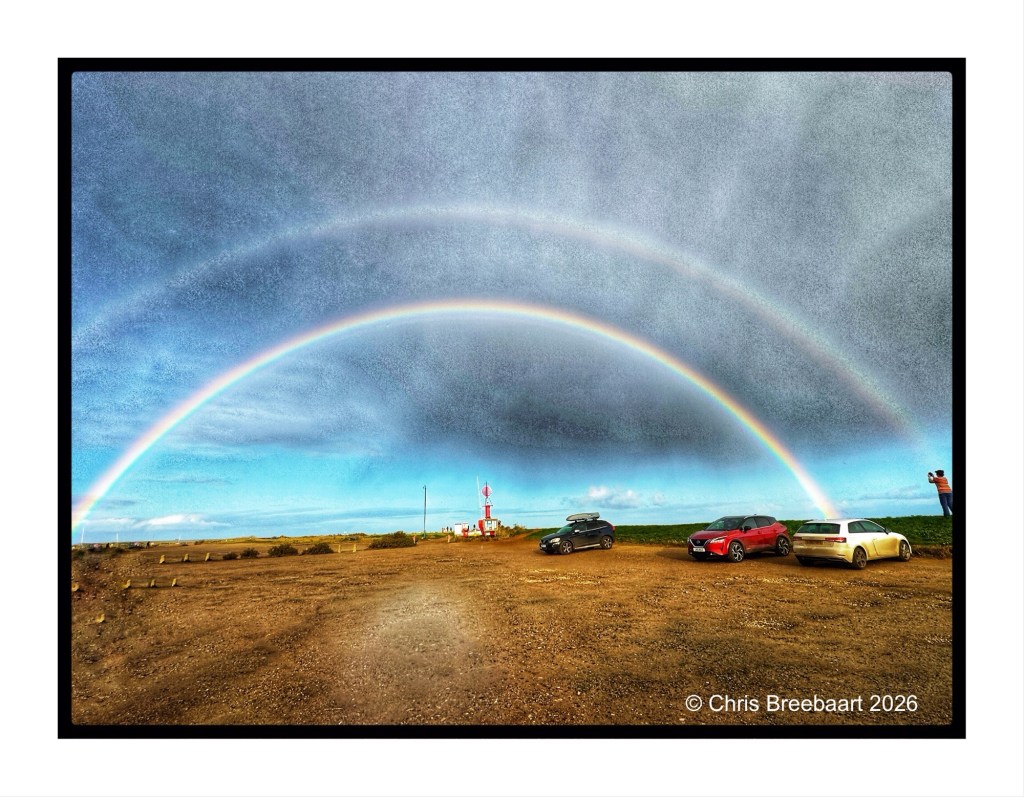
Lens-Artist’s Photo Challenge #383 is ‘patterns and designs’. Being caught in Winter shower in Blakeney, resultated in a gorgeous full and double rainbow. As we can see here, the story of the pot of gold is probably not true.
Shot with Nikon Zf (the two portrait photos),and iPhone 15 Pro Max (the landscape) edited using Snapseed and Marksta. Click the picture for a larger version
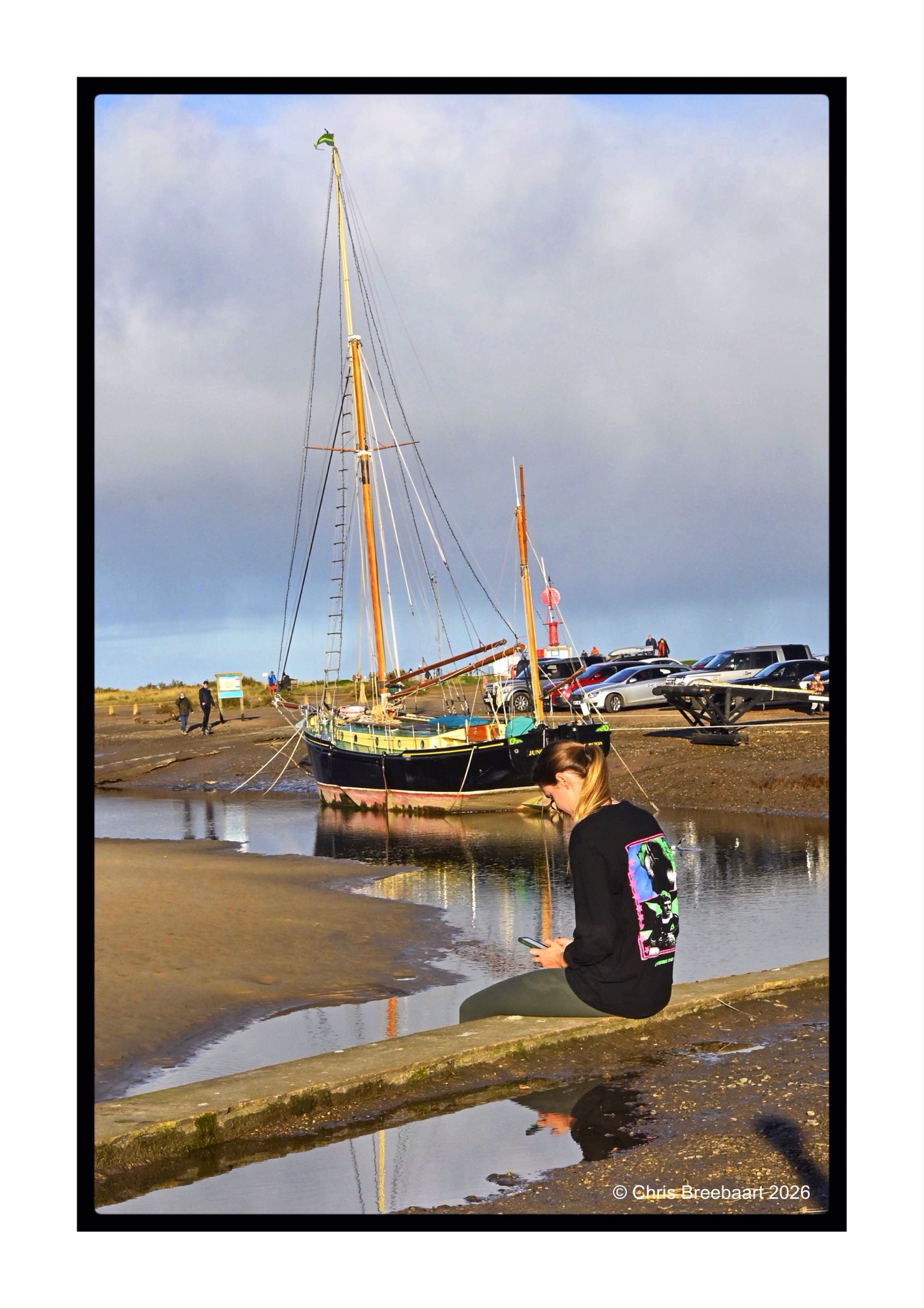
The quayside and harbour of Blakeney.
Shot with Nikon Zf,edited using Snapseed and Marksta. Click the picture for a larger version.
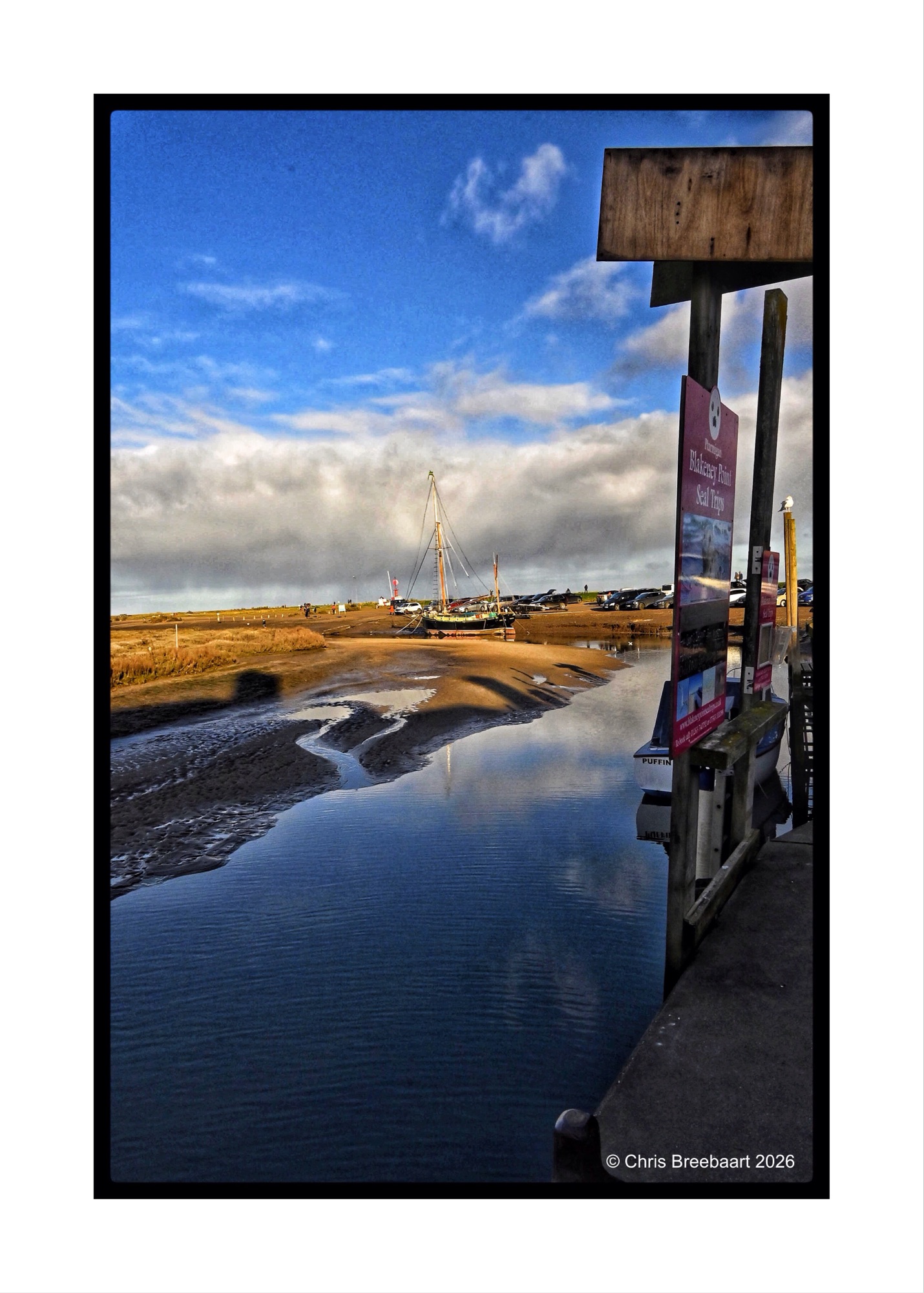
The quayside of Blakeney. Here you can go on a small boat to see Blakeney Point, visit the seals.
Shot with Nikon Zf,edited using Snapseed and Marksta. Click the picture for a larger version.
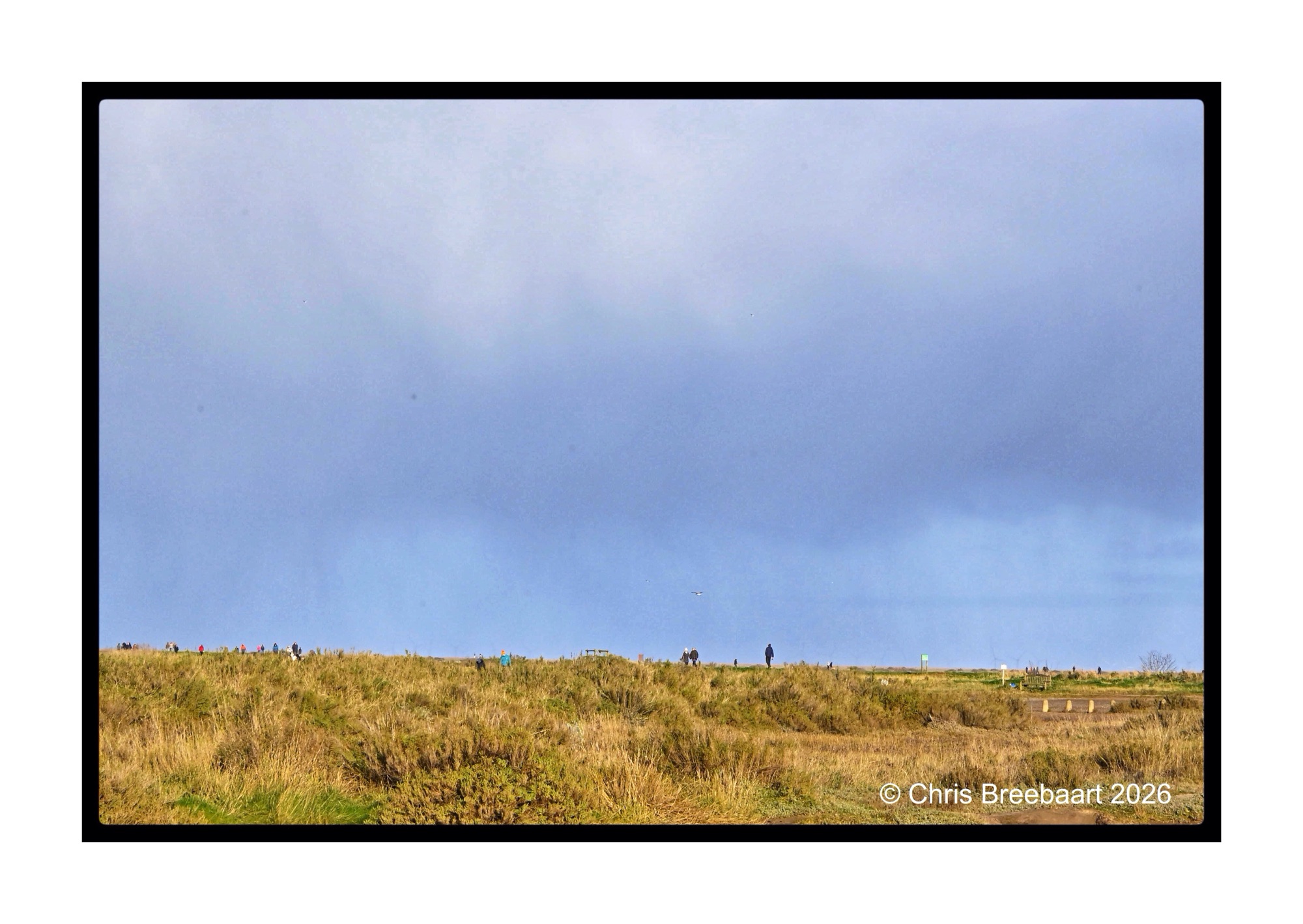
The path along the seafront in Blakeney.
Shot with Nikon Zf,edited using Snapseed and Marksta. Click the picture for a larger version.
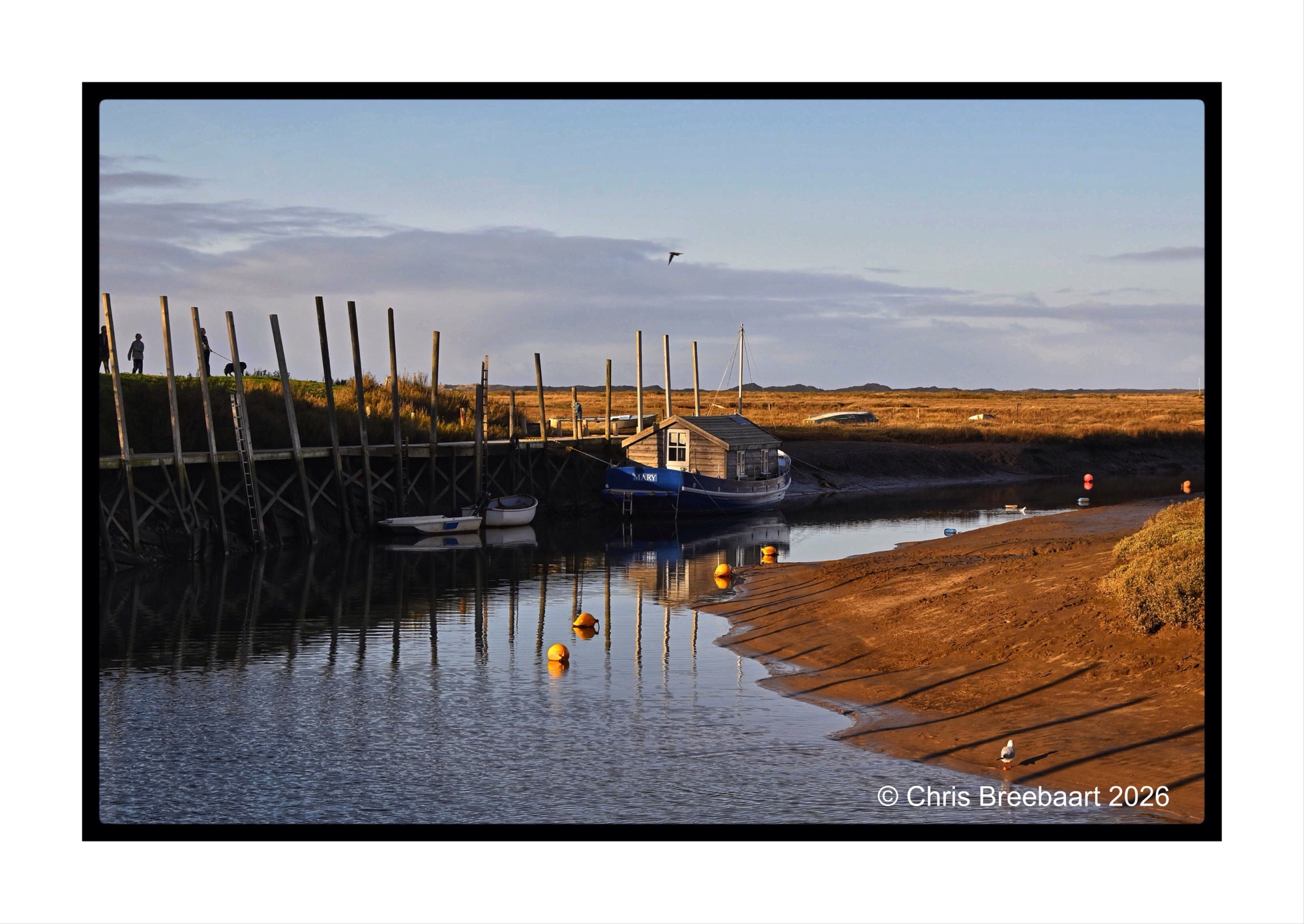
The seafront in Blakeney.
Shot with Nikon Zf,edited using Snapseed and Marksta. Click the picture for a larger version.
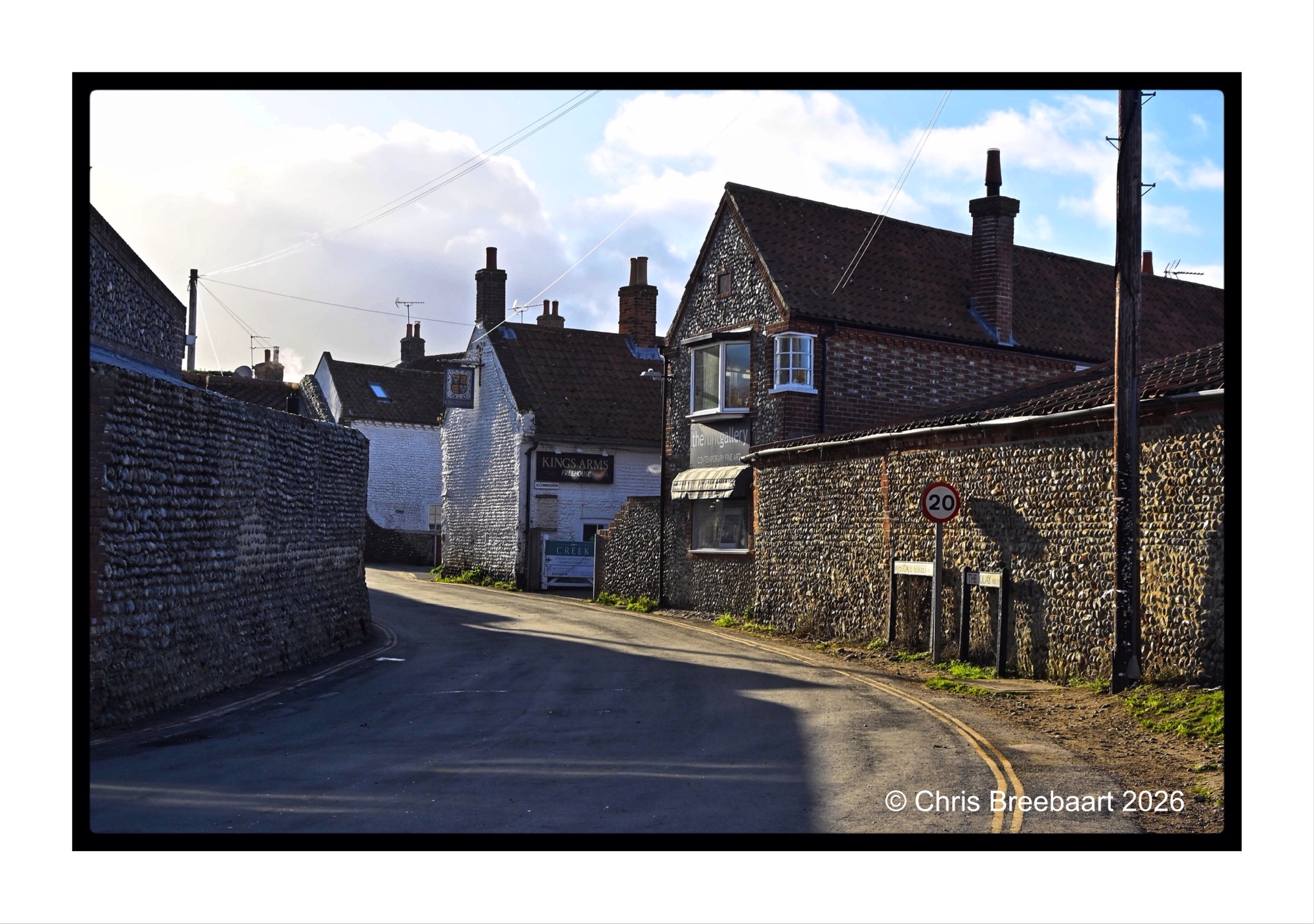
Westgate Street in Blakeney, the access to the Quay at the seafront.
Shot with Nikon Zf,edited using Snapseed and Marksta. Click the picture for a larger version.
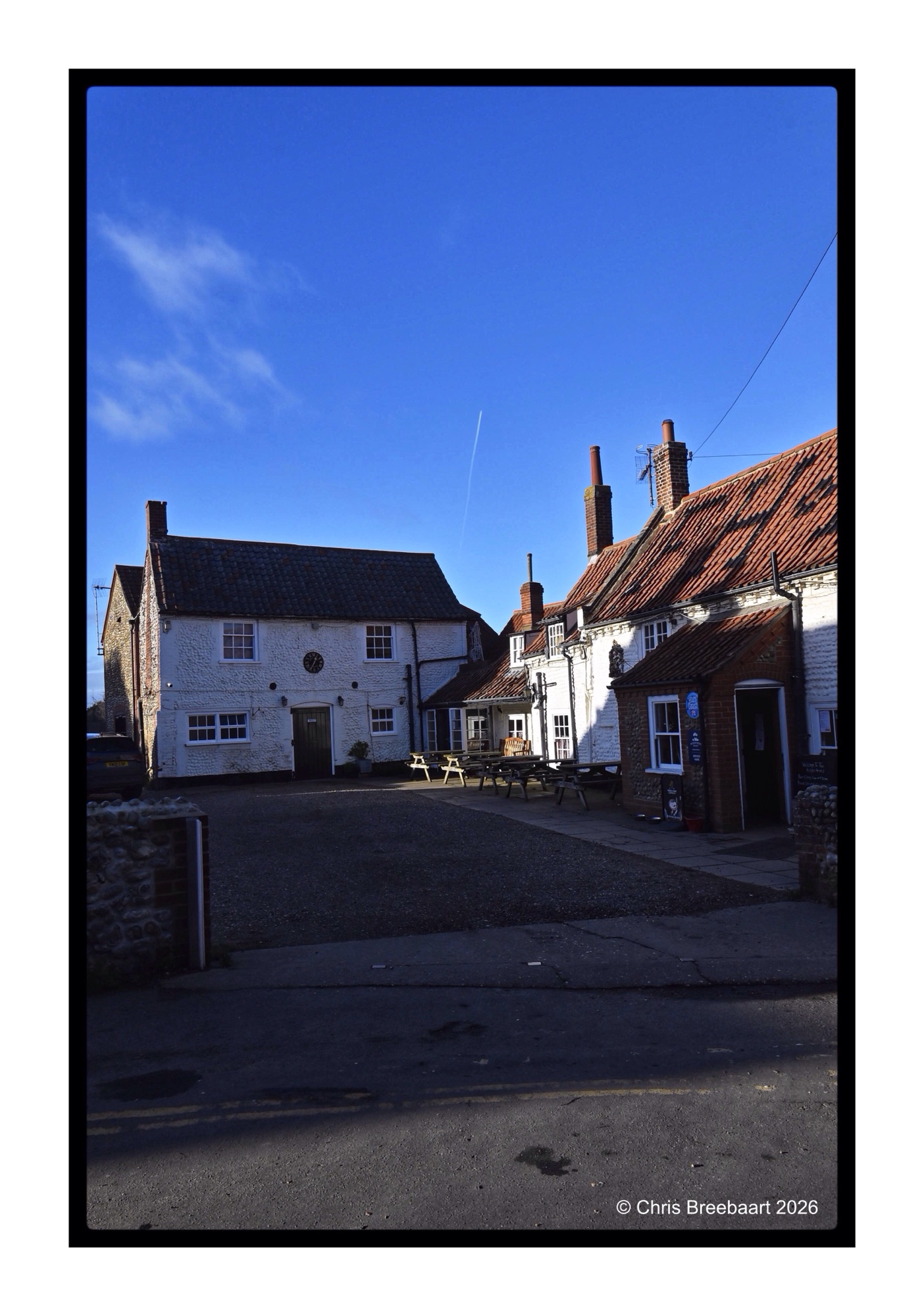
The King’s Arms in in Blakeney. Founded in 1763. And still sells fresh beer.
Shot with Nikon Zf,edited using Snapseed and Marksta. Click the picture for a larger version.
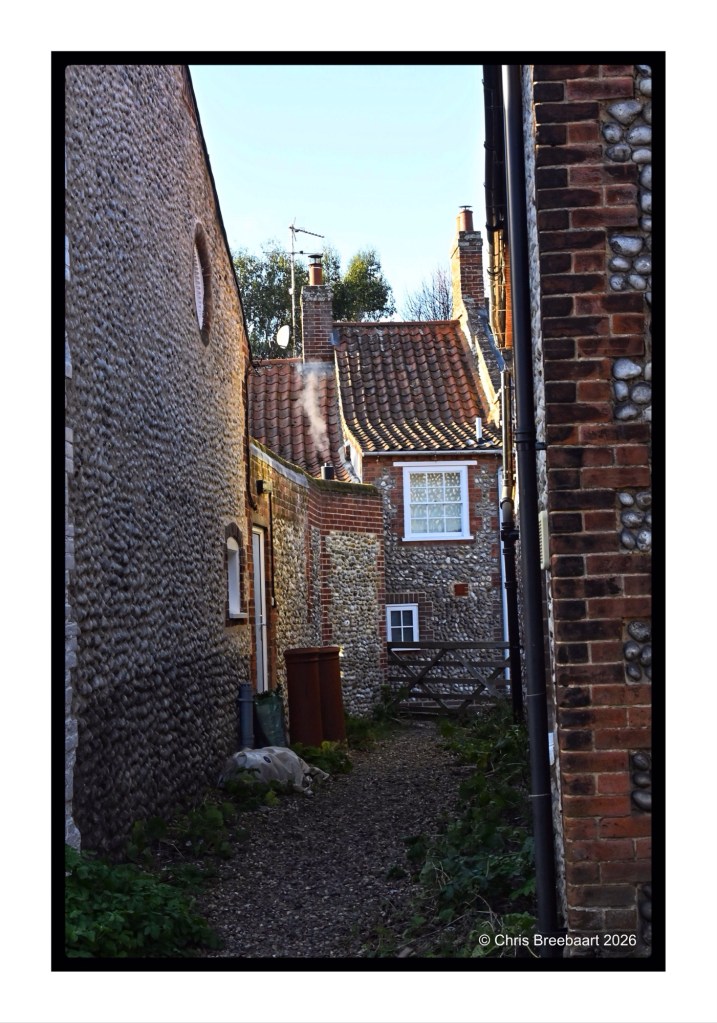
An alley in Blakeney.
Shot with Nikon Zf,edited using Snapseed and Marksta. Click the picture for a larger version.
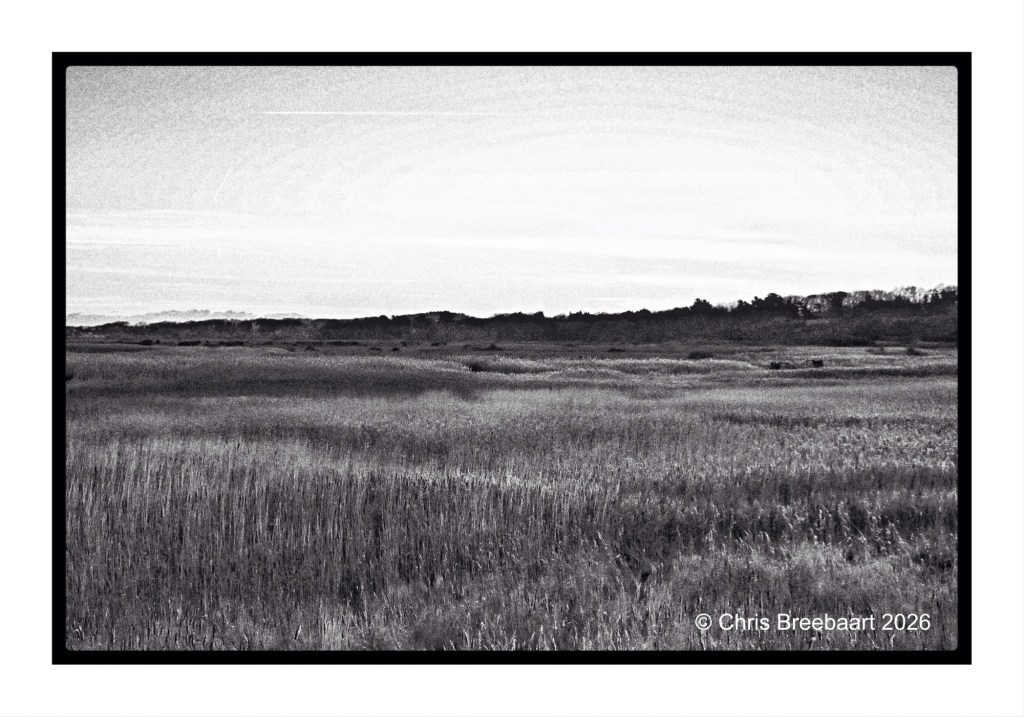
The last in the series of monochrome, more or less minimal photos for this week’s Lens artists photo challenge #381 (minimalism in black and white photography).
Shot with Nikon Zf,edited using Snapseed and Marksta. Click the picture for a larger version.
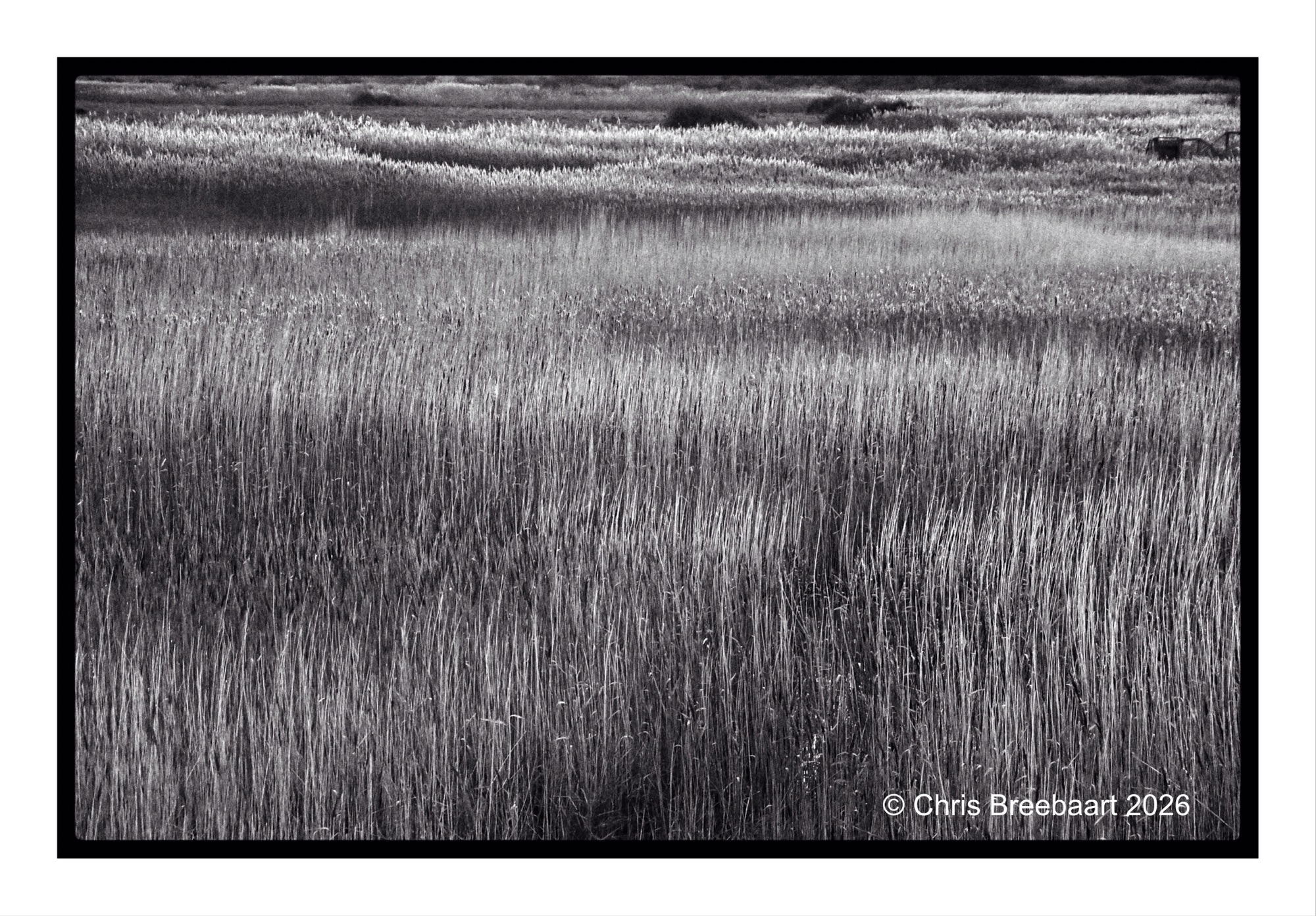
Lens artists photo challenge #381 is ‘minimalism in black and white photography’. The marshes at first sunlight, as the light details the waving reeds.
Shot with Nikon Zf,edited using Snapseed and Marksta. Click the picture for a larger version.
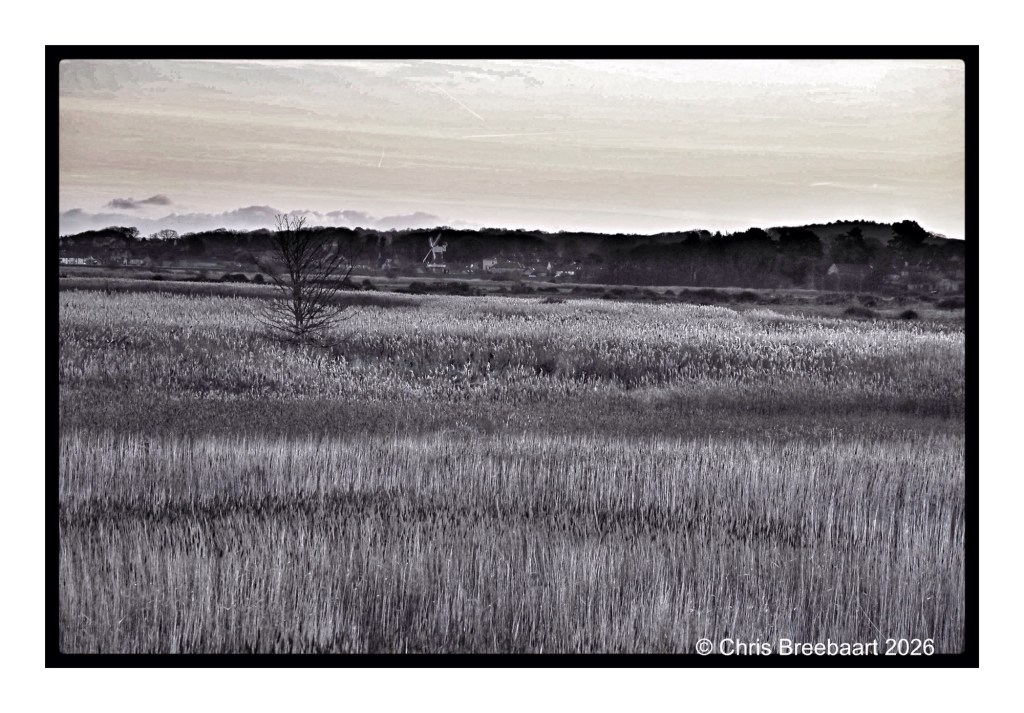
Lens artists photo challenge #381 is ‘minimalism in black and white photography’. Overlooking the marshes at first sunlight in the direction of Cley next the sea.
Shot with Nikon Zf,edited using Snapseed and Marksta. Click the picture for a larger version.
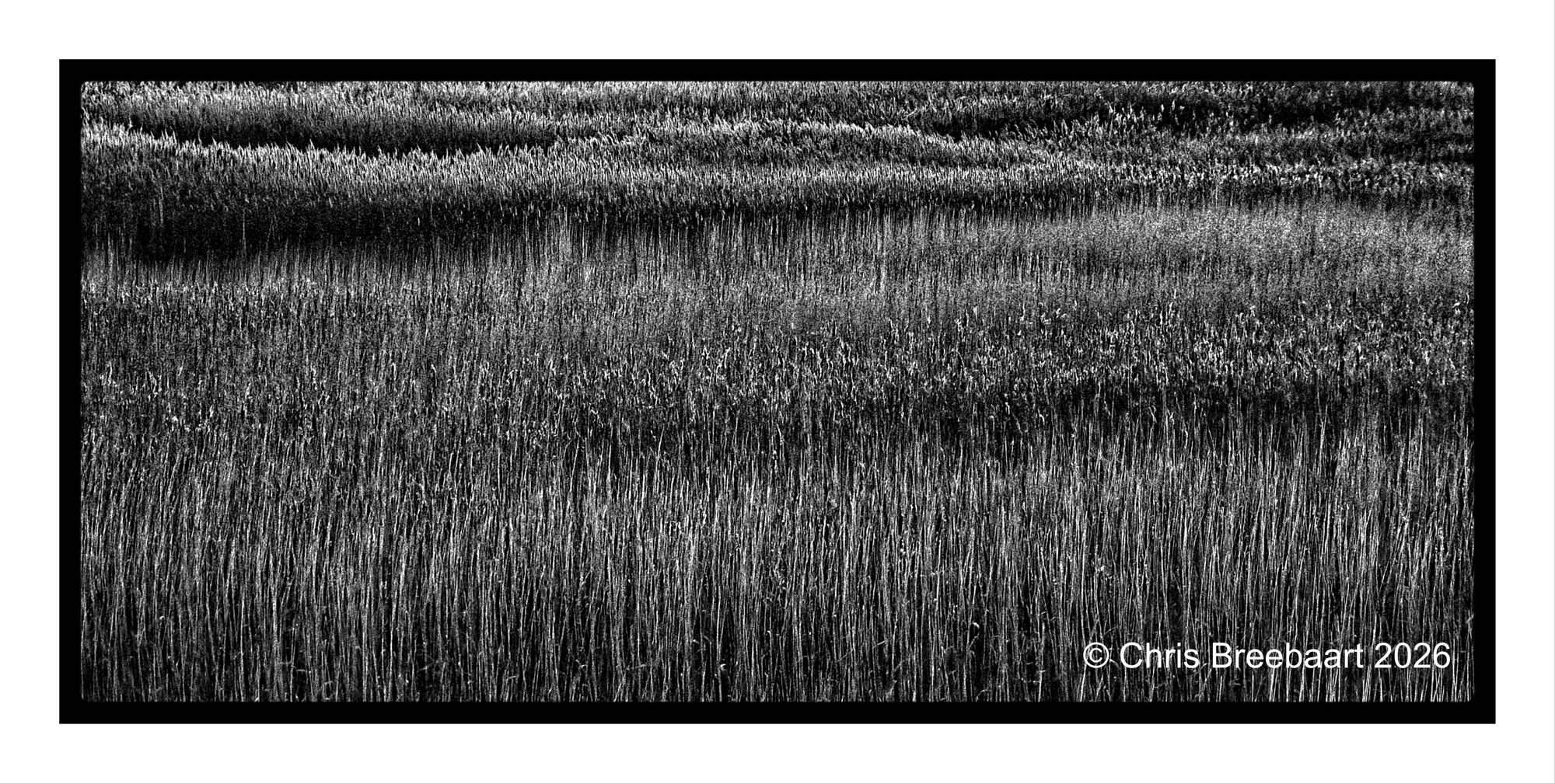
Lens artists photo challenge #381 is ‘minimalism in black and white photography’. The marshes at first sunlight.
Shot with Nikon Zf,edited using Snapseed and Marksta. Click the picture for a larger version.
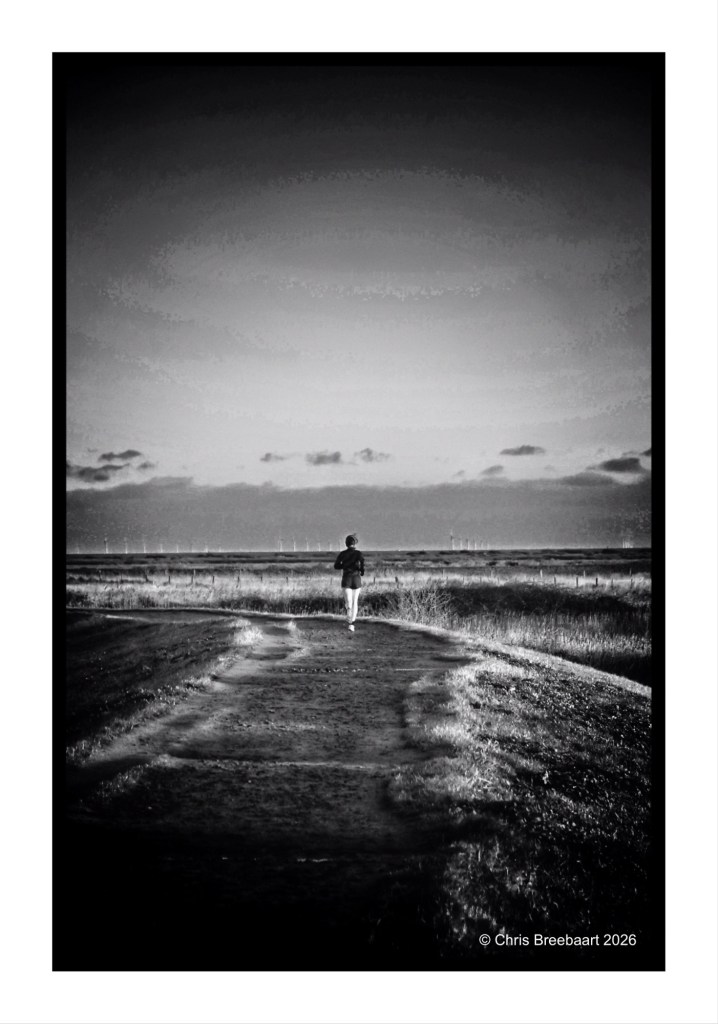
Lens artists photo challenge #381 is ‘minimalism in black and white photography’. The marshes at Blakeney are a place for running and hiking.
Shot with Nikon Zf,edited using Snapseed and Marksta. Click the picture for a larger version.
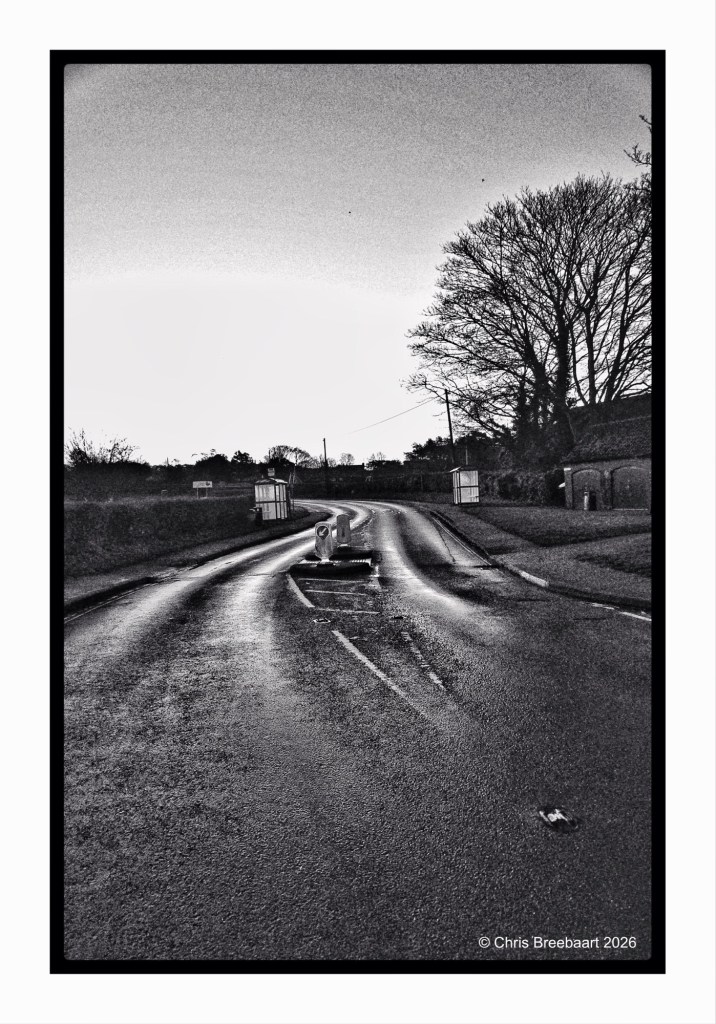
Lens artists photo challenge #381 is ‘minimalism in black and white photography’. A bus stop at sunrise.
If you wonder how it looks in color? Here is an iPhone shot of 2024 at the same spot. In the monochrome the sun is not over the horizon, in the color one it is.
Shot with Nikon Zf,edited using Snapseed and Marksta. Click the picture for a larger version.
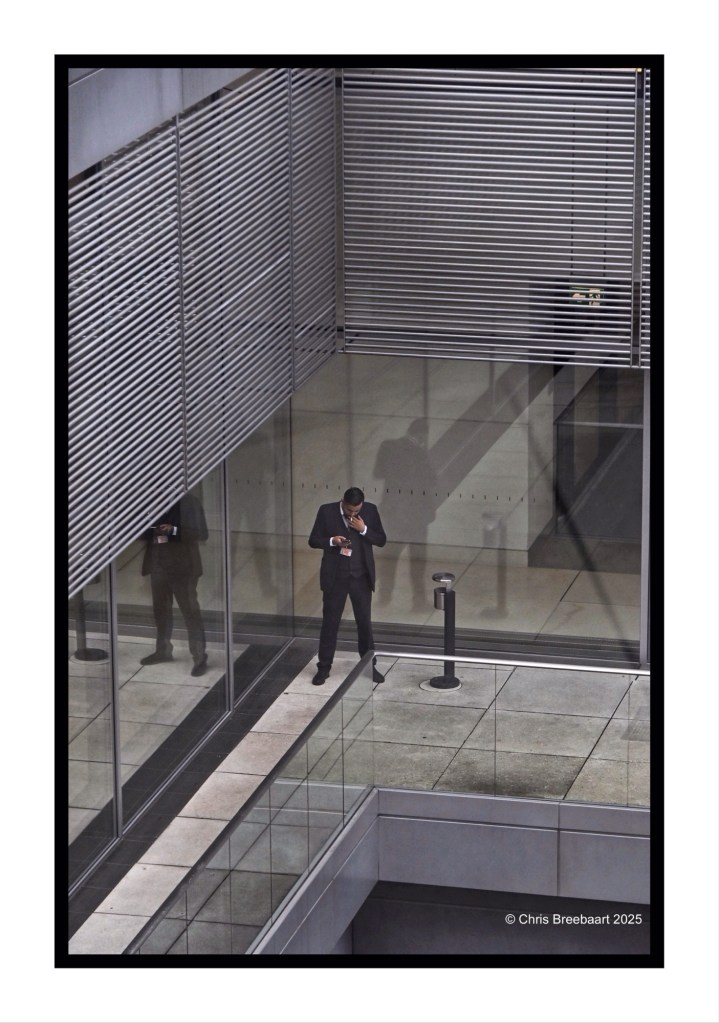
From the roof of the Reichstag. A member of staff has a smoke break. A slightly less common street detail nowadays for LAPC #371.
Shot with Nikon Zf, edited using Snapseed and Marksta. Click the picture for a larger version.


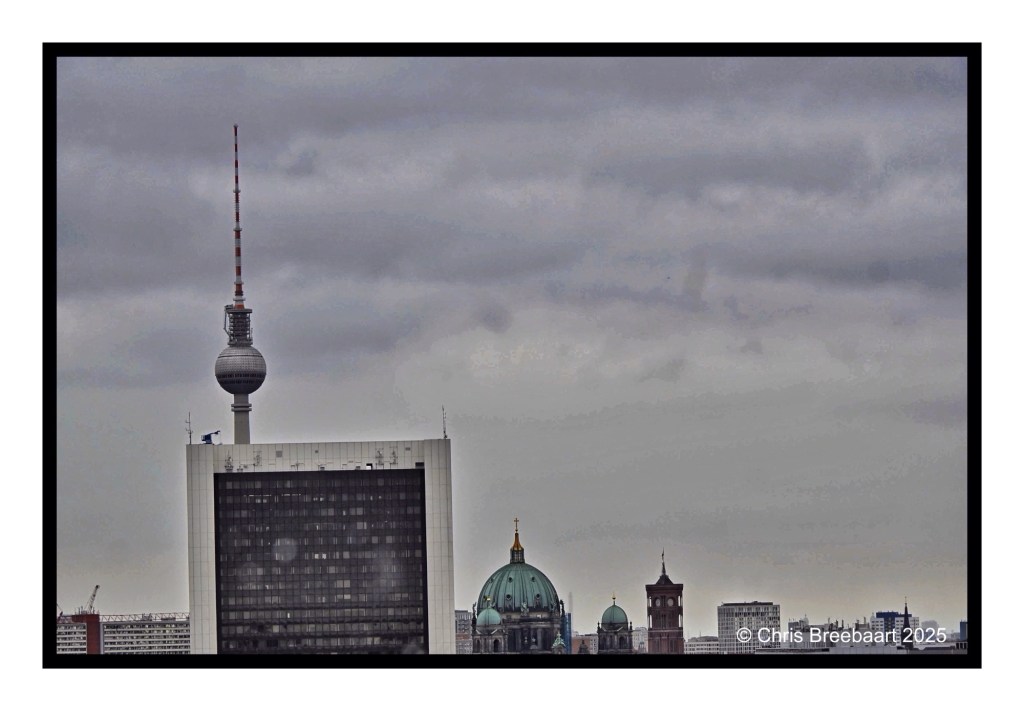
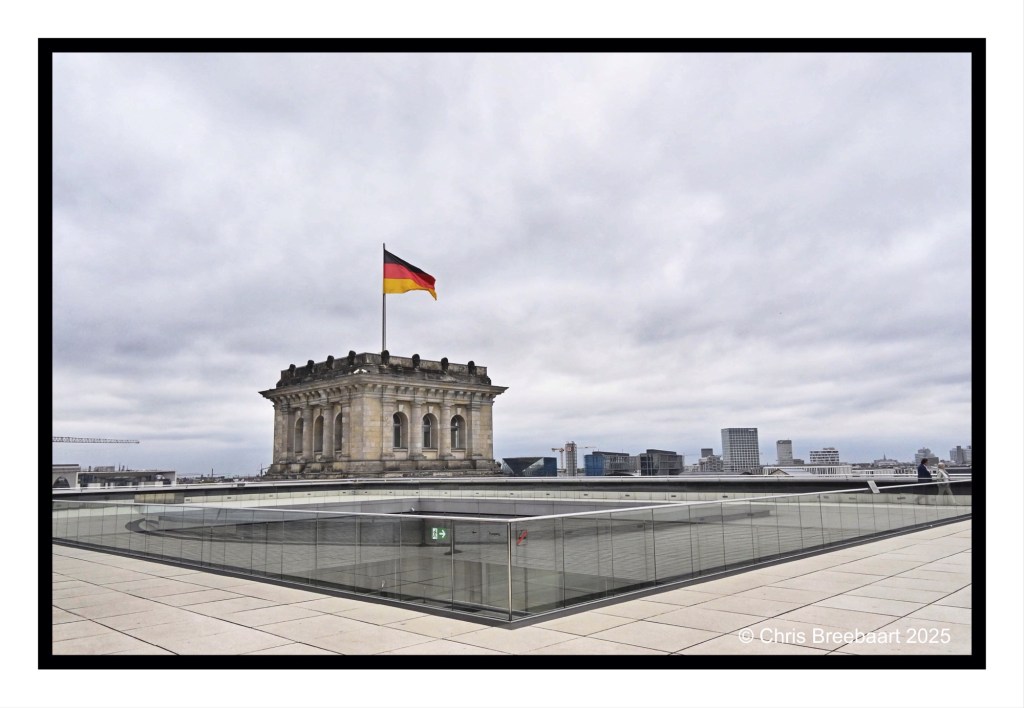
Views from the roof of the Reichstag. The panorama in the middle of the topline is from the iPhone15promax. On the bottom row on the left, you can see several notable ‘towers’. There is the television tower on Alexanderplatz, the International Trade Center, Berlin Cathedral, and the Red Town Hall. On the top right on the left the dome of the Französischer Dom, and on the right the Deutchser Dom (on Gendarmenmarkt).
Shot with Nikon Zf, edited using Snapseed and Marksta. Click the picture for a larger version.
Panorama shot with iPhone 15 Pro Max.
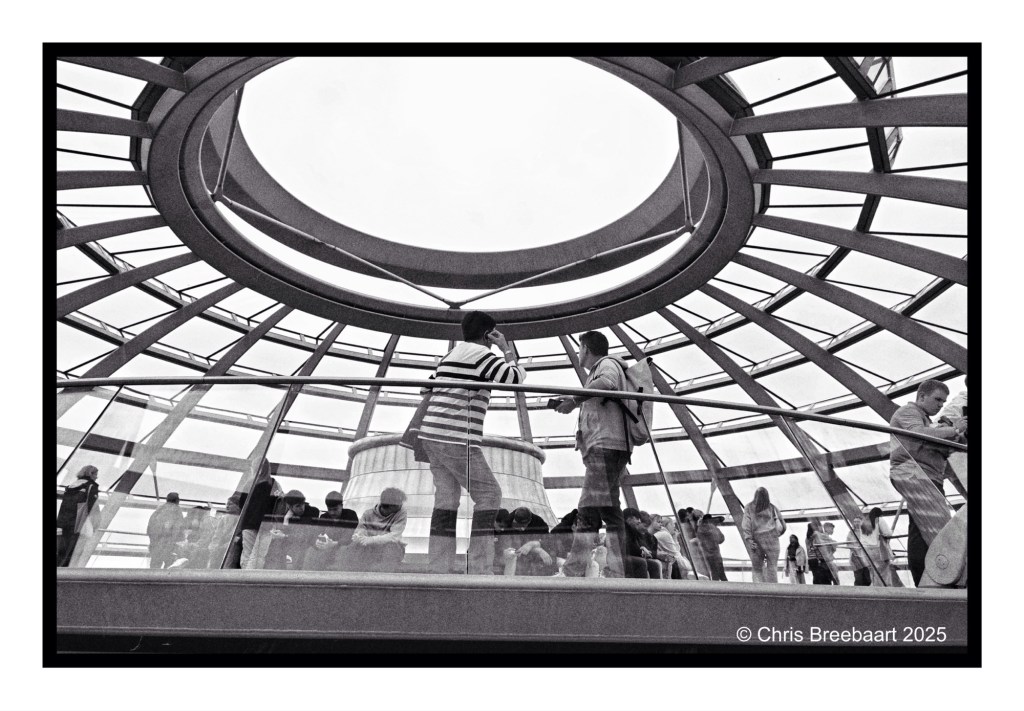
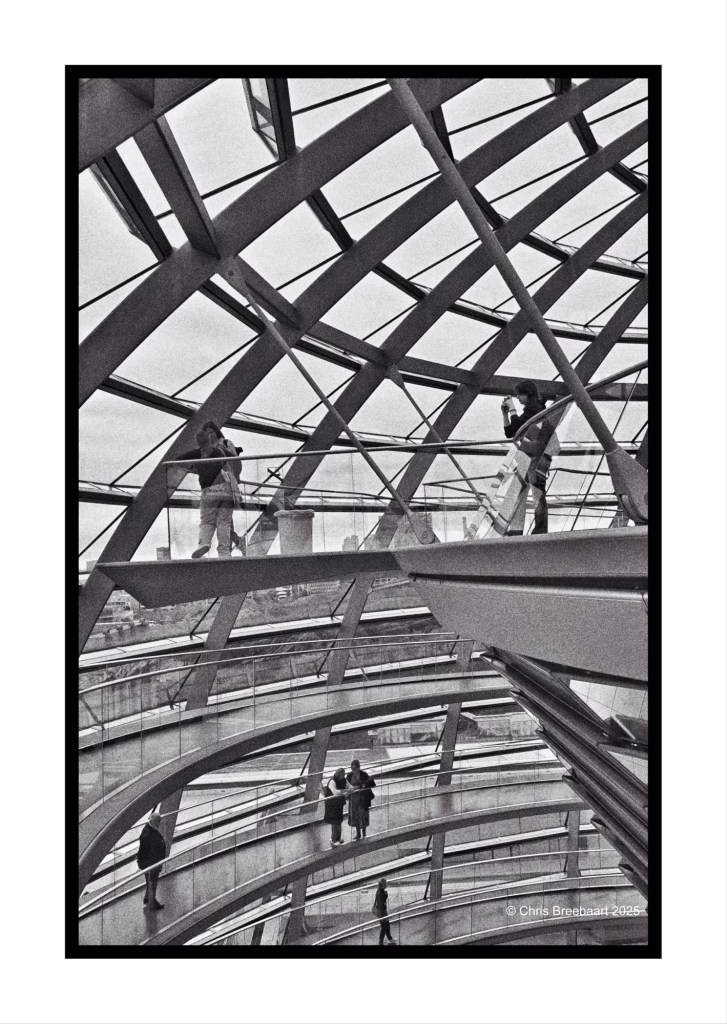
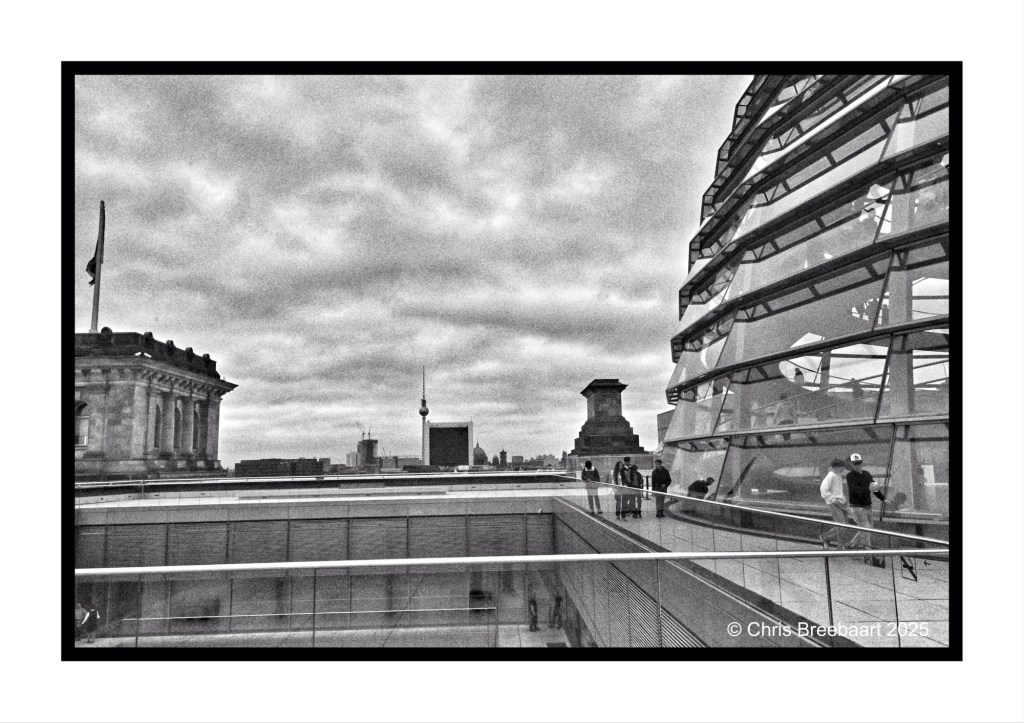
The dome on the Reichstag offers a wonderful panoramic view on Berlin. And you can walk the rest of the roof as well to look over the city. Here an impression in monochrome.
Shot with Nikon Zf, edited using Snapseed and Marksta. Click the picture for a larger version
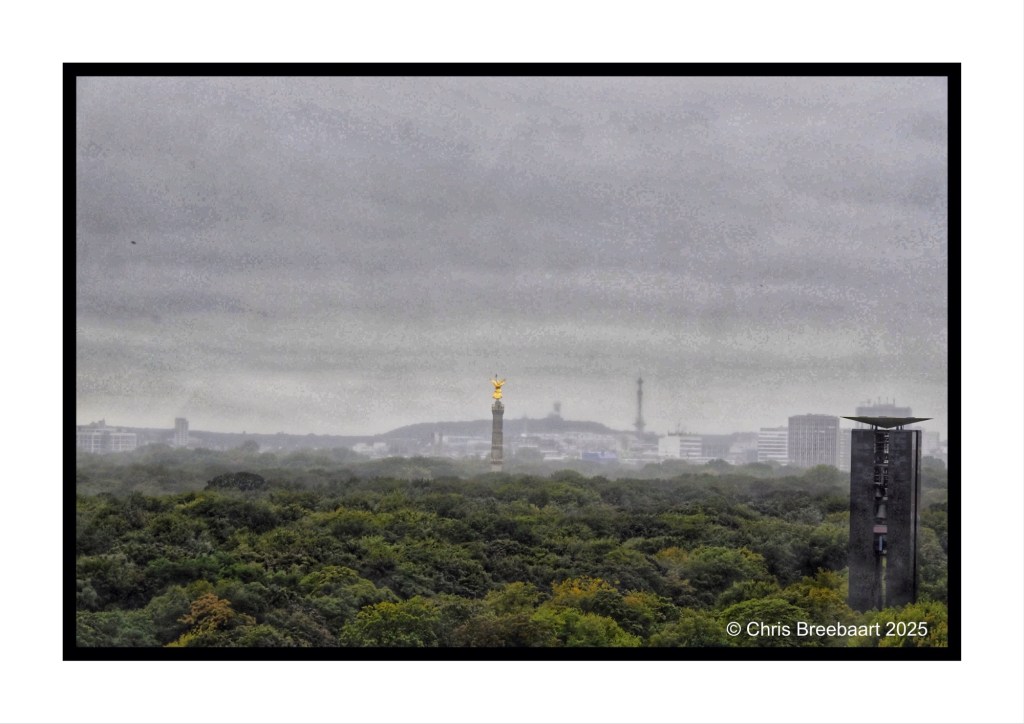
A view from the roof of the Reichstag, overlooking Tiergarten. On the left The Victory Column. On the right side is the Carillion, a 42 meter hight bell tower. And in the background the Teufelsberg.
I am not sure this photo is dreamy enough to enter Lens-Artists Photo Challenge #369 ‘dreamy’.
Shot with Nikon Zf, edited using Snapseed and Marksta. Click the picture for a larger version
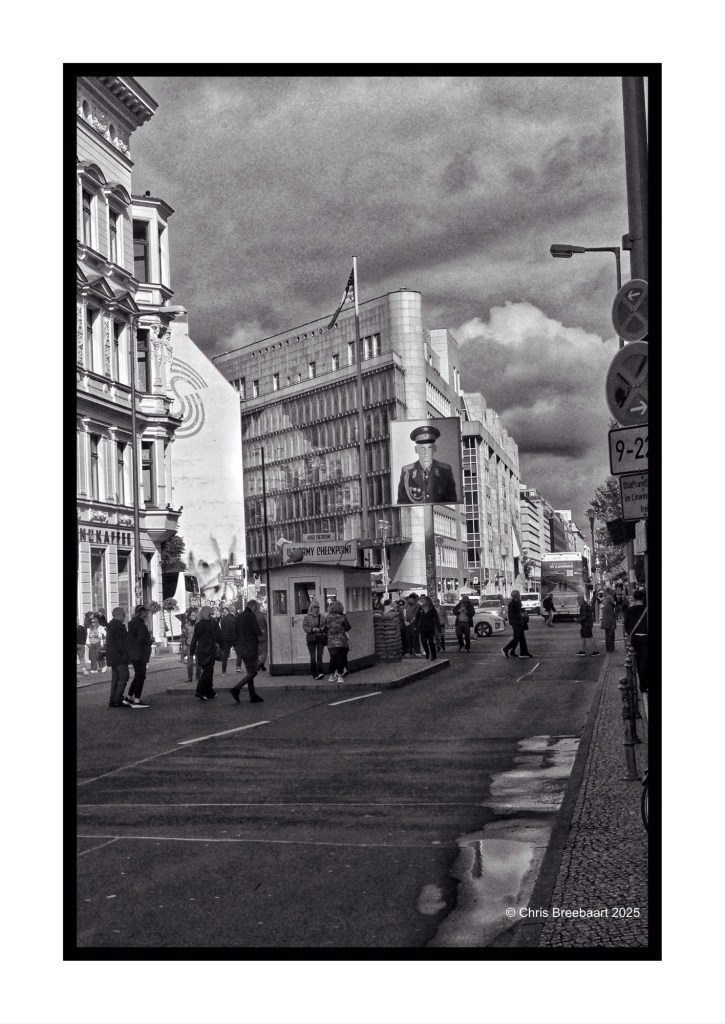
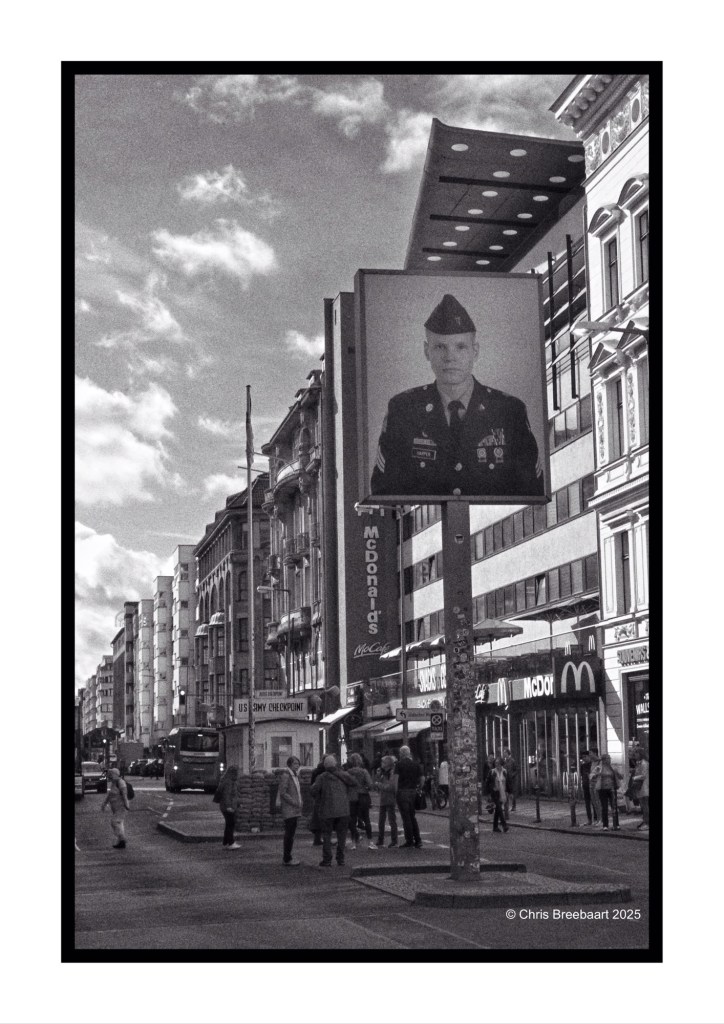
Checkpoint Charlie, symbol of the cold war.
Shot with Nikon Zf, edited using Snapseed and Marksta. Click the picture for a larger version

Berlin has a wonderful (and cheap) public transportation infrastructure. One of the building blocks is the U-Bahn.
Shot with Nikon Zf, edited using Snapseed and Marksta. Click the picture for a larger version
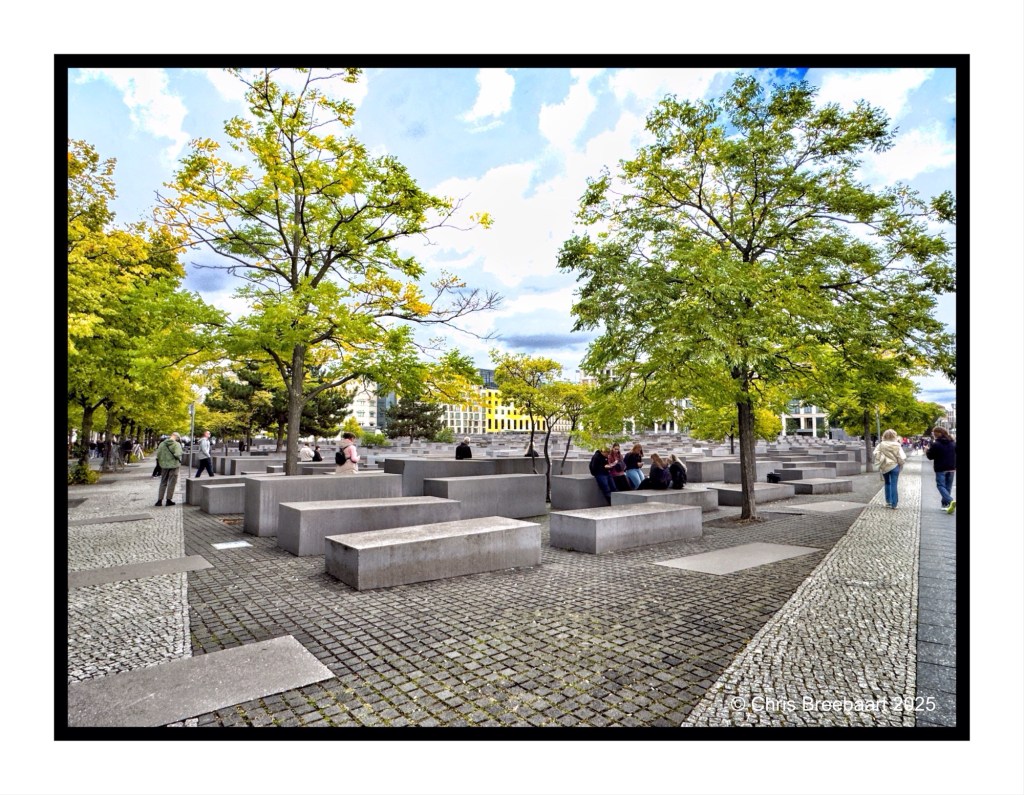
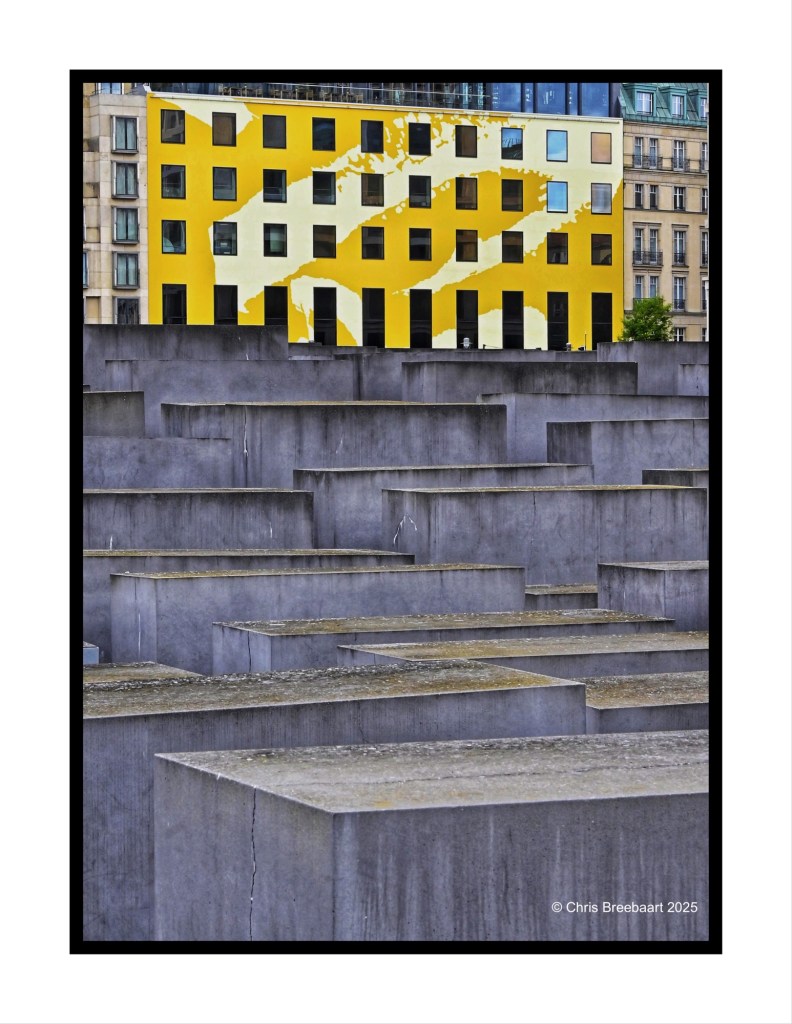
Another impression of the the Memorial to the murdered Jews in Europe.
Shot with iPhone 15 Pro Max and Nikon Zf, edited using Snapseed and Marksta. Click the picture for a larger version

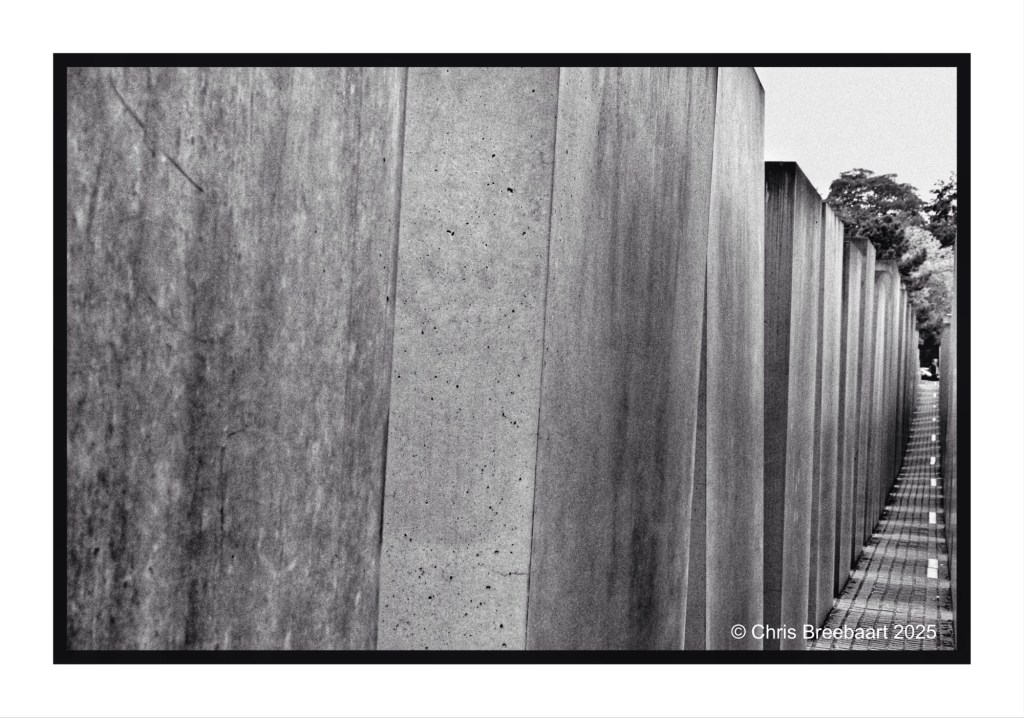
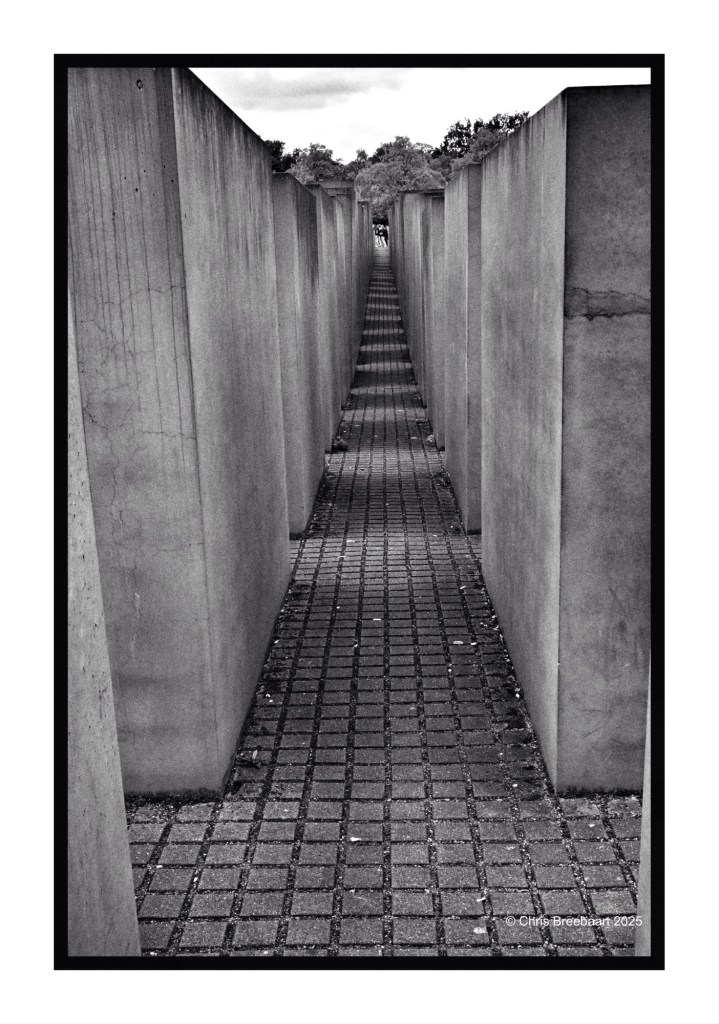

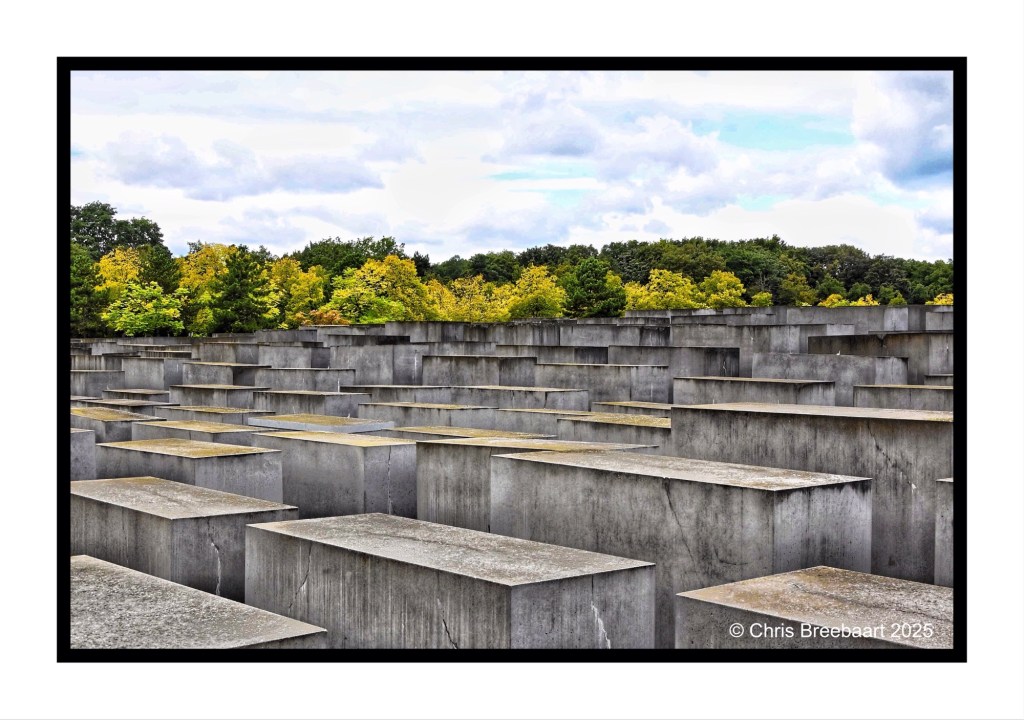
Last September I revisited Berlin after 46 years. One of the reasons to come back was to visit the Memorial to the murdered Jews in Europe. I had read stories and seen photos, and I wondered how I would take photo’s of it. And what it would be like to wonder through it. This visit I had my first experience with the monument. Here is the first impression (and the coming days I will publish some more).
Shot with Nikon Zf, edited using Snapseed and Marksta. Click the picture for a larger version.
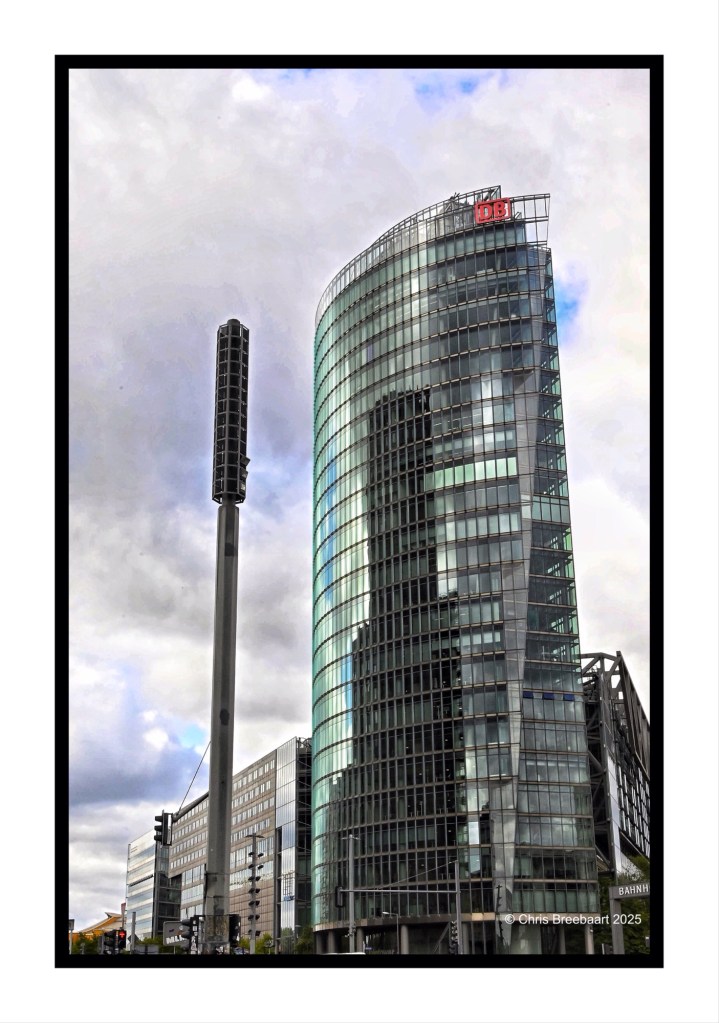
The Bahntower on the Potsdamer Platz, headoffice of the Deutsche Bahn.
Potsdamer Platz was the vivid heart of Berlin. During World War II, it was almost completely destroyed. Since 1961 Potsdamer Platz was a no man’s land, a death strip as part of the Berlin Wall. After the fall of Berlin Wall this was the biggest property developing area in a major city in Europe.
Shot with Nikon Zf, edited using Snapseed and Marksta. Click the picture for a larger version.
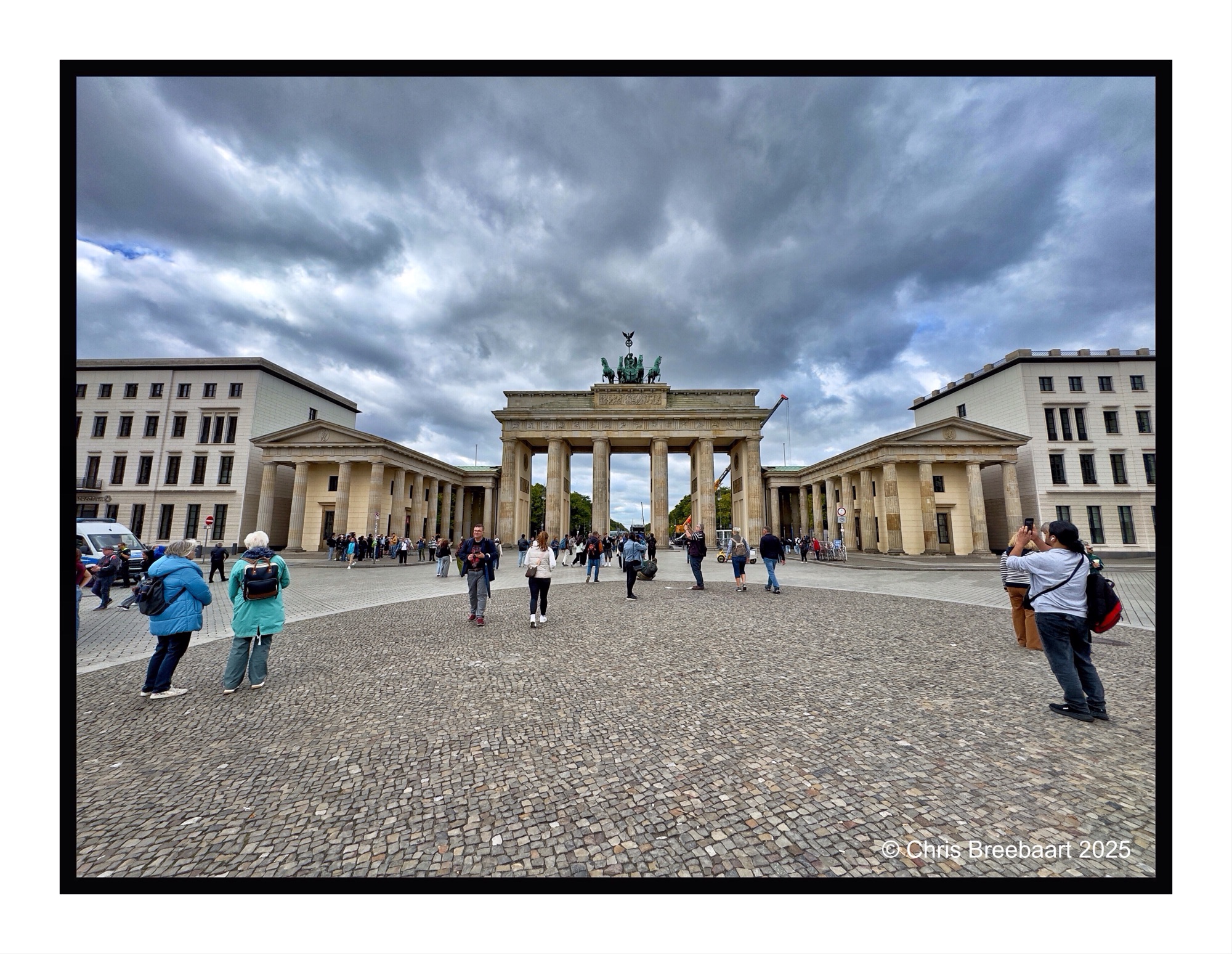
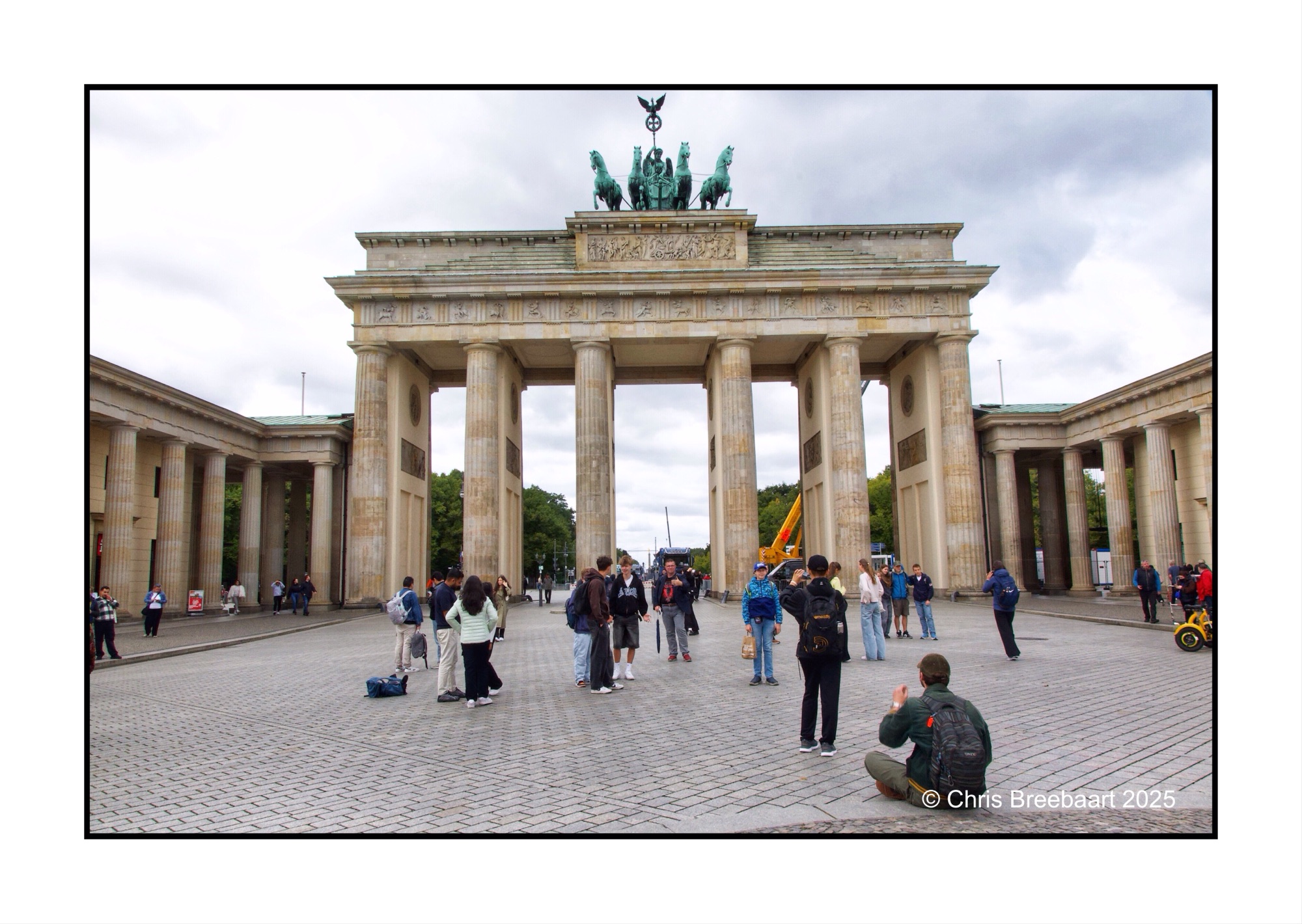
Brandenburger Gate (Brandenburger Tor) is a symbol of unity for Berlin and Germany. Nowadays the Pariser Platz (Paris Square) is a pedestrian and bicycle area.
Shot with Nikon Zf, edited using Snapseed and Marksta. Click the picture for a larger version.
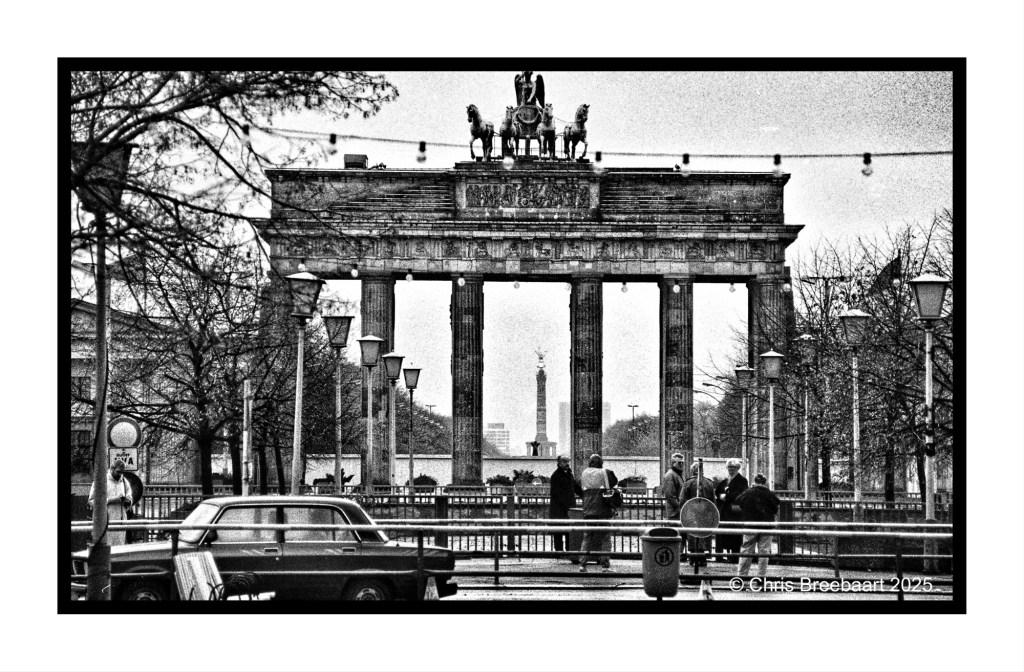
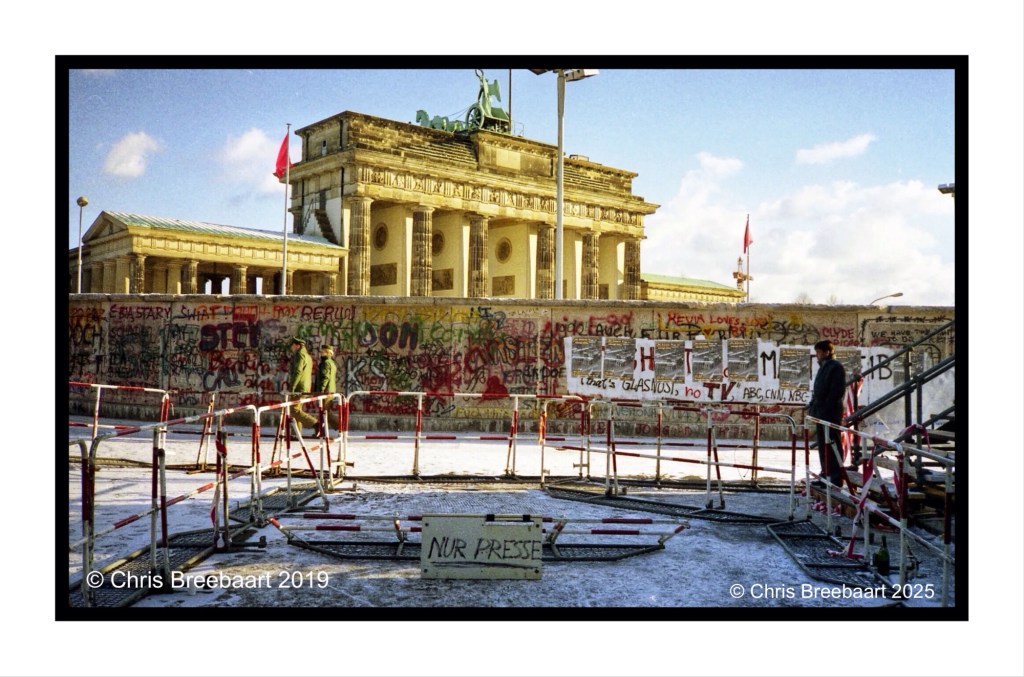
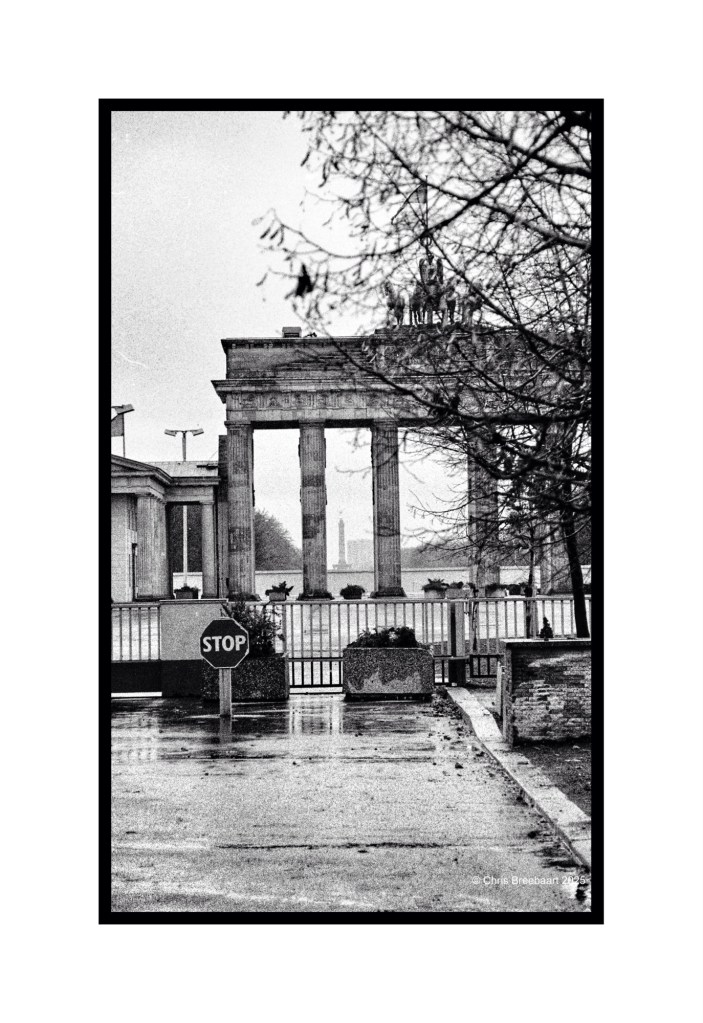
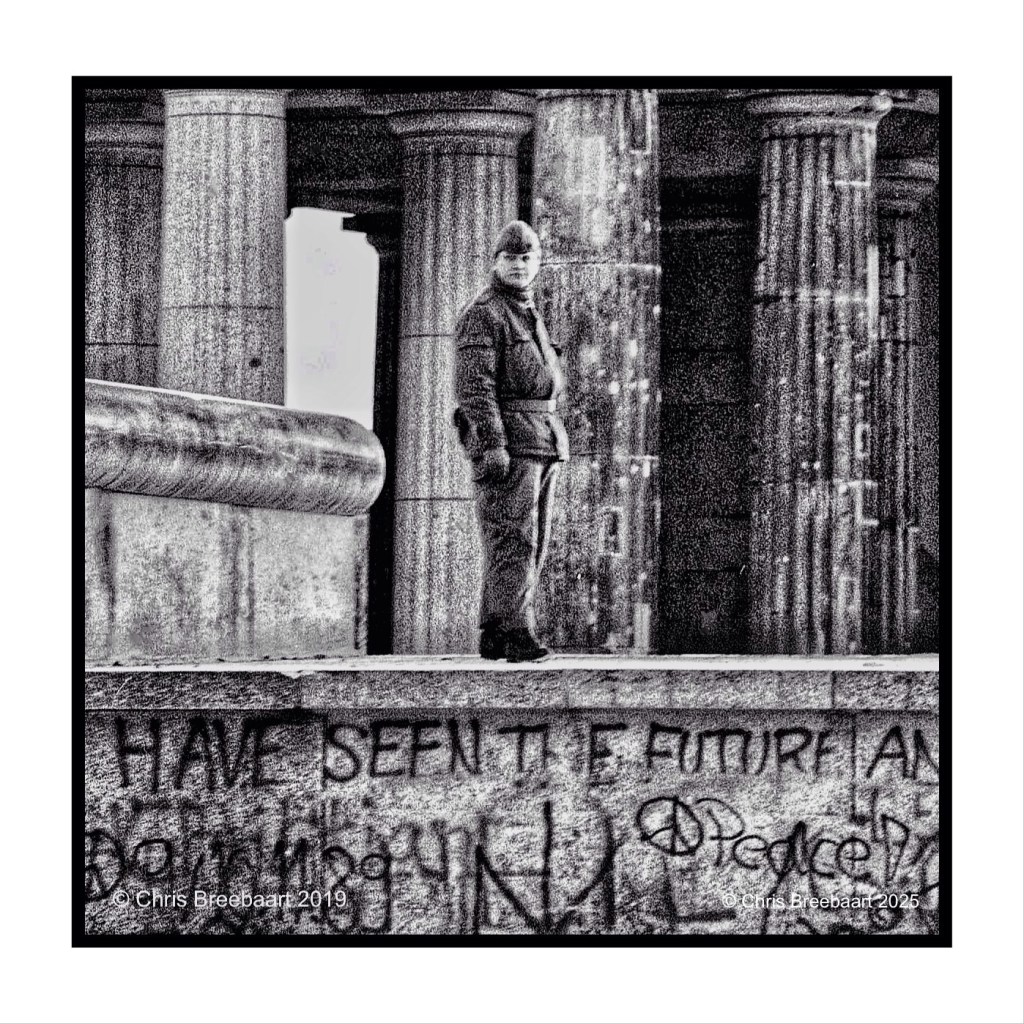
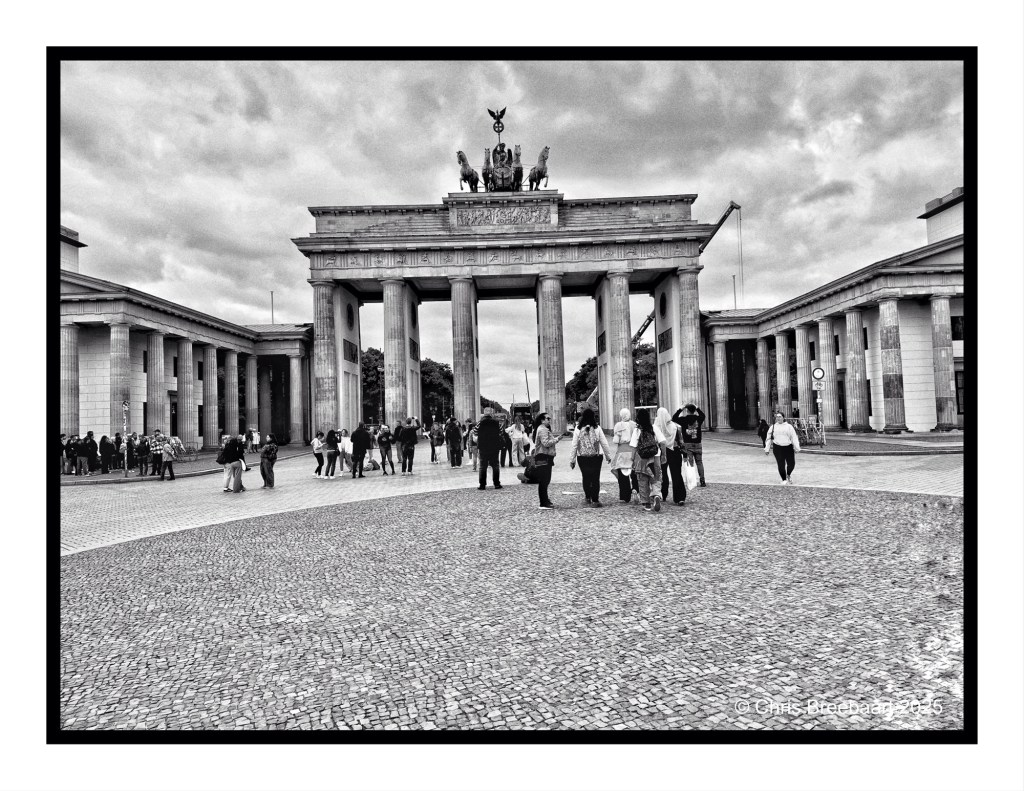
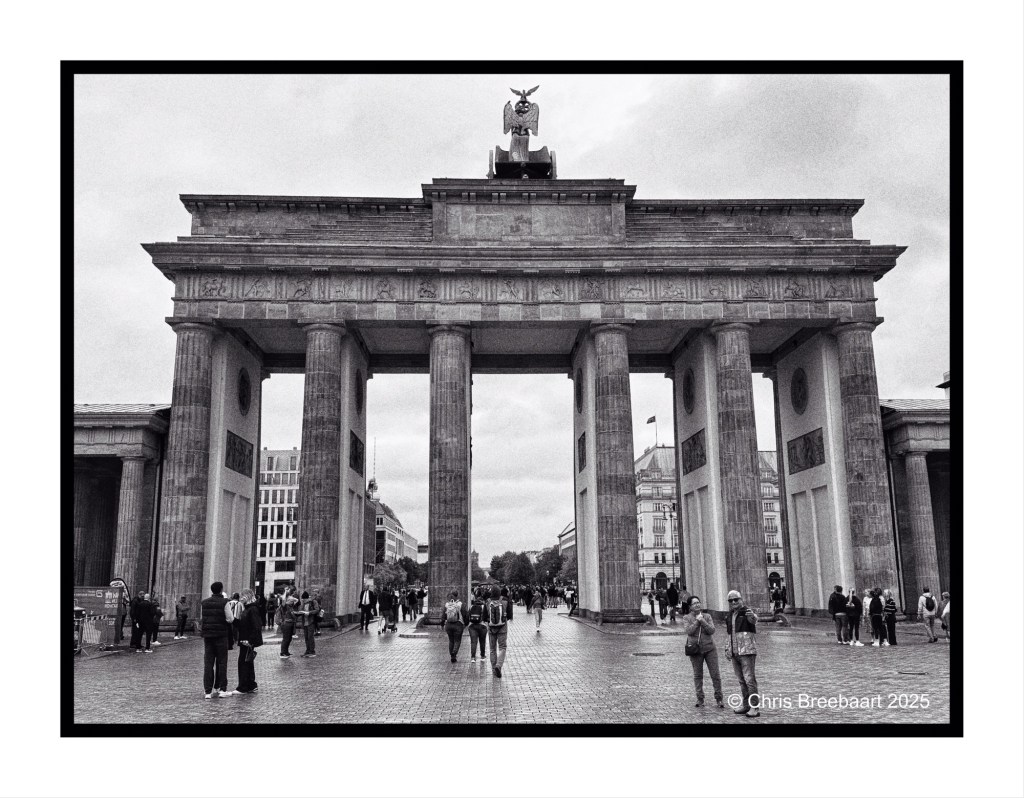
Brandenburger Gate (Brandenburger Tor) in Berlin was an iconic point at the time of the Berlin Wall (Berliner Mauer). The gate then stood in no mans land, and showed the alienating effects of division through the city. Now the Brandenburger Gate is a symbol of unity of Berlin. It was a pleasure to walk through the gates, and enjoy the people and streets around it. And the see the gate back at its splendor.
About the B4 retouch series:
I browsed my archive for pictures to publish. Some of them are partly retouched but most do have scratches, dust and stains.
The monochrome set of 1989 was shot with Nikon F301 on Kodak TriX. The colorfilm was Fuji, and shot on Pentax Espio 115M. 2025 photos shot with iPhone 15 Pro Max edited using Snapseed and Marksta. Click the pictures for a larger version.
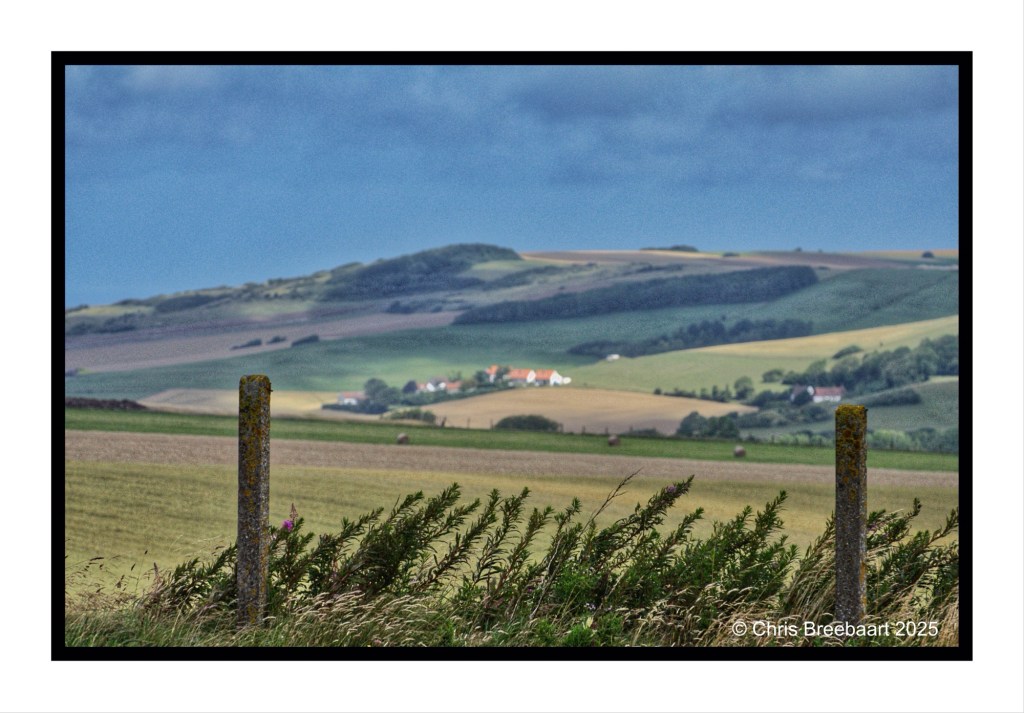
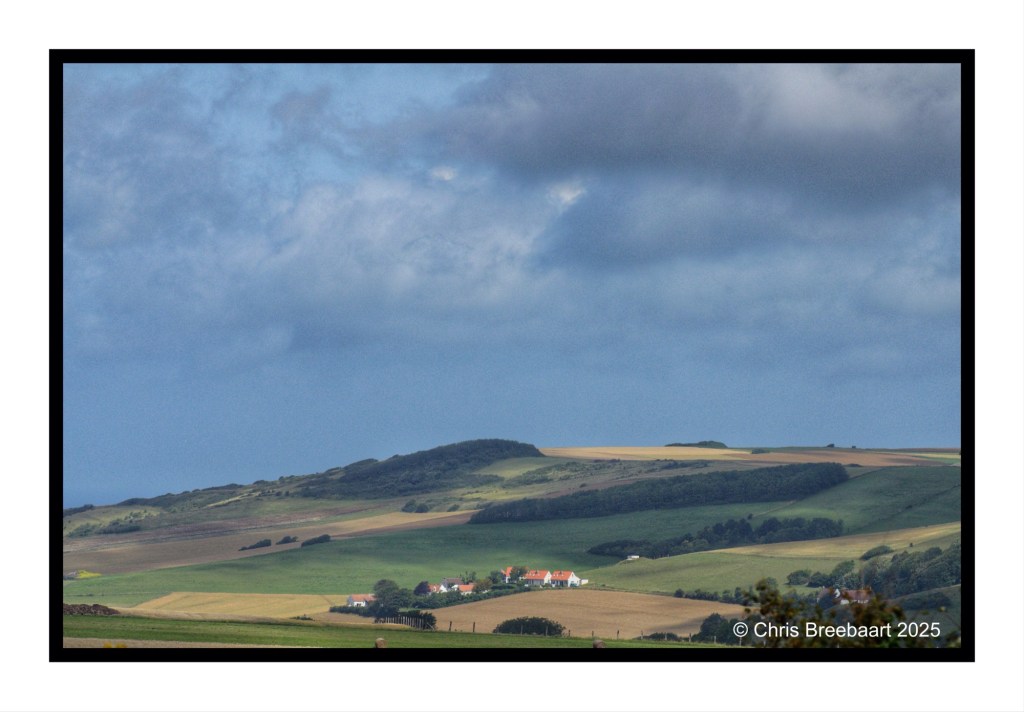
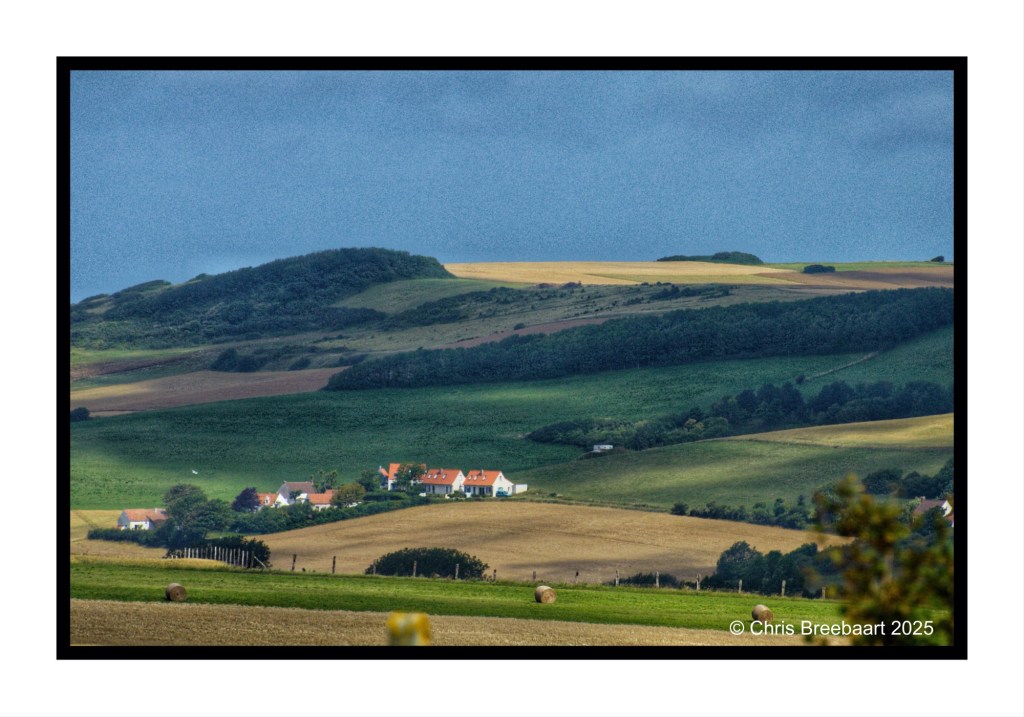
Lens-Artist’s Photo Challenge #365 is ‘longing’. This landscape is so appealing, I still feel the excitement I felt when I shot this sequence.
shot with Nikon D70, edited using Snapseed and Marksta. Click the picture for a larger version.
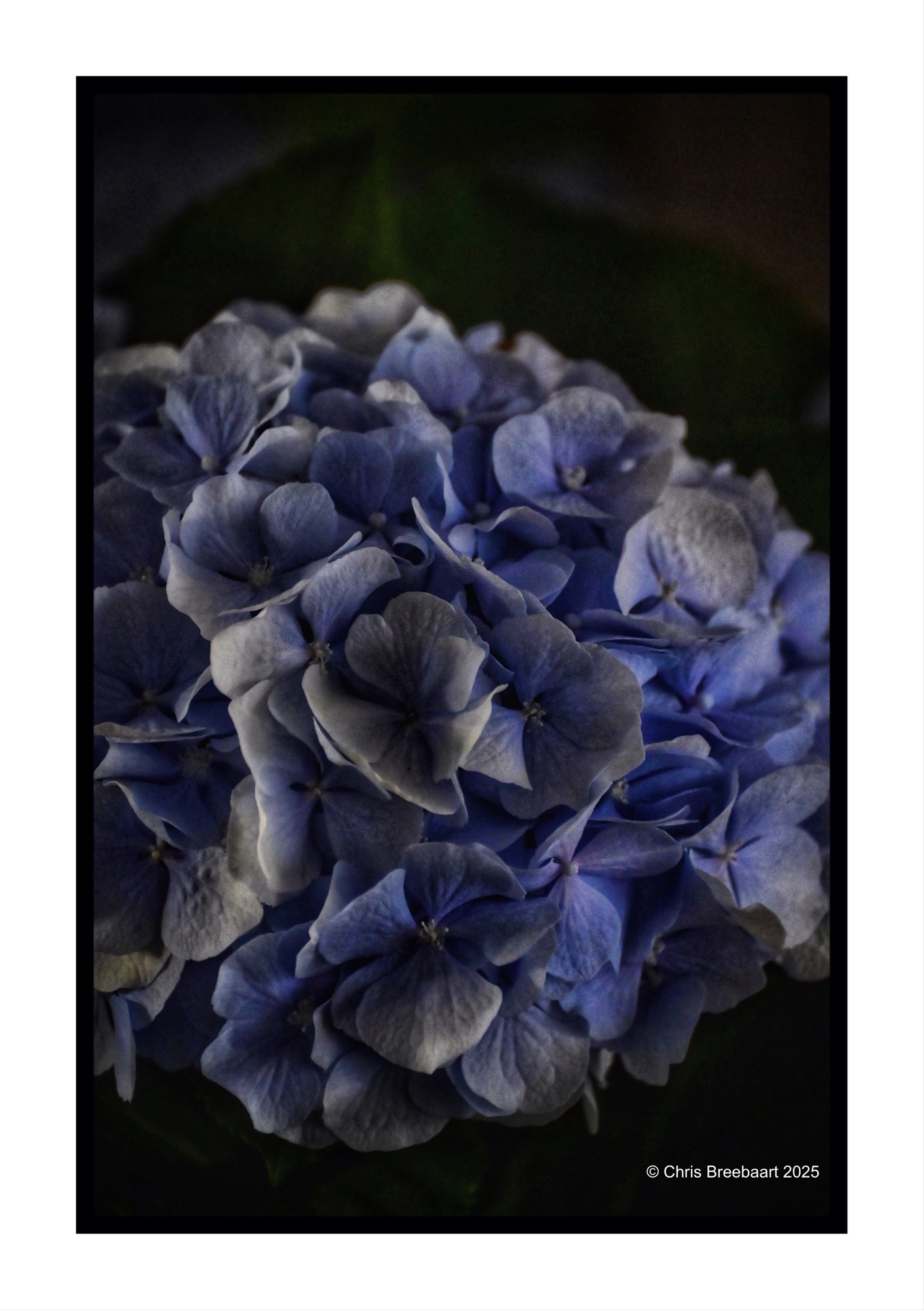
Shot with Nikon Zf, edited using Snapseed and Marksta. Click the picture for a larger version.
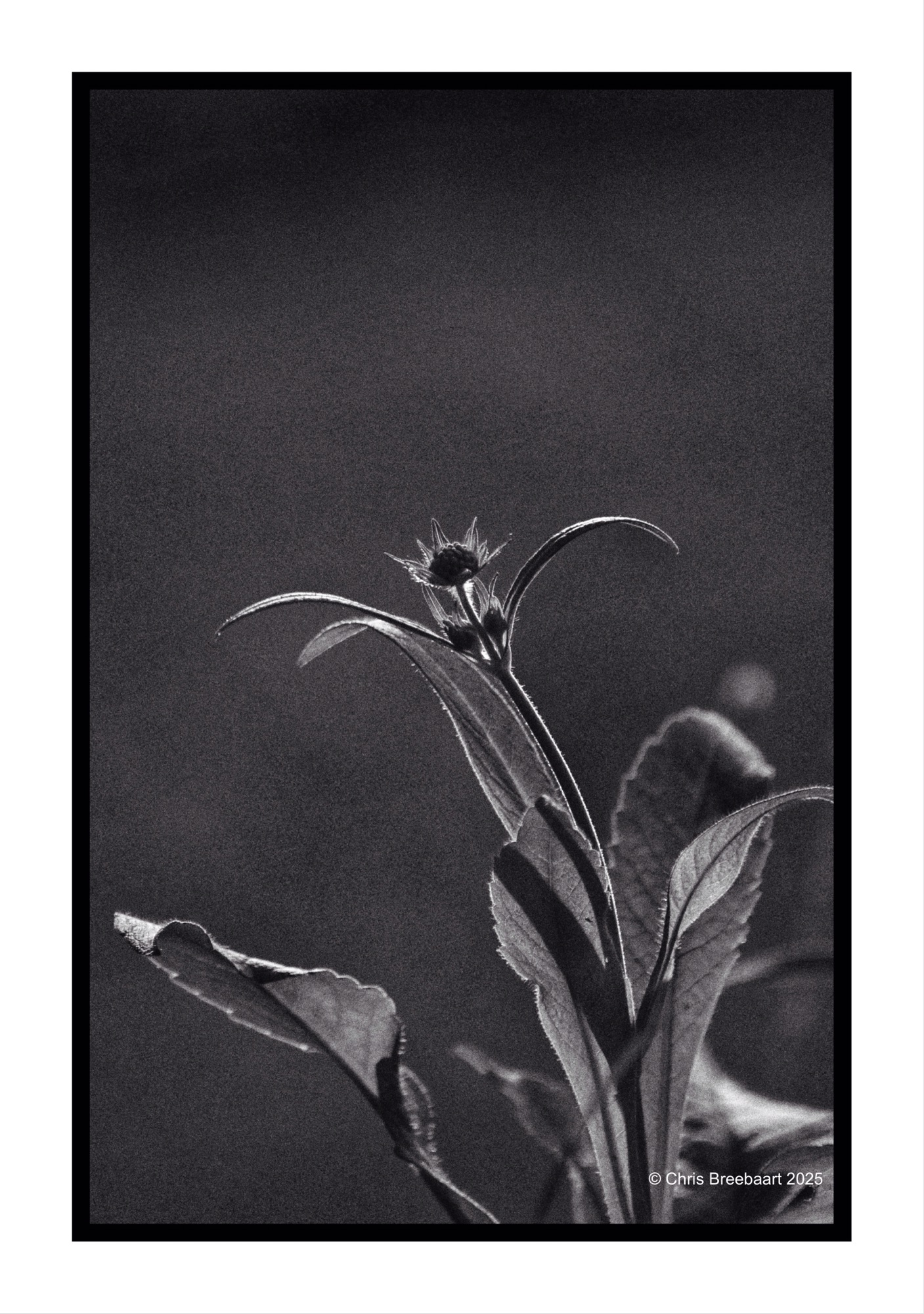
In the front garden, next to the Japanese Anemone, there is a Knautia Arvensis. It is more easily known as Field Scabiosa.
Shot with Nikon Zf, edited using Snapseed and Marksta. Click the picture for a larger version.
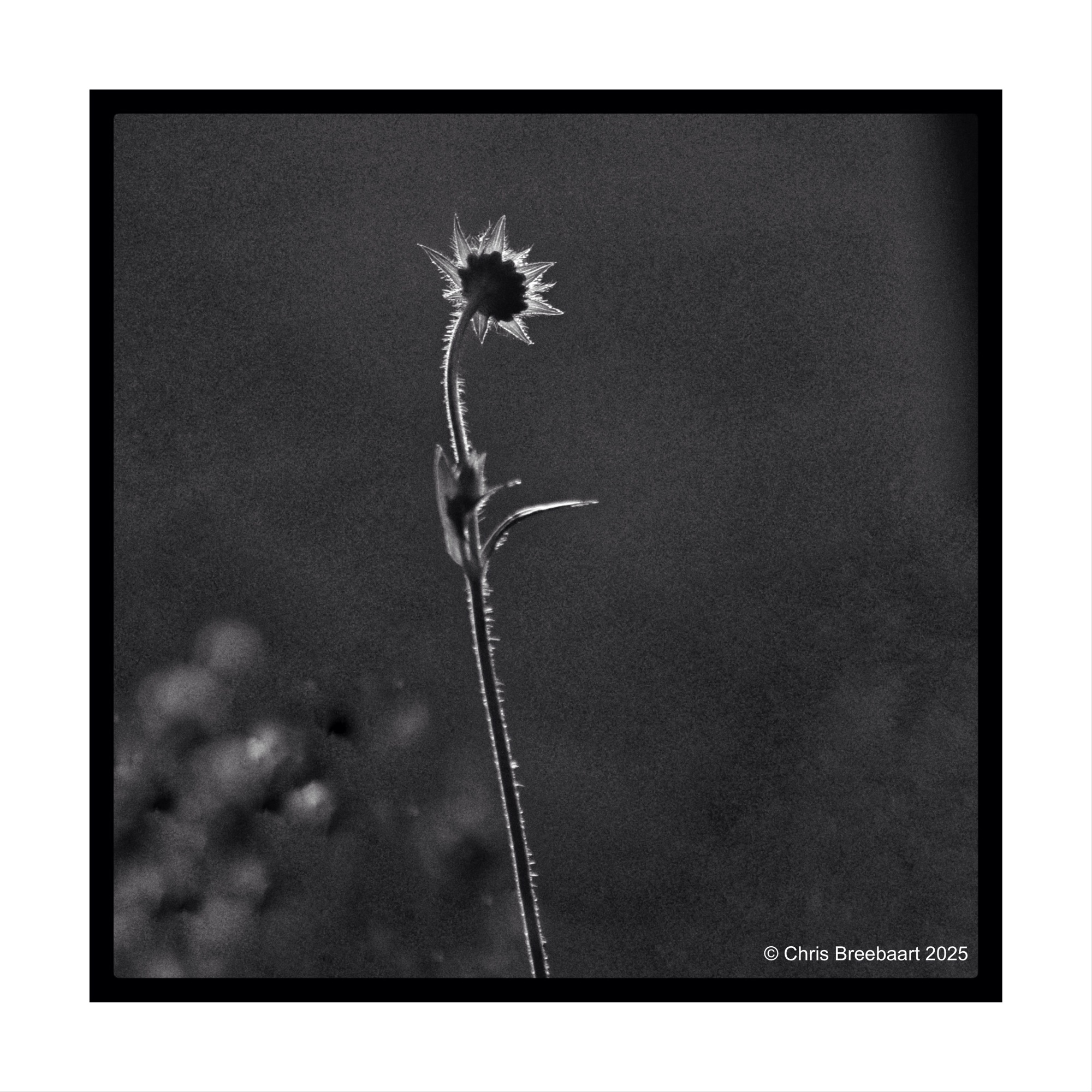
In the front garden, next to the Japanese Anemone, there is a Knautia Arvensis. It is more easily known as Field Scabiosa. It is literally a star.
Shot with Nikon Zf, edited using Snapseed and Marksta. Click the picture for a larger version.
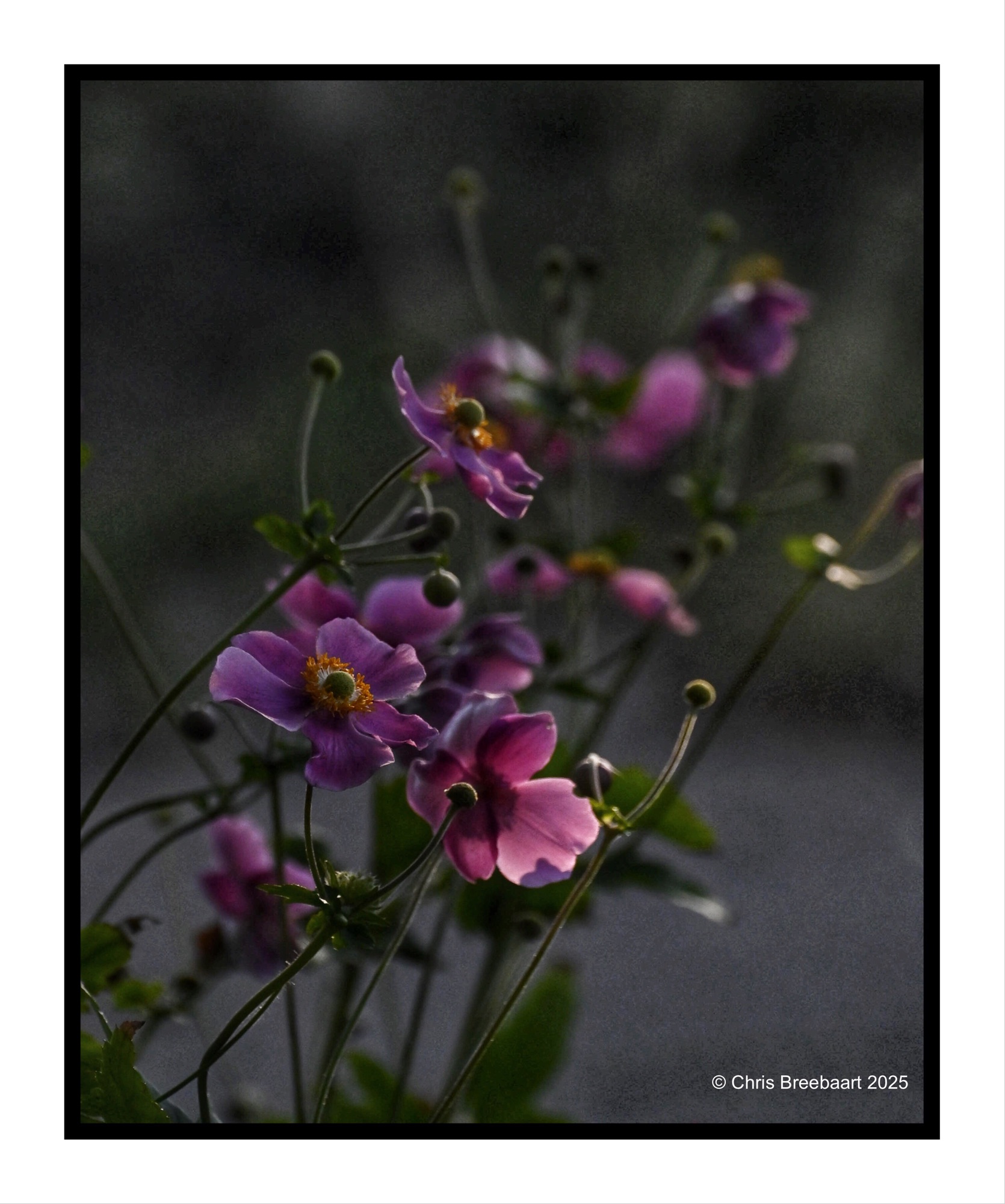
To close the series of the Japanese Anemone, a last one in color.
Shot with Nikon Zf, edited using Snapseed and Marksta. Click the picture for a larger version.
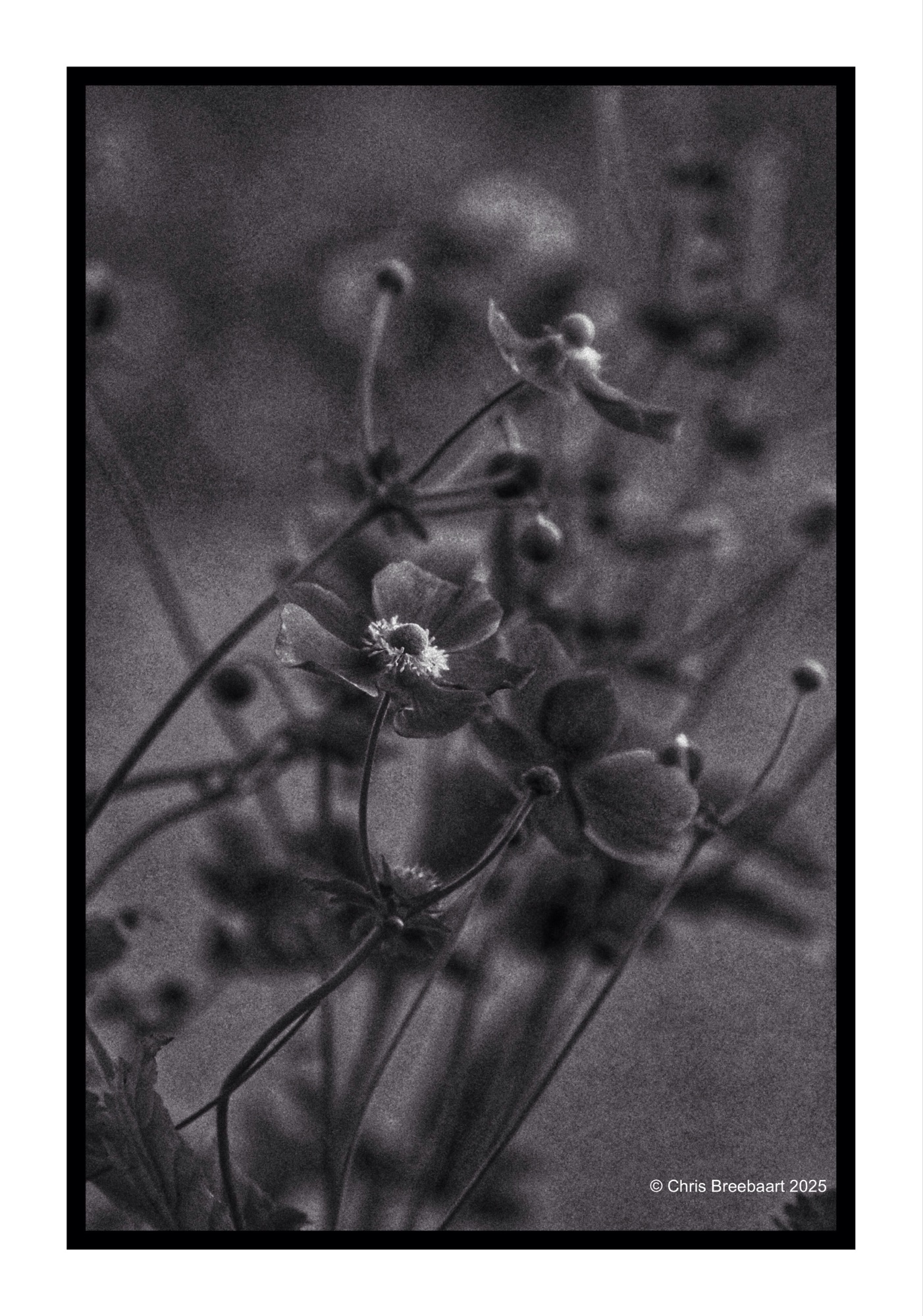
I like monochrome photography for many reasons. One of them is the ability to play with the mood in the photo. Just by adjusting the aperture time or the opening of the lens, the same light delivers a different mood. This one and the photo I published yesterday, were shot on the same day.
Lens- Artist Challenge #364 is ‘Quiet Moment’. Close ups of natural beauty are a wonderful instrument to just be quiet, enjoying the view. And to realize all is connected.
Shot with Nikon Zf, edited using Snapseed and Marksta. Click the picture for a larger version.
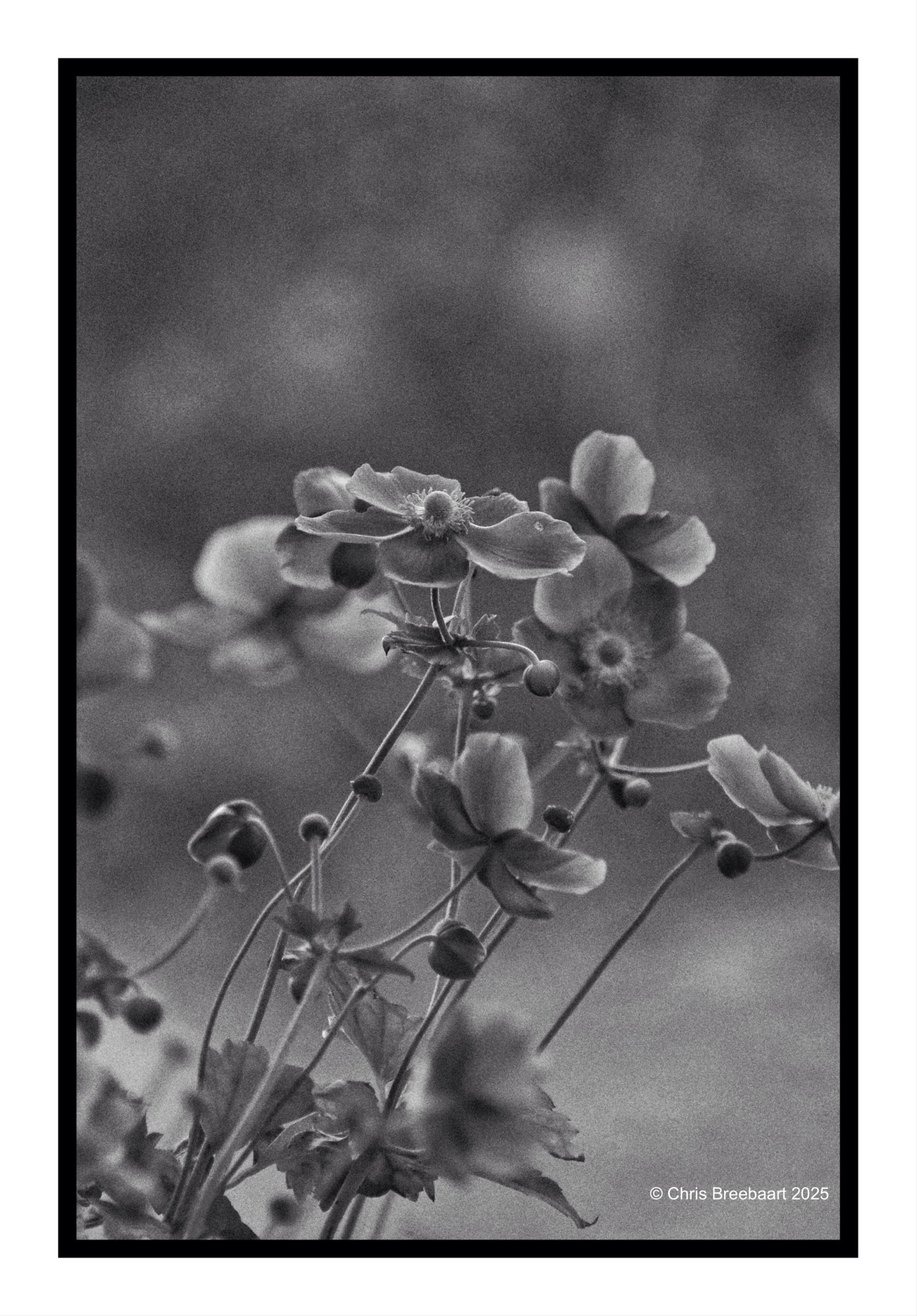
Lens- Artist Challenge #364 is ‘Quiet Moment’. Close ups of natural beauty are a wonderful instrument to just be quiet, enjoying the view. And to realize all is connected.
Shot with Nikon Zf, edited using Snapseed and Marksta. Click the picture for a larger version.
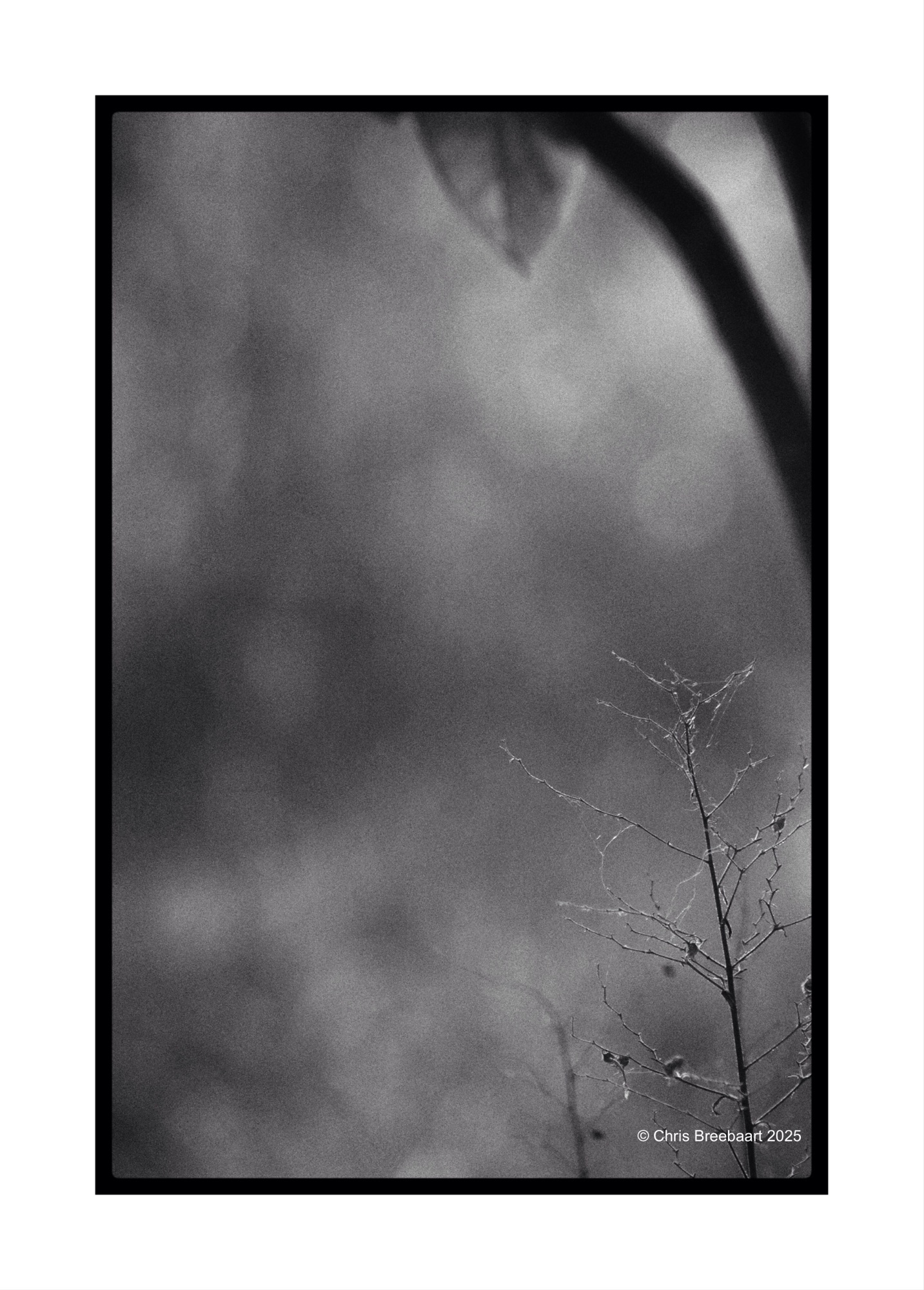
The aim is to get up into the light and find your place among the rest of the garden.
Shot with Nikon Zf, edited using Snapseed and Marksta. Click the picture for a larger version.

The Japanese Anemone in the front garden at close look.
Shot with Nikon Zf, edited using Snapseed and Marksta. Click the picture for a larger version.
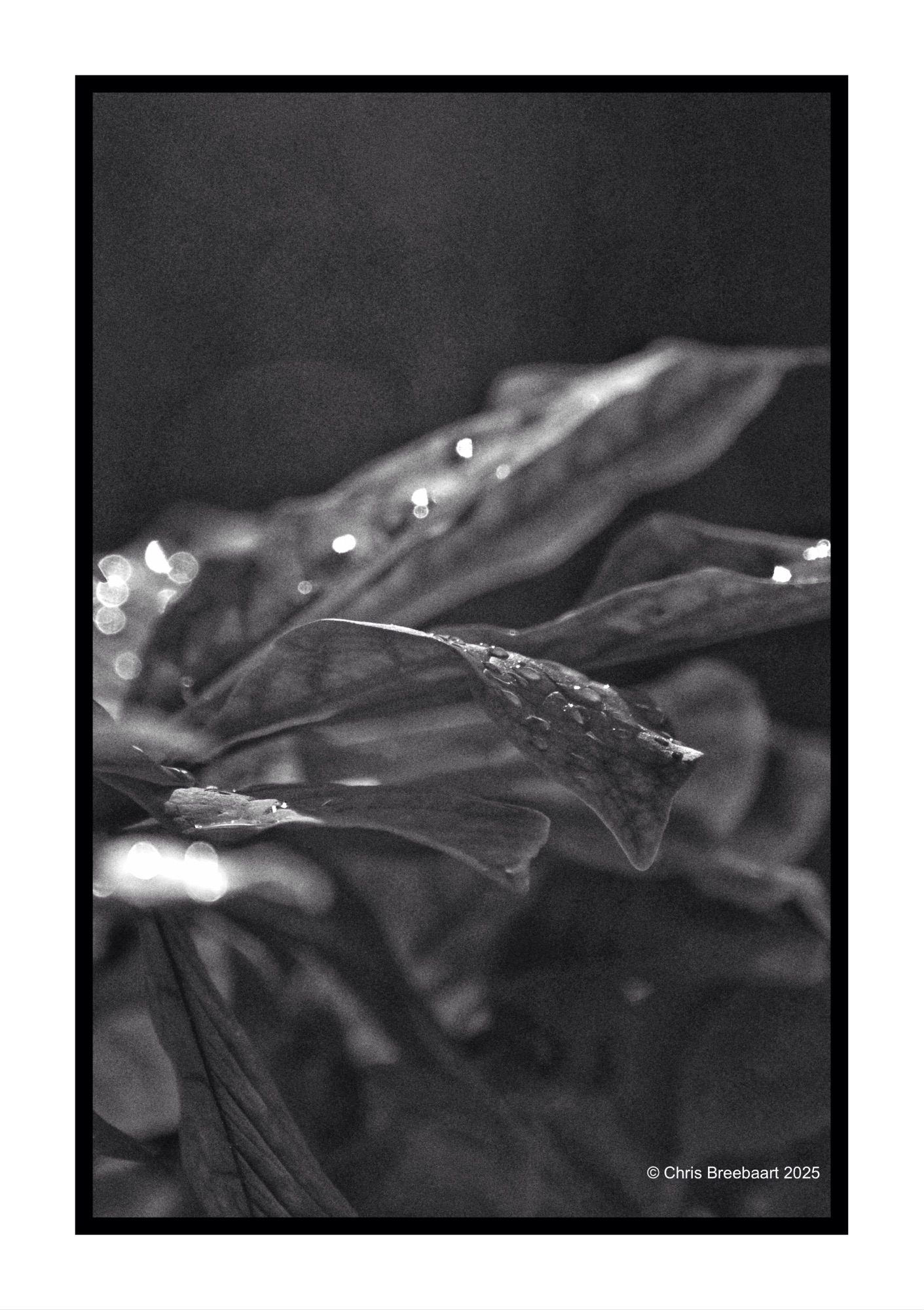
The morning sun reflecting the drops of rain that the night left behind.
Shot with Nikon Zf, edited using Snapseed and Marksta. Click the picture for a larger version.
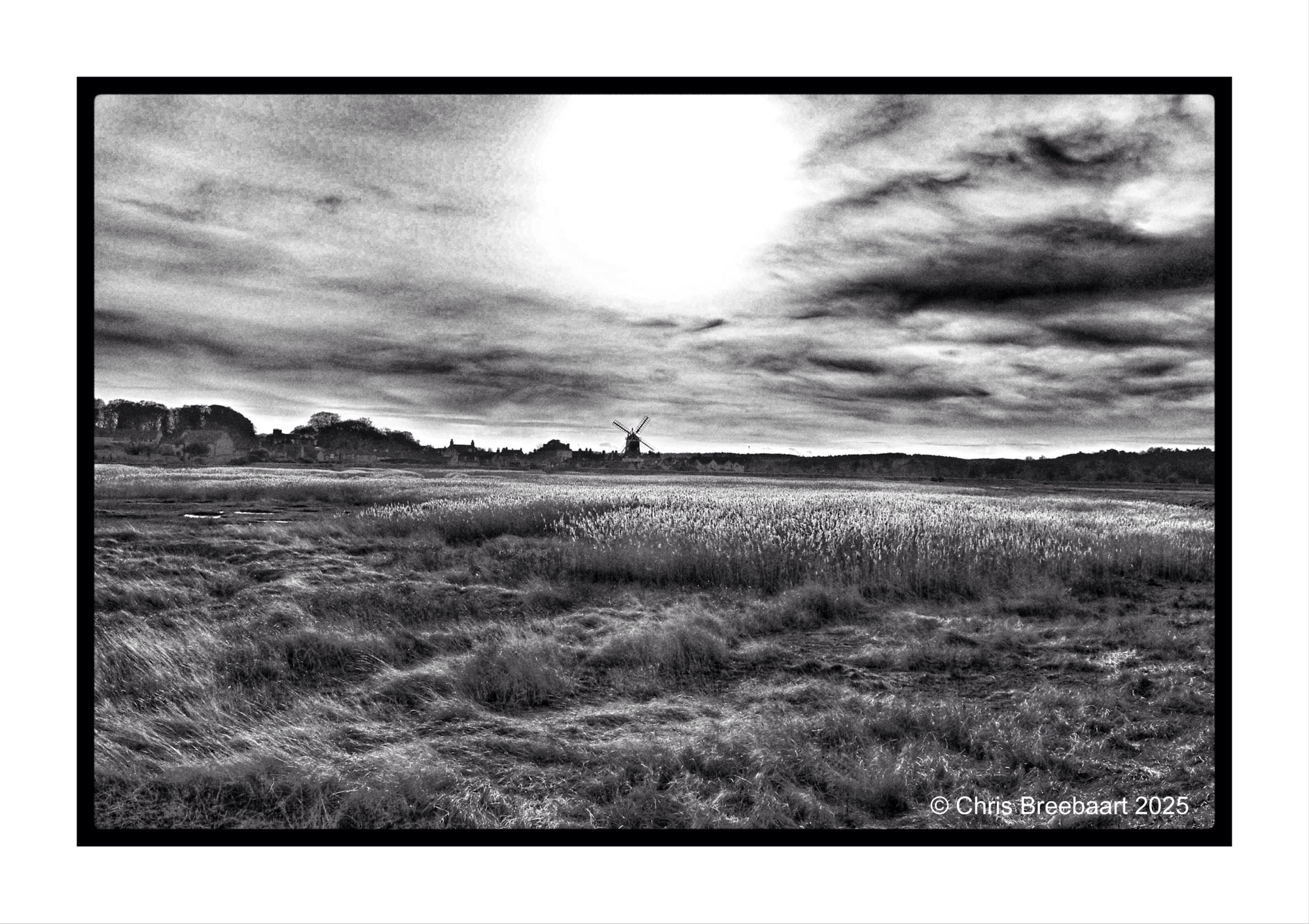
This is the famous Cley windmill at Cley next the sea. It’s by far the best name for a coastal village. Interestingly, it actually does not have a sea front. The mill was owned by the family of James Blunt.
Shot with Nikon Zf, edited using Snapseed and Marksta. Click the picture for a larger version.
This week’s Lens-Artists Photo Challenge #361 is ‘Doors revisited’. That theme was also the brief for LAPC #20. A door is a pass way to another space behind it. That space can be something we know already. Or something we like to imagine to see there when we go through. And in books you can end up in another world. In this post a few doors I met in my life. One I used for a long time, most I just passed by or passed through on holidays.
The word ‘doors’ for me is also linked to the band The Doors. The name of the band came from a book by Aldous Huxley, The doors of perception. And Huxley took it from William Blake, who used it as a metaphor:
“If the doors of perception were cleansed every thing would appear to man as it is, Infinite. For man has closed himself up, till he sees all things thro’ narrow chinks of his cavern . Doors lead you to another side or space, break on through to the other side.”
‘Break on through to the other side’ became the title of a Doors’ song.
So a lot can be said about doors. Luckily, we still have the photos. Here are a few from my conscious memory.
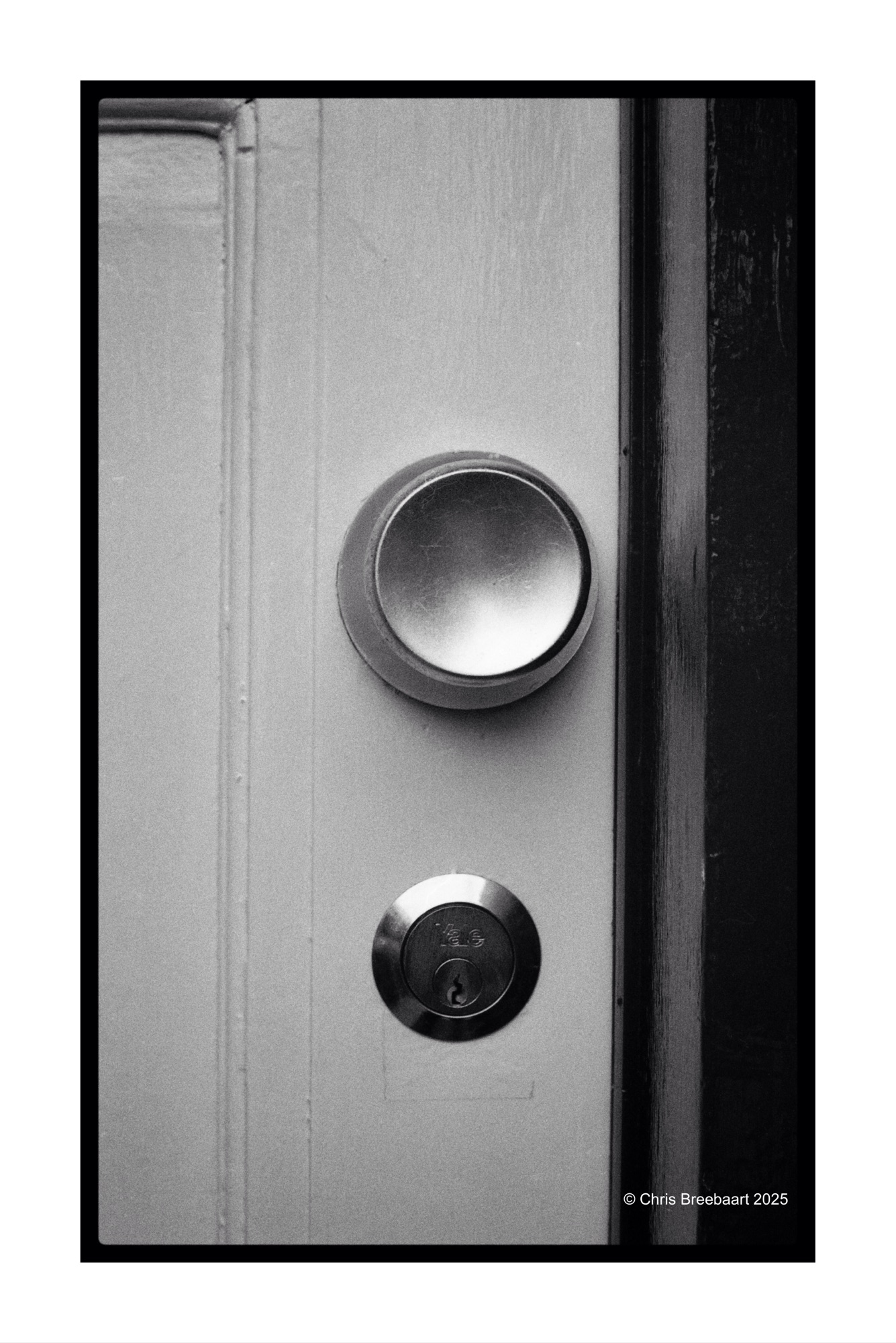
This is the front door to the house I was born and lived in for 25 years. The photo is shot on Ilford XP with a Pentax K1000.
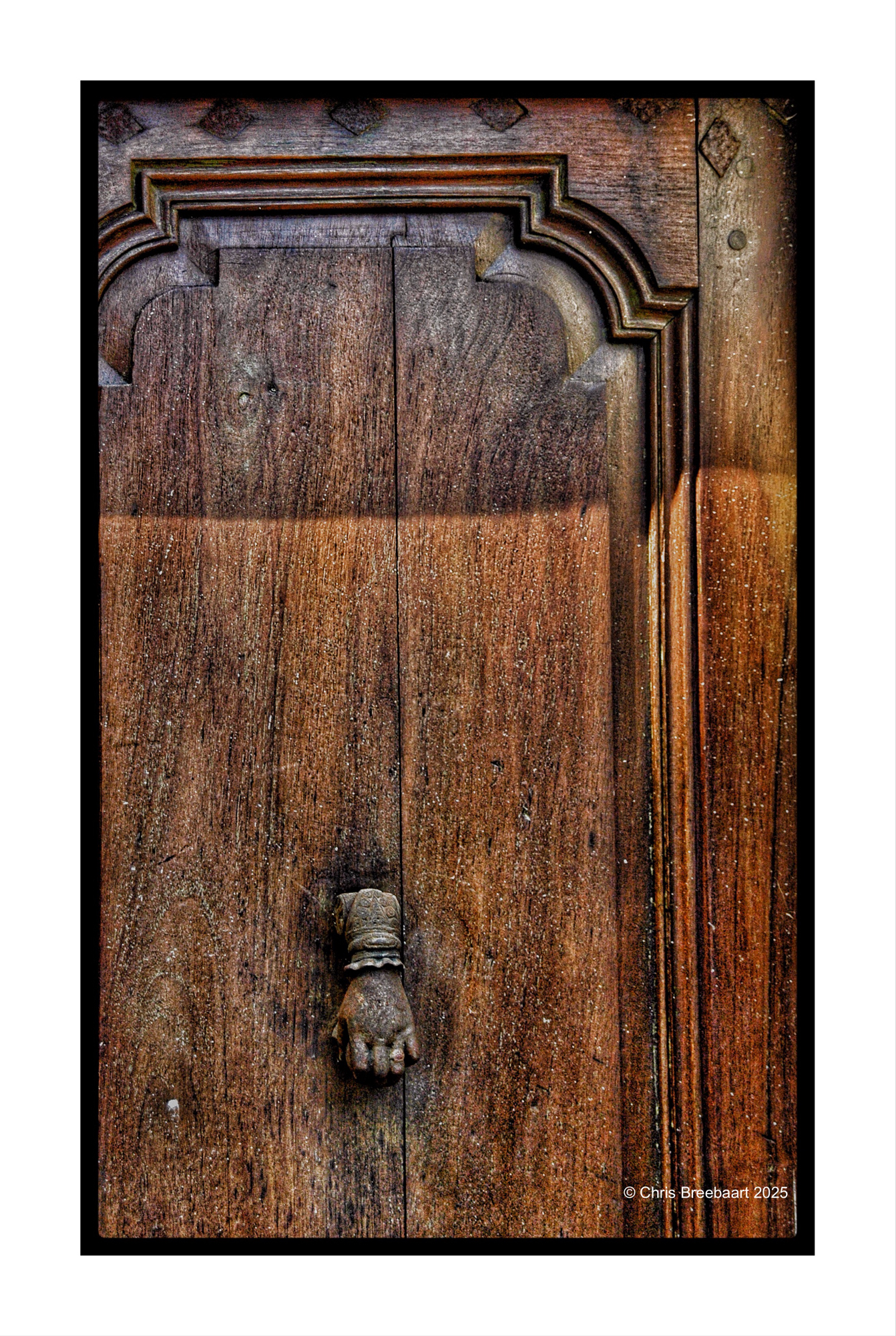
This door in Caylus is ready to be knocked. Shot on Nikon D70.
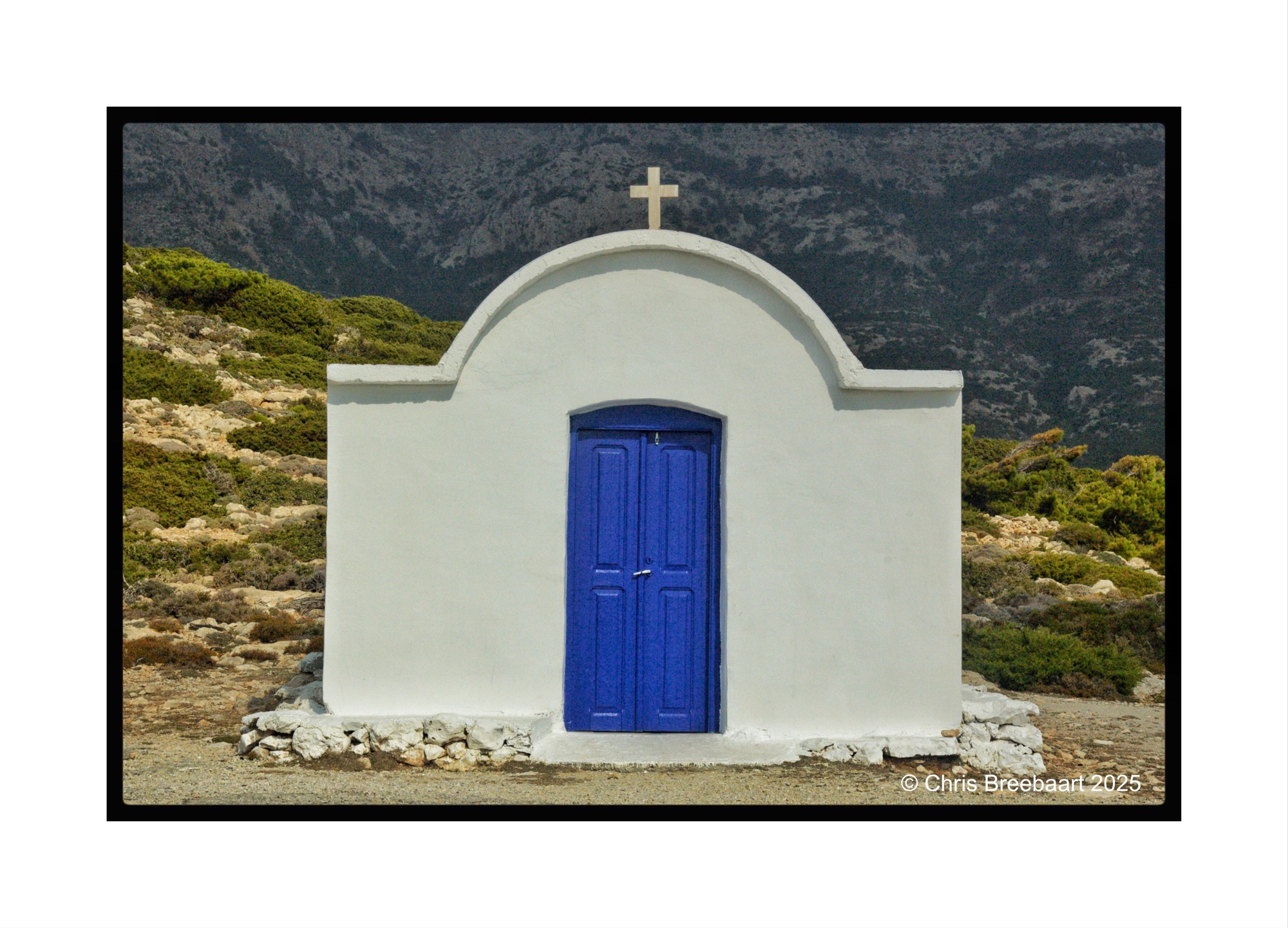
I looked through my archive. It struck me that lots of the doors I saw there are doors of small or bigger churches. This one is on Karpathos. Shot on Nikon D70.

Another church door on Karpathos, shot on Kodak TriX with Nikon F90.

A chapel door in Lesbos, also shot on Nikon D70.
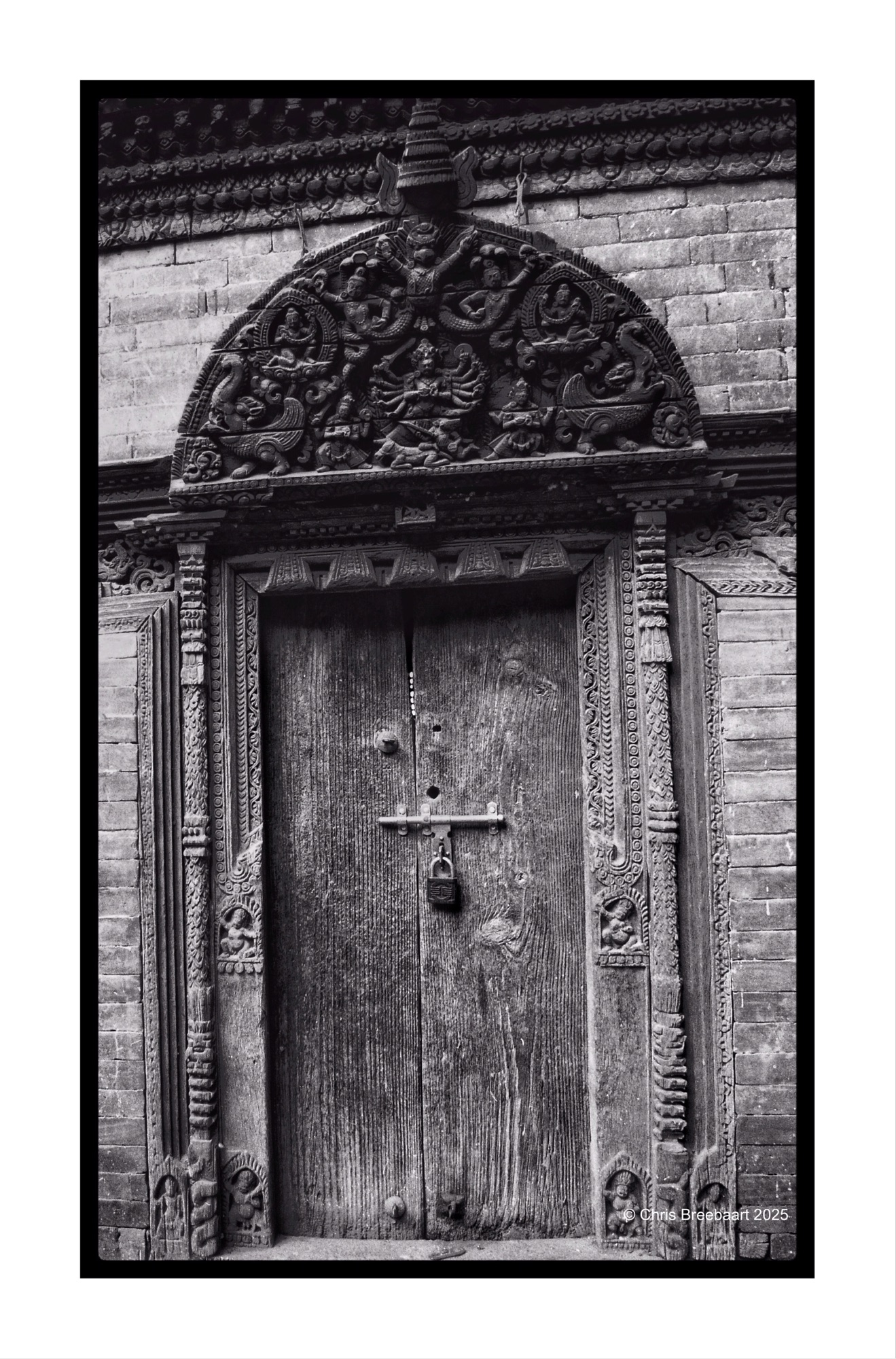

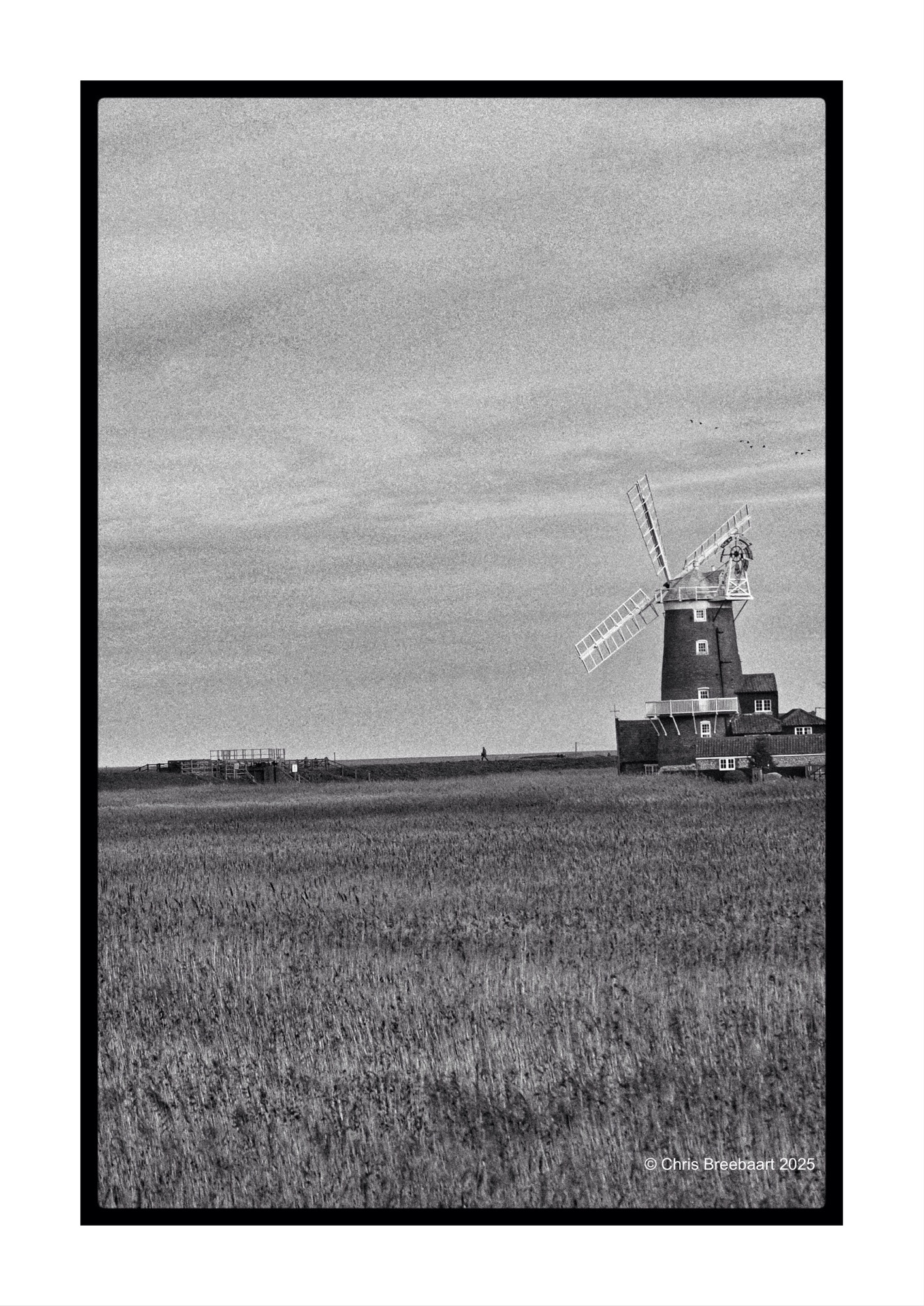
I have a fondness for black and white aka monochrome. That grew on me. Mono was cheaper 50 years ago and more ‘easy’ to handle in a dark room. Monochrome gives something extra at times. The sphere, the grain. And over all these years I learned to see objects in monochrome, visualizing what something looks like in grays.
When I bought my first Nikon digital camera (the D70), I naively asked ‘where is the monochrome setting?’. It was not there. Shooting was color only. If I wanted mono I had to create it myself afterwards in Lightroom, Photoshop or an app like Snapseed. But lucky for me, on the iPhone and on the recent Nikon Zf, there are monochrome settings. To be honest, that was one of the reasons to buy a Zf. So now I have a choice: mono or color.
I know the taste of my ‘audience’ is different than mine. In three days I like to find out more about your taste. What do you fancy more: a photo in mono or in color?
This is the famous Cley windmill at Cley next the sea. It’s by far the best name for a coastal village. Interestingly, it actually does not have a sea front. The mill was owned by the family of James Blunt. The photo was shot in color.
Shot with Nikon Zf, edited using Snapseed and Marksta. Click the picture for a larger version.
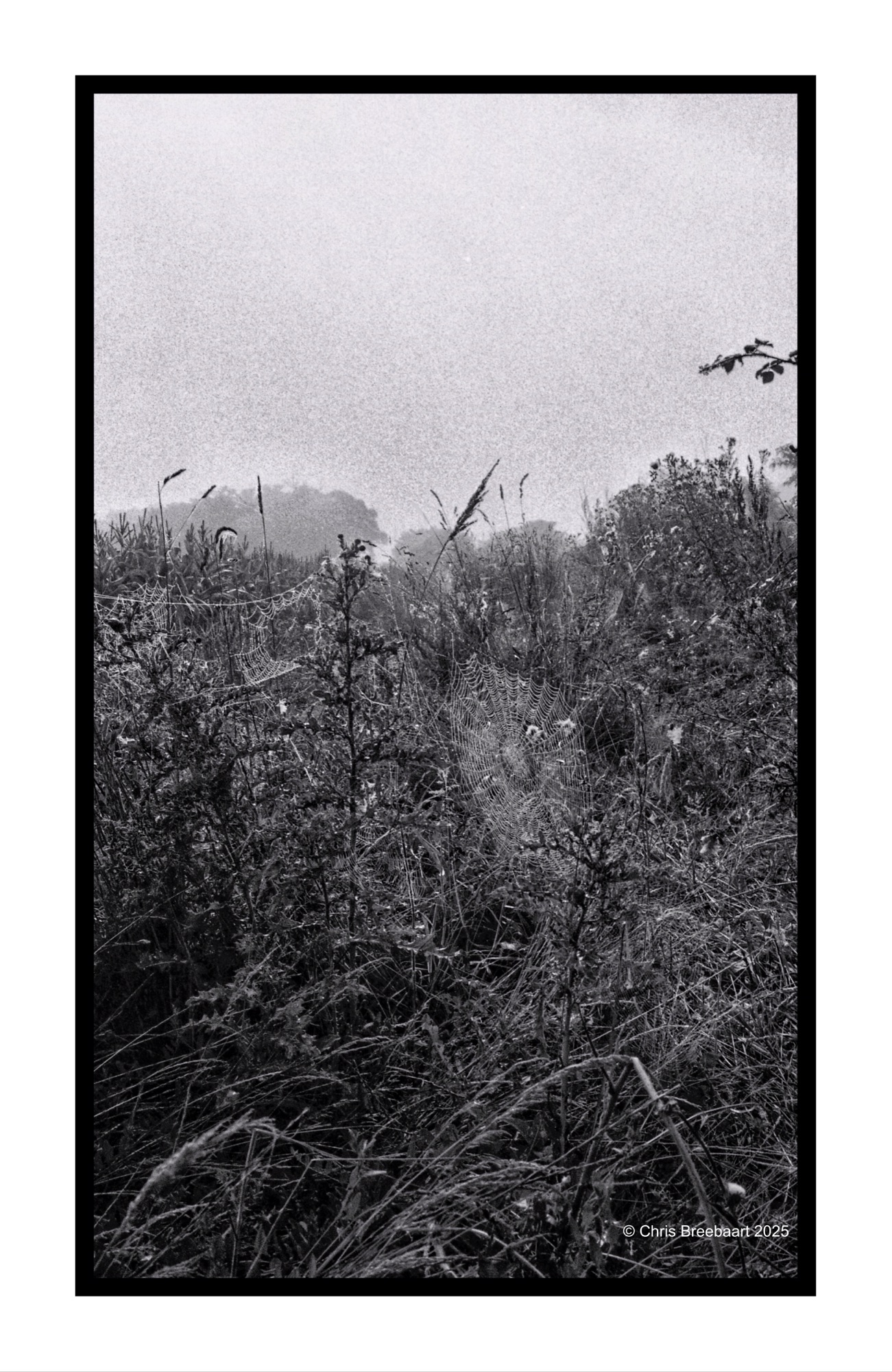
Lens-Artists Photo Challenge #359 is ‘Tools of Photo Compositions: Lines, Colors and Patterns’.
Long leading lines, nice shapes etc are pretty obvious to use when building a nice frame. But what about chaos? Can that be appealing too? A field with spiderwebs, wet by the fog. A photo from almost 30 years ago, taken in Brittany at St. Samsom-sur-Rance, near Dinan. To see it at its best, click the photo please.
About the B4 retouch series:
I browsed my archive for pictures to publish. Some of them are partly retouched but most do have scratches, dust and stains.Shot with Nikon F90 on Kodak TriX, scanned from film and edited using Snapseed and Marksta. Click the picture for a bigger version

Lens-Artists Photo Challenge #359 is ‘Tools of Photo Compositions: Lines, Colors and Patterns’.
The harbor of Le Conquet at low tide during sunset, as equestrians pass by. To say I was surprised when I spotted the horses, is an understatement.
About the B4 retouch series:
I browsed my archive for pictures to publish. Some of them are partly retouched but most do have scratches, dust and stains.Shot with Nikon F90 on Kodak TriX, scanned from film and edited using Snapseed and Marksta. Click the picture for a bigger version
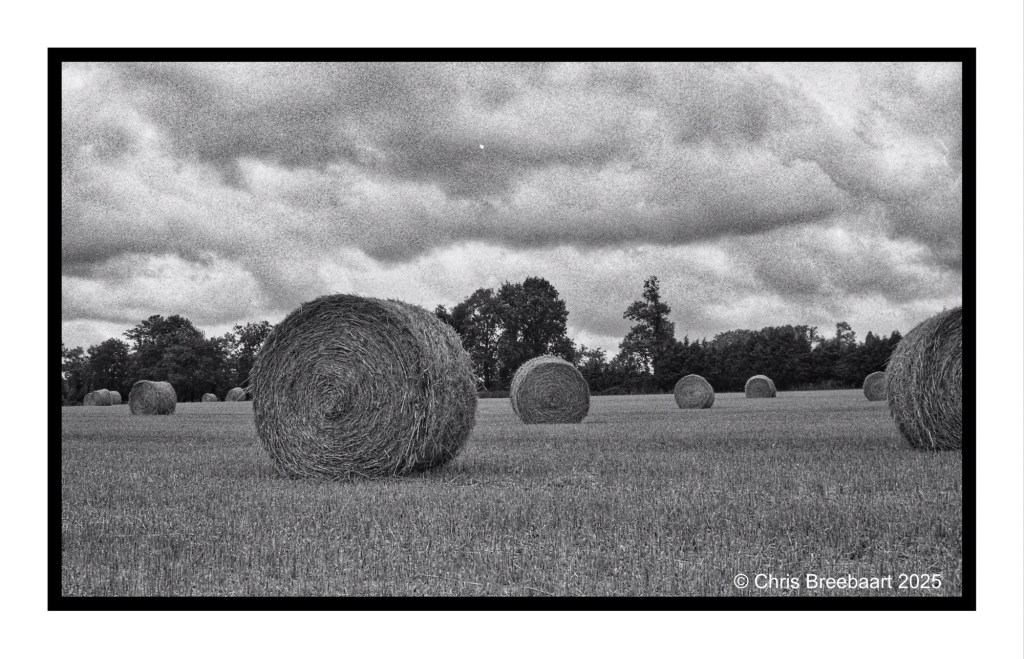
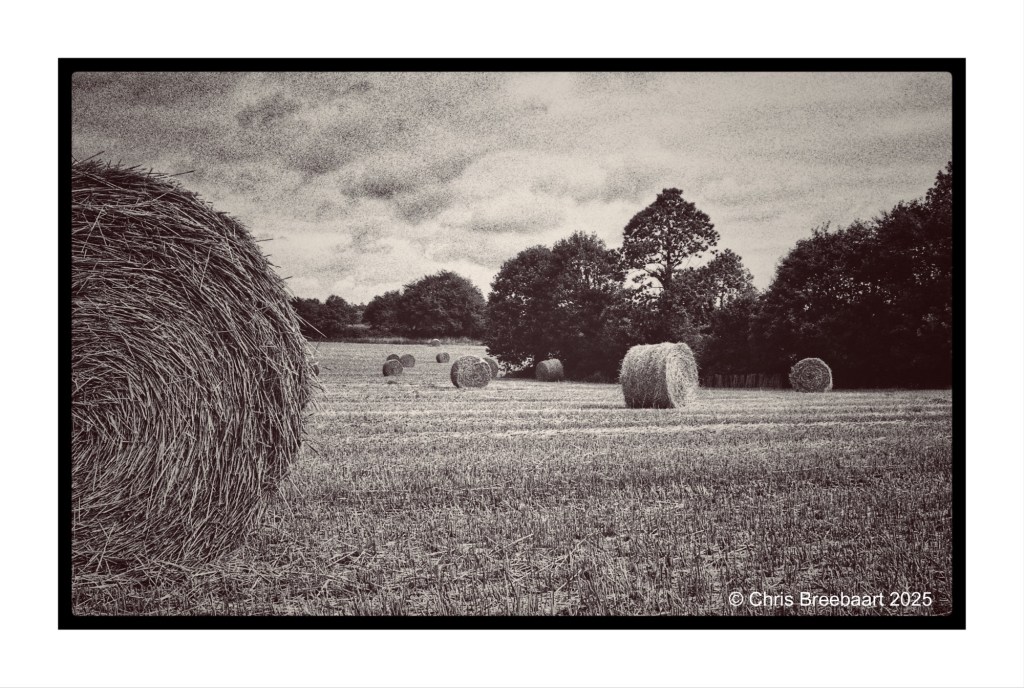
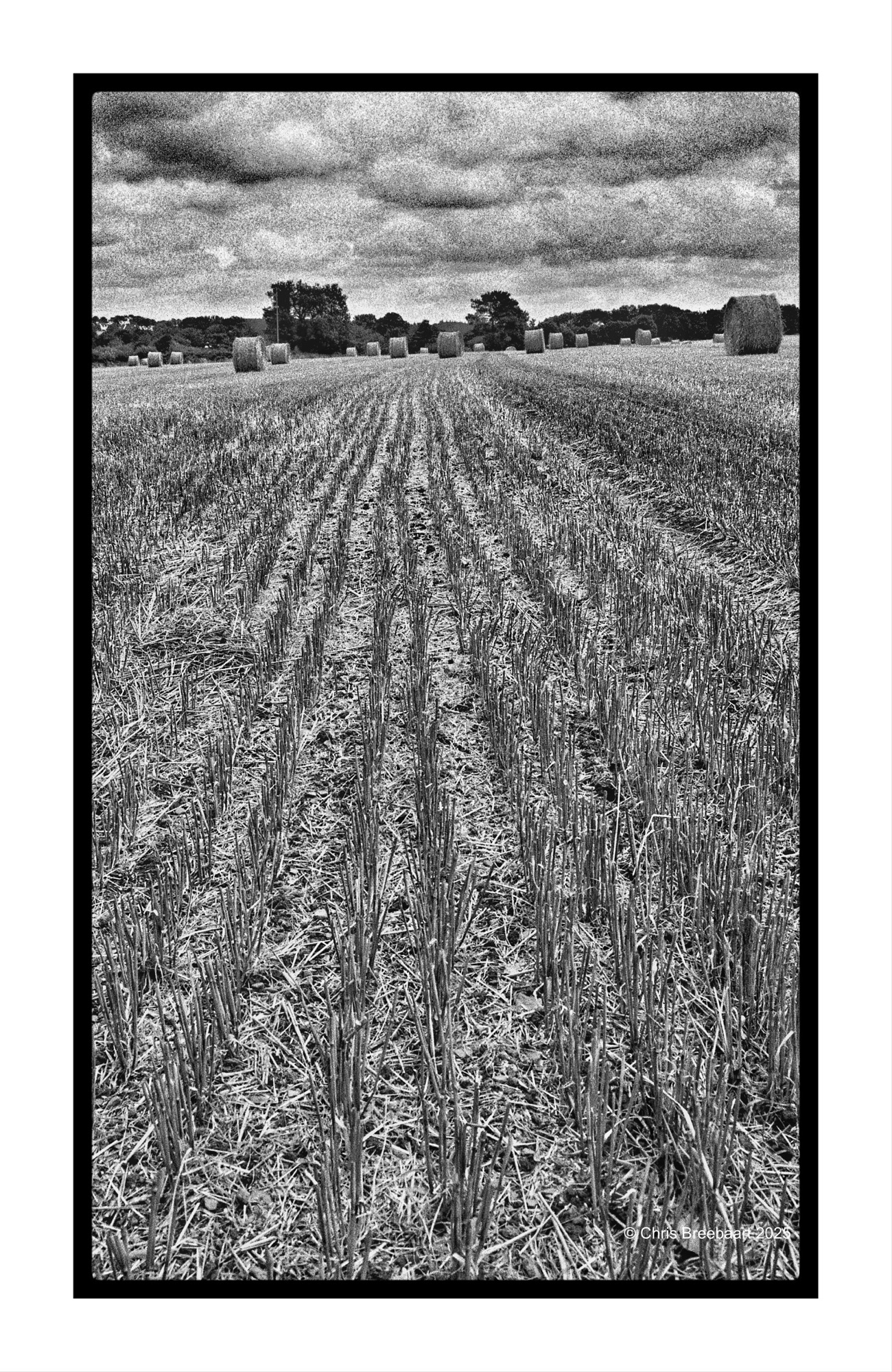
France – Morbihan, Questembert – August 1996
Lens-Artists Photo Challenge #359 is ‘Tools of Photo Compositions: Lines, Colors and Patterns’.
The dreamy field with freshly pressed straw rolls offers a nice challenge. It is an opportunity to create something that makes sense in images. The idea that they actually roll. Near Questembert in the Morbihan region of Brittany.
About the B4 retouch series:
I browsed my archive for pictures to publish. Some of them are partly retouched but most do have scratches, dust and stains.Shot with Nikon F90 on Kodak TriX, scanned from film and edited using Snapseed and Marksta. Click the picture for a bigger version
 What's (in) the Picture?